Choosing starter profiles for different façade plinth details

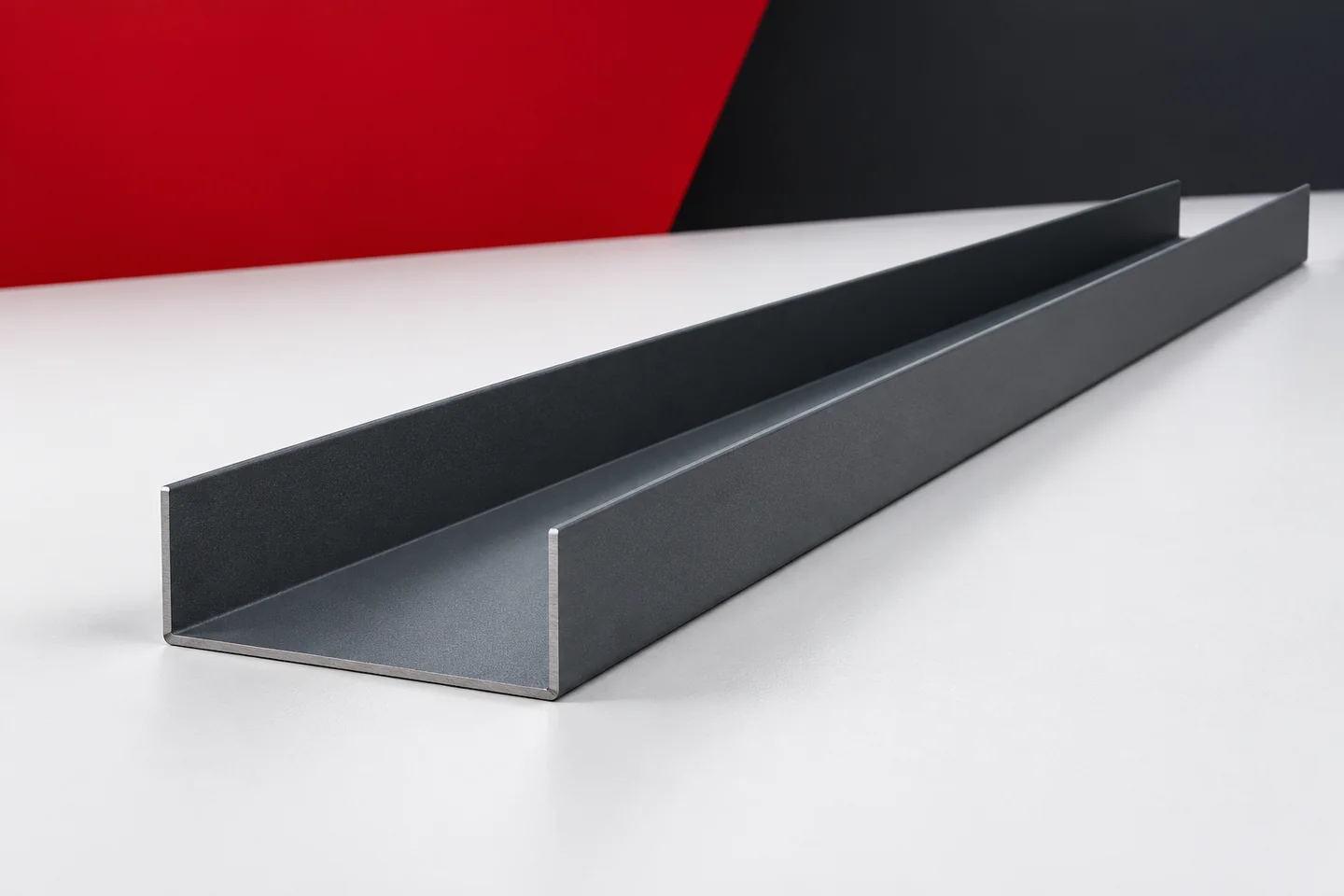
The bottom line of the façade is seen up close. It shows the accuracy of execution and how the wall connects to the plinth. Starter profiles can help to tidy up this zone, but their cross-section depends on the construction of the cladding. A recessed plinth needs a different solution from one projecting in front of the face. Ground levels and the proximity of doors and gates also matter. The selection should be based on the full cross-section, not only on the expected visible height of the trim. A recessed plinth creates a distinct undercut beneath the façade. A projecting plinth may require its top surface to be covered and water to be drained away from the junction. These situations differ in geometry. They should not be resolved by using the same trim without checking its position.
By |2026-11-15T03:59:12+01:002024-02-27|Knowledge base|Comments Off on Choosing starter profiles for different façade plinth details

Planning a patio roof: covering, supports and drainage

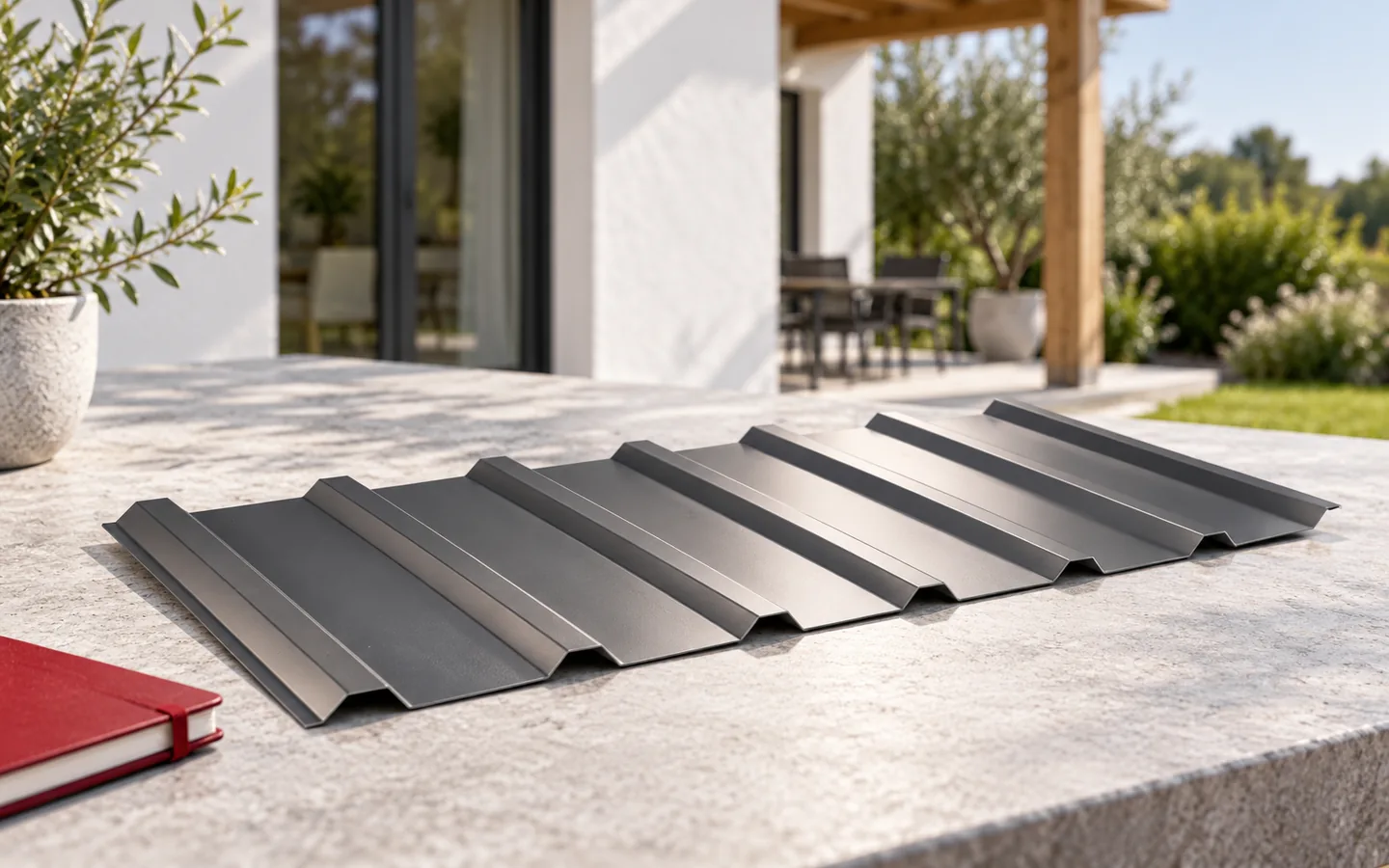
Begin by marking out the zone the roof is actually meant to shelter, rather than relying on the terrace's floor area. Indicate the table, chairs and main passage, since wind can carry raindrops under the open sides. Match the size, pitch, structure and drainage to this. T18 or T35 profiles form a lightweight covering, while a sandwich roof panel limits heat loss through the roof surface itself. Keep in mind daylight in the room, condensation beneath the metal and the junction with the wall. Load capacity and fixings need calculation, not floor area alone.

By |2026-11-14T23:56:42+01:002024-02-11|Knowledge base|Comments Off on Planning a patio roof: covering, supports and drainage

Choosing a classic or contemporary tile-effect profile for a house

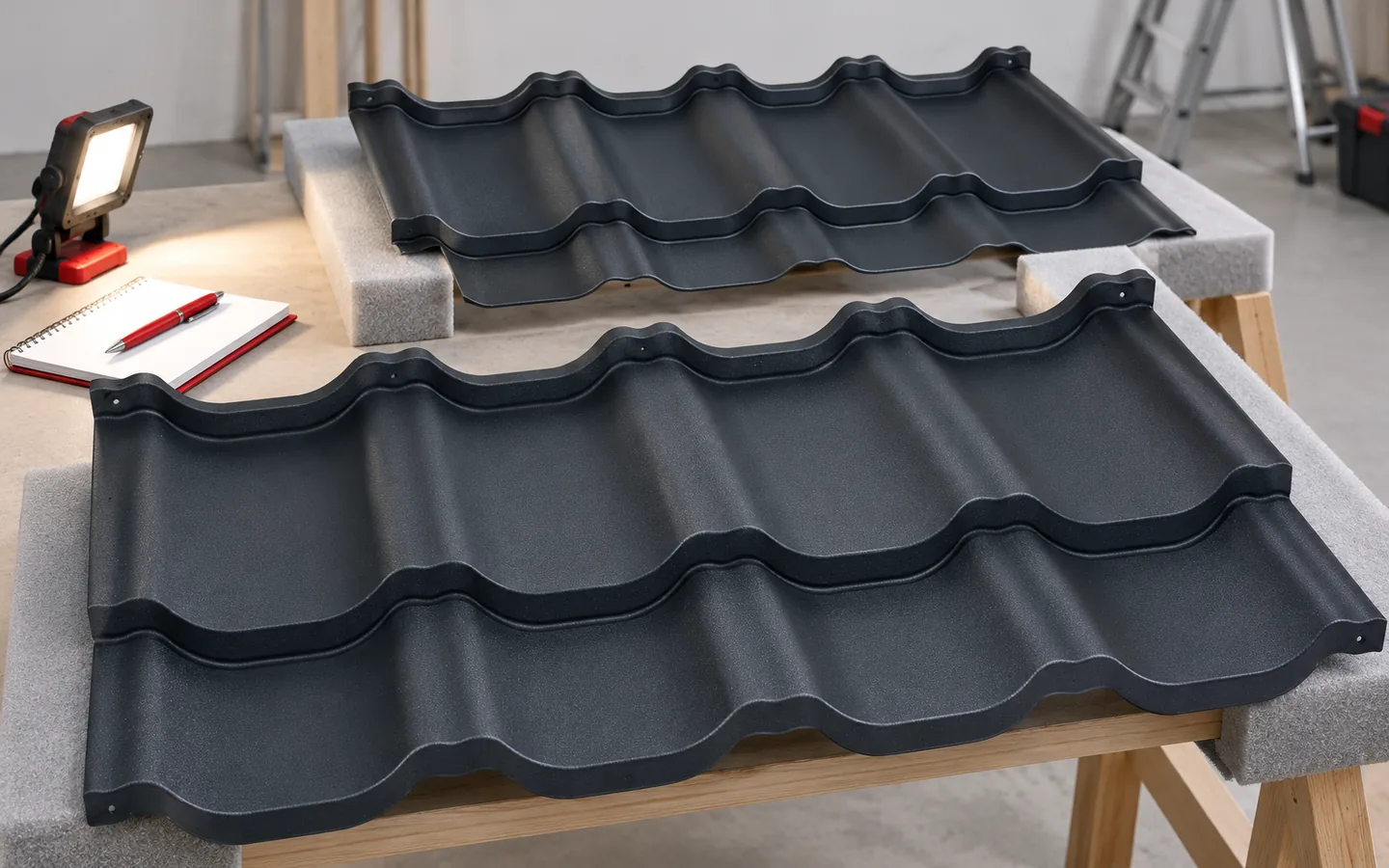
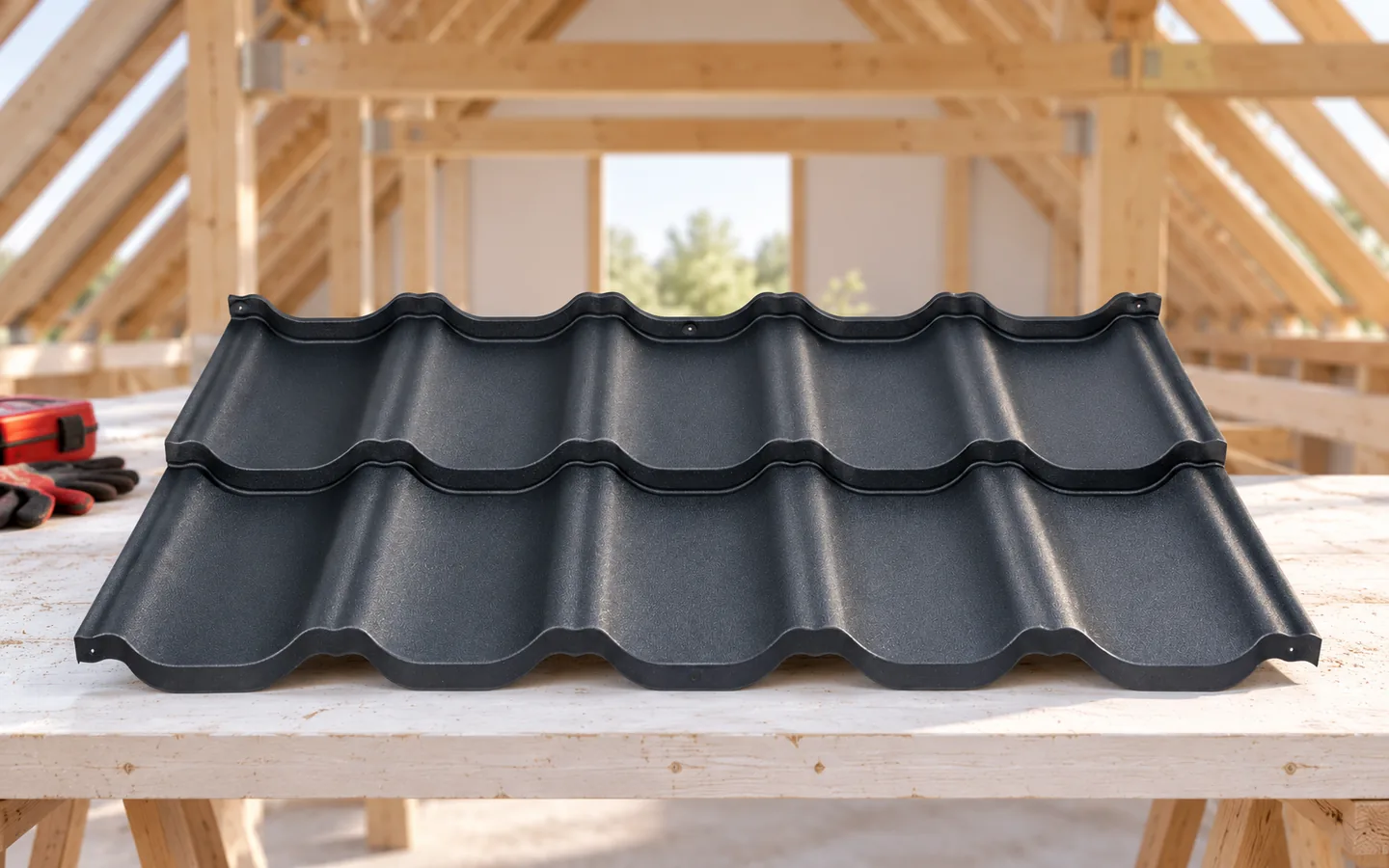
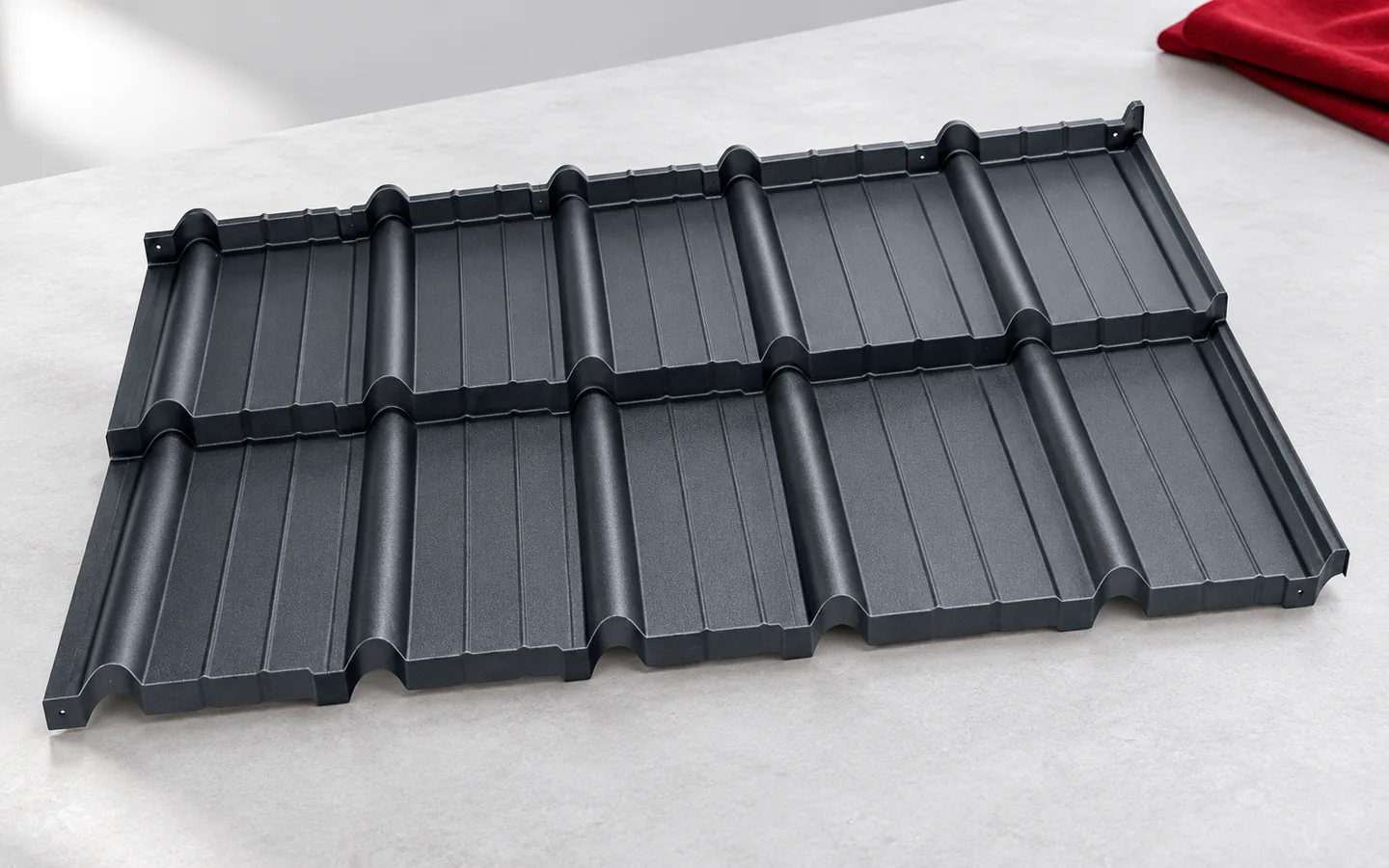
Choose the roof tile profile only after comparing a sample with the house's form, façade and planned details, not solely under the influence of fashion. A classic pattern and modern geometry can share similar material parameters, so shape does not determine durability. Check the coverage width, module length, edge details and the full set of accessories. Assess colour and texture outdoors, in sun and shade, because a screen distorts hue. Remember that the final effect also depends on careful installation and an even substructure.

By |2026-11-15T03:57:59+01:002024-02-10|Knowledge base|Comments Off on Choosing a classic or contemporary tile-effect profile for a house

Can the roof covering be repaired or does it need replacing?

A single leak usually does not call for replacing the whole covering — first establish whether water enters through flashing, a fixing or a blocked outlet. Before commissioning work, check how extensive the damage is, the condition of the material and whether a durable repair is feasible using matching sheets and accessories. Note when damp appears — during rain, with wind from a particular side or during a thaw — and inspect whatever roof interior is accessible. Remember that water travels through the layers, so a ceiling stain need not sit beneath the leak.

By |2026-11-15T03:57:56+01:002024-02-08|Knowledge base|Comments Off on Can the roof covering be repaired or does it need replacing?

Six practical checks for resistance to wind uplift on a roof

Before accepting the roof covering, establish whether the design specifies fixings in the edge and corner zones — these determine the roof's wind resistance. Check that the fasteners match the substrate and material thickness, and that the flashings have proper support. Simply adding more screws is not enough; the entire load path from sheet to structure matters. When changing the covering, verify the earlier assumptions, and leave structural doubts to the designer.

By |2026-11-15T03:58:15+01:002024-02-08|Knowledge base|Comments Off on Six practical checks for resistance to wind uplift on a roof

Removing moss and green deposits from tile-effect roofing sheets

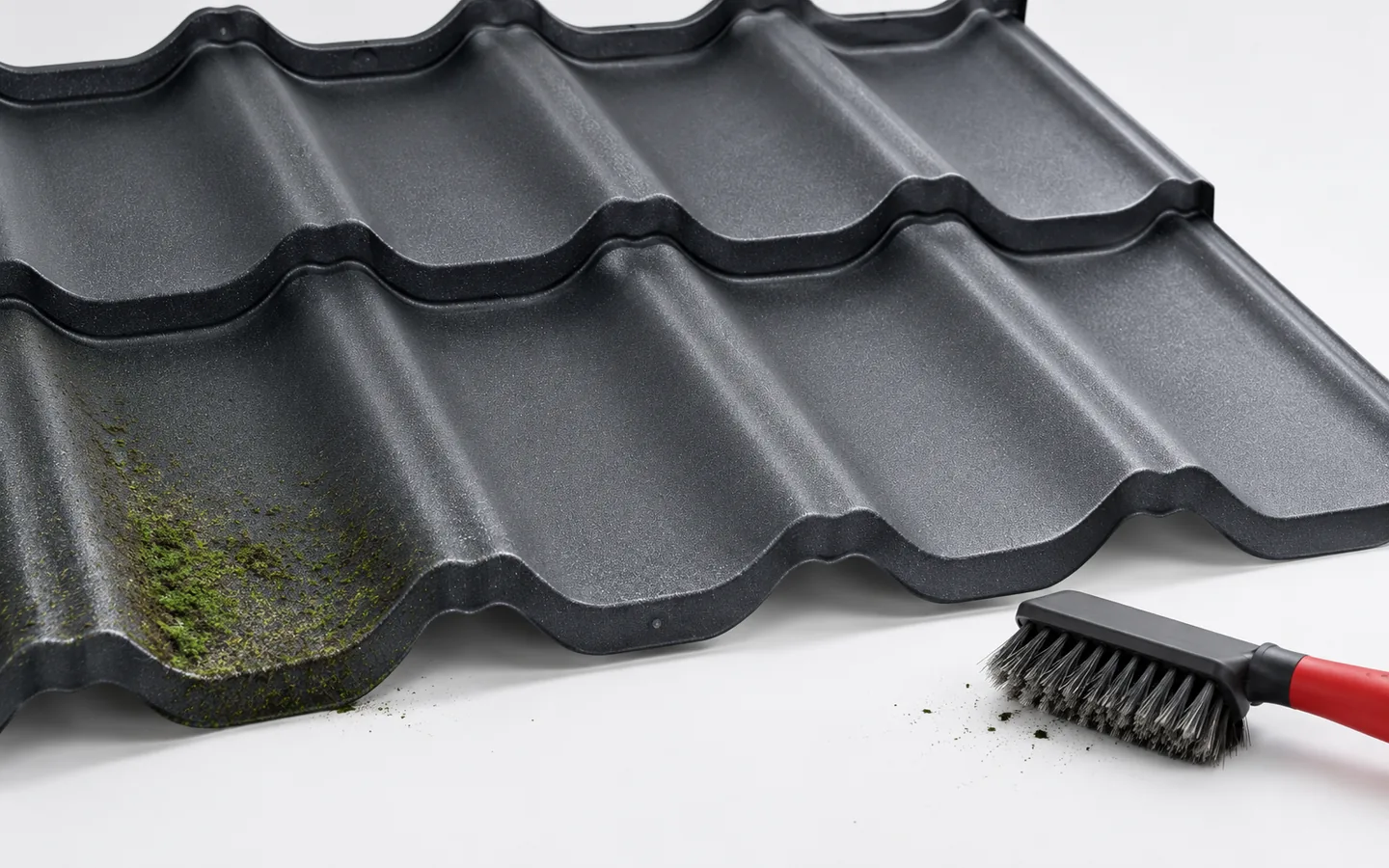
Effective removal of moss and green film from coated steel roofing requires a method matched to the coating type. Before cleaning, identify the soiling and surface condition, and check the user instructions and warranty terms. Gentle washing, a soft brush and a product approved for the specific finish are usually used. Avoid scraping the metal and aggressive chemicals, which can damage the sheet's protection. Also clean the valleys and gutters and determine why the roof slope remains damp for long. Remember that metal sheeting does not need moss for protection, and deposits trap water.

By |2026-11-14T20:14:47+01:002024-02-05|Knowledge base|Comments Off on Removing moss and green deposits from tile-effect roofing sheets

How a collar beam roof works and where it makes sense

A collar-tie roof relies on horizontal collar ties connecting opposite rafters, which work with the roof structure to transfer loads and affect the stiffness of the system. It is worth checking whether the collar ties match the calculations and design, especially when attic adaptation is planned. Their dimensions, position and connections depend on the structural scheme and load distribution, including asymmetric snow and wind. A collar tie should not be treated merely as a ceiling beam or freely raised or removed. Final design decisions are left to the designer.

By |2026-11-14T23:57:00+01:002024-01-22|Knowledge base|Comments Off on How a collar beam roof works and where it makes sense

Assessing protective coatings for metal roofing

When choosing a protective coating for roof sheeting, the key is to assess the whole system: steel core, metallic layer and organic finish, not just the technology name. Check the conditions the sheet will face on the roof – distance from the sea, industry, moisture – and whether the offer states corrosion and UV resistance. Compare two variants with the same steel thickness but different coatings, asking for the material data sheet and maintenance conditions. This will help distinguish real properties from marketing slogans.

By |2026-11-15T03:57:23+01:002023-12-17|Knowledge base|Comments Off on Assessing protective coatings for metal roofing

How to store tile-effect metal roof sheets before installation

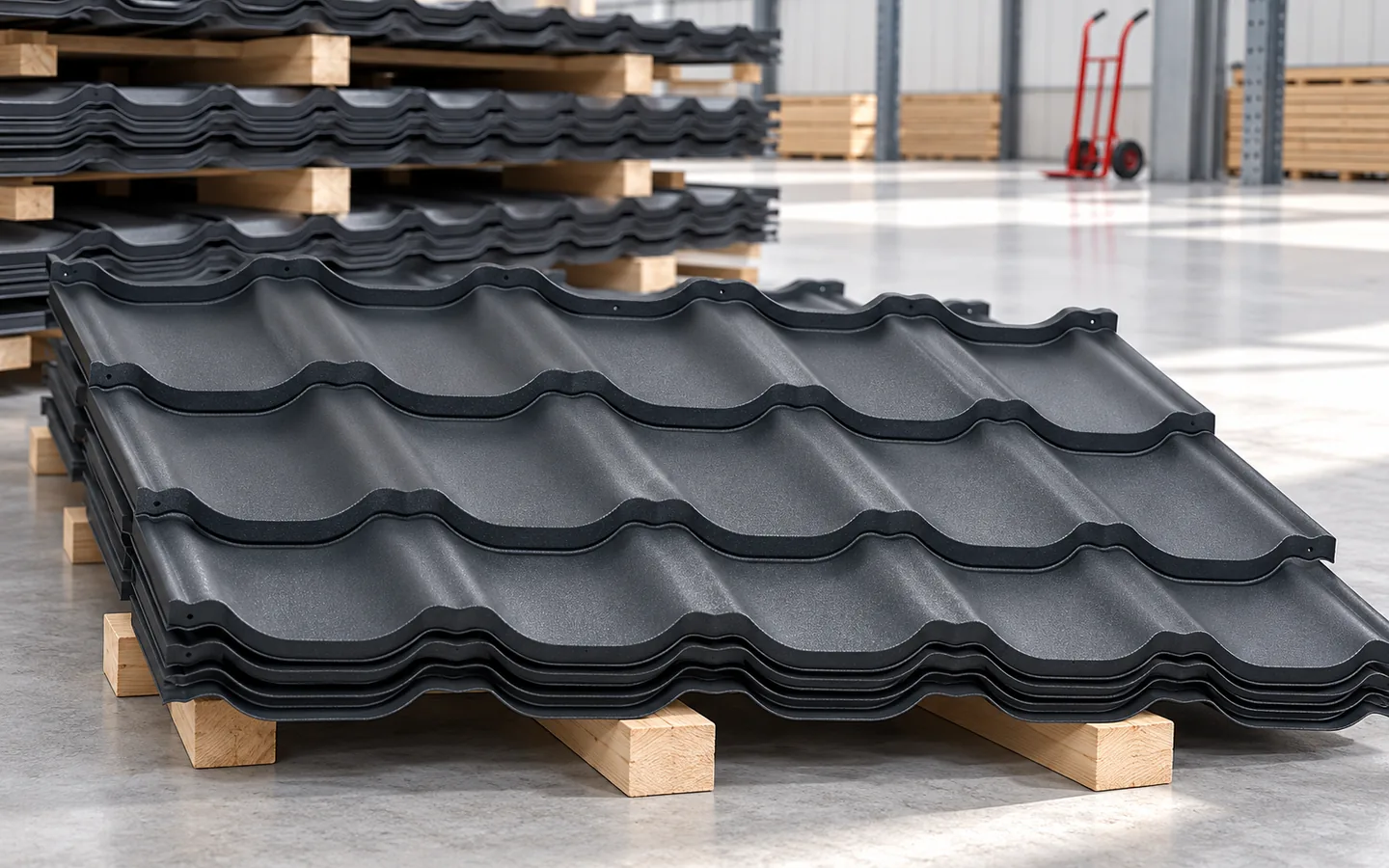
It is best to schedule delivery of the metal roofing tiles just before installation rather than buying them in advance. Before unloading, inspect the packaging and the visible edges of the pack, and record any dents, scuffs and signs of dampness straight away. Also check that the number of elements, lengths and coating match the order. Place the pack on even, stable and dry ground, raise it above the ground and ensure airflow so that moisture between the sheets can dry out. Always confirm the storage rules for the chosen coating in the instructions.

By |2026-11-15T03:56:27+01:002023-12-14|Knowledge base|Comments Off on How to store tile-effect metal roof sheets before installation

How to read trapezoidal steel sheet designations before ordering

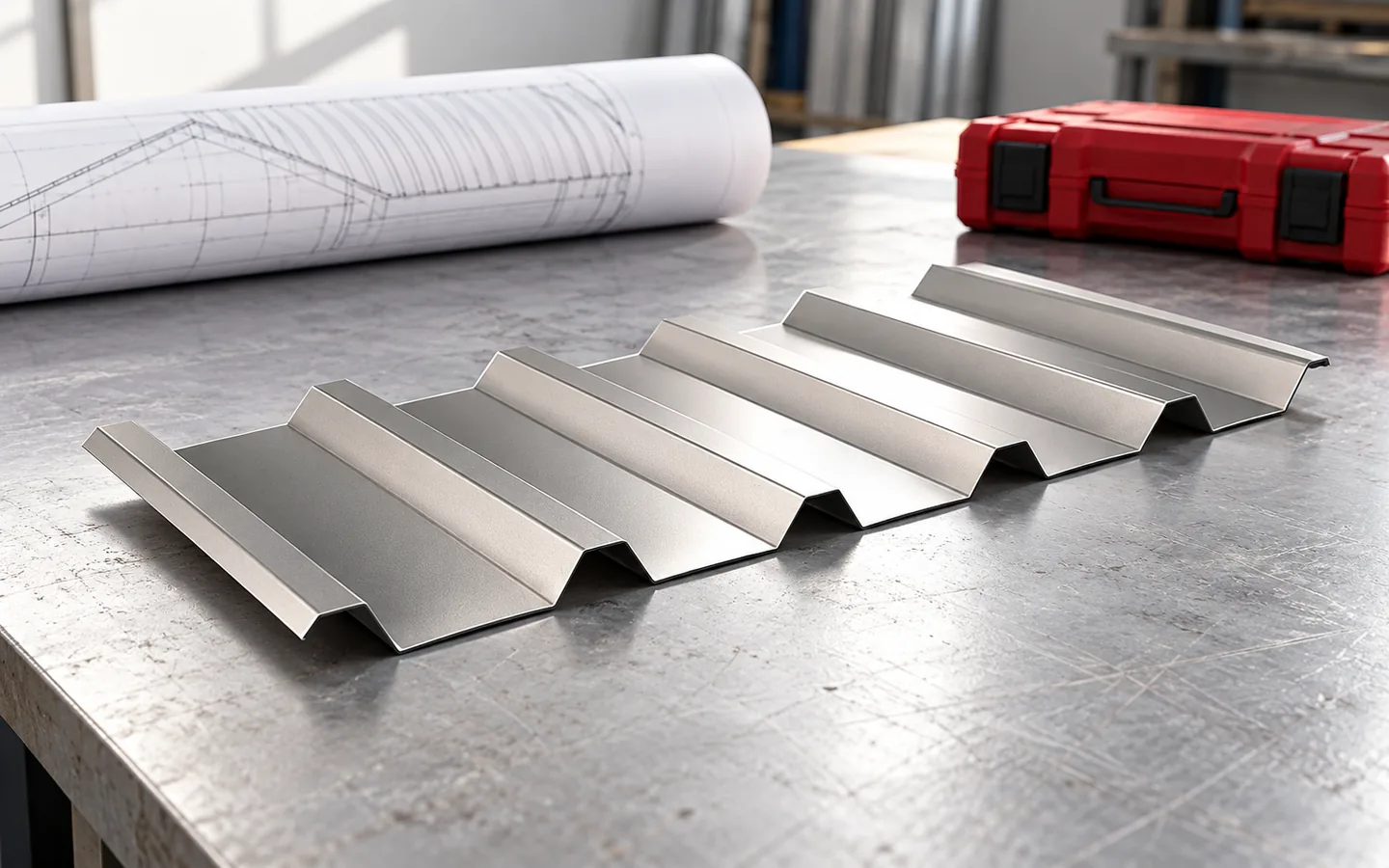
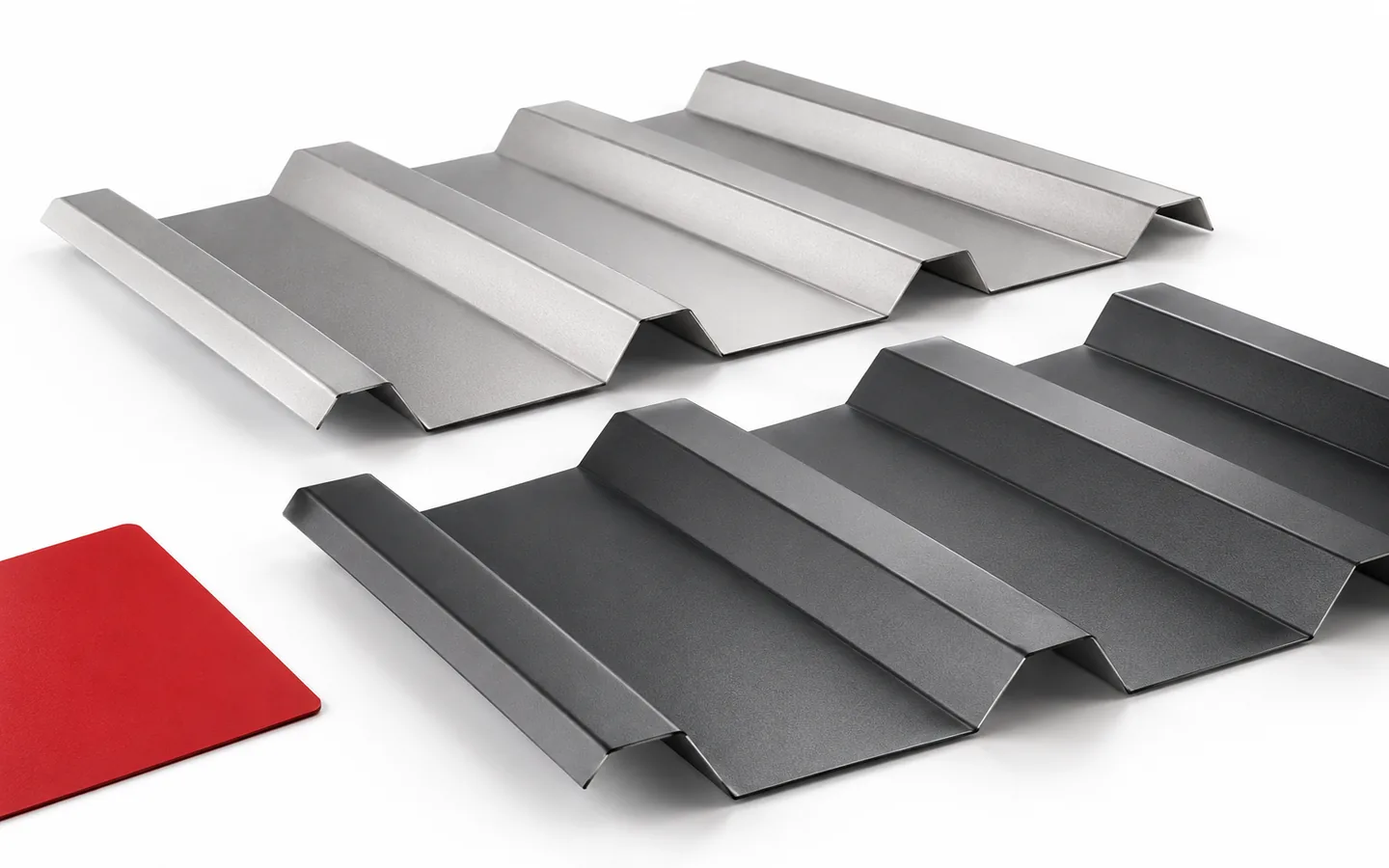
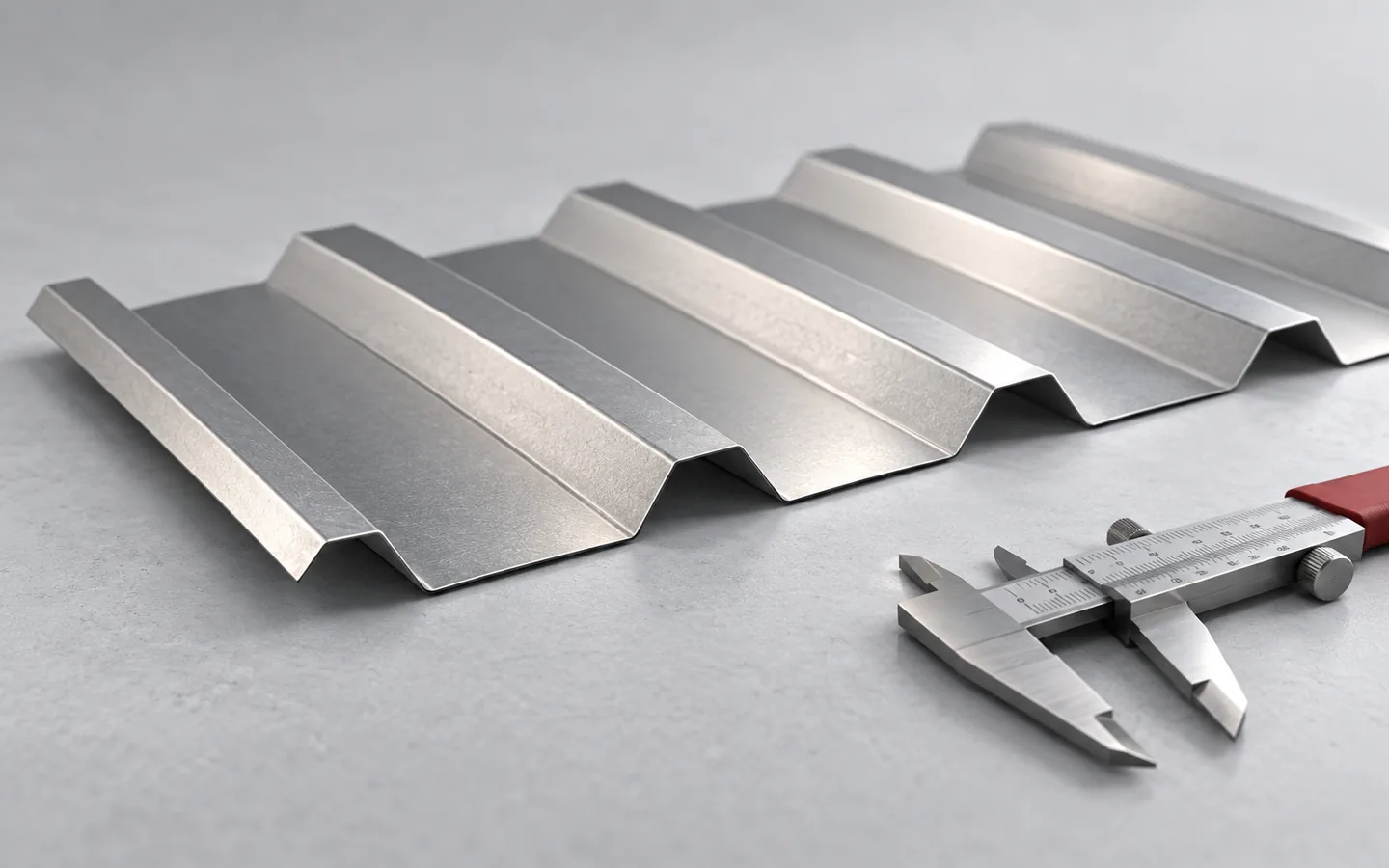
A designation such as T18 or T35 does not yet identify a specific sheet – it only indicates the profile family and refers to its height. Before purchase, therefore, check the full variant: core thickness, steel grade, coating type and effective cover width, and for repairs also the rib geometry and lap shape. The key variable is the effective width, as it determines the quantity of material and the price of the covering; compare offers in the same unit. Only the product data sheet and profile drawing let you avoid buying sheets that look similar but do not fit together.

By |2026-11-14T16:52:18+01:002023-12-11|Knowledge base|Comments Off on How to read trapezoidal steel sheet designations before ordering
Back to top