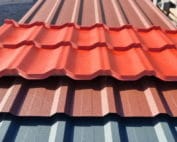
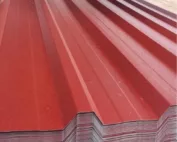
Choice of covering
How to read trapezoidal steel sheet designations before ordering
A designation such as T18 or T35 does not yet identify a specific sheet – it only indicates the profile family and refers to its height. Before purchase, therefore, check the full variant: core thickness, steel grade, coating type and effective cover width, and for repairs also the rib geometry and lap shape. The key variable is the effective width, as it determines the quantity of material and the price of the covering; compare offers in the same unit. Only the product data sheet and profile drawing let you avoid buying sheets that look similar but do not fit together.
What does the letter T and the profile number mean?
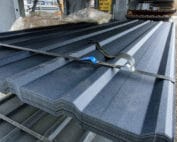
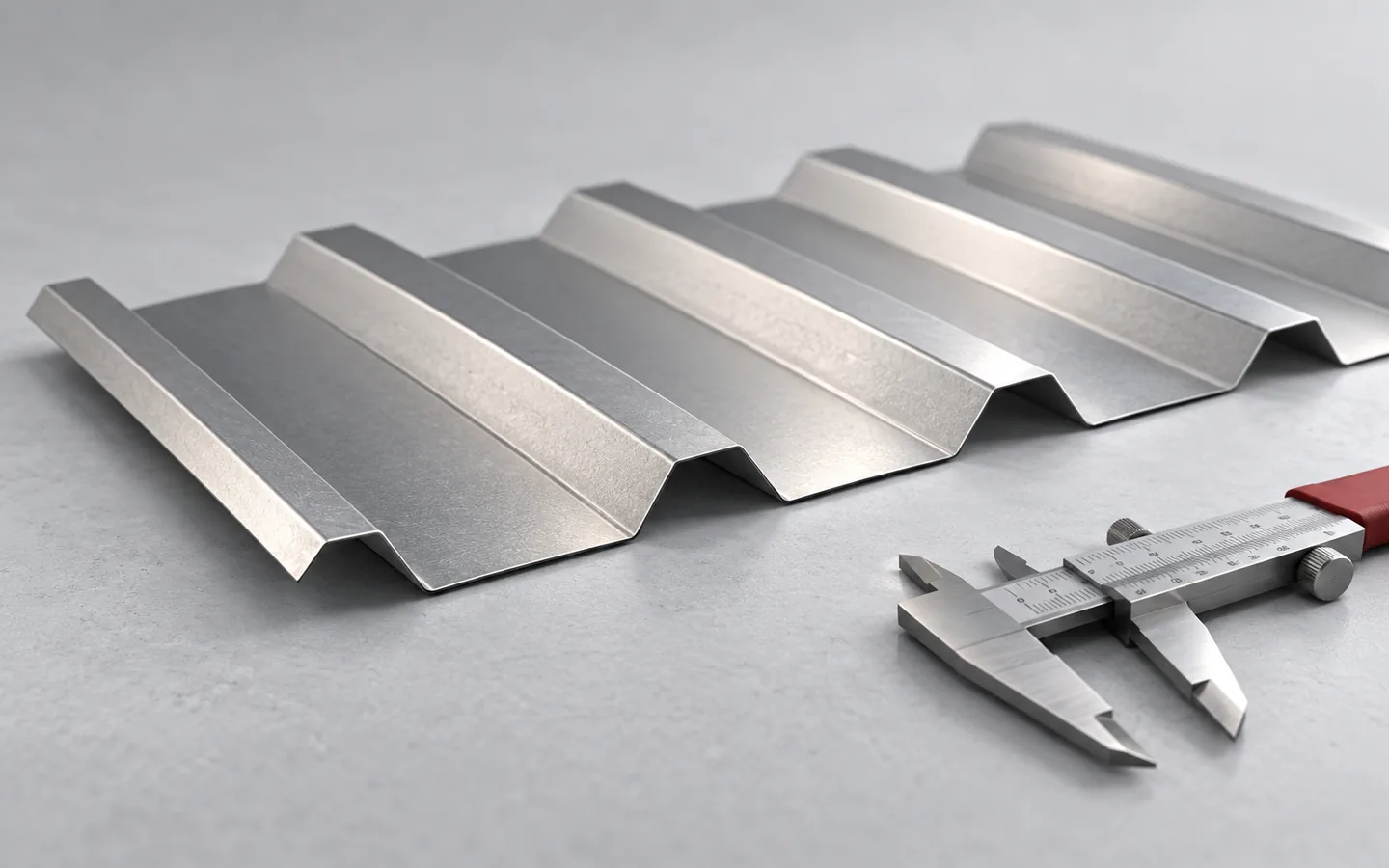
In common designations, the letter indicates trapezoidal steel sheet, while the number refers to the profile height. However, this should be treated as the starting point for identification. The names do not form a single system of dimensions common to the entire market. Even within the T18 family, there may be different pitches and edge terminations.
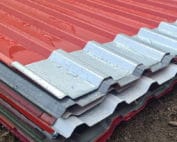
Repair material should not be ordered solely on the basis of a measured height. The upper flange width, the valley, the web angles and the shape of the lap are important. Two sheets may look similar from a distance and yet not join tightly. A profile drawing or precise identification of the existing product is needed.
Why are there two sheet widths?
The overall width covers the entire material. The effective width, also called usable width or coverage, means the part remaining after the lap is made. The difference matters when calculating quantities and price. A square metre of the whole sheet is not the same as a square metre of the finished covering. Comparison of offers should use one unit.
It is also worth checking the effective length when sheets are joined in the direction of the slope. The coverage width alone does not account for the transverse lap. For a roof with cut pieces, the order is best based on a cutting plan. A fixed percentage allowance should not be assumed for every profile and every roof geometry.
When requesting a quote, ask for both widths to be given in the same unit. This makes it possible to quickly spot an offer in which the price per m² of overall area is set against the price per m² of coverage.
What do thickness and steel grade mean?
The core thickness affects the mechanical properties but must be assessed together with the geometry. Steel of a given grade has its own design parameters. The same profile with a different thickness or material may have a different load-bearing capacity. Load tables must not be transferred between such variants simply because the basic symbol is identical.
When comparing, make sure what the stated thickness refers to. In the documentation, a distinction must be made between the core and the coating system. An organic layer measured in micrometres does not replace the steel thickness given in millimetres. These are different elements of the specification. Thicker paint does not remedy insufficient load-bearing capacity of the sheet.

How to read the coating designation?
The data sheet may indicate the type of metallic and organic layer. Among others, zinc protection and various polyester and polyurethane coatings are found. Their trade names should not replace a comparison of properties. Corrosion resistance, UV resistance and the approved service environment are important.
The colour code describes the shade, but not the entire quality of the coating. The same colour can occur in different coatings and structures. The shade may also differ between batches. For a larger investment, it is worth ordering related components together. For later reordering, product and coating data are needed, not just the recorded colour number.
How does the roof variant differ from the façade variant?
The laying geometry and the finished side may differ. In the roof variant, water drainage and the correct overlap are important. In the façade variant, the width of the visible surfaces may look different. A sheet should not be reversed without checking its intended use. The decorative coating and the protective lacquer on the underside are not the same.
In structural documents, a distinction is also made regarding the side on which the profile is laid. This affects the way the cross-section performs. A table for one direction need not be valid for the opposite direction. Perforation and an additional anti-condensation layer must be checked separately. These are specific variants, not features of every sheet in this family.
Which documents should be kept?
Before ordering, the product data sheet, the installation instructions and the relevant structural selection data are needed. The quotation should state the full variant, lengths, thickness, coating and colour. Also keep the delivery markings. This will facilitate acceptance and any later repair. The description ‘T35 sheet graphite’ alone is too general for reliable identification.
Do not try to determine the support spacing from the designation alone. Loads, the structural system and the fastening are needed. The symbol allows you to find the correct product family, but the data sheet and the design explain what can be made from it. Reading this data together protects against confusing a cheap cover sheet with a material intended for a different job.
If the supplier proposes a substitute, ask for a comparison of the full specification. A similar height or colour does not establish equivalence. A substitution may affect the cutting layout, flashings, load-bearing capacity and existing connections.
7 branches. Materials closer to your project.