Maintenance and durability
How to store tile-effect metal roof sheets before installation
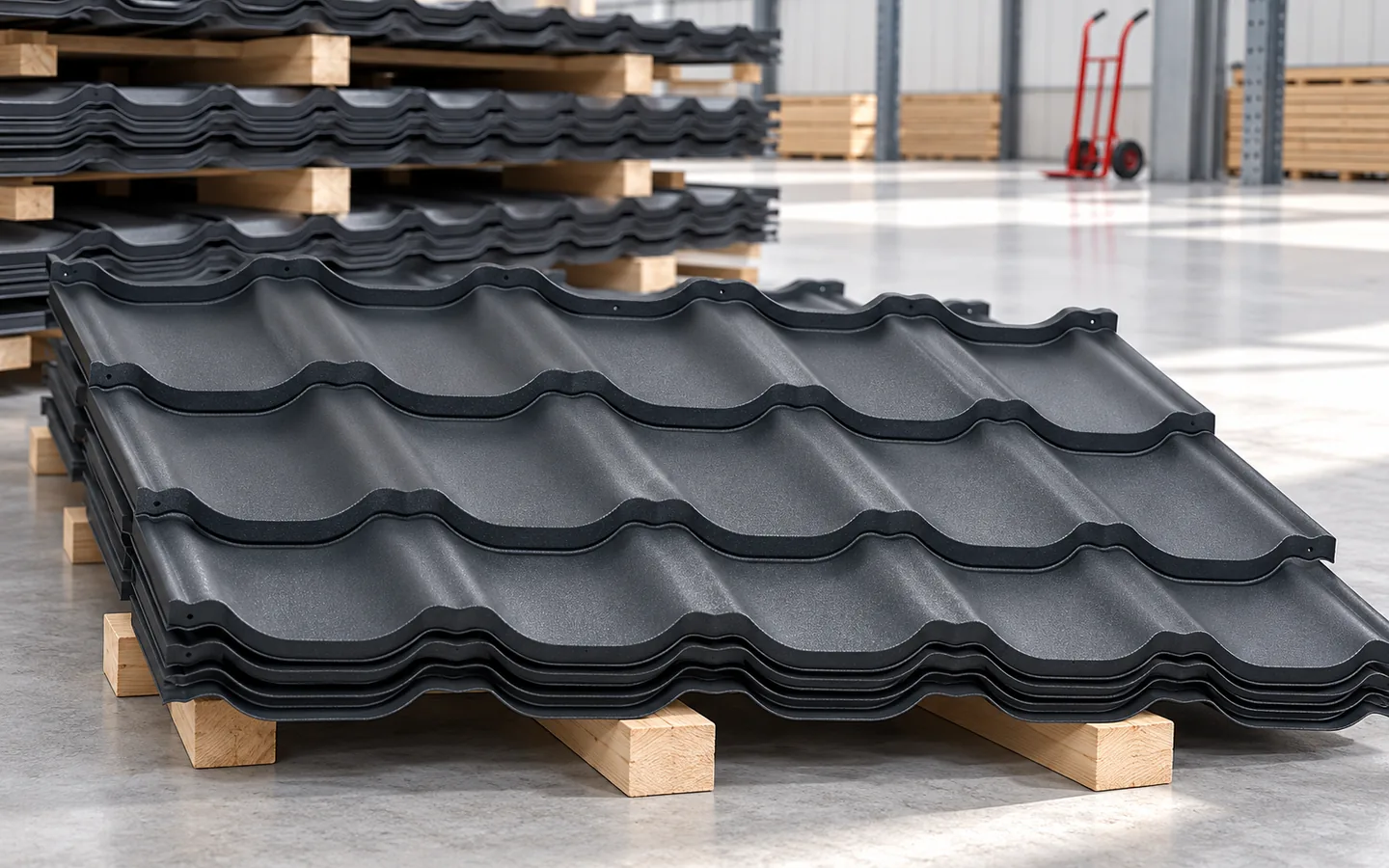
It is best to schedule delivery of the metal roofing tiles just before installation rather than buying them in advance. Before unloading, inspect the packaging and the visible edges of the pack, and record any dents, scuffs and signs of dampness straight away. Also check that the number of elements, lengths and coating match the order. Place the pack on even, stable and dry ground, raise it above the ground and ensure airflow so that moisture between the sheets can dry out. Always confirm the storage rules for the chosen coating in the instructions.
What should be checked on delivery?
Before unloading, it is worth inspecting the packaging and the visible edges of the pack. Dents, scuff marks and signs of moisture should be noted. The number of items, lengths and coating should also be checked against the order. If damage occurred in transit, quick photographic documentation helps establish its extent. Inspection should not be left until the day roofing begins.
A pack may look correct from the outside and still need drying. It is worth following the instructions for unpacking and inspection. With second-grade material, a description of the condition of the specific batch is particularly important. An agreed aesthetic defect does not mean consent to arbitrary damage to the interlock, corrosion or a change in dimensions that hinders installation.
How to choose a storage location?
The substrate should be level, stable and dry. Packs must be raised above the ground on suitable supports. They must not lie where water or mud collects. The method of support depends on the length of the sheets. Too great a distance between supports can cause permanent deflection, particularly during longer storage of a heavy pack.
The roof covering should protect against precipitation but must not close off air access. The material should not be stored next to wet mortar, chemicals or places where sparks and cutting dust arise. It is worth protecting the area against accidental walking on the pack. Sheets are not a table for setting down heavy tools and other building materials.
Why is moisture between sheets a problem?
Water can get into the pack during transport, precipitation or condensation with temperature changes. Between tightly stacked sheets it dries much more slowly than on an open surface. Prolonged moisture promotes changes to the protective layers. Even good protection of the metal does not mean resistance to any storage conditions.
If the pack is wet, proceed according to the supplier’s instructions. It may be necessary to separate and dry the sheets while ensuring ventilation. Covering with a tight tarpaulin alone does not remove moisture already inside. The pack should also not be left unchecked for many weeks. The roofing date is worth agreeing before delivery to shorten the storage period.

How should the protective film be handled?
The film is intended to protect the surface during specific stages of production, transport or installation. It is not a permanent covering layer. The time and method of removal follow from the product instructions. Prolonged exposure to sun can make peeling difficult and leave marks. It is not worth waiting to remove it until all work around the building is finished if the recommendations indicate an earlier date.
A distinction must also be made between the film on a single sheet and the packaging of a whole pack. Each serves a different purpose. If removal requires force or leaves adhesive, random solvents should not be used. They can damage the coating. It is worth first establishing the correct cleaning method. An aggressive attempt to repair a minor mark can cause a larger permanent stain.
How should modules and long sheets be handled?
One sheet should not be dragged across the surface of another. Such friction can damage the paint and the edges. Long elements require a sufficient number of people or suitable equipment. Lifting by one end can lead to buckling. The way of gripping and supporting should limit deflection, not merely enable the sheet to be briefly lifted off the pack.
The modules are shorter and usually more convenient to hand up, but their profiles can also be crushed. It is worth keeping the workstation clean and placing elements on a suitable surface. Gloves protect both the hands and the surface from soiling. In wind, loose sheets can be difficult to control, so the organisation of carrying must be adapted to the conditions.
What should be done before starting the roofing?
Check that the sheets are dry, clean and free from deformation that would prevent connection. Remove packaging and contamination in accordance with the instructions. If there is any doubt concerning the coating, it is worth clarifying it before installing the material. Installing a damaged element makes it difficult to later assess whether the problem arose in transport, in the warehouse or during covering.
Keep the labels and batch documentation. They will make it easier to identify the material when buying additional flashings or reporting a problem. Good storage does not require a complicated warehouse, but it does require moisture control and proper support. Logistically, it is safest to combine the delivery date with the readiness of the roof and the team, rather than buying the sheet metal long before installation is possible.
7 branches. Materials closer to your project.