Maintenance and durability
Can the roof covering be repaired or does it need replacing?
A single leak usually does not call for replacing the whole covering — first establish whether water enters through flashing, a fixing or a blocked outlet. Before commissioning work, check how extensive the damage is, the condition of the material and whether a durable repair is feasible using matching sheets and accessories. Note when damp appears — during rain, with wind from a particular side or during a thaw — and inspect whatever roof interior is accessible. Remember that water travels through the layers, so a ceiling stain need not sit beneath the leak.
How to determine the source of the problem before deciding?
Note when moisture appears: with every rain, with wind from a specific direction or during a thaw. Inspect the accessible roof interior and note the location of marks. Water can migrate through layers, so a stain on the ceiling is not always directly below the leak. The point of water entry should be determined by the contractor during a safe inspection.
Not every problem is a leak from outside. Condensation can result from humid air, leaks in the inner layer or inadequate ventilation. Replacing the sheet metal alone does not eliminate such causes. Before quoting, the roof cross-section and the condition of hidden layers must be identified. Without this, even a costly renovation may reproduce the same error.
Which defects can usually be repaired locally?
Point repairs are often suitable for individual damage to flashings, leaking penetrations or local fastening defects. The condition is that the surrounding material is in good condition and a compliant detail can be executed. Sealing should result from the construction of the joint. A random sealant applied on top is often only a short-term cover for the problem.
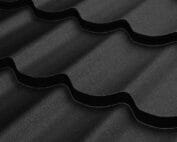
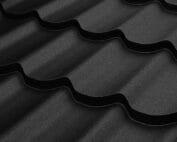
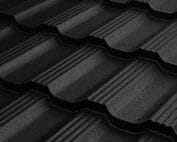
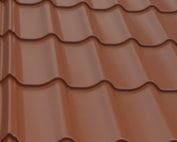
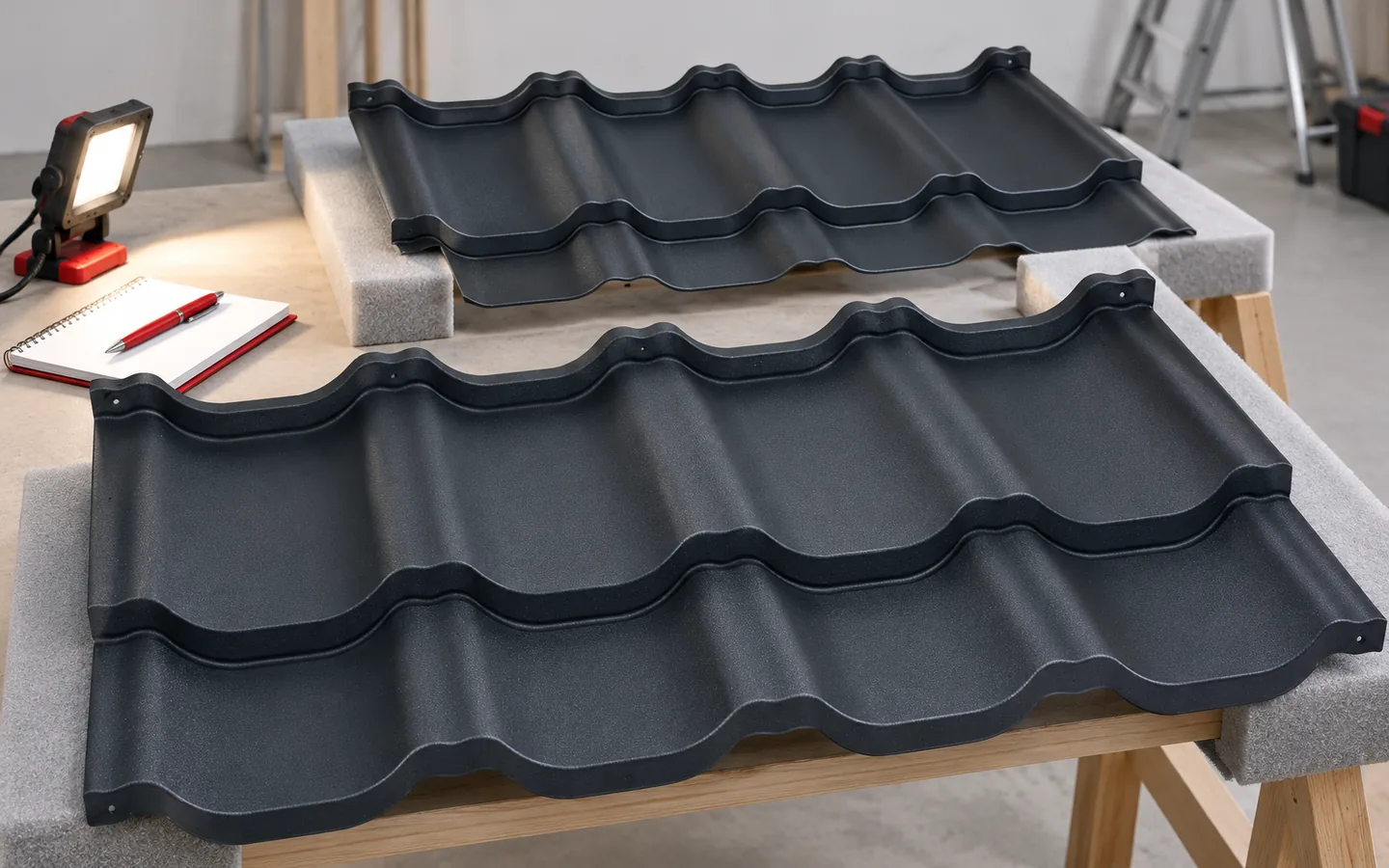
Replacing a damaged sheet is also possible if it can be removed and the connections recreated. In modular tile-effect metal roofing, the size of the replaced element is small, but this does not mean models are freely interchangeable. A matching profile and fastening method must be found. A new batch may differ in shade from long-standing roofing. It is worth establishing this effect before commissioning the work.
What signs point to a larger replacement?
Extensive corrosion, numerous coating defects and recurring leaks at many connections may indicate that point repairs are no longer worthwhile. This also applies to a roof with poorly selected pitch or systematically incorrect installation. The cause and extent of the changes must be assessed. The age of the material alone is not a sufficient criterion, as usage conditions can vary greatly.
A larger replacement may be needed when converting the attic or significantly changing the layers. If the old roofing must be removed to repair damp sheathing and insulation, it is worth calculating the entire option. It is not always worthwhile to reinstall used sheets. At the same time, replacement for the sake of refreshing the colour alone has a different justification than a technical repair.

Why should the roof structure and insulation be checked?
Wood under a leaking roof may have damage not visible from outside. The structure is assessed for the condition of the material, connections and deformations. The choice of new roofing does not replace this inspection. Even lighter sheet metal requires stable support and correct fastenings. If there are doubts about load-bearing capacity, an assessment by a designer is required.
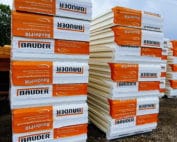
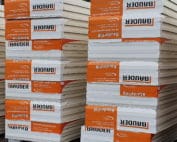
Wet insulation and inconsistent layers require a separate solution. For renovation, continuous PIR insulation can be considered if it suits the roof design. However, it should not be used to seal a damp structure without diagnosis. Drying out, airtightness and the moisture drainage path must be established. The new covering should form part of an improved system, not merely its new surface.
How to compare repair and replacement costs?
The repair option should define the scope, the durability of the proposed solution and the remaining limitations. For replacement, add dismantling, protection of the building, substrate repair, flashings and waste. The two routes cannot be compared on the price of new sheets alone. It is also important how many times access to the roof will have to be arranged for further repairs.
Ask for the components that can be retained after assessing their condition. Gutters, accessories and layers under the covering do not always need replacing, but they must suit the new solution. Record who is responsible for measurements and material selection. Where the condition of hidden parts is unknown, it is worth establishing how additional work is approved once the roof is opened up.
How to prepare a safe scope of renovation?
First, active leaks and loose parts that may pose a hazard are secured. Then permanent work is planned, taking account of the weather and protection of the interior. It is not worth removing a large area without a ready plan to cover it. If old materials may contain substances requiring special handling, their identification should precede dismantling.
After repair or replacement, acceptance covers details, ventilation and drainage. Keep documentation and photographs of the layers before they are covered. A well-founded decision is not about choosing the most expensive scope. It should remove the cause of the problem and leave a roof that can be maintained further. Where the damage is local, a sound repair may be entirely sufficient.
7 branches. Materials closer to your project.