Maintenance and durability
Six practical checks for resistance to wind uplift on a roof
Before accepting the roof covering, establish whether the design specifies fixings in the edge and corner zones — these determine the roof’s wind resistance. Check that the fasteners match the substrate and material thickness, and that the flashings have proper support. Simply adding more screws is not enough; the entire load path from sheet to structure matters. When changing the covering, verify the earlier assumptions, and leave structural doubts to the designer.
Rule 1: account for the building’s conditions in the design
Wind load depends on the location, height and geometry of the building and its surroundings. A sheltered low house roof performs differently from a large roof slope in open terrain. Openings in the envelope and internal pressure may also matter. A solution must not be copied simply because similar steel sheet was used on a neighbouring building.
The design should indicate how loads are transferred and the fixing requirements. If the covering is changed, it must be checked whether the previous assumptions remain valid. A lightweight material does not mean a low wind suction effect. Structural doubts require assessment by a designer. The product instructions help to install the system but do not replace calculations for a specific building.
Rule 2: check the supports and structural connections
The sheet transfers forces through the fasteners to the battens, purlins or other support. The load must then reach the main structure and the building. Strong steel sheet on a weakened batten does not create a safe system. During renovation, the condition of the timber, corrosion of steel components and the connections must be inspected. Loose or damaged supports are not repaired by adding screws to the covering.
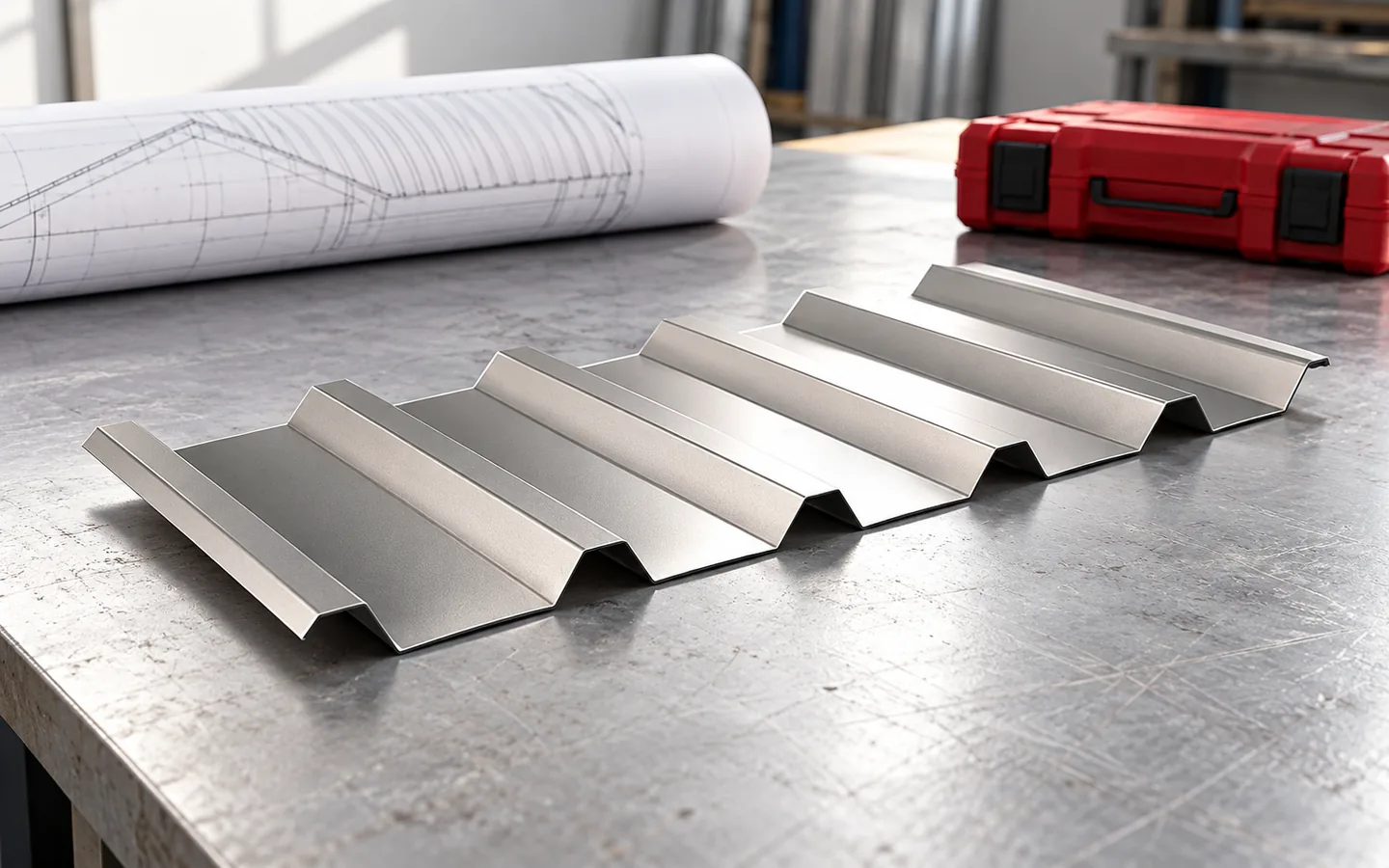
The spacing and width of the support are selected according to the profile, thickness and structural behaviour. T18 and T35 do not have a single common load-bearing capacity. In sandwich panels, the span length, core and thickness of the facings also matter. The parameters in the tables must be related to the correct variant. A change to one element may require the entire solution to be checked again.
Rule 3: select fasteners for the materials and loads
The screw should be intended for the specific substrate and thickness combination. Its load-bearing capacity, length, protection and method of sealing are important. A fastener for timber is not an arbitrary substitute for a component for a steel structure. A similar head colour does not confirm the same properties. Selection must take into account the system data and the design.
Fixing is carried out at the designated position on the profile. The seal requires correct compression, without being crushed and without play. A screw driven outside the support does not transfer the assumed load, even though it may look correct from above. Inspection during installation is therefore more important than merely counting the visible heads. An incorrect hole must be repaired in accordance with the covering requirements.

Rule 4: treat edges and corners as separate zones
Wind action is not distributed evenly over the entire roof slope. Greater uplift forces may occur in edge and corner zones. The fixing design should take this into account. A universal number of screws per square metre may conceal a lack of appropriate density in an important location. A layout plan is needed, not just the total number of pieces.
Sheet ends, verge flashings and eaves are executed with particular care. The flashing must have proper support and connection. A long loose section can start to vibrate and then damage subsequent fixings. Such elements should not be left for later completion. The temporary construction stage must also be safely protected against changes in weather.
Rule 5: check flashings and additional equipment
The ridge, chimney flashings and wall connections are exposed to lifting and movement. Their fixings must match the detail, and tightness must not rely solely on adhesive or sealant. The ventilated end must be executed so as to maintain the required airflow. Accidentally sealing all gaps is not proper protection against wind.
Installations and accessories can introduce additional forces. The fixings of panels, antennas, roof access systems and covers must be checked. They must not be screwed to an arbitrary section of thin sheet metal without assessing the system. When equipment is changed, loads and tightness need to be verified. Later intervention can weaken a well-executed roof if it has not been designed.
Rule 6: inspect the roof and respond to the first signs of looseness
The inspection covers raised edges, deformed flashings and traces of work at the fasteners. Unusual knocking during gusts requires the cause to be established. Begin the inspection from a safe place. Do not go onto the roof slope during strong wind or immediately afterwards without assessing the conditions. Loose sheet metal can also pose a danger to people standing next to the building.
If an element is detached or unstable, restrict access beneath the endangered zone and commission a team to secure it. The repair should restore the correct fixing, not merely silence the vibration. Keep photos and information about the changes made. Regular inspection allows small damage to be detected before further gusts increase the extent of the failure.
7 branches. Materials closer to your project.