Maintenance and durability
Removing moss and green deposits from tile-effect roofing sheets
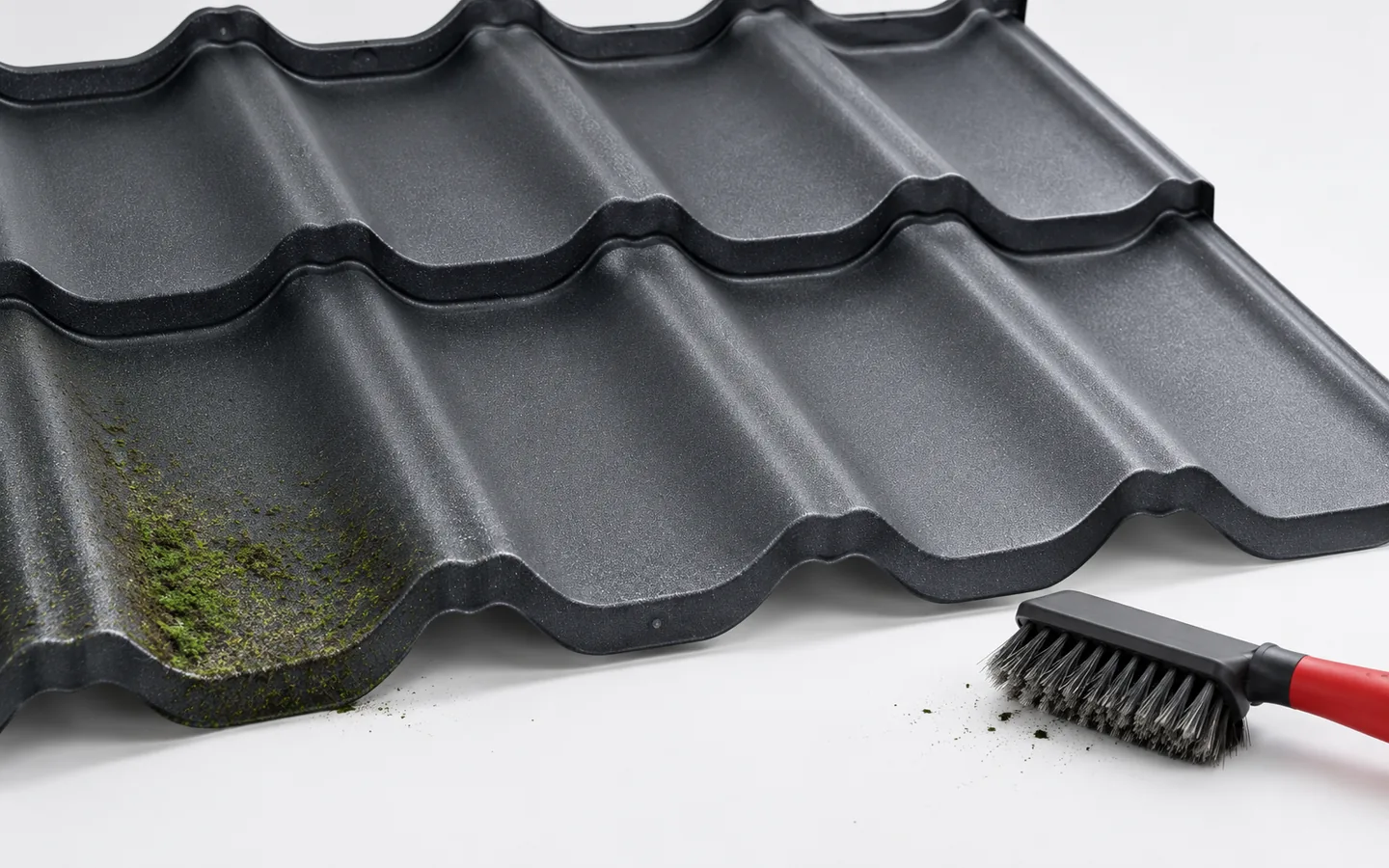
Effective removal of moss and green film from coated steel roofing requires a method matched to the coating type. Before cleaning, identify the soiling and surface condition, and check the user instructions and warranty terms. Gentle washing, a soft brush and a product approved for the specific finish are usually used. Avoid scraping the metal and aggressive chemicals, which can damage the sheet’s protection. Also clean the valleys and gutters and determine why the roof slope remains damp for long. Remember that metal sheeting does not need moss for protection, and deposits trap water.
Where does growth on a metal roof come from?
Metal sheeting is not a substrate that needs moss for protection. However, dust and organic material settle on its surface. In shaded areas, moisture persists longer. This arrangement favours the development of algae, mosses and lichens. Nearby trees and depressions where small leaves collect also have an influence. Rain does not always remove this deposit.
Not every greenish trace is moss. A thin film, larger clumps and firmly attached lichens require a different approach. Before commissioning cleaning, it is advisable to take photos from a safe distance. It is also necessary to check whether there is flaking paint or corrosion. Washing dirt off a damaged surface does not replace repairing the coating.
Does the growth need to be removed immediately?
A single change in colour does not mean that the roof will immediately lose its watertightness. However, it is worth reacting before the deposit becomes thick and starts retaining water. The sheet joints, roof valleys and gutters are particularly important. In these places, dirt can restrict drainage. Regular cleaning is easier than removing a years-old layer from numerous profiles.
Simultaneous signs of leakage, rust or coating detachment require urgent assessment. In that case, a roofer’s diagnosis is needed first. The appearance of the deposit alone does not allow determining whether water is getting under the covering. Nor should the problem be covered with paint. A new layer on a damp or biologically soiled substrate may not achieve proper adhesion.
How to choose a cleaning product?
First, the user instructions and the warranty conditions of the coating are checked. A product described as a roof cleaner may be intended for mineral tiles, not for lacquered steel. What matters is compatibility with the finish, the required dilution and the contact time. A test is carried out on a small, barely visible section. The change in gloss after drying is also assessed.
It is not worth experimenting with homemade mixtures of chlorine, acids or solvents. They can damage the lacquer, seals or the building’s surroundings. Products for removing deposits are used exclusively according to the label. They must not be mixed arbitrarily. It is also necessary to plan what will happen to the water flowing into gutters, the rainwater tank and the garden.

How does safe washing proceed?
Work begins with ensuring access and protection against falls. A roof covered with damp growth is very slippery. A professional team selects the method of movement according to the profile and structure. Weight should not be placed on an arbitrary point in the middle of the sheet. A good cleaning result does not justify dents or loosened joints.
Loose dirt is removed gently. Soft tools are used on the surface, not a wire brush or metal scraper. The pressure washer settings must match the coating instructions. Water is directed in line with the natural run-off, without forcing it under the laps. The product is rinsed off or left on only where its instructions expressly provide for such use.
What should be checked after cleaning the roof surface?
A clean surface reveals scratches, defects and areas of exposed metal. Their repair is matched to the scale of the damage. Touch-up paint is for small defects, not for randomly painting whole panels. If the coating is peeling off in larger flakes, an assessment of adhesion and a renovation plan are needed. On such a substrate, further washing will not solve the problem.
After the work, it is worth inspecting the gutters and downpipe outlets. Detached growth can collect at the drain. It should also be checked whether water has got into the loft and whether the flashings have been loosened. Photographs taken before and after cleaning help to identify a recurring problem later. It is good practice to keep the product data and the date of treatment.
How can the reappearance of moss be limited?
The basis is removing leaves and keeping the drainage paths clear. It is worth assessing the influence of branches that rub against the roof or constantly shade it. Any tree cutting must be planned in line with their condition and the rules applicable on the property. Sunlight exposure should not be improved at the cost of damaging the covering by dropping branches oneself.
There is no treatment that will unconditionally prevent growth for the entire service life. The surroundings, the profile and maintenance all matter. Nor should random strips of a foreign metal be mounted above coated steel sheet. Water running off them can trigger undesirable reactions. After washing, it is best to set a date for re-inspecting the places that were previously most soiled.
7 branches. Materials closer to your project.