
Knowledge base
Izoprofil.com helps you compare materials for a specific building project. The guides cover the uses of sandwich panels, PIR insulation boards, metal roof tiles and trapezoidal sheets. The criteria depend on the application, including the supporting structure, thermal performance and requirements for the finished surface. Read the product specifications, identify which dimensions affect the order and compare complete solutions. The articles help you discuss the options with a designer or installer and check the suitability of the selected materials before purchase.
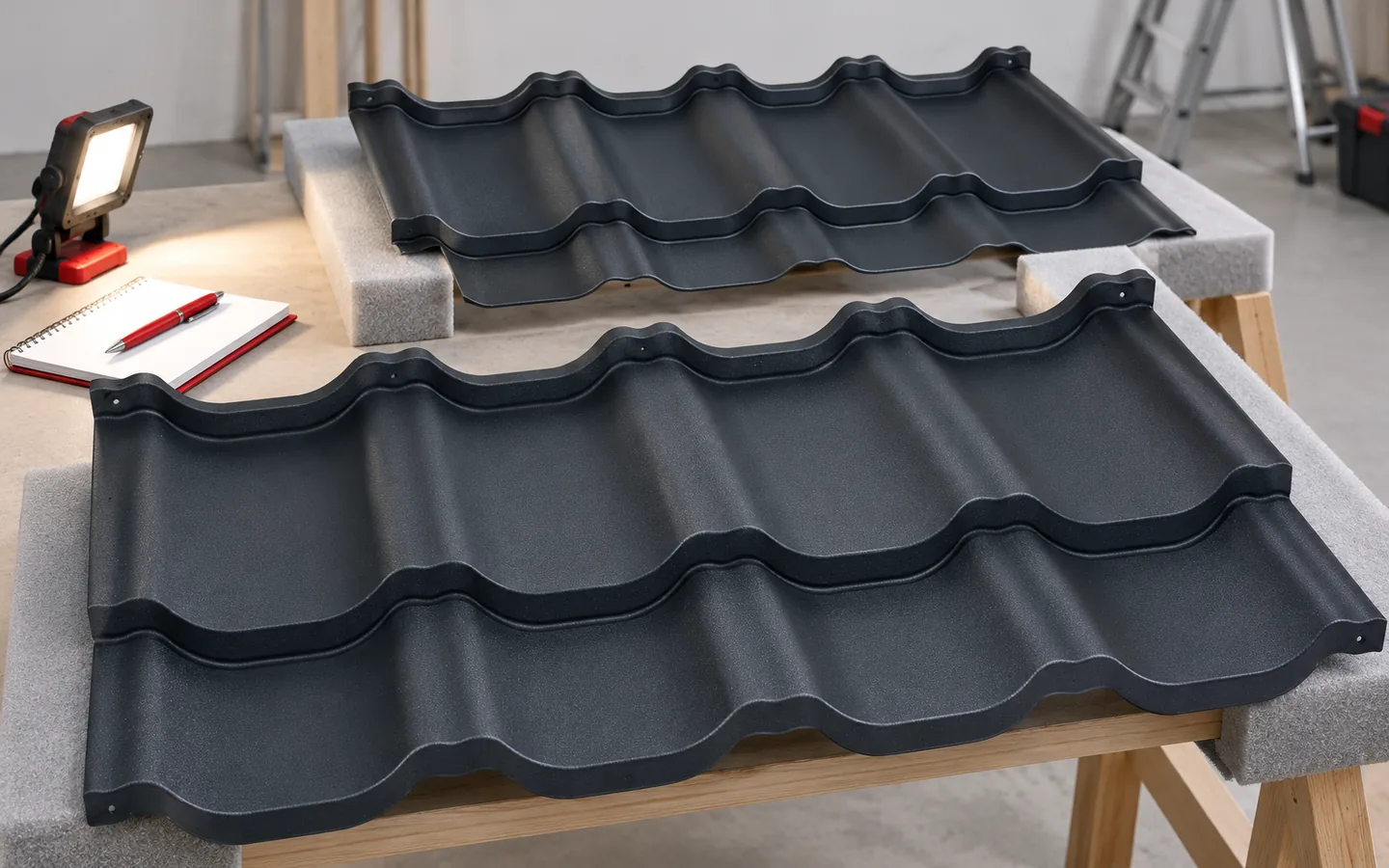
Can the roof covering be repaired or does it need replacing?
A single leak usually does not call for replacing the whole covering — first establish whether water enters through flashing, a fixing or a blocked outlet. Before commissioning work, check how extensive the damage is, the condition of the material and whether a durable repair is feasible using matching sheets and accessories. Note when damp appears — during rain, with wind from a particular side or during a thaw — and inspect whatever roof interior is accessible. Remember that water travels through the layers, so a ceiling stain need not sit beneath the leak.
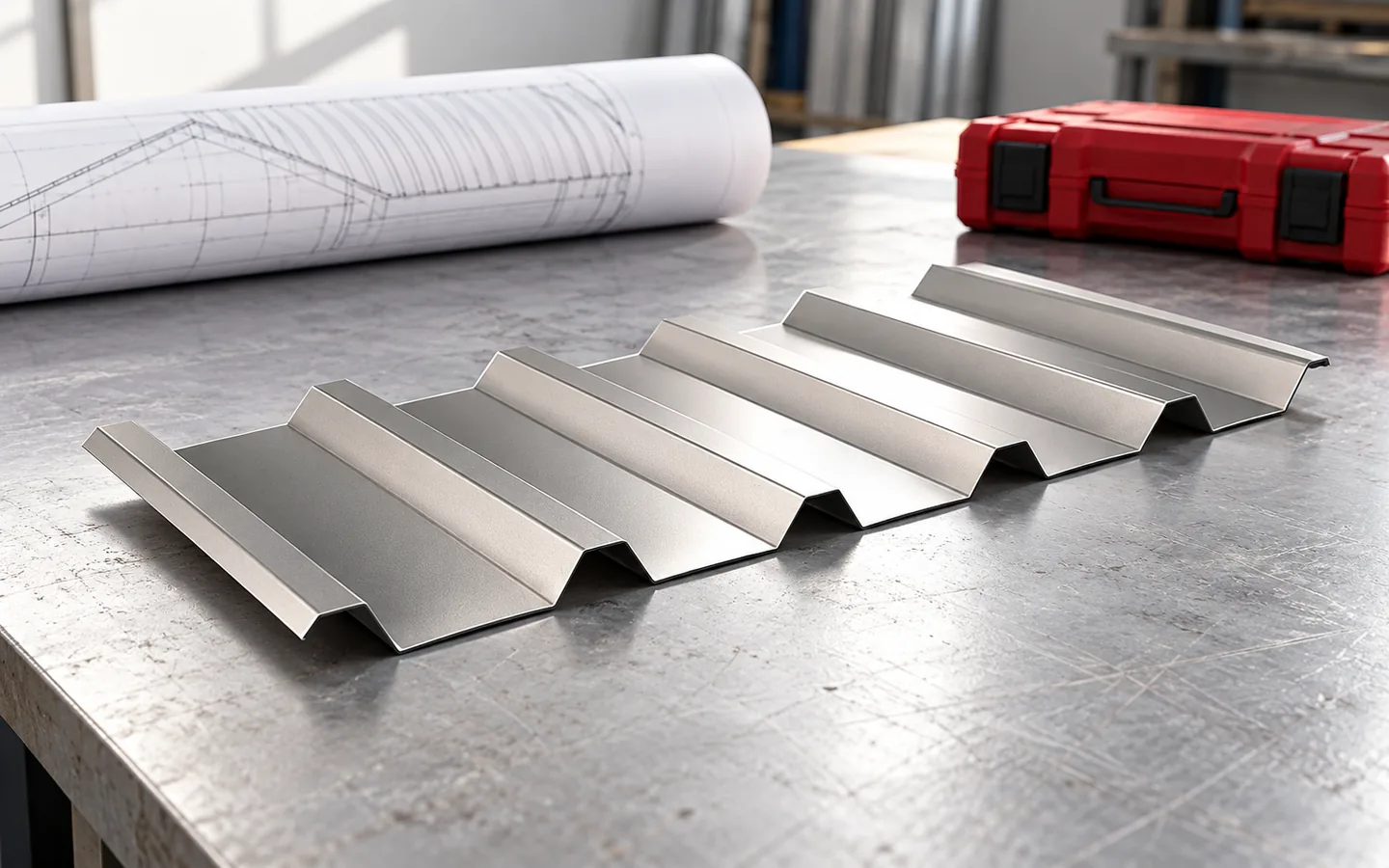
Six practical checks for resistance to wind uplift on a roof
Before accepting the roof covering, establish whether the design specifies fixings in the edge and corner zones — these determine the roof's wind resistance. Check that the fasteners match the substrate and material thickness, and that the flashings have proper support. Simply adding more screws is not enough; the entire load path from sheet to structure matters. When changing the covering, verify the earlier assumptions, and leave structural doubts to the designer.
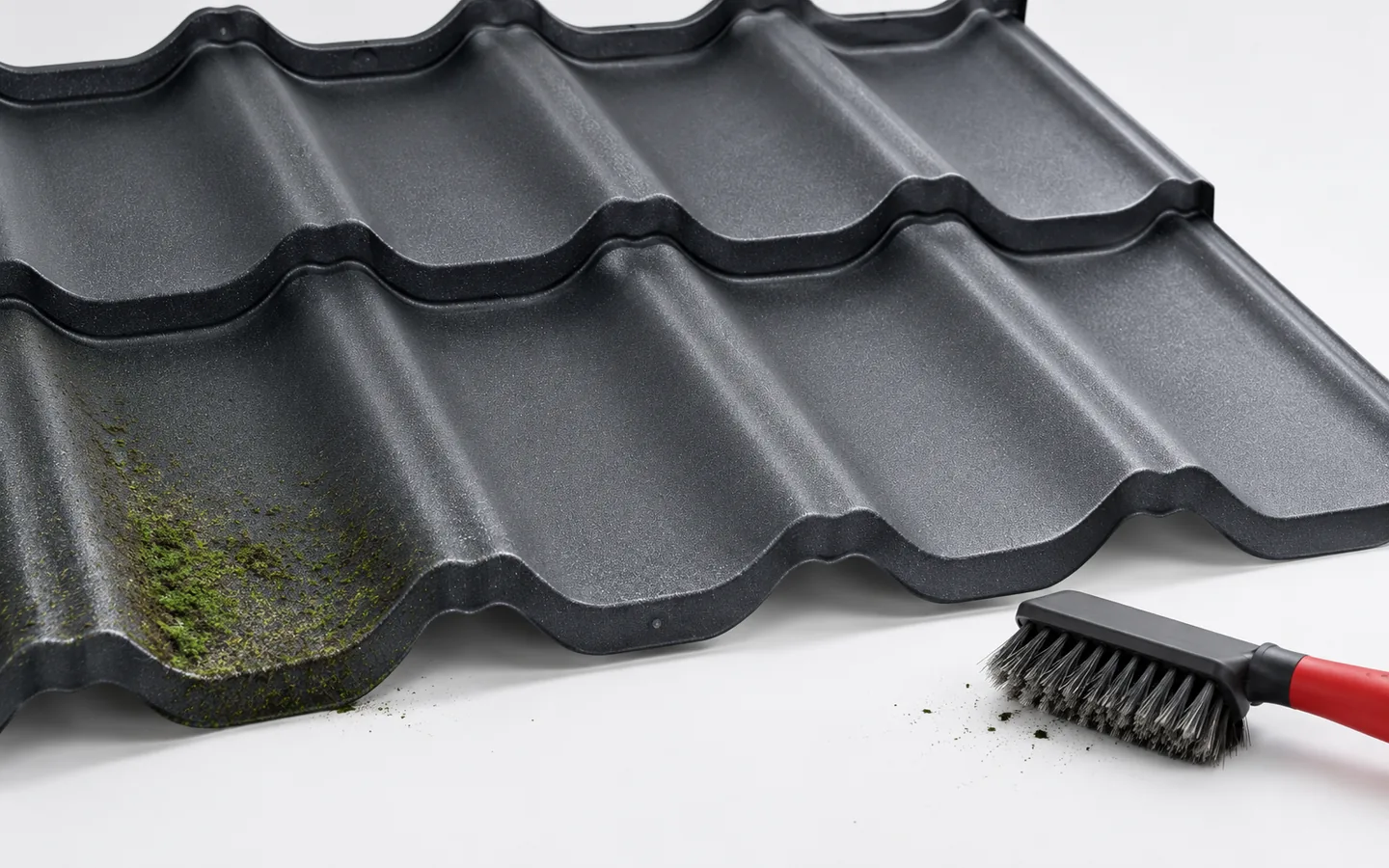
Removing moss and green deposits from tile-effect roofing sheets
Effective removal of moss and green film from coated steel roofing requires a method matched to the coating type. Before cleaning, identify the soiling and surface condition, and check the user instructions and warranty terms. Gentle washing, a soft brush and a product approved for the specific finish are usually used. Avoid scraping the metal and aggressive chemicals, which can damage the sheet's protection. Also clean the valleys and gutters and determine why the roof slope remains damp for long. Remember that metal sheeting does not need moss for protection, and deposits trap water.
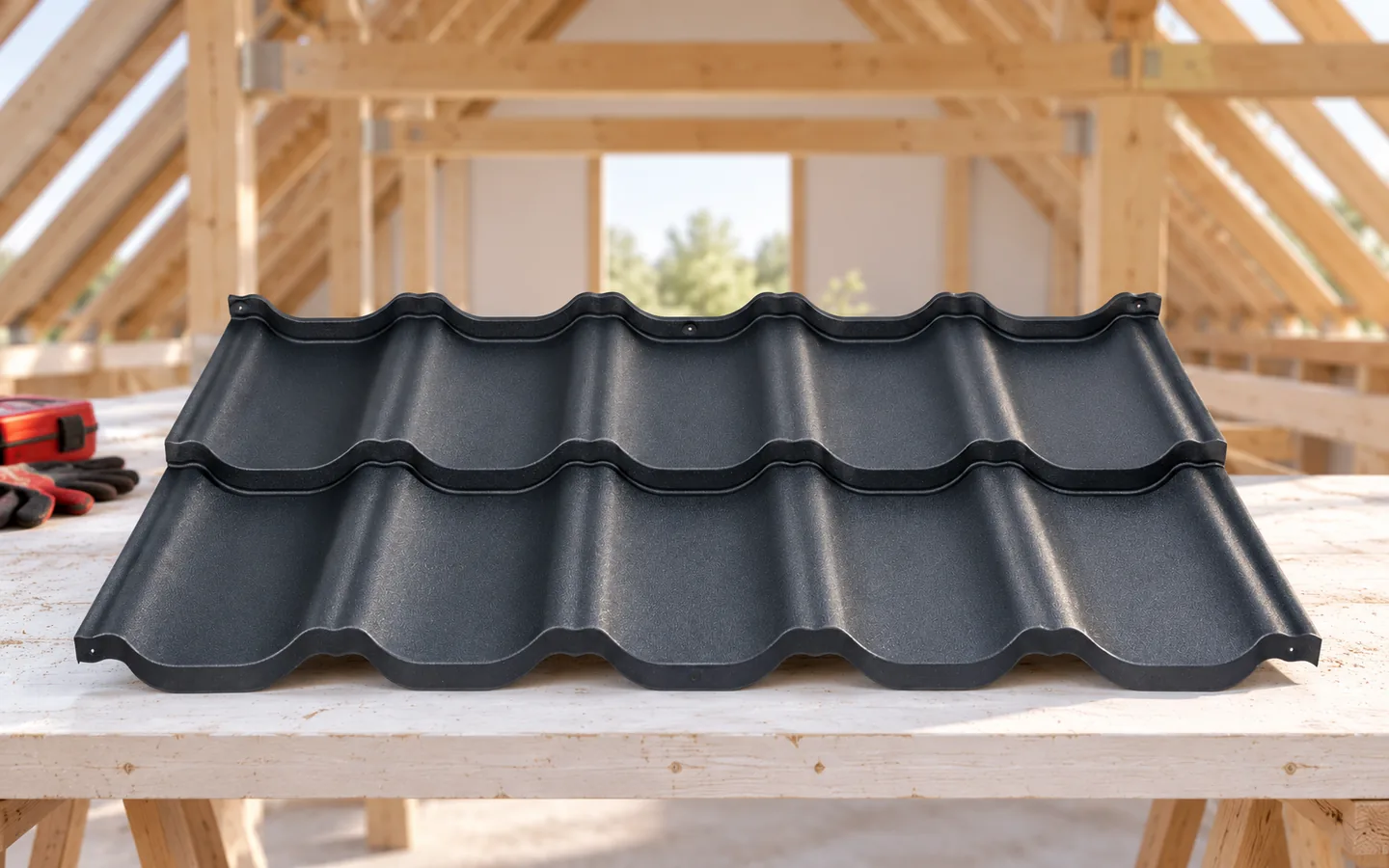
How a collar beam roof works and where it makes sense
A collar-tie roof relies on horizontal collar ties connecting opposite rafters, which work with the roof structure to transfer loads and affect the stiffness of the system. It is worth checking whether the collar ties match the calculations and design, especially when attic adaptation is planned. Their dimensions, position and connections depend on the structural scheme and load distribution, including asymmetric snow and wind. A collar tie should not be treated merely as a ceiling beam or freely raised or removed. Final design decisions are left to the designer.
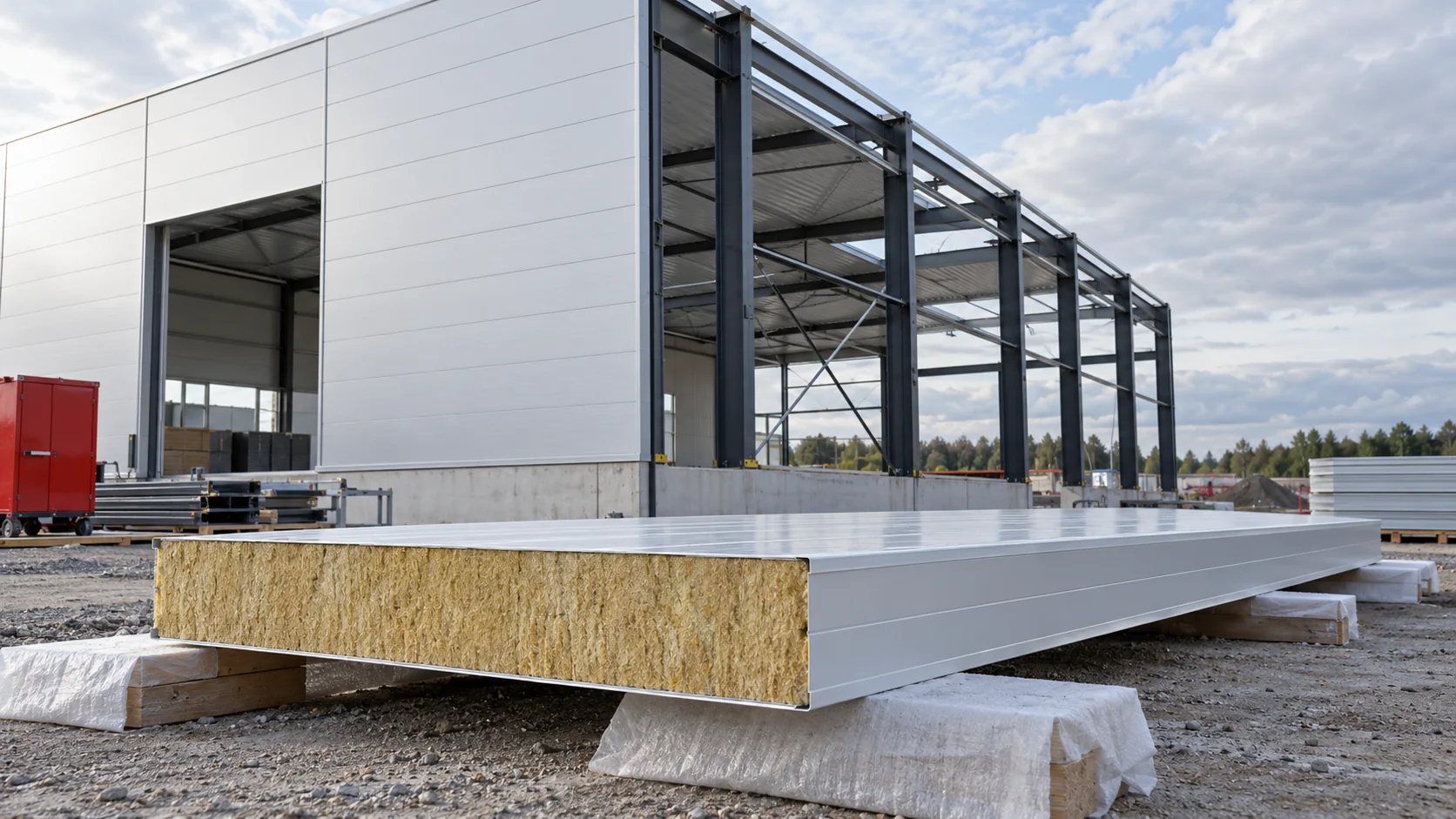
What are the advantages and limitations of mineral wool panels in a new hall?
The mineral wool in a sandwich panel is part of a composite element with metal facings. Its advantages must be assessed together with the weight, the joint and the coating. In a new hall, the choice affects the purlins, the lifting equipment, the openings and the sequence of works. It is therefore worth comparing at the level of the finished envelope, not solely the cores. Panels with a mineral core are often chosen where reaction to fire and the fire resistance of the wall are important. These are, however, two separate parameters. The classification of the whole panel also covers the facings and the bonding layers, and fire resistance refers to a specific partition.
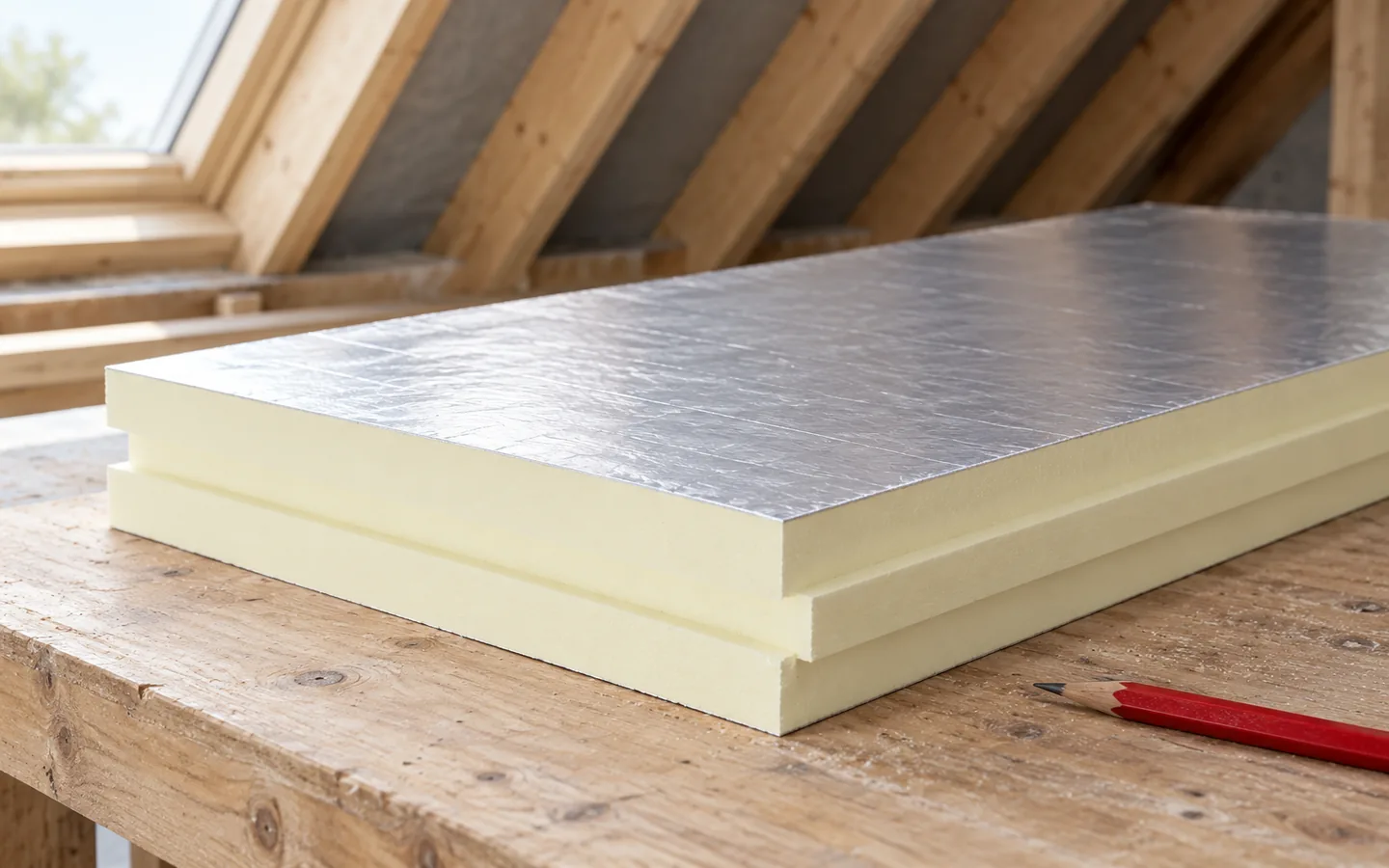
How to plan and install roof insulation
Begin roof insulation by settling the layer arrangement and checking the structure's condition. Only then choose the material, its thickness and how it will be fixed. PIR boards give high thermal resistance in a slim build-up, but need airtight joints and proper protection. Thermal bridges, the vapour layer and ventilation also count — centimetres alone do not determine the roof's quality. Insulation may sit between the rafters, below them or over the structure; this depends on whether the roof is new or you are renovating a finished loft. An above-rafter layout reduces timber-related bridges, yet the eaves height, flashings and covering fixings must be planned.