
Knowledge base
Izoprofil.com helps you compare materials for a specific building project. The guides cover the uses of sandwich panels, PIR insulation boards, metal roof tiles and trapezoidal sheets. The criteria depend on the application, including the supporting structure, thermal performance and requirements for the finished surface. Read the product specifications, identify which dimensions affect the order and compare complete solutions. The articles help you discuss the options with a designer or installer and check the suitability of the selected materials before purchase.
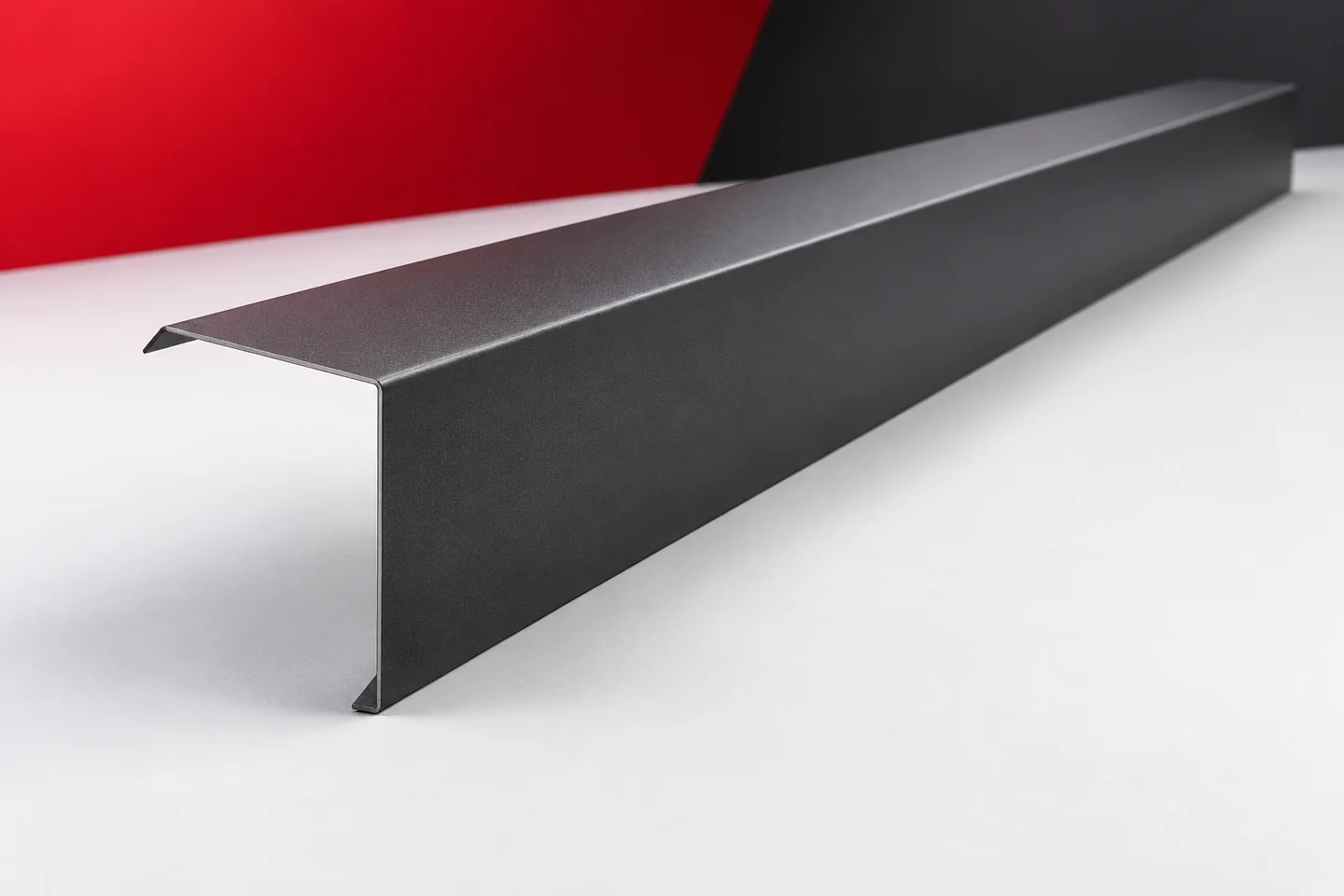
Should verge flashings match the roof or the façade?
The verge flashing sits at the boundary between the roof and the wall. Visually, it can belong to the roof slope or emphasise the façade line. This decision is clearly visible, especially on simple buildings and with strong colour contrast. It is worth making it before ordering the entire set. Verge flashings must at the same time retain their function of protecting the edge. Colour does not solve the problem of an incorrect height, width or position of the flashing. A verge flashing in the shade of the covering can form a coherent outline with the roof slope. A colour close to the façade, in turn, can tie the side leg more strongly to the wall. There is no single correct answer for every building form. What matters is the distance and angle from which the building will be viewed.
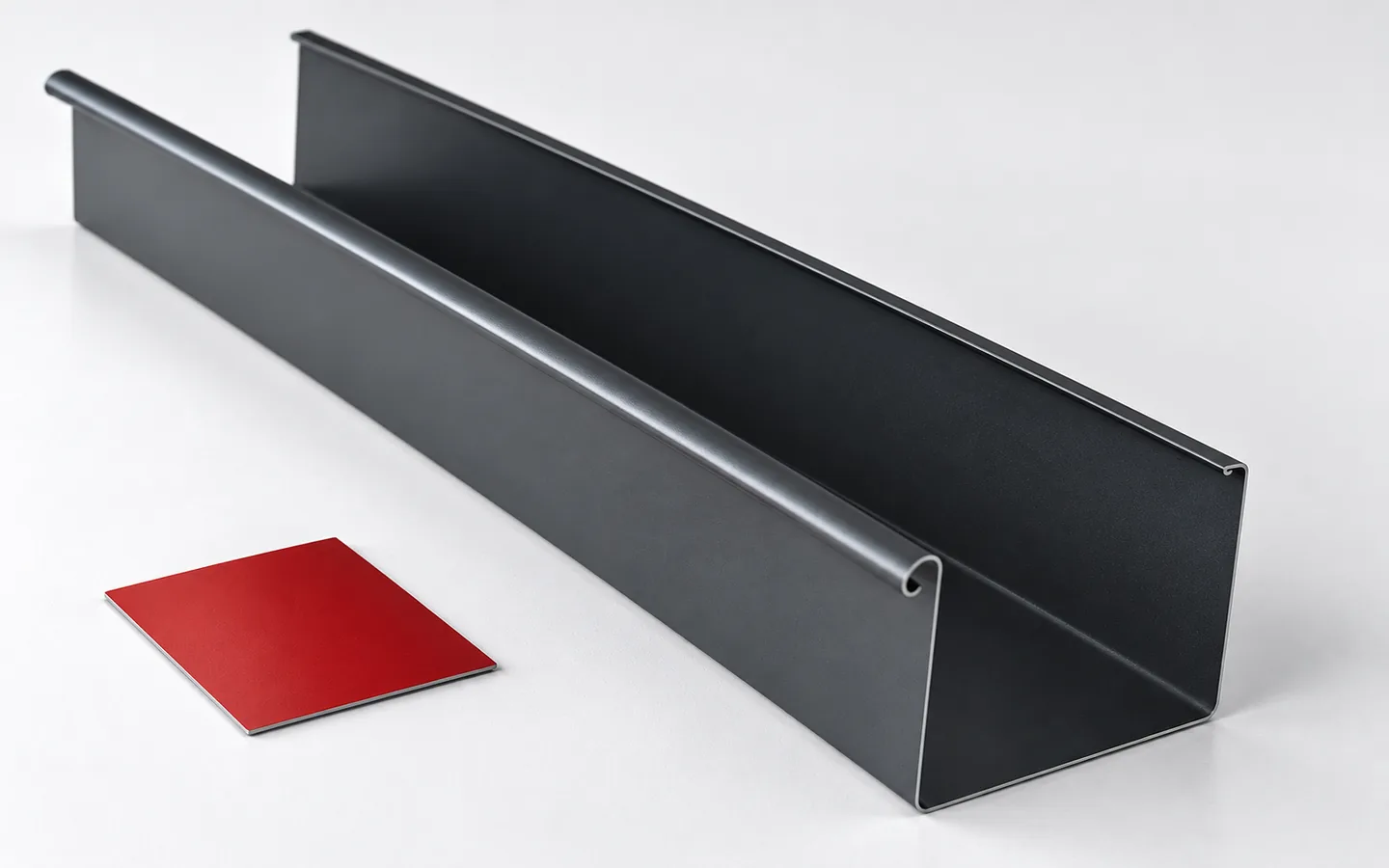
What to consider when fitting square gutters to a metal roof
Square gutters stand out for their clean eaves line and fit with many contemporary buildings, yet they do not automatically offer greater capacity. On a metal roof, check above all the system dimensions, the effective roof area, the positioning of outlets, and whether the eaves flashing matches the roof pitch and overhang. Aesthetics depend on the eaves proportions, building size and downpipe routing, so judge appearance together with function. Remember fixings, thermal movement and cleaning, and base the hydraulic selection on the system data and roof layout.

What determines the service life of tile-effect metal roofing?
The durability of a metal roof tile depends above all on matching the coating and core thickness to the conditions on the roof, and on correct installation of the entire covering. Rather than looking for one universal number of years, it is worth checking the specific product: the type of metallic and organic coating, its suitability for the given environment, and maintenance requirements. Edges, fasteners, ventilation beneath the covering and the condition of flashings also matter. The number of warranty years is not the same as expected service life. A roof near a forest, industrial plant or coast operates in a different environment from one in quiet, open housing.
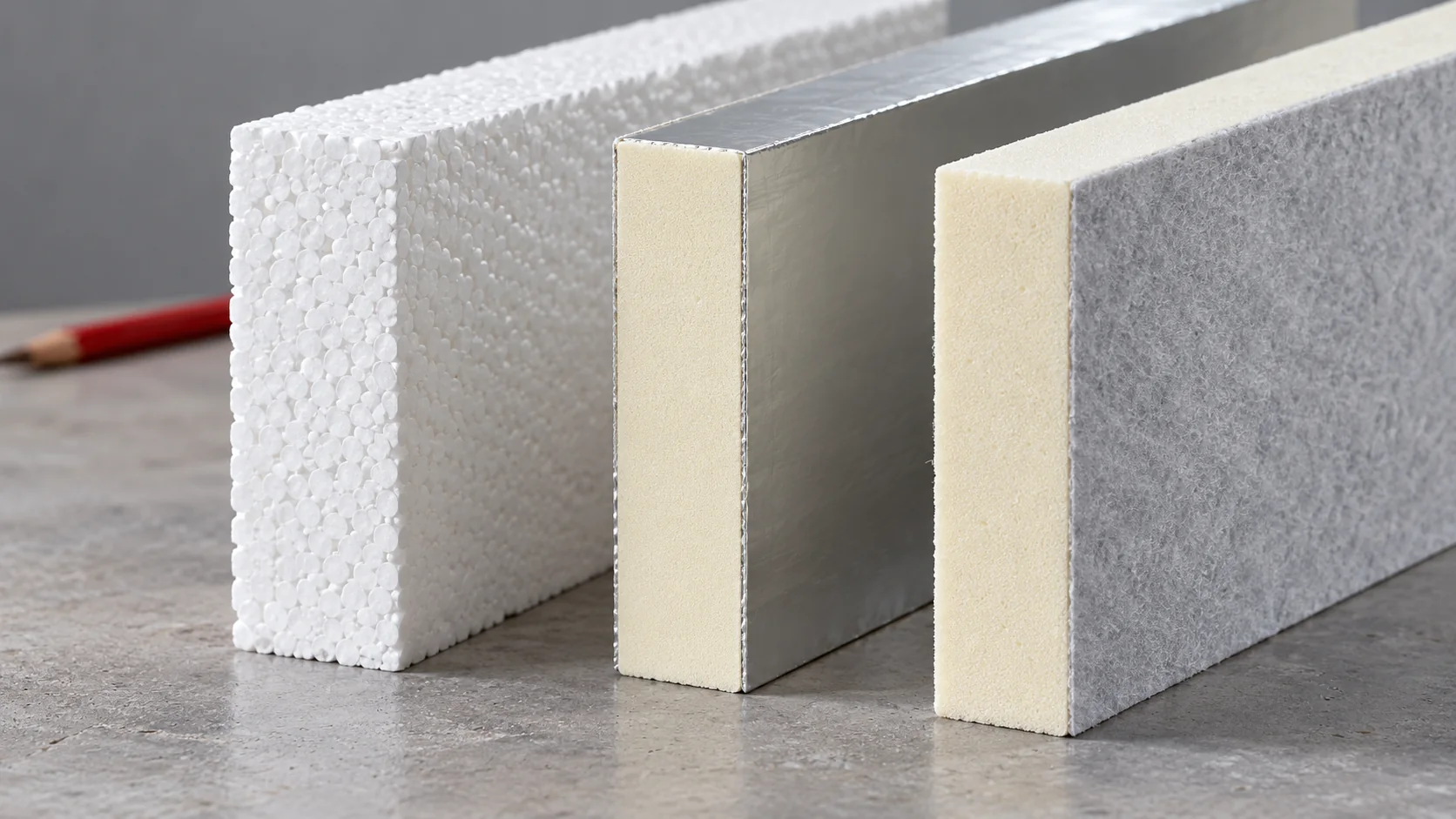
How do you convert the thickness of EPS to PIR for the same wall?
PIR can provide a similar thermal resistance in a thinner layer than a selected EPS, but there is no single conversion factor for all boards. You need to compare the lambda of specific types and their application. Only then can you assess how much space can be recovered and how the change will affect the render, reveals and other wall layers. Lambda describes heat conduction through a material. The lower it is, the greater the resistance of a layer of the same thickness. In a simple calculation, the resistance R is d divided by lambda, where d is given in metres. U, on the other hand, relates to the entire building element and requires the other layers and the calculation conditions to be taken into account.
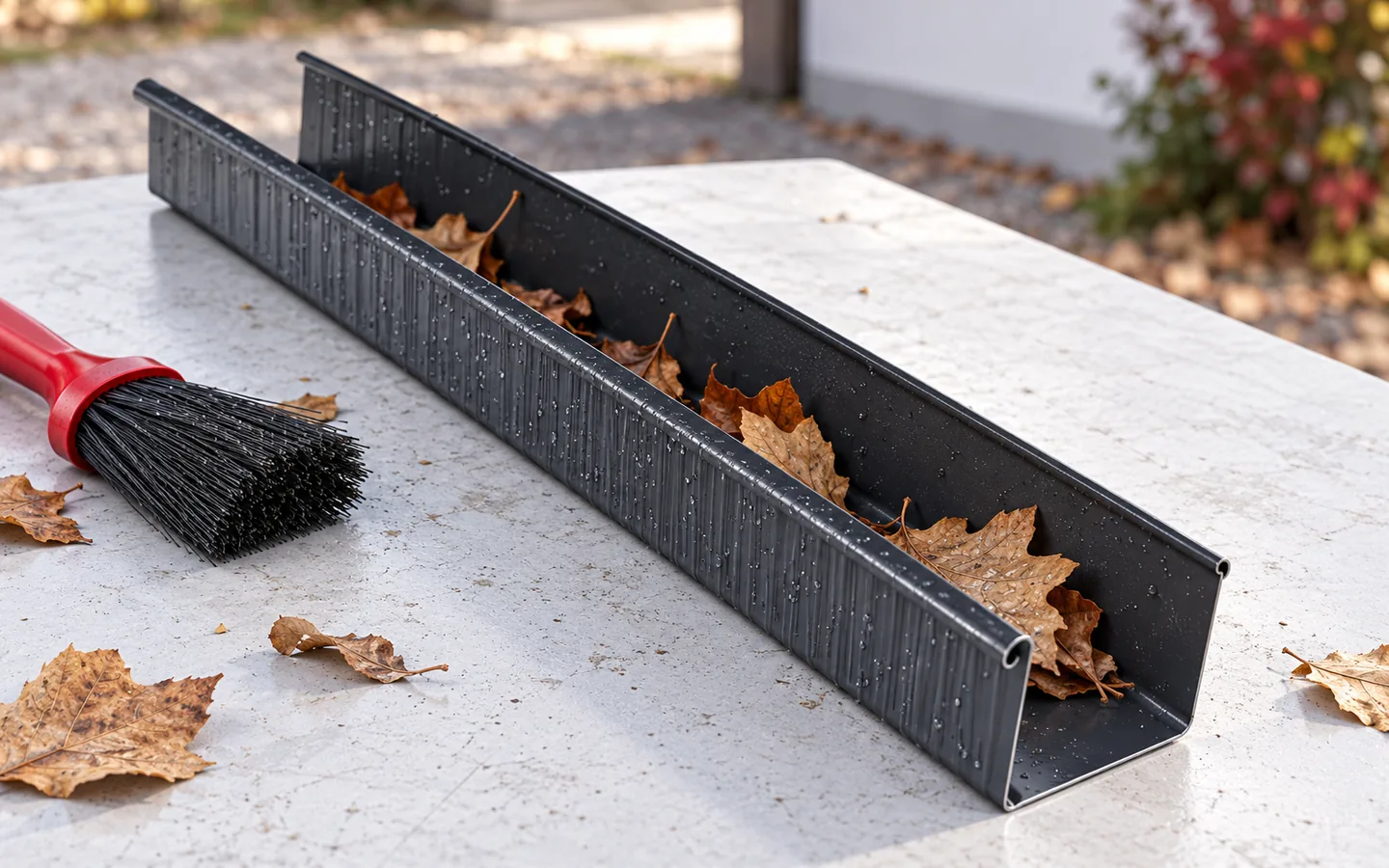
Where to place a rainwater gully so you can clear it later
A gutter sediment trap is installed as an accessible point between the downpipe and the underground pipe to make inspection and cleaning easier. Before installation, check where the water drains and whether it can back up, and match the product to the pipe diameter, outlet level and installation location. Ensure a stable base, tight connections and free access to the basket. Remember that the trap does not replace gutter cleaning or solve a blocked installation. How it works depends on the product design, so leave the choice of solution to the designer.
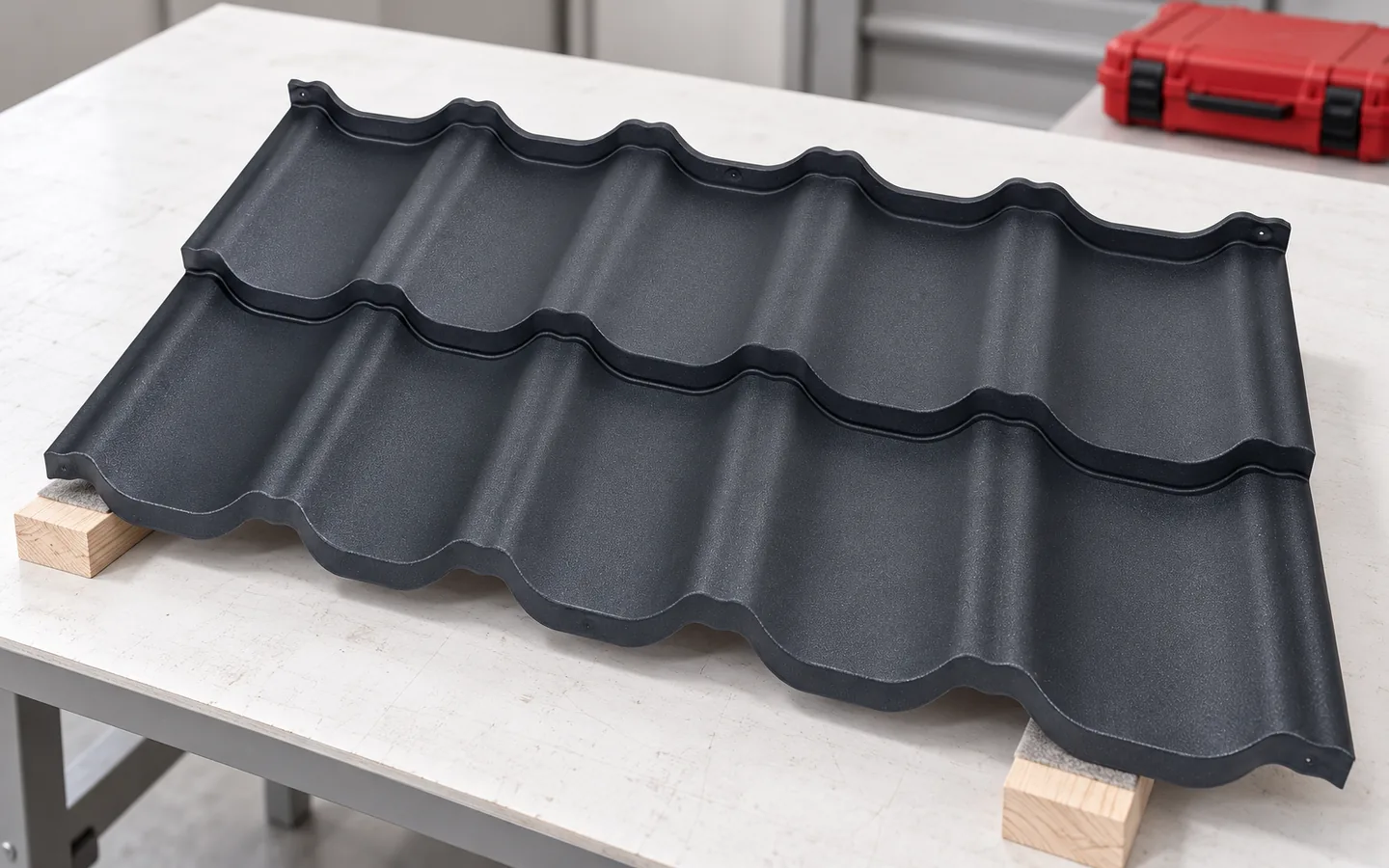
Laying modular tile-effect roofing from the eaves to the cuts at a roof valley
Before ordering the battens, establish the exact model and variant of the modular metal roof tile, as this determines the batten spacing and fixing method. Check the instructions for the permitted pitch, sheet geometry, laying sequence and connection rules. A similar appearance of two modules does not guarantee identical installation, especially at ends and corners. The documentation should be on site before the support is built. Choose the specific roofing variant and only then plan the work, to avoid corrections and uncertainty at every joint.