
Knowledge base
Izoprofil.com helps you compare materials for a specific building project. The guides cover the uses of sandwich panels, PIR insulation boards, metal roof tiles and trapezoidal sheets. The criteria depend on the application, including the supporting structure, thermal performance and requirements for the finished surface. Read the product specifications, identify which dimensions affect the order and compare complete solutions. The articles help you discuss the options with a designer or installer and check the suitability of the selected materials before purchase.
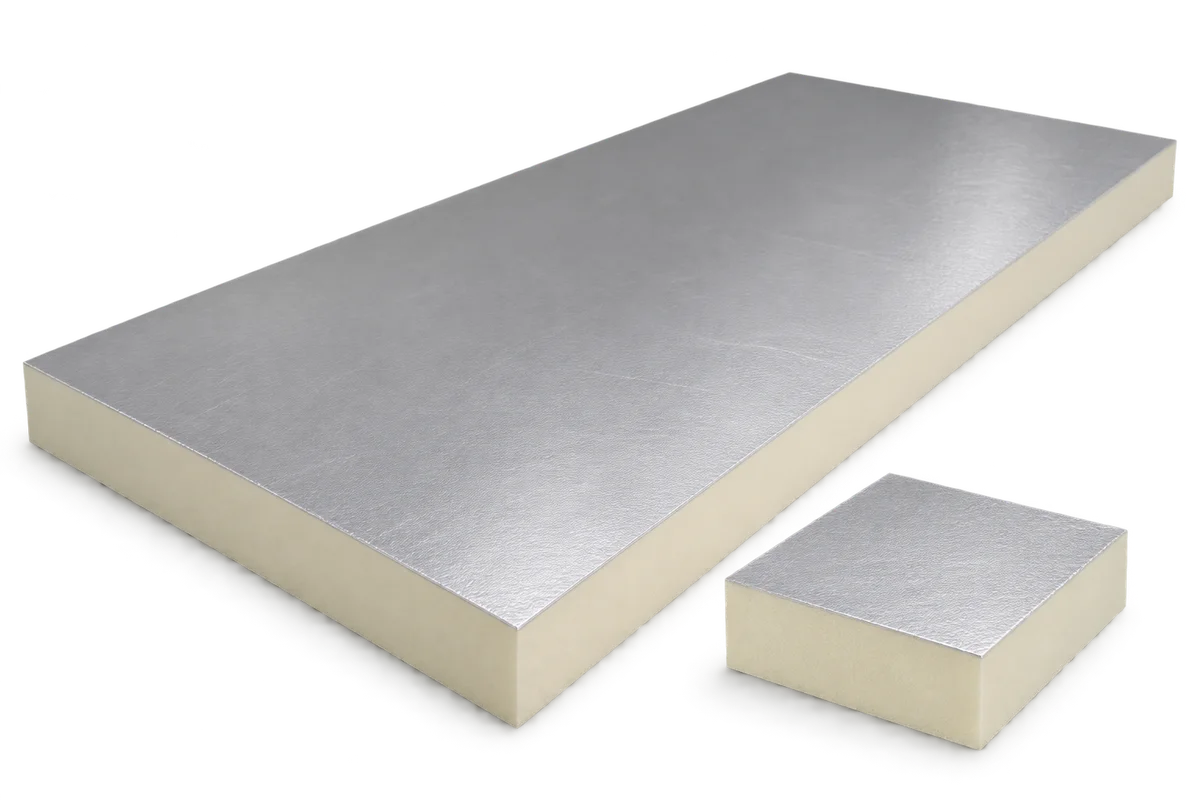
PIR in a wall specification: reading thermal, fire and acoustic requirements
If a wall schedule says only “100 mm PIR”, neither the product to be supplied nor the evidence required from the contractor is clear. Separate the requirements first: some relate to a material, others to the complete wall and its joints. Against each figure, note what it describes and where it comes from. This lets you compare a proposal with the design without attributing a tested wall assembly's performance to a board alone. Here is how to review the information before accepting a substitution.
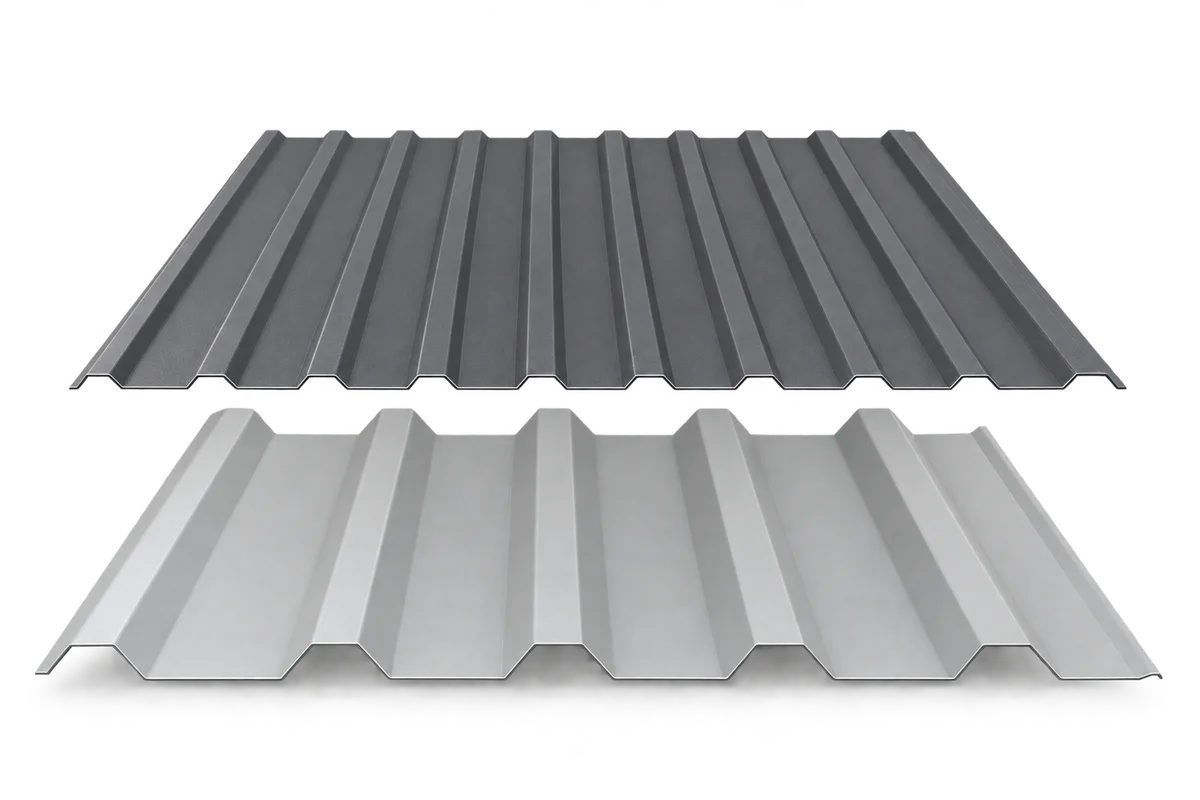
Cladding sheet or structural deck? Reading a profile drawing before changing a specification
Two sheets sold as T35 may look alike yet have different cross-sections, cover widths or intended uses. Before accepting a substitute, place the two profile drawings side by side. On each, mark the face that will be visible, the direction of loading and the support positions. Compare steel thickness, the geometry of the upper and lower flanges, and the detail of the side lap. Changing a structural deck also requires load data for the number of spans in the design. The following checks help distinguish the details a supplier can confirm from the questions the designer needs to resolve before ordering.
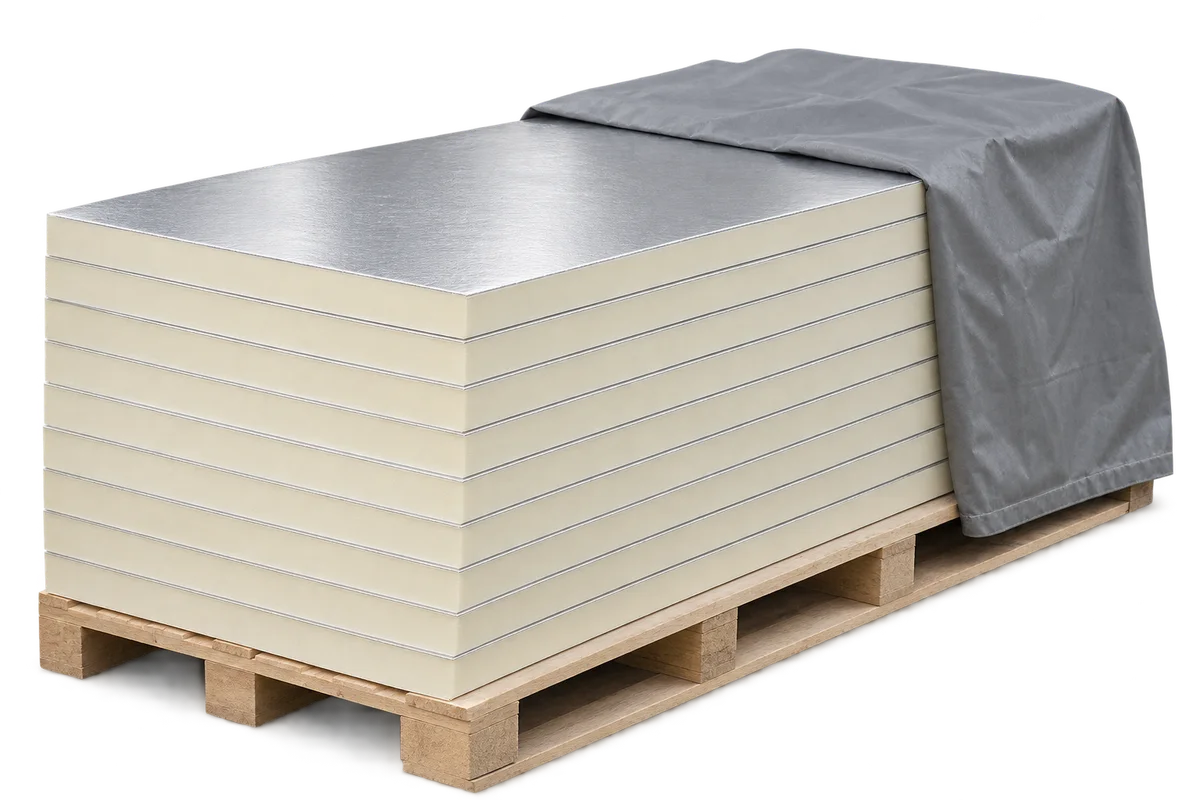
Insulation beneath a screed: how to allow for heavy household equipment
Floor insulation is often chosen before the owner knows where a heavy stove, aquarium or cabinet on narrow feet will stand. Mark these positions on the floor plan as early as possible. Two objects of equal mass can load a floor differently: one rests on a continuous plinth, the other on four small feet. Durability depends on the full build-up, including the substrate, insulation, screed and finish. Here is what to tell the designer about the fittings, and why a figure on a PIR board data sheet is not a ready-made furniture weight limit.
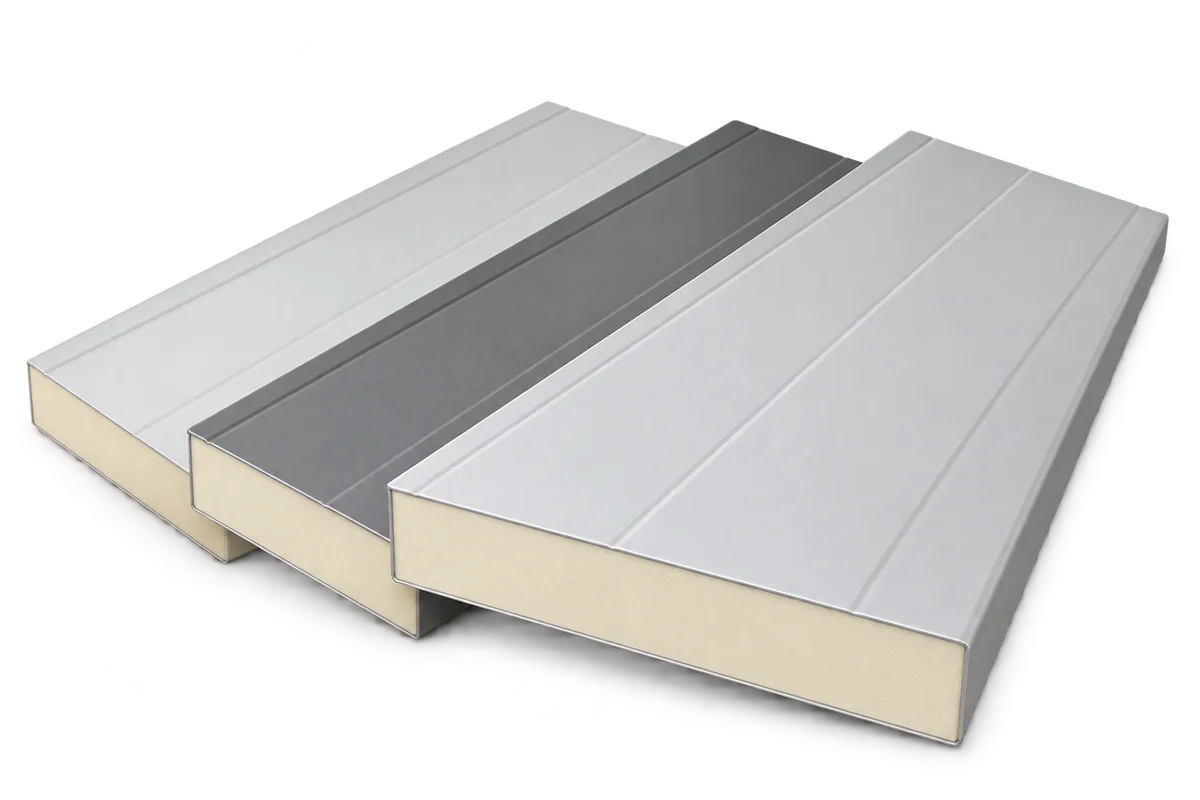
Damaged sandwich panel at a loading bay. What to check before ordering a replacement
After an impact at a loading bay, it is easy to order a panel of the same thickness and a similar colour. The harder part is finding one that joins the adjacent panels and can be installed beside a working bay. Start by establishing the extent of the damage and identifying the existing system. Collect photographs, cover width, joint details and information about access to the fixings. An inspection will help the contractor decide whether a skin repair is sufficient or a whole wall section needs replacing.
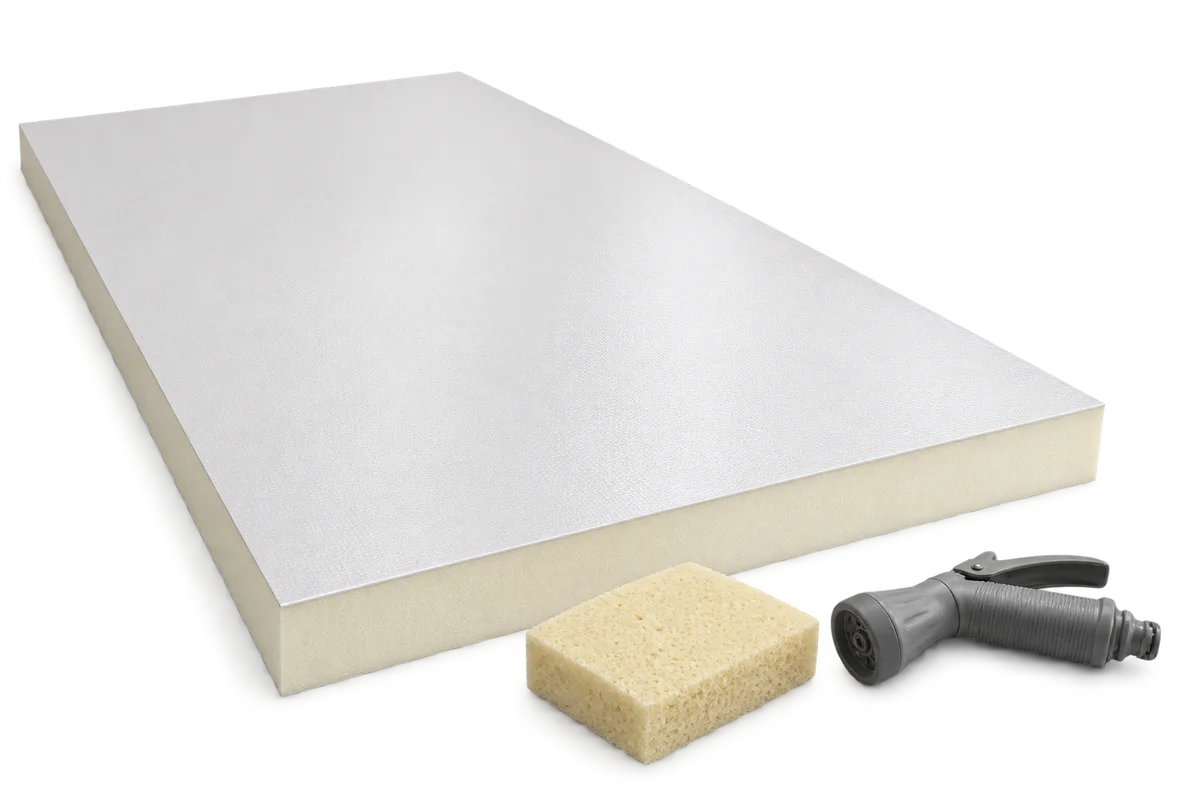
Cleaning a barn ceiling after the lights have been replaced: where should the crew stop?
Replacing the lights in a barn can leave marks from old brackets alongside new cable entries in the ceiling. Not every mark seen from below is dirt that should be washed off. Before the cleaning crew starts, walk through the altered areas with the installer. Agree where the lining can be cleaned according to its care instructions, what must be left out and who will check the old holes. The rest of the ceiling can then be included in the brief without assuming that a new light fitting and the point where its cable enters the ceiling can be cleaned in the same way.
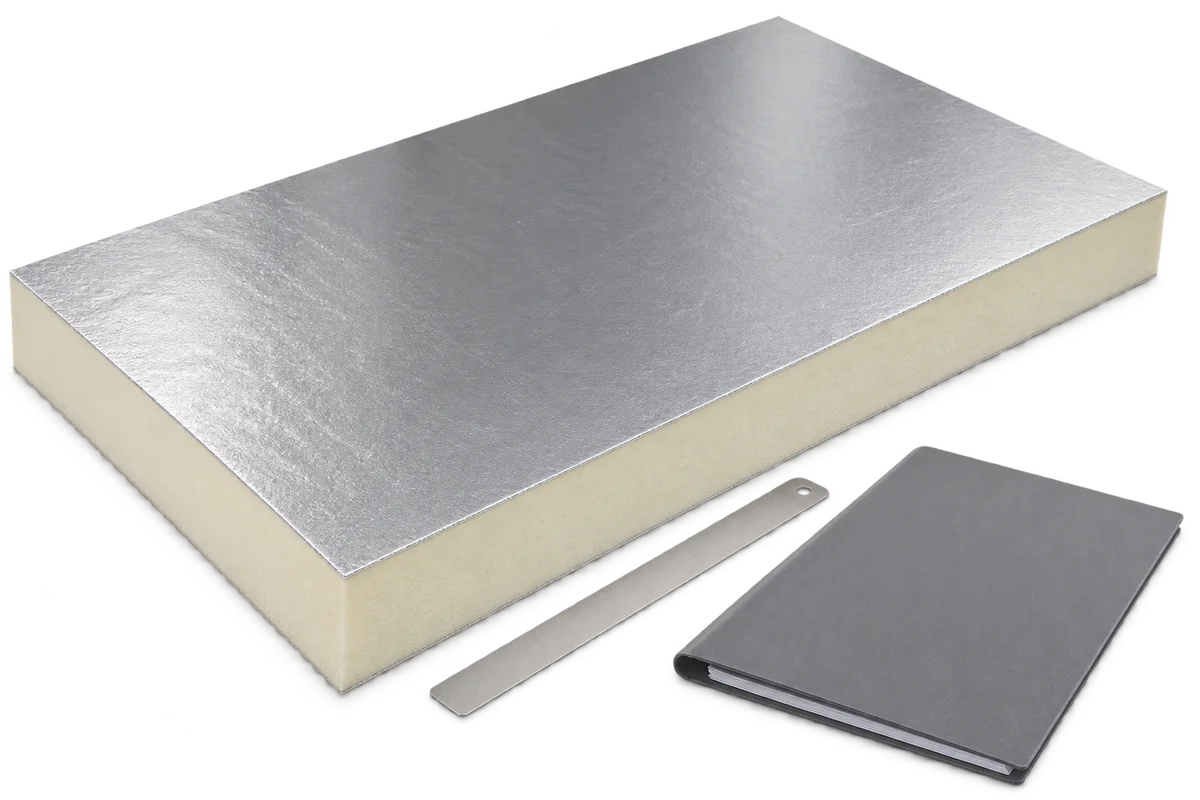
One 120 mm PIR board or two 60 mm boards? How to check a proposed substitution
The merchant has 60 mm PIR boards in stock, while the design specifies a single 120 mm layer. Two thinner boards occupy the same depth. To assess the thermal effect, look up the resistance for both thicknesses and add the resistances of the layers laid one over the other. If the manufacturer quotes different conductivities for different thicknesses, the sum can differ from the value for a single thicker board. The designer should also check design conductivity, fixing arrangements and joint positions in the proposed build-up before accepting the substitution.