XPS insulation
Questions to ask before buying XPS: properties matter more than colour
A well-chosen XPS can reduce heat losses in the damp or load-bearing part of a building. To benefit from these advantages, you need to buy the right grade. Extruded polystyrene does not have a single set of parameters for all thicknesses and applications. The colloquial term Styrodur is too general for placing an order. A few precise questions allow you to compare offers without basing the decision on the colour of the board. The first question should concern the function, not the price. XPS under a floor, at a foundation wall and in an inverted roof works under different conditions. You must tell the seller the location of the material, the expected contact with water and the type of load. Extruded polystyrene has many applications, but the scope of a specific product must be confirmed.
What location is this variant intended for?
A general answer about use everywhere is not sufficient. It is worth asking for the technical data sheet and the installation instructions specific to the given location. This allows you to check whether the offer corresponds to the design before we compare the commercial terms.
Which thermal conductivity value applies to the thickness being ordered?
Within one XPS family, thermal conductivity can vary with thickness. You should ask about the specific row of the table, not just the best result quoted in the advertisement. The declared resistance value for the selected board is also useful.
Extruded polystyrene with a lower lambda value can help where there is not enough space for a greater thickness. However, the other requirements must be checked. Two boards with a similar resistance do not have to be equivalent under load. The thermal design should correspond to the entire building component, together with the joints and the conditions of use.
Which data describe long-term loading?
In addition to short-term compression, it is worth asking about the creep of XPS. This matters under the weight of the screed, ballast or equipment acting over years. The class number should not be presented as a ready-made permissible service load. Data and the way it is used in the design are needed.
Extruded polystyrene offers a wide choice of mechanical grades, which makes it easier to match to the task. XPS manufacturers include, among others, Finnfoam, FIBRAN and PNP. However, the properties of the specific boards should be compared. If the seller gives only the result of pressing with a hand, it is worth returning to the documentation.
How does the board behave in the intended contact with water?
Low water absorption is an advantage of XPS, but its declaration and test method should be known. Immersion and absorption under diffusion are different properties. For certain applications, freezing and thawing also matter. The assurance that the material is completely waterproof is not enough.
It must be determined whether the insulation will be periodically damp or exposed to more difficult conditions. XPS does not replace waterproofing, so the entire cross-section is also important. A well-posed question makes it possible to check the suitability of the product instead of comparing general slogans from shop descriptions.
What surface and edge will I receive?
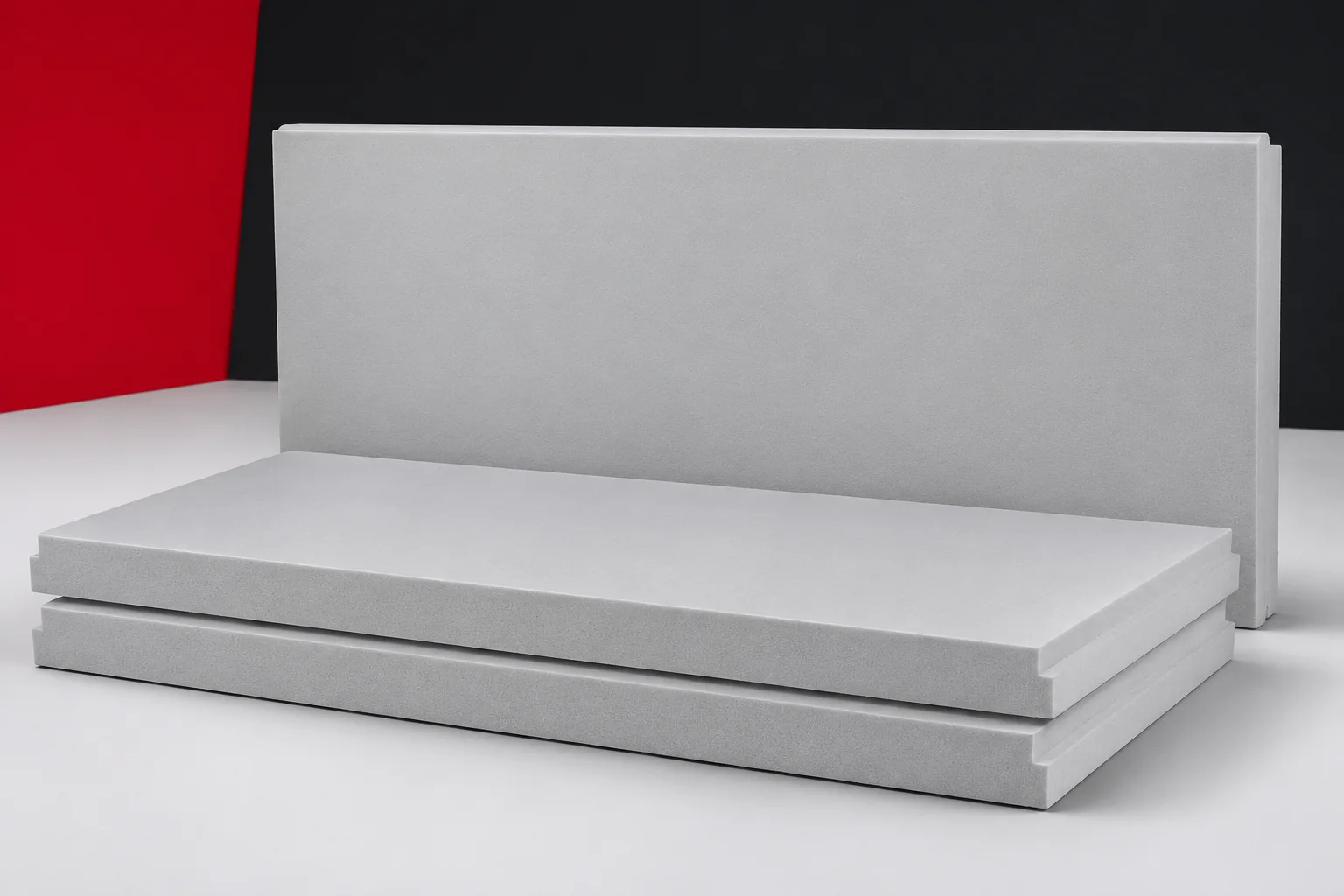
A smooth XPS board and a variant with a surface prepared for bonding do not have identical functions. They must be matched to the adjacent layers. A square edge and a rebated edge also affect the laying method. It is worth asking for an actual drawing or product data sheet.
One should ask about the covering area and tolerances, especially for a larger order. The external dimension does not always correspond to the area covered after the boards are joined. XPS with the right geometry makes precise installation easier and reduces the number of cuts. This benefit also matters for the installation cost.
What can the board be safely combined with?
The adhesive must be compatible with XPS and with the substrate. The same applies to primers, coatings and separating materials. It is worth asking which connections the documentation specifies. Not every bituminous compound or assembly foam should be regarded as suitable.
The temperature conditions and the sequence of work must also be established. XPS requires protection from excessive heat and from incompatible solvents. If the project specifies a plastered surface, the system requirements must be checked. Such questions help avoid buying material that later forces a change to the entire method of execution.
What exactly does the price include?
The offer should specify the unit, the number of boards and packs, and the order area. It is worth checking transport, unloading and the delivery date. A price per pack of XPS without information on quantity does not allow two offers to be compared. Similarly, a net amount is not directly comparable with a gross price.
The procedure for shortages and damage to the delivery should be agreed. For a larger project, the option of staged deliveries is important. Well-chosen logistics reduce long storage and the risk of damage. The commercial terms should help ensure efficient installation, not merely lower the first visible amount.
What documents will remain after purchase?
It is worth keeping the declaration of performance, the technical data sheet and the batch labels. They make it possible to check that the XPS conforms to the design and to identify the material after years. The document should relate to the variant actually delivered, not merely to the general product family.
When an alternative is proposed, it is necessary to return to all the important questions. One better property does not automatically balance out another that is worse. A well-described XPS is a purchase that can be checked. Its advantages then become a concrete element of the solution, instead of remaining a general assurance of high-quality insulation.
7 branches. Materials closer to your project.