PIR insulation
Utherm Roof BM quotations: comparing facings and technical properties
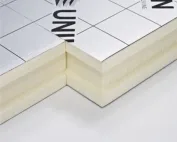
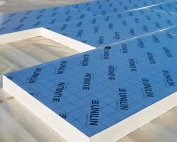
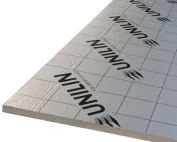
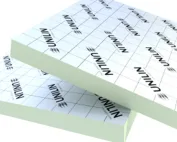
Utherm Roof BM is a PIR board with two different facings: one surface is finished with a bituminised glass fleece, the other has a mineralised character. When comparing offers, thickness or price alone is not enough — the thermal resistance of the board must be set against the cost of the layers and works matched to its surface, because a cheaper item of smaller thickness does not deliver the same thermal benefit, and a change may also affect the lambda value specific to a given range. The terms “polyurethane boards” and “polyurethane foam” are broader than the precise designation of the PIR product, so a supply enquiry should name both surfaces of Roof BM. Before sending an enquiry, it is worth establishing the orientation of the bituminised and the mineralised side.
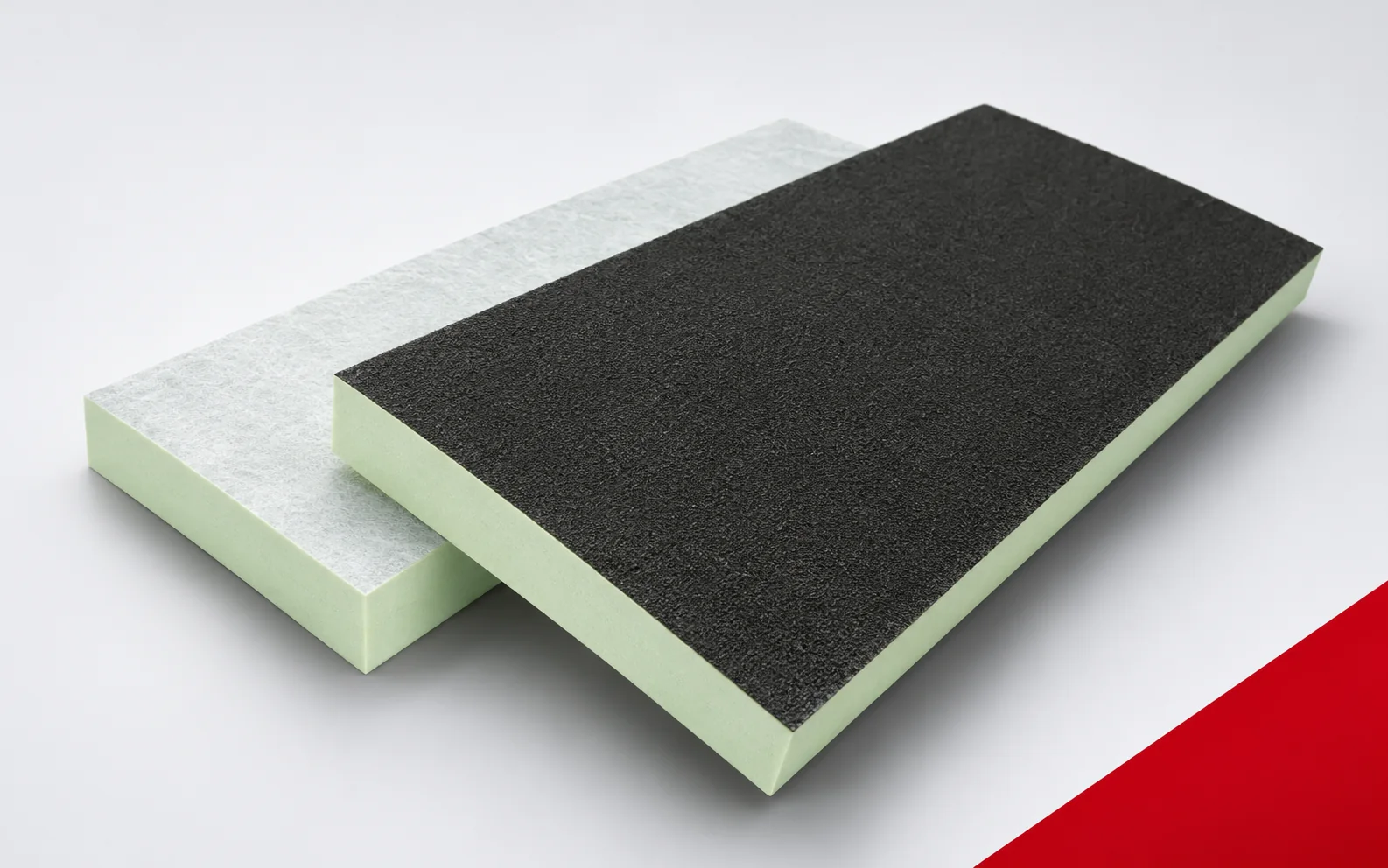
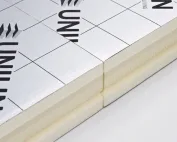
Roof BM PIR boards with two different facings
The short name in the price list does not describe the whole product — a vapour-permeable fleece should not be equated with an aluminium laminate. The choice of facings is intended to allow each side of the board to be assigned the correct contact with the adjacent layer. Provide all tenderers with a description of the facings and the technology for making the connection to the covering, so that prices relate to a similar task.
Lambda Roof BM depends on thickness
In the Roof BM comparison, the change from 100 to 120 mm must be assessed alongside the other lambda values. The datasheet assigns 0.027 W/(m·K) to thicknesses of 30–70 mm, then 0.026 to the 80 and 100 mm variants, and 0.024 to the 120–150 mm range. Using a single parameter for all thicknesses being priced will distort the comparison.
Before comparing amounts, read the parameters of each Roof BM thickness variant under consideration separately — the cheaper item may produce a different effect, and the quotient d/λ must not use the lambda of a different thickness range of this board. In the tender table, enter the declared R_D of 3.80 for 100 mm and 5.00 m²K/W for 120 mm, and link the price difference to the specific change in parameters.
Polyurethane insulation with square edges
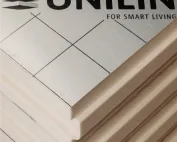
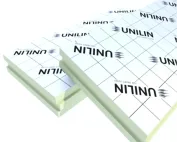
Roof BM has a format of 1200 × 600 mm and straight edges, so before laying, the orientation of the surfaces and the requirements of the waterproofing system must be established. The bill of quantities for the polyurethane insulation covers boards with straight edges in this format.
When calculating the order quantity, you must allow for the offset joints and the cuts to Roof BM around roof components. A straight edge does not have a factory rebated edge for fitting into the adjacent row, which is why the rectangular area alone can be misleading. The cutting plan should maintain continuous contact between boards and correctly terminate the layer at the edges. For the quotation, add the joint layout, the support for the edge elements and the method for forming penetrations, so that the necessary details do not remain outside the scope.
Contact with the roof covering and the sequence of works
At the junction between the insulation and the covering, adhesion, cleanliness and dryness of the surface are what matter. The fixing must be checked for the central, edge and corner zones of the roof. When assessing the completeness of the purchase, state the method of connecting the covering to the bituminised surface of Roof BM.
When assessing the completeness of the offer, check the documentation for the first layer of covering above Roof BM. The bitumen in the facing is not permission for arbitrary work with a burner, so an omitted item does not remove the task. The delivery of supplementary materials should make it possible to select compatible contact materials and the sequence of work for the actual roof. Before approving the amount, agree the type of adhesive or fixing, the surface preparation conditions and the scope of forming the connections.
CS150 and class F within the relevant scope
For Roof BM, the declared compressive stress is at least 150 kPa at 10% deformation, and the reaction to fire class is F. These are two separate parameters: the first concerns the behaviour of the board under load, the second the way the material reacts to fire. When proposing an equivalent, compare precisely these values — CS of at least 150 kPa and reaction to fire F — and not just the product name.
Assessing a substitute requires separating the data for the Roof BM board itself from the conditions of the entire roof assembly. A similar name is not enough, because compressive stress and the reaction-to-fire class describe different properties and do not determine the load-bearing capacity of the system. The supplier’s data should allow loads and fire protection to be assessed within the relevant scope. In both quotations, compare the product data with the support, fixing and system classification solution, and only then accept the change.
Insulation with polyurethane: selecting and pricing Roof BM
The request for quotation should specify Roof BM with its full designation, thickness and selected waterproofing; the note “PIR board” alone is not enough. Include in the budget a quotation for Roof BM with the correct adhesive side and the selected thickness variant.
Before approving the price, link the delivery of Roof BM with the materials for a compatible covering. The material price alone does not reflect the result, because the same PIR name does not mean interchangeable facings or identical lambda. The comparison should allow complete solutions to be compared once the required thermal insulation performance has been established. In the order, confirm the full board designation, a description of the contact layers and the scope of work at the details, and price any missing work separately.
A case worth considering
A lower price for a thinner Roof BM may mean a different thermal result than assumed. The comparison must use the parameters for the correct range and then add the cost of a compatible covering. The adhesive or the fixing method also matters. The price per square metre of PIR alone does not describe a finished roof. It is worth comparing variants only after establishing the same service conditions.
7 branches. Materials closer to your project.