
Knowledge base
Izoprofil.com helps you compare materials for a specific building project. The guides cover the uses of sandwich panels, PIR insulation boards, metal roof tiles and trapezoidal sheets. The criteria depend on the application, including the supporting structure, thermal performance and requirements for the finished surface. Read the product specifications, identify which dimensions affect the order and compare complete solutions. The articles help you discuss the options with a designer or installer and check the suitability of the selected materials before purchase.
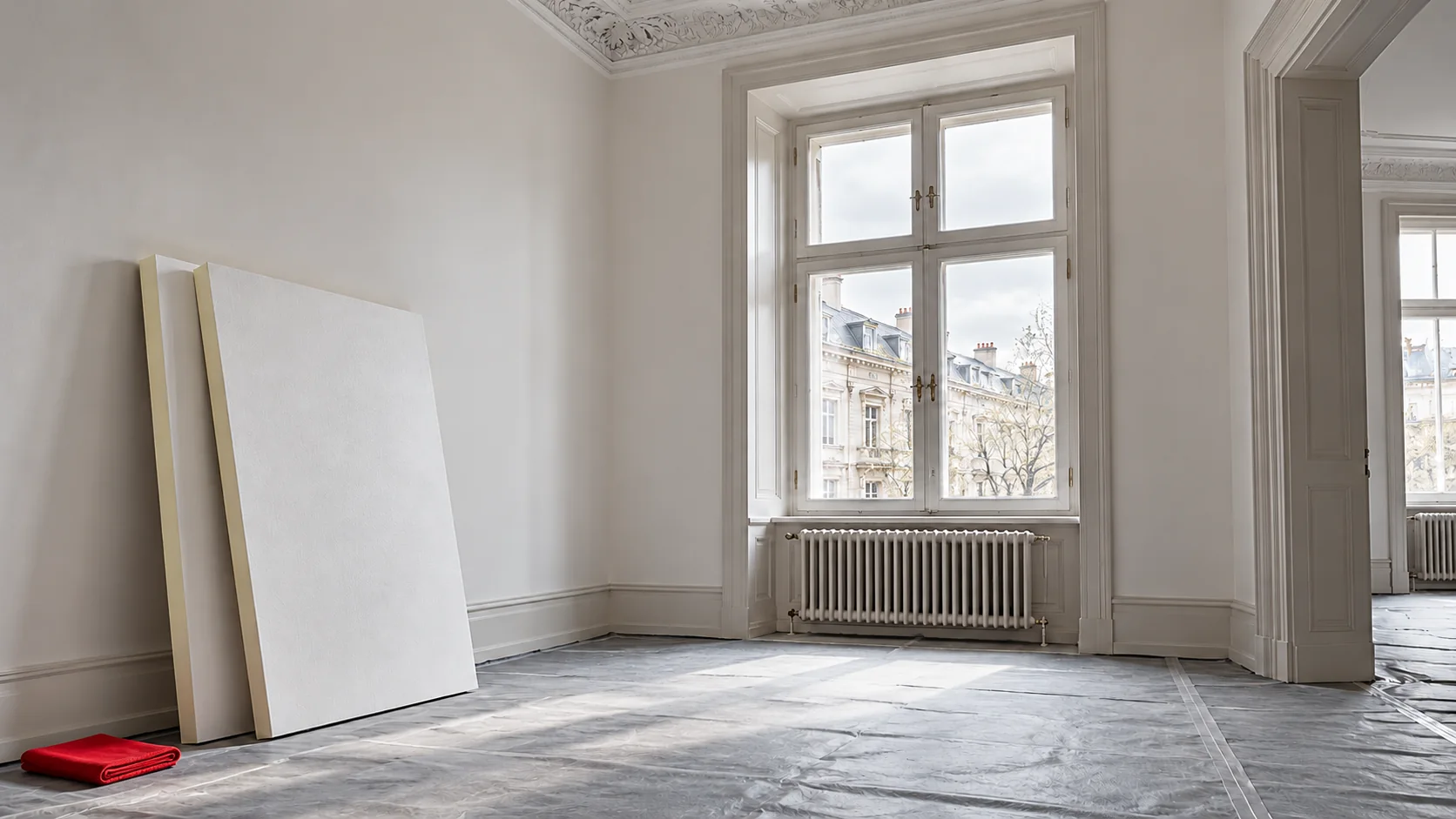
What to check before insulating a tenement building from the inside
Preserving the historic façade may direct attention to internal insulation. In a tenement building, however, this is not a simple substitute for external insulation. Old walls, timber elements and different ways of using the flats require a joint assessment. The choice of PIR should result from an appraisal of the building, not be the first decision in the works plan. The inability to alter the façade does not automatically mean freedom to remodel the interior. The scope of the building's protection, the required approvals and the impact of the works on common parts must be checked. Original plaster, stucco, joinery or other interior elements may also matter. The assessment should precede ordering the lining.
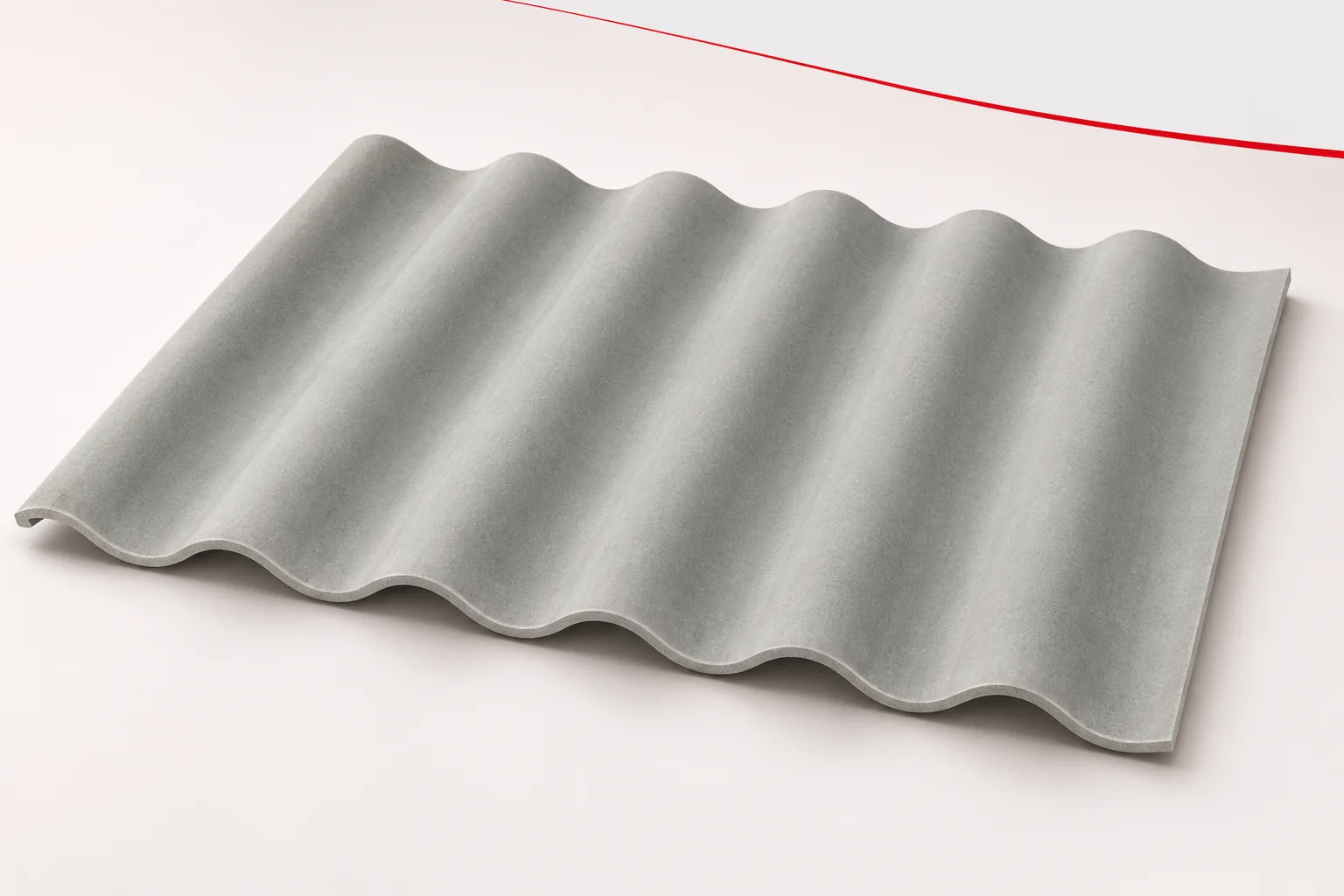
How to choose the colour of a corrugated roof to suit its surroundings?
The roof colour is best assessed together with the building form, the façade and the landscape. Corrugated fibre cement sheets have a pronounced profile that changes how the colour is perceived through light and shadow. Asbestos-free fibre cement should be chosen on the basis of a real sample. A small rectangle of colour on a screen does not show what will be visible across the whole roof slope. In an open landscape the roof may be visible from a great distance. In dense development it is more often viewed up close, between the neighbours' façades. It is worth checking both points of view. The same shade can be a calm background in one place and a strong accent in another. Lasting features of the plot also matter: trees, paving, fencing and the colour of neighbouring buildings.
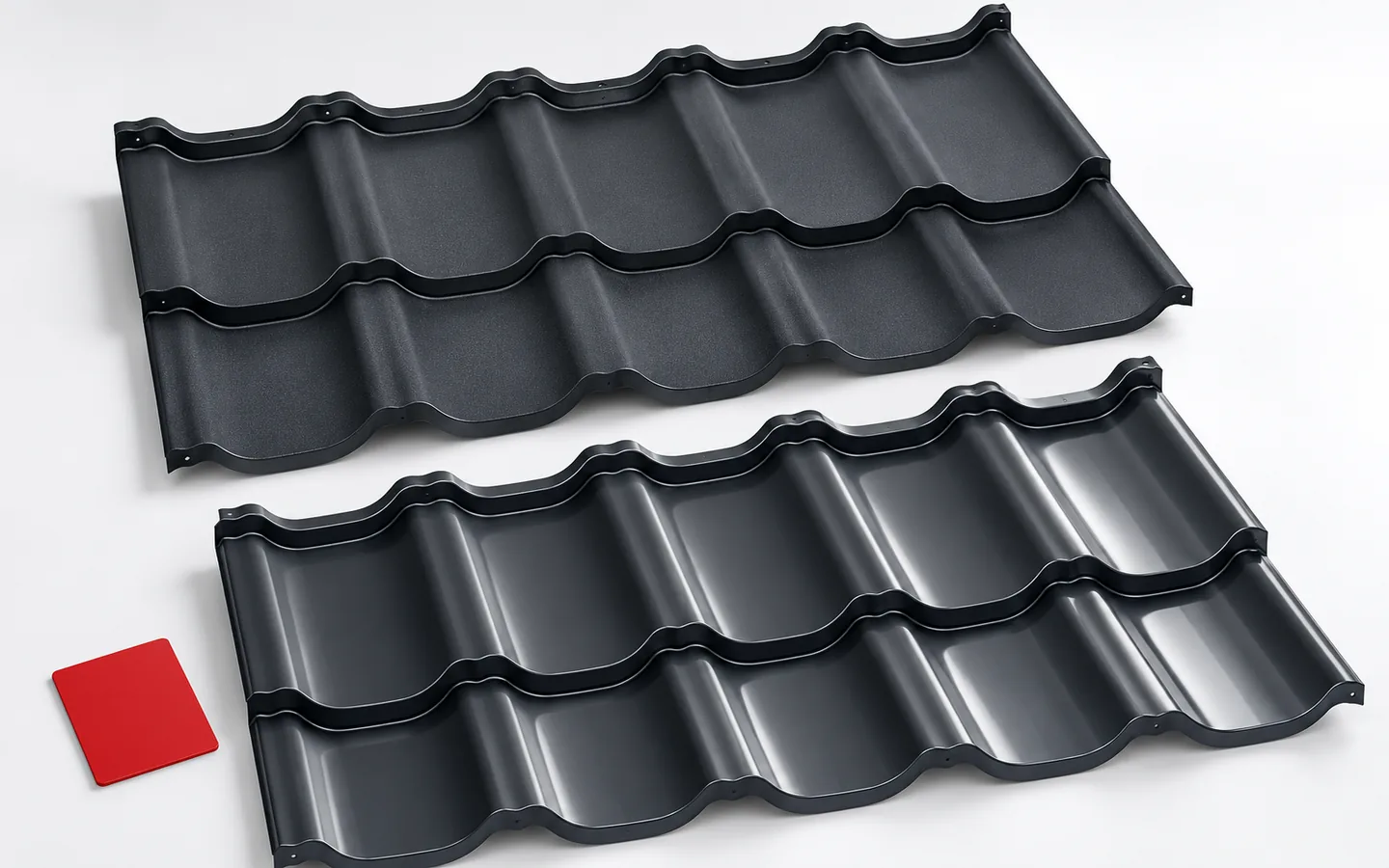
Matt or gloss coating for tile-effect metal roofing?
Choosing between matt and glossy metal roof tiles is not a simple matter of better versus worse — the type of coating, its properties and its intended use are what count. Before judging appearance, check corrosion and UV resistance, the metallic layer protecting the steel, and maintenance requirements. Compare specific data, not just the two finish names. View the colour outdoors, on several joined sheets, in sun and shade. Remember that durability also depends on the environment, installation and maintenance, and matching the look to the house makes sense only once the material meets the roof's technical requirements.
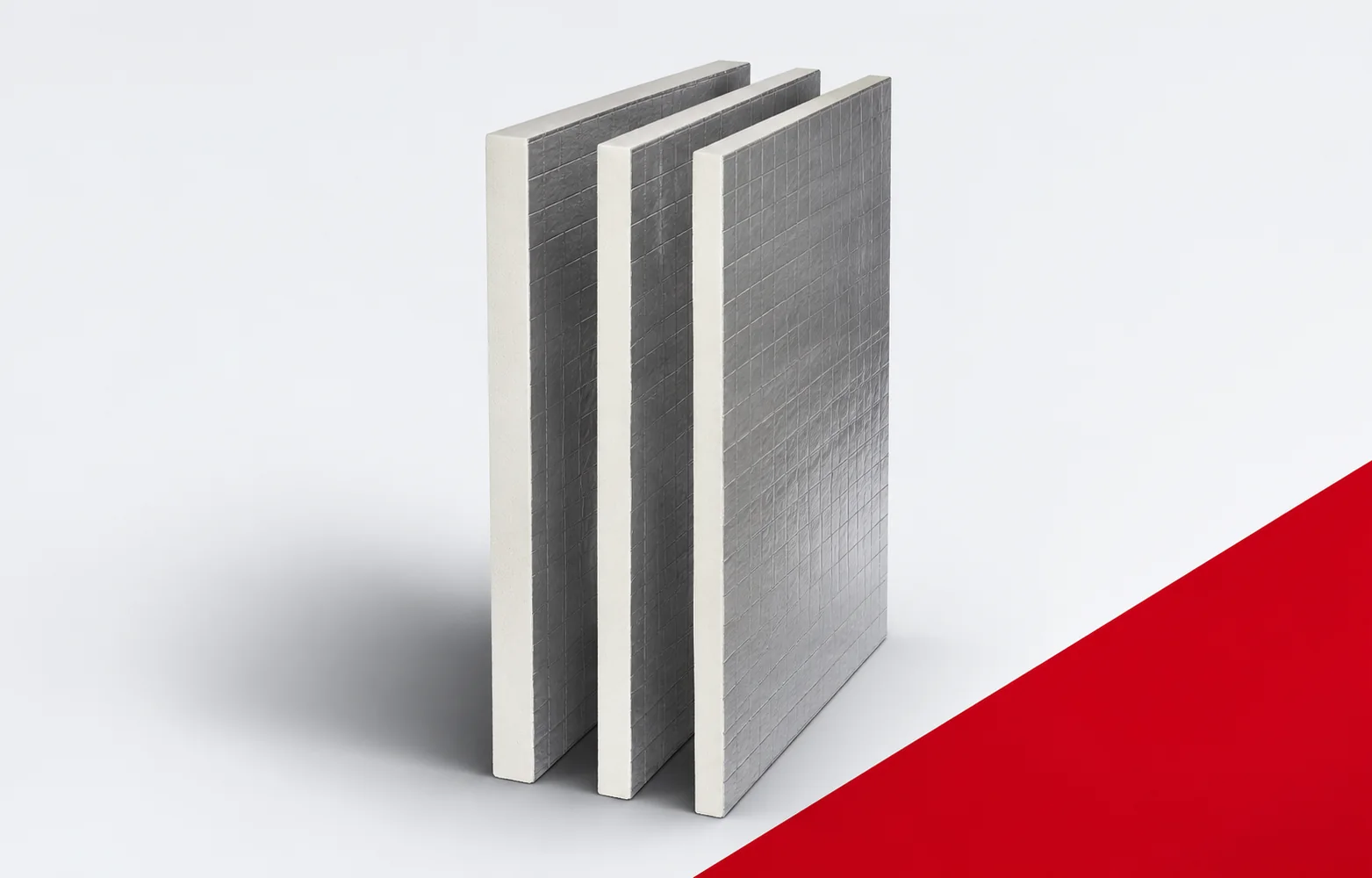
IKO enertherm ALU TAP: how to check that a quotation is complete
With ALU TAP, the completeness of a quotation is decided not by the number of line items but by whether the tapered boards match the drainage layout plan. For each slope, the components must be specified and assigned to specific drainage areas, and the junction between areas draining in different directions must be listed separately. In your enquiry, describe the roof with aluminium-faced tapered boards at different slopes and the intended finished result, attaching the drainage layout plan showing slopes and heights. Also agree the terms for supplementary delivery, because a shortage of a few of the right parts can hold up the covering of a larger area.
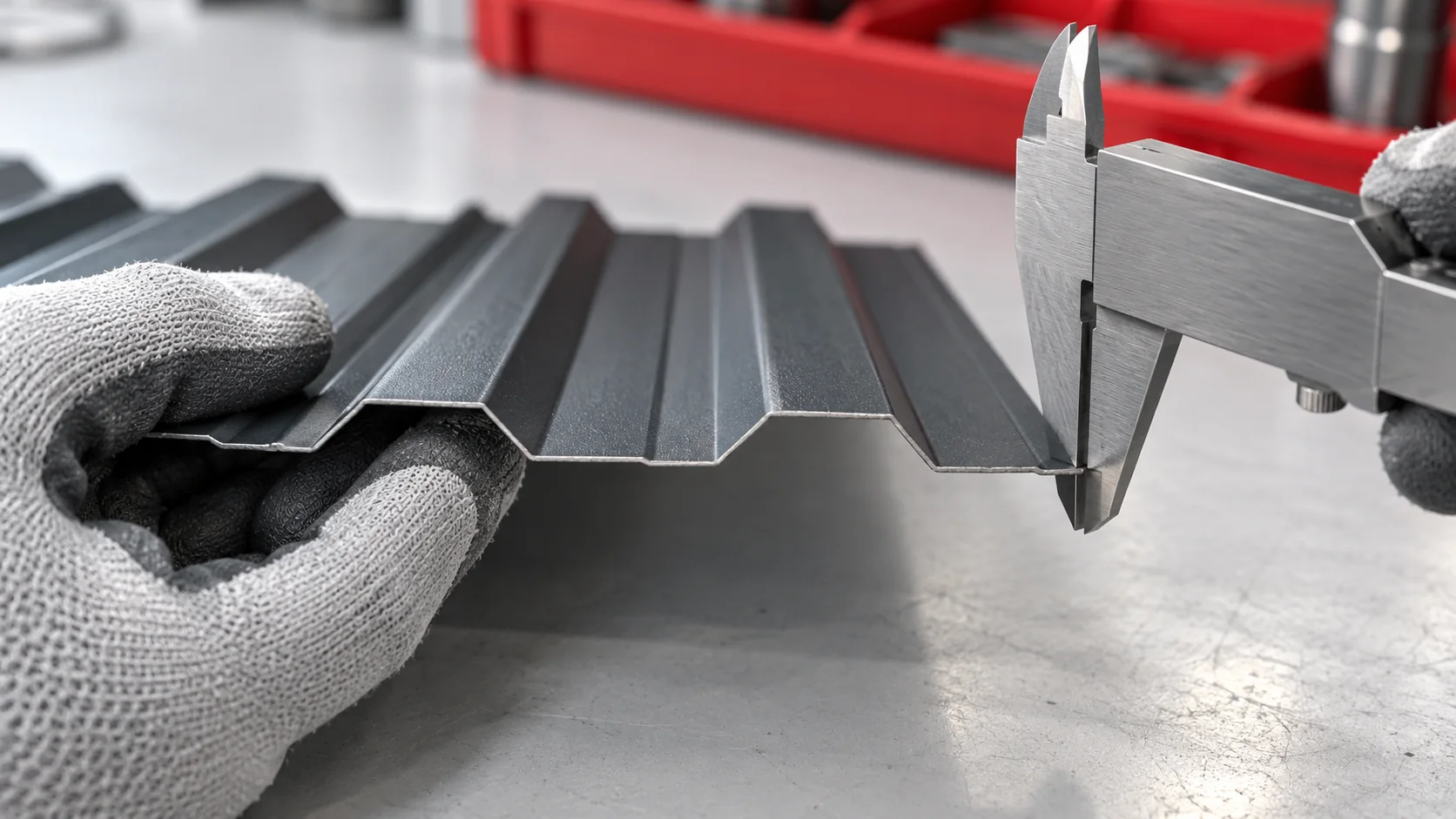
Why must sheet thickness be selected together with the profile and supports?
There is no single sheet thickness suitable for every roof. The sheet works together with the ribs, supports and fasteners. The choice of 0.5 or 0.7 mm should follow from the load and the specific section. Thicker material can improve the properties of the system, but it will not fix faulty construction or incorrectly selected fasteners. It must be established whether the stated value describes the nominal steel thickness and according to which rules it has been declared. Protective coatings are separate layers. Measuring the total thickness of the finished sheet does not automatically separate them from the core. Therefore, simply applying a calliper does not replace identifying the material.
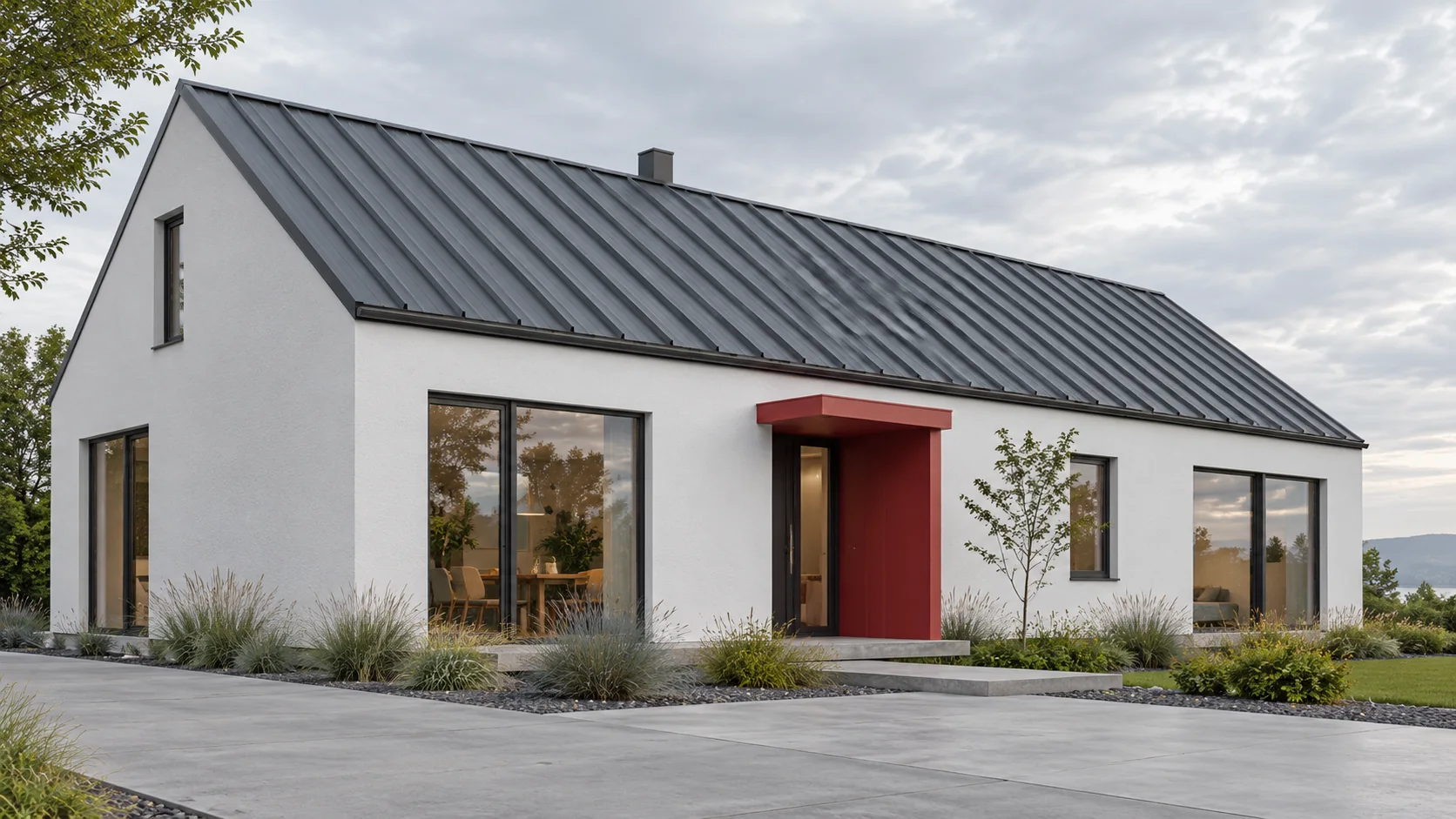
What changes when you choose trapezoidal steel sheet instead of tile-effect metal roofing on a new house?
Trapezoidal steel sheet can suit a house just as well as tile-effect metal roofing if the design accounts for it. The difference does not end with appearance. Both coverings have different geometry, support and details. It is worth comparing them before installing battens and flashings. A later change may require more work than the difference in sheet price suggests. Trapezoidal sheet forms continuous lines running in the direction of the roof slope. Tile-effect metal roofing adds a transverse division that resembles rows of tiles. Flat modular versions give yet another effect than traditional waves. It is therefore worth comparing specific profiles rather than two general material names.