
Knowledge base
Izoprofil.com helps you compare materials for a specific building project. The guides cover the uses of sandwich panels, PIR insulation boards, metal roof tiles and trapezoidal sheets. The criteria depend on the application, including the supporting structure, thermal performance and requirements for the finished surface. Read the product specifications, identify which dimensions affect the order and compare complete solutions. The articles help you discuss the options with a designer or installer and check the suitability of the selected materials before purchase.
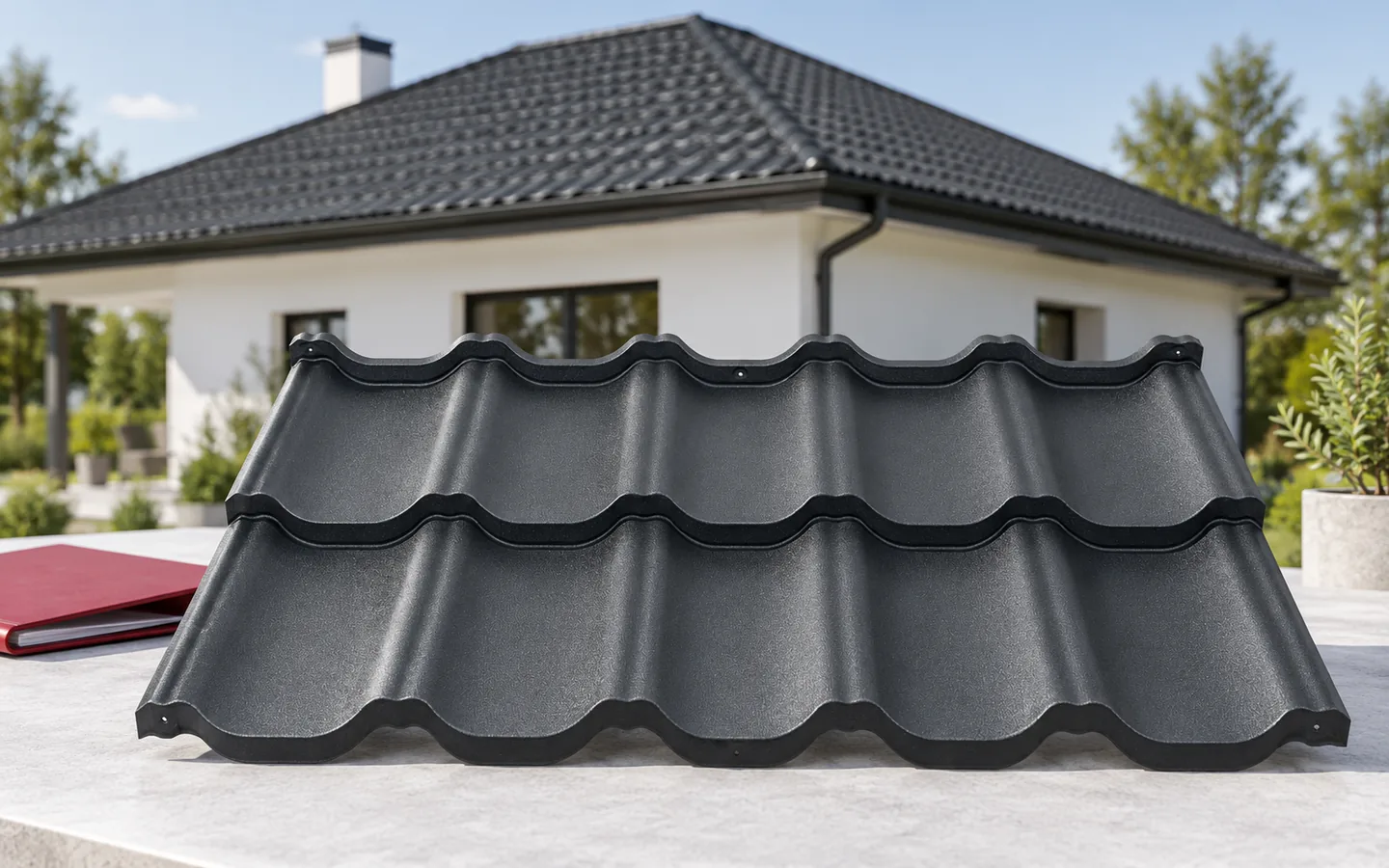
A hipped roof: how the structure affects the cost
A hipped roof has four slopes joined at the corners, and its cost depends on geometry and construction details. In a hip roof on a rectangular building, two slopes are close to a trapezium and two to a triangle, with a ridge at the top; in a pavilion roof the slopes meet at a point. Before choosing, check that the design defines the supports and how loads are transferred, because the number of slopes does not describe the load-bearing structure. Consider the span, pitch, length of the corners and the layout of the rooms under the roof.
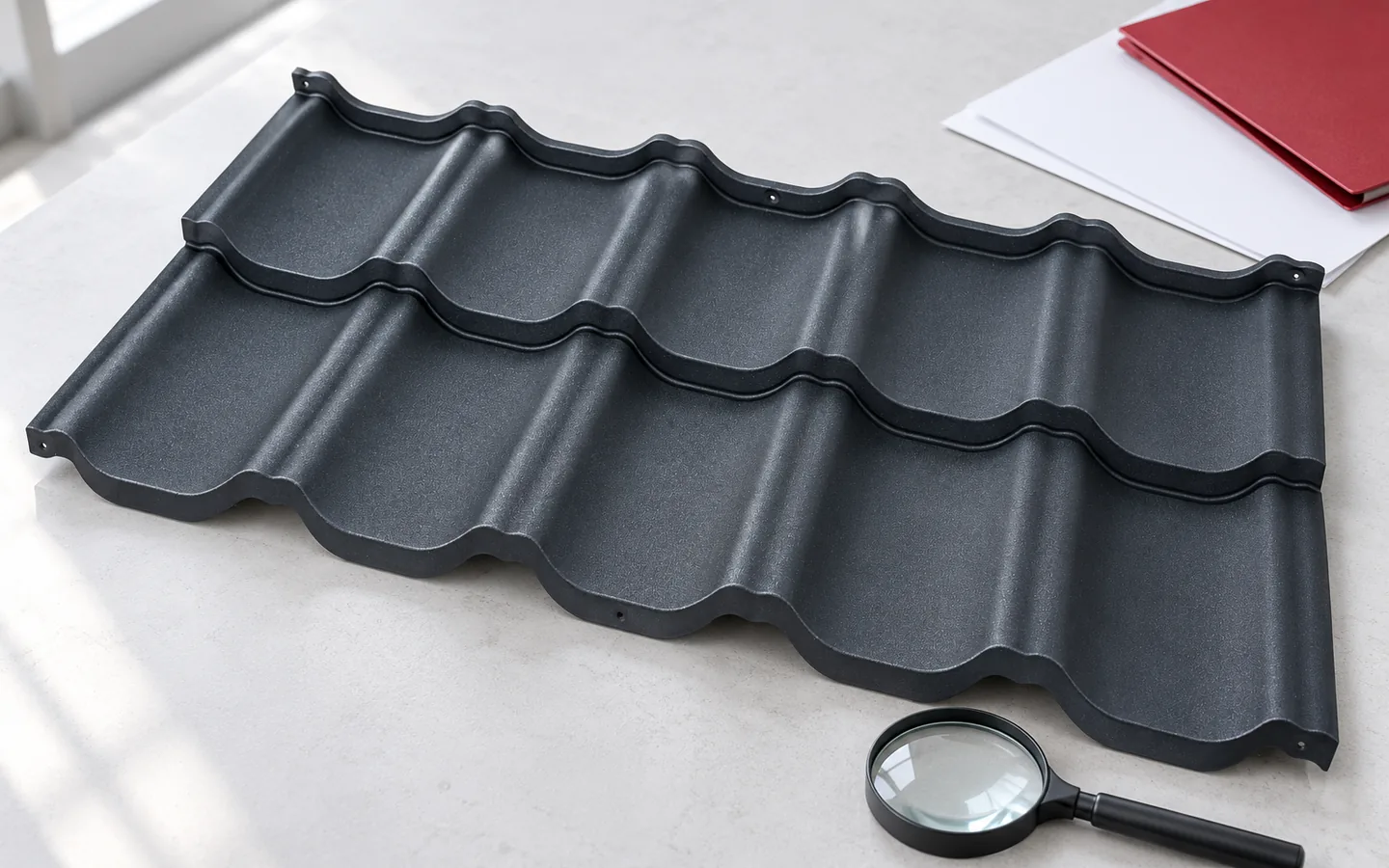
Tracing the causes of metal roofing complaints and preventing defects
Before treating a roofing sheet complaint as a material defect, check whether transport, storage or installation is the real source. On delivery, inspect the accessible edges, surface and packaging, and document any visible damage before splitting the pack. Later inspection should separate symptom from cause: a rust spot may come from a metal filing, while a leak may stem from flashing or condensation. Purchase documents and photographs of the whole roof area help establish the source and choose the right repair.
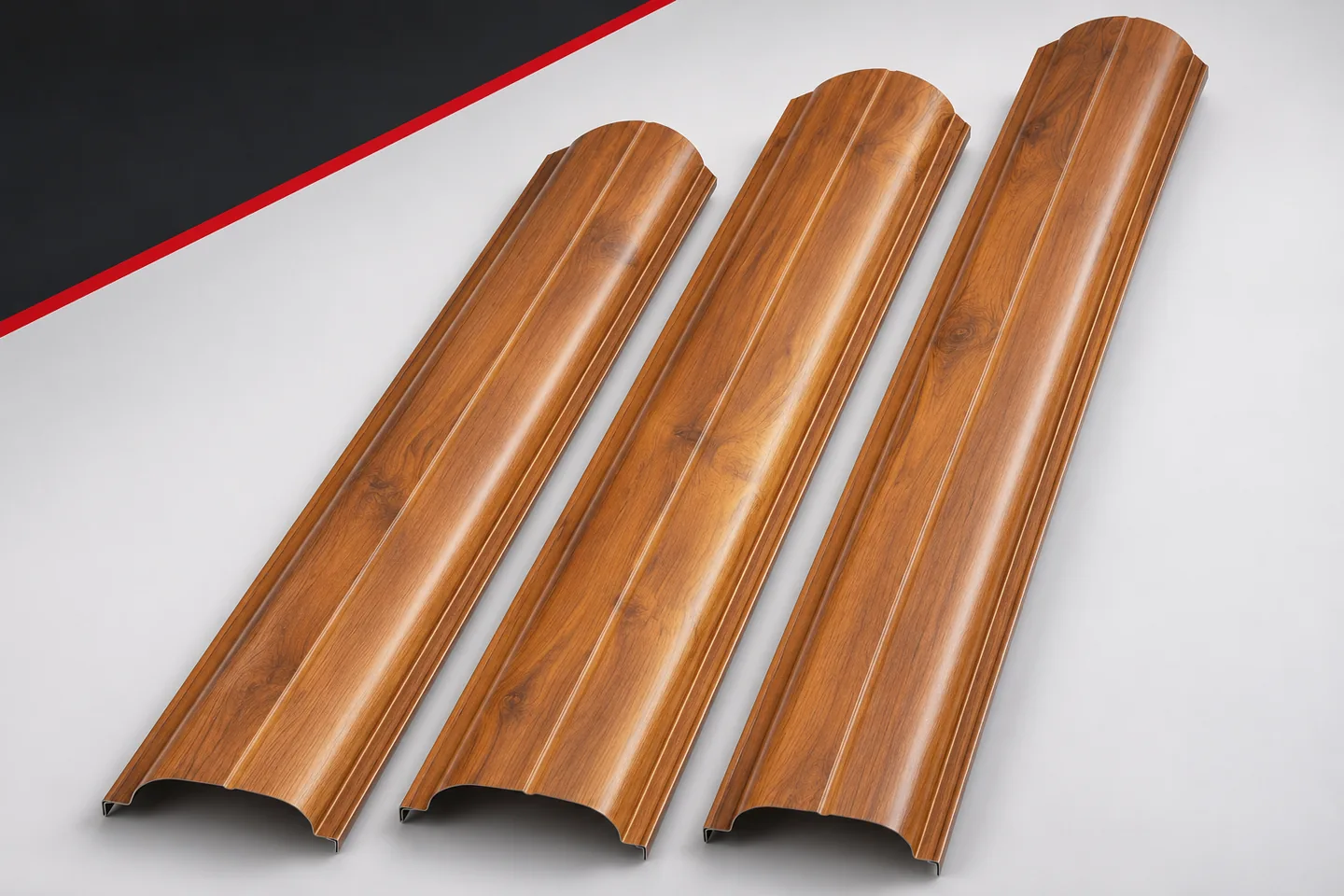
A fence picket sample before purchase: what to check beyond colour?
A sample is one of the most useful elements when choosing a fence. It shows more than a photograph, but it also has limitations. A short section does not prove how a long picket will behave within a bay. It is therefore worth using it for the right tasks. Checking the colour, geometry, reverse side and finish helps you order metal fence pickets that meet expectations. The material should correspond to the offer, not just to the general product family. Check the profile, coating and finish designation. If a sample of a different variant was shown, note that difference. A similar colour should not be treated as confirmation of all the properties of the picket being ordered.
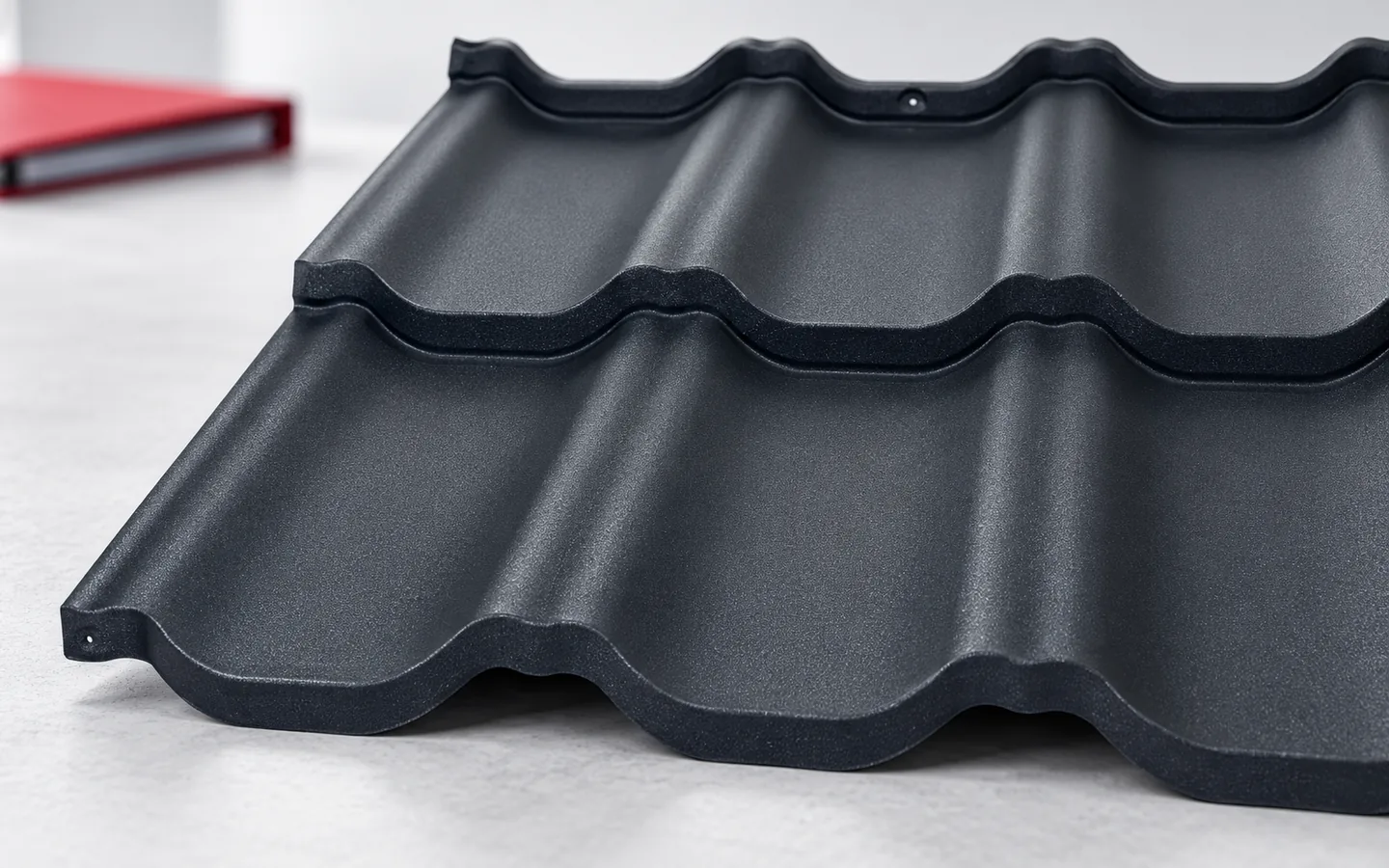
Stone-coated or painted steel roof tiles: what does the finish change?
The choice between a granular-coated metal roof tile and a coated finish depends on the desired appearance and verified documentation, not on a slogan about a better covering. It is worth checking whether the sample matches the effect on a large roof area, and comparing the coating build-up and installation requirements. The granular finish gives a mineral texture and diffuses light, but does not replace insulation or snow guards. A coated finish allows various gloss levels and profiles. The decision should be based on a complete system for the same roof geometry.
What should a thermal and moisture report for a PIR wall include?
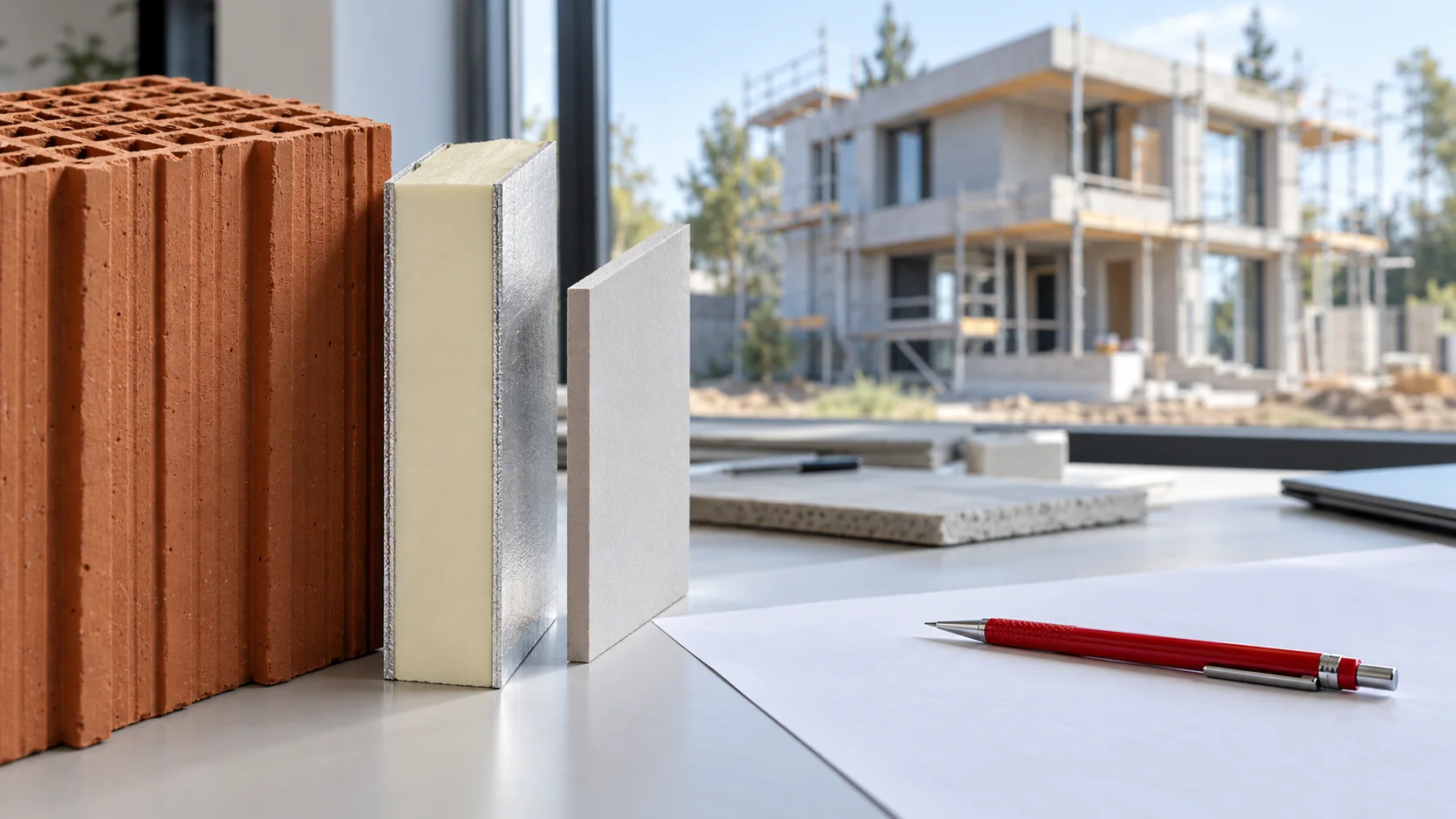
A thermal and moisture report helps select the layers of a building element if it describes the actual wall and its conditions of use. A green result in the calculator alone does not explain the behaviour of corners or the effects of leaks. For new construction, it is worth preparing the data so that the calculations can also be used when coordinating windows, installations and the sequence of works. A wall separating a flat from the outside performs differently from a building element between a workshop and a cold store. Record the design temperature on both sides, the heating method and the expected humidity. In a bathroom, laundry and utility room, the sources of vapour behave differently from those in a bedroom. It is also important whether the heating will operate continuously.
Selecting T18 or T35 trapezoidal sheets for a façade
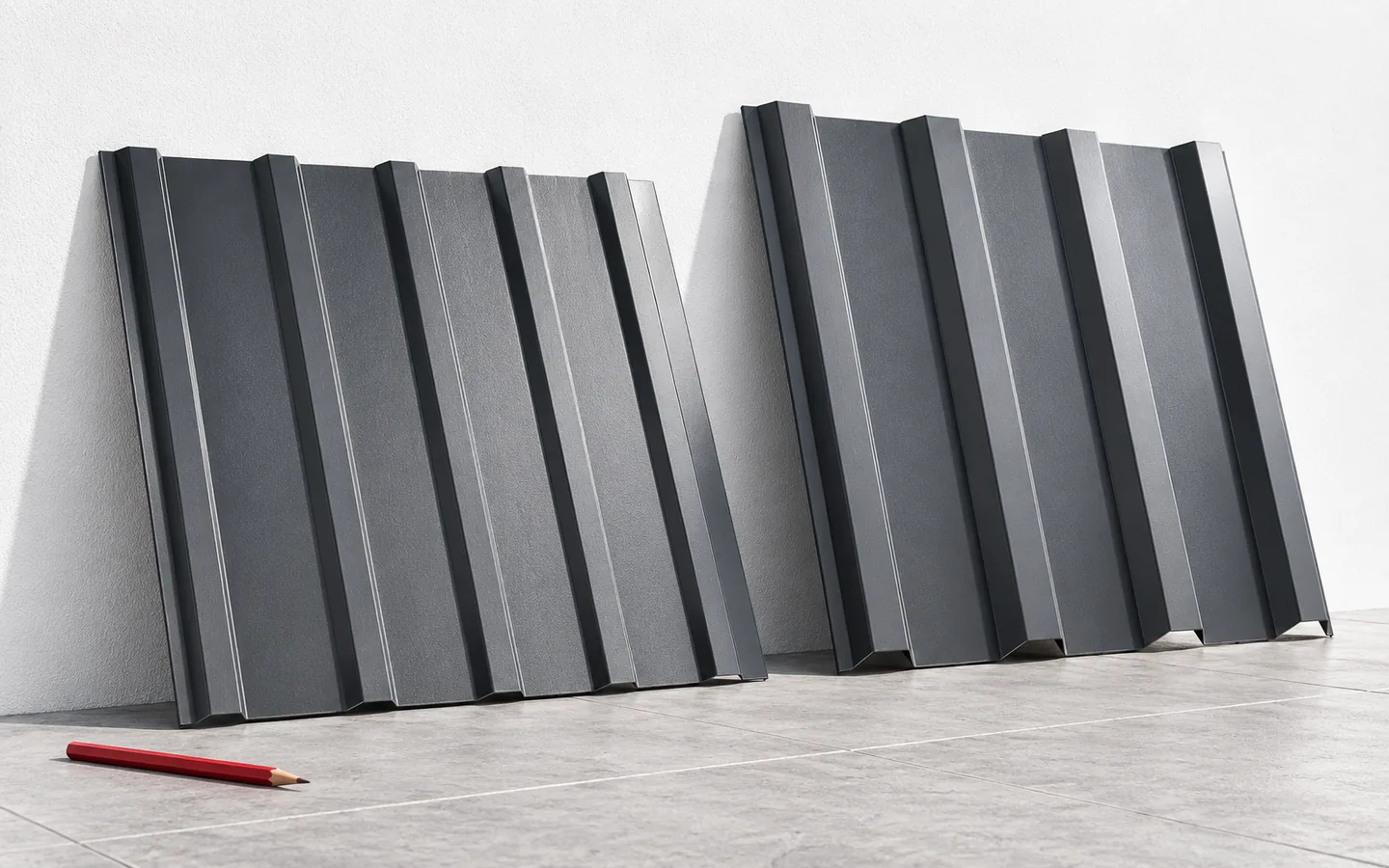
The choice between T18 and T35 trapezoidal sheet for a façade depends primarily on the designed support layout, wind load and the intended appearance. Readers should check whether the sheet will form the external wall cladding or part of another enclosure system, and should examine steel thickness, coating and fixing. The lower T18 profile gives a more delicate surface rhythm, while the higher T35 produces a stronger relief and more pronounced light and shadow. The designation alone does not determine load capacity, so a matching system and specified material variant should be used together, not random sheets with a similar name.