Maintenance and durability
How often does a roof need maintenance and what should an inspection cover?
Regular roof checks help catch problems before a leak shows up in the attic. For many metal coverings, the manufacturer recommends an inspection at least once a year, and an extra check is justified after a severe gale, hail or chimney work. Maintenance covers the sheet surface, fixings, flashings and drainage, while cleaning frequency should suit the coating and the building surroundings. Even a new covering needs attention: cutting swarf or foil scraps left in the gutter can be washed by rain into places you cannot see, so handover should include clean slopes and clear outlets.
Why does an inspection make sense even on a new roof?
New roofing may look good even though metal filings from cutting remain in the roof valley or fragments of foil lie in the gutter. Rain carries such small items to places not visible from the yard. Handover of works should therefore include the cleanliness of the roof surface and the patency of drainage. The first inspection also allows the condition of the roof to be compared with the handover documentation.
Later, deposits, branches and minor damage after antenna or chimney servicing can become a problem. Early repair of a scratch is simpler than replacing a sheet with advanced corrosion. This does not mean that every colour change must be painted immediately. First, dirt must be distinguished from coating wear. Photos from the same location make it easier to assess whether the change is progressing.
When should you schedule a check and cleaning?
The starting point is the user manual for the specific roofing. An annual inspection is best scheduled for a fixed date, for example after winter. Where there are trees, an autumn gutter check is also important. It is not about a rigid calendar for every house. Near a road or in the vicinity of a plant, different contaminants settle on the roof than on an open plot.
After a violent storm, first inspect the roof from a safe place. Look for displaced flashings, loose fragments and signs of impact. If the sound of the roofing in the wind has changed, report it to the roofer. A roof inspection is not the same as mandatory building inspections. Their scope and dates are set separately for each property.
What should you look at on the sheet and at the fixings?
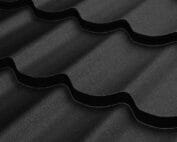
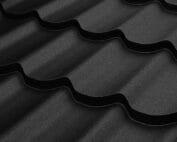
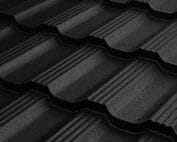
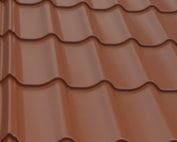
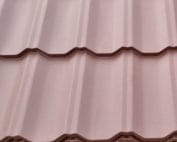
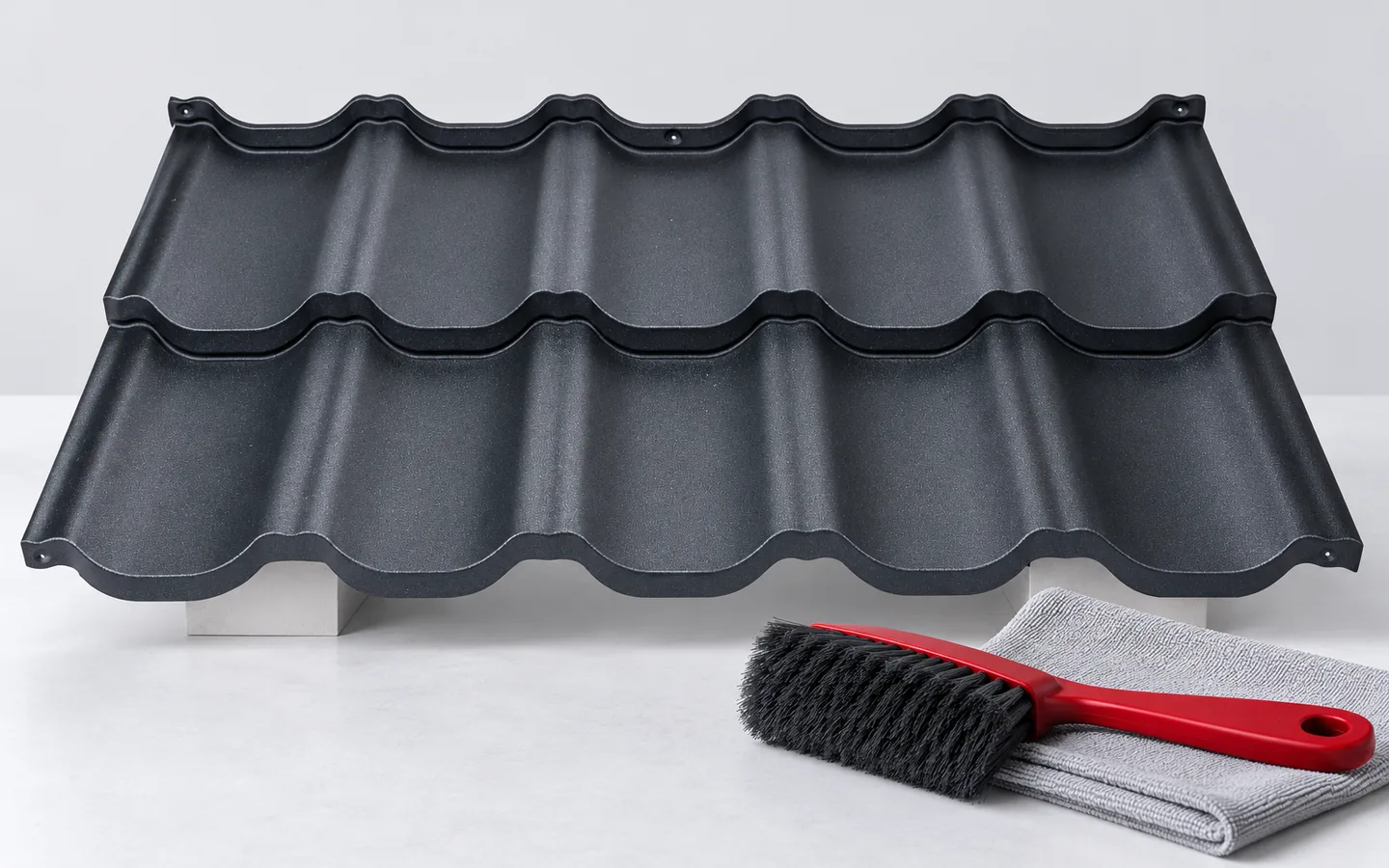
On the surface of tile-effect metal roofing, look for scratches, chipping, deposits and places where dirt accumulates. Cut edges and the areas around chimneys require particular attention. Rusty spots may come from foreign filings. They do not always indicate corrosion of the sheet itself, but should be identified and removed in accordance with the coating recommendations.
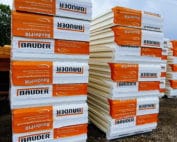
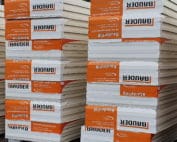
At the screws, the condition of the seals and the position of the fasteners are checked. A cracked washer, a loose screw or deformed sheet metal require the cause to be determined. Tightening all fasteners as a precaution is not good maintenance. It can crush the seal or damage the hole. In sandwich panels, the panel joints, ridge caps and seals described in the system instructions are also checked.

Which places are easiest to overlook?
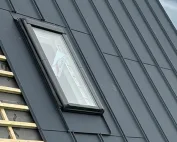
The roof valley, the back of the chimney and the area around a window collect water from a larger section of the roof. Leaves accumulating there restrict drainage. The inspection should also cover the ridge, barge boards, installation penetrations and the termination of the membrane at the eaves. The aim is to maintain the water drainage path and ventilation. Not every visible gap should be filled with sealant.
In the gutters, assess the joints, brackets and outlets to the downpipes. Standing water after rainfall may indicate local sagging or a blockage. It is also worth checking the loft. Streaks on timber, damp insulation or a smell of damp help detect a problem that cannot be seen from outside. The cause may be a leak or condensation.
How to clean a roof without damaging the coating?
The cleaning agent and method are chosen according to the sheet finish. Usually, you start with water and a soft brush. Stubborn deposits require a product approved for the specific coating and a test on a small area. Hard brushes, abrasive powders and random solvents can leave permanent marks. A strong jet of water should not lift the laps.
Cleaning is carried out taking into account the direction of flow and the requirements of the instructions. There is no single safe nozzle distance for every device and product. Work at height should be entrusted to a team with suitable access and safeguards. Wet sheet is slippery, and incorrect stepping can deform the profile. A ladder alone does not solve these problems.
What should be recorded after an inspection?
A useful note includes the date, photos and a description of the places requiring repair. Separate urgent defects from cosmetic treatments. A loose flashing above the entrance or an active leak requires prompt action. Delicate deposits on an undamaged coating can be removed at a scheduled time. Also keep the name of the product used and the scope of work carried out.
Before repairing, check the warranty conditions. Some changes require the course of action to be agreed with the contractor or supplier. Well-kept documentation helps avoid a dispute over when the damage occurred. When ordering a service, ask for an assessment of the entire detail, not just painting over the visible spot. The roof is to remain watertight after the next season, not just look good on the day of acceptance.
7 branches. Materials closer to your project.