Fire and acoustics
Does non-combustible wool mean a non-combustible and fire-resistant wall?
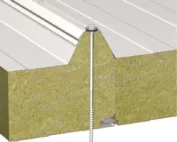
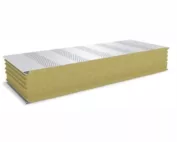
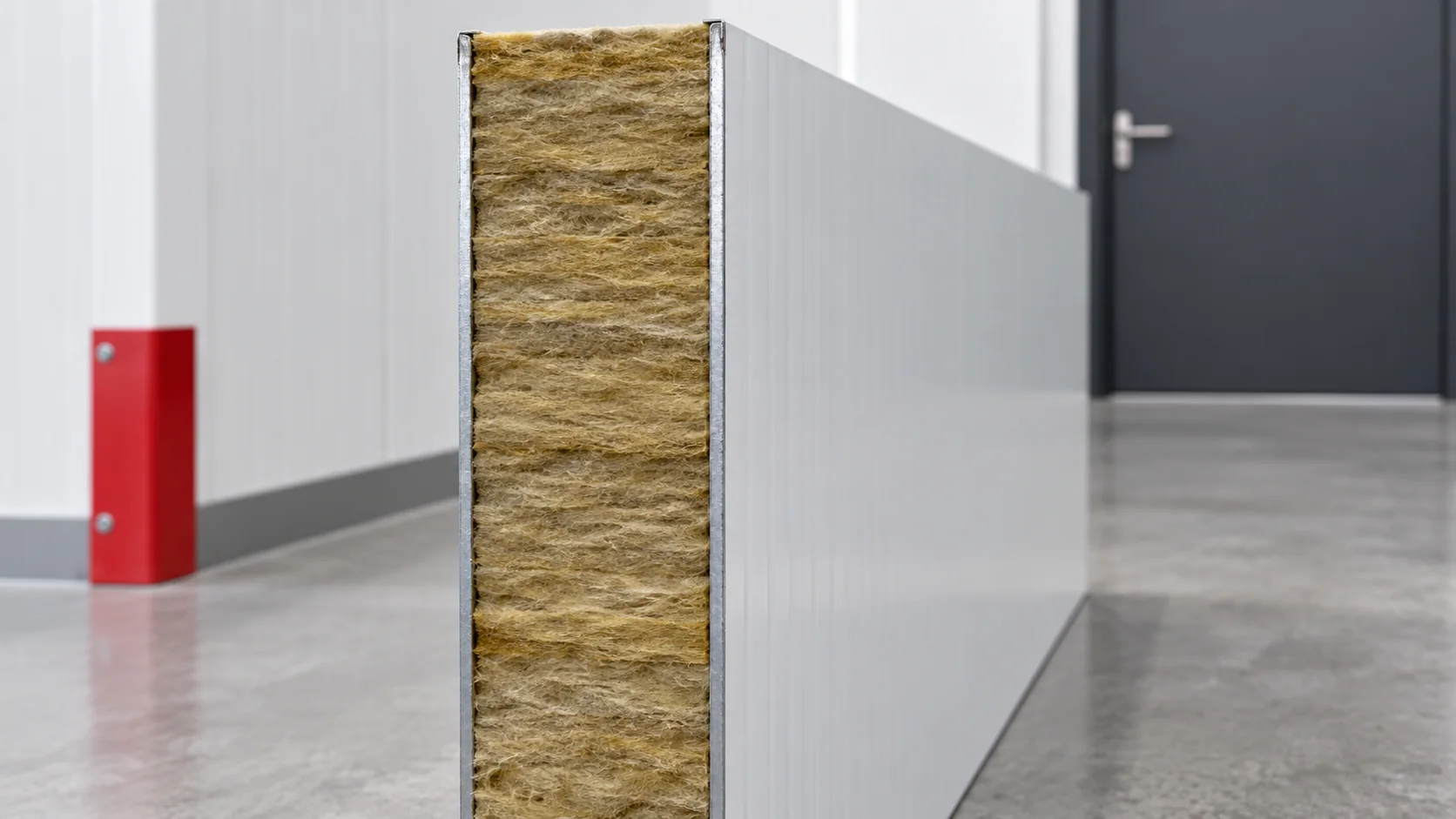
Mineral wool is associated with fire protection, but a sandwich panel also contains steel sheets, coatings and bonding layers. The reaction-to-fire class of the whole product need not be the class of the core alone. The fire resistance of the wall is determined separately. These distinctions help to select the cladding correctly and to avoid unjustified promises. The core, the complete panel and the wall installed on a structure are three different levels of assessment. Information about the wool does not replace the declaration for the panel with metal facings. Similarly, a result for the panel does not automatically describe every method of its installation.
First determine what is being classified
The enquiry must specify the requirements for the finished partition. The designer needs data for the specific variant, including the type of joint and the facings. Using the single word “non-combustible” without defining the scope can conceal significant differences between the material and the completed building element.
Read the reaction-to-fire class
In the wall configurations with mineral wool that were examined, class A2-s1,d0 applies to the entire panel. A2 describes a very limited contribution to fire development, s1 relates to smoke production, and d0 to flaming droplets or particles under test conditions. This is not a declaration of arbitrary behaviour in every possible fire.
A2 should not be replaced by A1 simply because the core is mineral. Other components of the panel also influence the classification. The exact designation should be retained in the documentation and in the comparison of offers. Shortening it to a general slogan can make it difficult to verify compliance with the requirement.
EI resistance applies to the separating element over time
The letter E refers to fire integrity, and I to fire insulation. The number next to the designation indicates the classification time in minutes. If R appears, it relates to fire loadbearing capacity. These criteria are not the same as the material’s reaction to fire.
The test conditions and the scope of application are important: panel orientation, dimensions, supports, fasteners and the direction of exposure. EI 120 cannot be attributed to a wall on the basis of the A2-s1,d0 label alone. Likewise, a greater thickness does not prove a specific EI value without appropriate confirmation.
Also distinguish between roof behaviour and wall behaviour
The classification for external fire exposure on the roof is not equivalent to the EI classification of a wall. Likewise, information on non-spread of fire does not replace all the other parameters. In the design, each separating element should have its requirement stated in the appropriate technical language.
This matters at the junction of wall and roof. If the wall performs a specific function in a fire, its termination at the roof covering must be coordinated with it. It is not enough to select two separately classified products and connect them with any flashing. The properties of the components and the behaviour of the connection must be considered together, in accordance with the scope of the design.

Joints and openings must maintain continuity
In a fire, it is not only the centre of the panel that counts. The joint between panels, the termination at the roof and the penetration of services can be decisive locations. If the classified variant requires a specific seal or an additional fixing element, this solution must be maintained.
Doors, glazing and penetrations are selected to suit the function of the separating element. Simply filling the gap with any compound does not provide verified resistance. In a new building, it is worth coordinating the service routes before ordering the panels, in order to limit the number of later openings and provide space for proper sealing.
Check the construction and the exposed side
The wall needs supports whose behaviour corresponds to the assumed requirements. Loss of support can prevent the panels from performing their function. The assessment should therefore cover the junction of the cladding with the frame and the way displacements are accommodated.
It is also important from which side the fire may act and what scope the documentation covers. A one-sided verification must not be extended on one’s own initiative to all directions. The requirements for an internal wall, an external wall and a fire separation arise from the design, not from the name of the core alone.
Maintain compliance during execution
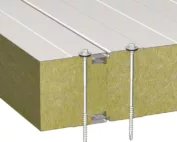
On site, check the identification of the panels and accessories before they are built in. A change of seal, support spacing or type of fixing may require the solution to be reassessed. Not every substitute of similar appearance retains the scope of the classification.
Document the details before they are concealed, especially penetrations and terminations. It is worth having a schedule that links the designed class with the specific components and the installation location. This facilitates acceptance and later decisions when the function of the room changes or new services are added.
Questions and answers
Does class A2-s1,d0 confirm EI 120 fire resistance?
No. Reaction to fire and fire resistance are separate classifications. The required EI class must be confirmed for the complete separating element in a specific configuration.
Does a panel with mineral wool always have class A1?
No. The class of the core need not be the class of the panel with facings, coatings and adhesives. The exact designation of the complete product must be read from its documentation.
7 branches. Materials closer to your project.