Installation and details
Choosing a roofer and agreeing the scope of work
Choose a roofer based on projects similar in material and complexity, not price alone. Check whether the team knows the installation instructions for the selected system and can point to the document they use. Before work starts, agree materials, details, dates and the handover method, as well as how additional work will be settled. With metal roof tiles and trapezoidal sheets, flashings, fixings and ventilation are particularly important. Look at details in photos and, with the owner’s consent, a finished roof – a distant overall view does not show the quality of edges and finishes.
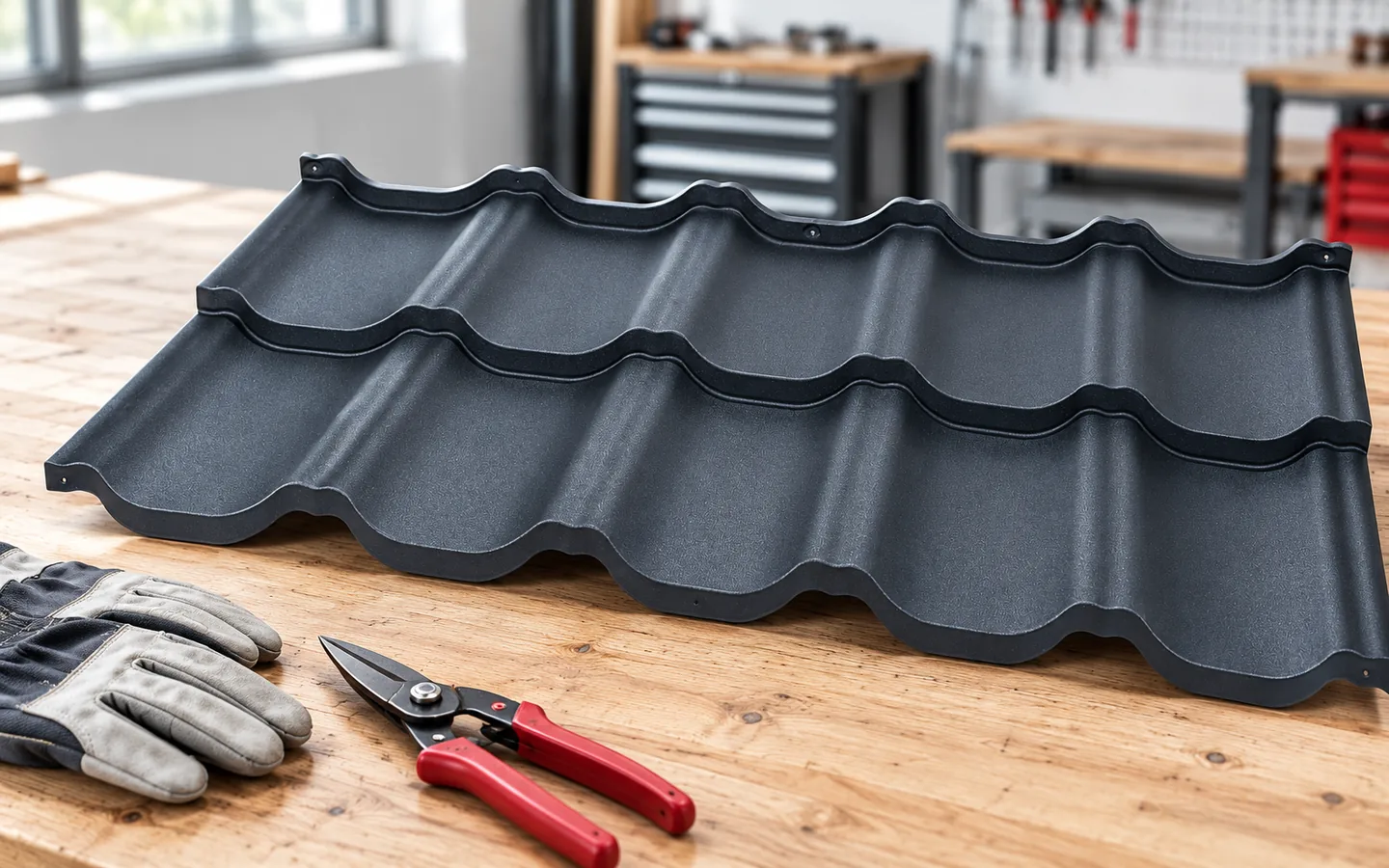
What experience matters for your roof?
Look for projects similar in terms of material and degree of complexity. Installing a simple trapezoidal steel sheet on a carport differs from covering a house with roof valleys, windows and a chimney. It is worth viewing the details in photographs and, with the owner’s consent, the finished roof. A general view from a distance does not show the quality of flashings and terminations.
Ask which systems the team works with and whether it knows the instructions for the chosen model. Tile-effect metal roofing sheets of similar appearance may require different batten spacing or a different method of joining. A reliable contractor can point to the document they use. They do not have to know every value by heart. It is more important that they check the data and do not replace the design with habits from a previous build.
What to ask during the first conversation?
Present the drawings, the planned covering and the condition of the existing structure. Ask about measurement, preparation of the substrate and the sequence of works. During renovation, protecting the building after the old roof has been removed is important. Establish what will happen in the event of a sudden change in weather. The answer should describe the organisation of work, not just a promise that the team will manage.
Talk about the details: the eaves, ventilation, roof valleys and penetrations. It is worth asking who selects the fasteners and checks their layout in the edge zones. Structural doubts should not be resolved by eye. If an assessment by a designer is needed, it should precede installation. It is good when the contractor identifies missing information before the material goes onto the roof.
How to compare quotes with different scopes?
The price per square metre can be useful, but it does not describe the entire order. Flashings, windows, dismantling, scaffolding and drainage may be priced separately. On a complex roof, the share of these works increases. Ask for an itemised scope and compare the same items. Without this, a lower offer may simply omit some of the necessary activities.
Establish who buys the material and is responsible for its quantity. If you order it yourself, the contractor should check the list and the cutting plan in advance. Discuss unloading, storage and waste disposal. Record how additional works discovered after dismantling will be settled. It is impossible to predict every defect in an old roof structure, but it can be established how it will be assessed and priced.

What is worth recording before work begins?
The scope should specify the particular material, coating and required accessories. Drawings of the agreed details and a reference to the installation instructions are useful. Establish deadlines, payment stages and the method of reporting changes. Replacing the material with another variant should be agreed before installation. A similar colour does not mean matching parameters or the same guarantee.
Explain the rules for acceptance and rectification of any defects found. Treat the material warranty and the contractor’s obligations regarding the works separately. It is worth knowing whom to contact in the event of a leak and which documents to keep. Discussing responsibility is not a sign of distrust. It allows both parties to rely on the same arrangements when an unforeseen situation arises.
How can you recognise a good organisation on site?
The prepared team plans safe access and the method of passing the sheets up. The material should not lie in a damp, closed pack without being checked. Sheets are carried without dragging them over one another and without permanent bending. Cutting tools must be suitable for coated steel sheet. Swarf is removed as work proceeds, before it starts to damage the surface.
Observe whether the important details are carried out in the correct sequence. It is worth photographing the layers that will later disappear under the covering. It is not about supervising every movement, but about the ability to check the continuity of the insulation and drainage. If you have doubts, agree an independent acceptance. Do not go onto an active roof yourself to check the work without protection.
What should you check at handover and after the first rainfall?
Acceptance should cover the fixings, laps, flashings and the condition of the surface. The outflow from the underlay, the patency of the ventilation and the gutters are checked. No chips, foil or loose waste may remain on the roof slope. It is worth establishing whether all agreed accessories are installed. An even roof colour alone does not confirm the correctness of the invisible joints.
Keep the material documents, photos and the record of remarks. After heavy rain, inspect the accessible roof interior from a safe place. Report a new stain or leak with the location and date. A good choice of contractor reduces the risk of problems, but does not replace acceptance. Cooperation works most smoothly when both parties know what result and method of execution have been agreed.
7 branches. Materials closer to your project.