Insulation and ventilation
Can a metal roof help cut energy use?
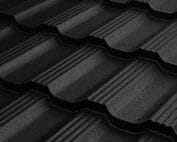
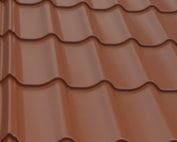
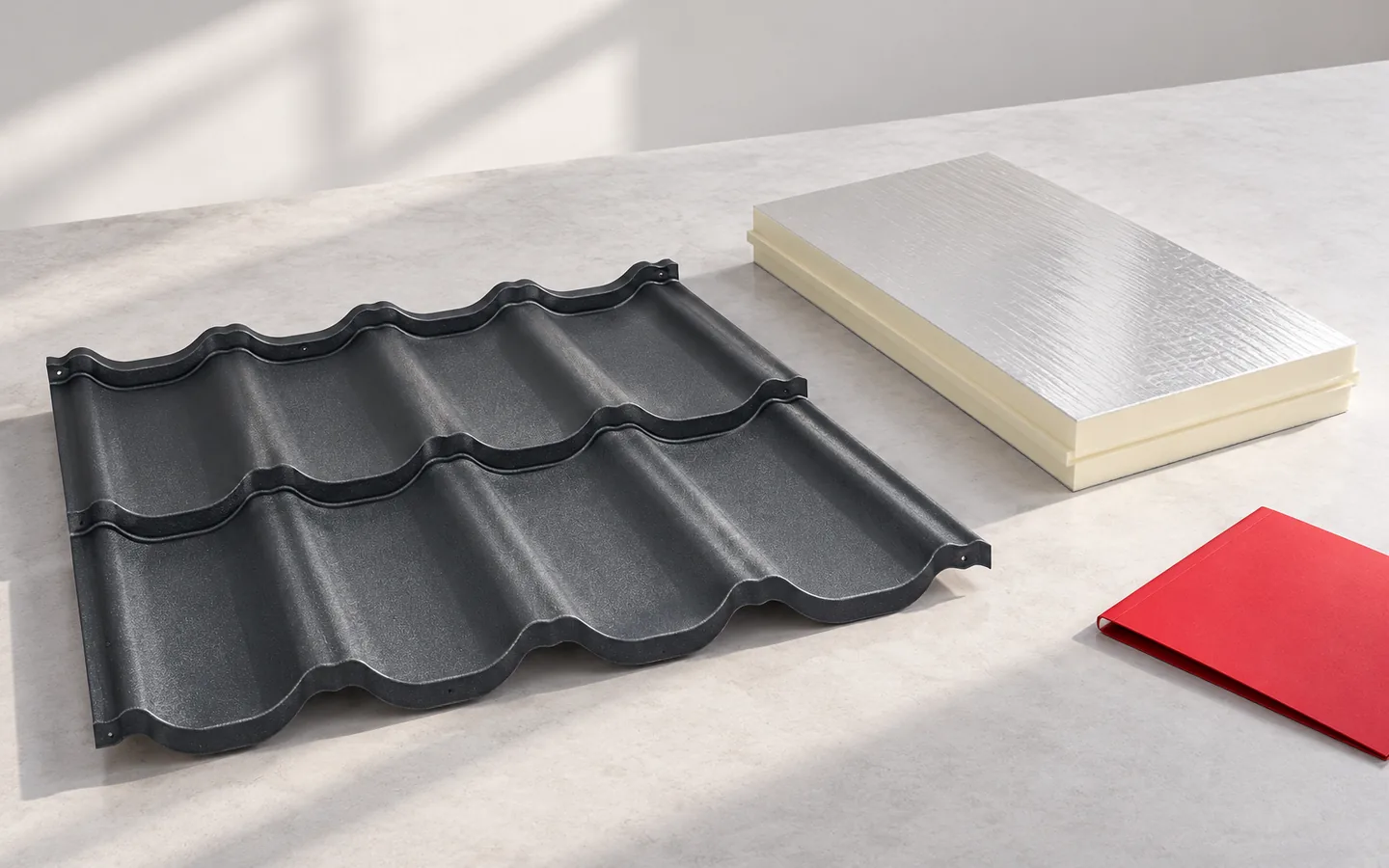
In a metal roof, insulation and airtightness do most of the work of limiting heat loss. Tile-effect metal sheets and T18 trapezoidal sheets can both cover a well-insulated loft. On a hall, a suitable sandwich panel can provide an insulated roof in a single unit. PIR insulation offers high thermal resistance at a relatively small thickness. The colour of the covering affects how hot the surface becomes, but it is only one factor in the building’s thermal performance. Thin steel conducts heat readily. Its main role on the outside of the roof is to keep rain out.
Which roof elements limit heat loss?
Thin steel sheet conducts heat well, so it does not act as insulation. It protects against precipitation and forms the outer part of the system. Heat flow is determined by all the layers and their connections. Insulation is particularly important, but so are the rafters, fixings and details at the walls. That is why the assessment is carried out for the whole building element, not for the sheet alone.
The U-value describes heat transfer through the finished system. Lambda relates to the material. A lower lambda helps to reduce the required thickness, but on its own it does not determine the roof’s U-value. The correct design values and the influence of the construction must be used for the calculation. Even a very good material can lose some of its benefit if it is laid with gaps or not connected to the wall insulation.
When does PIR provide a clear benefit?
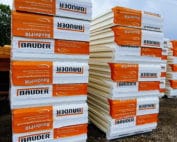
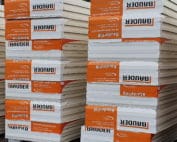
PIR is worth considering where space is limited or continuous insulation is needed. For example, a 10 cm layer with a lambda of 0.022 W/(m·K) has a resistance of approximately 4.55 m²K/W. A material with a lambda of 0.040 would need approximately 18.2 cm for a similar resistance. This is a simple calculation for a homogeneous layer. It does not determine what thickness is sufficient in a given house.
In an above-rafter system, continuous boards help to reduce the effect of the timber on thermal performance. When installed from inside, they can save height. In both variants, the joints, sealing of the connections and fixings are important. PIR is not a universal winner over EPS, XPS and mineral wool. XPS may meet moisture requirements, EPS cost requirements, and mineral wool fire and acoustic requirements.
How does a sandwich panel change the way the roof is built?
A roof panel has metal facings and a core. This allows it to combine several functions in one element. In a heated hall, it is selected with regard to U-value, load-bearing capacity, fire and internal conditions. A PIR core can provide good thermal performance at a relatively small thickness. However, panels must not be compared by centimetres alone. The influence of the joints is also important.
The airtightness of the joints, ridge and wall connection requires suitable tapes and flashings. A leaky connection can transport moist air and increase losses. A PIR insulation board with thin facings is a different product. It does not replace a self-supporting sandwich panel, and its use requires a separate substrate and protective layers. A similar core does not mean the same construction.

Does a light colour mean a cooler loft?
The colour and properties of the coating affect the absorption of solar radiation. A dark surface can heat up more than a light one under comparable conditions. However, the temperature of the covering is not the room temperature. Between them are the roof layers, cavities and insulation. The effect of colour depends on the whole system as well as the climate and solar exposure.
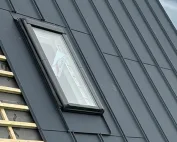
A specific cooling saving should not be promised solely on the basis of a change of shade. If a coating has declared radiation-reflecting properties, the specific data must be assessed. An ordinary matt finish is not automatically a special coating that limits heat build-up. In a loft, windows and their coverings can be of great importance. Overheating is analysed together with ventilation and room use.
What role do airtightness and ventilation play?
Thermal insulation and air tightness are related but are not the same. Air escaping through a gap at a window or wall plate bypasses a well-insulated surface. It also carries moisture into cool layers. Continuous connections of the airtight layer must therefore be planned. Later cable routing should not leave open penetrations.
A tight building still needs effective room ventilation. By contrast, the gap under the covering serves a different purpose and does not ventilate the dwelling. Felt under the sheet metal can temporarily take up condensate if it has conditions to dry out. It does not replace insulation or ventilation. The choice of layers should take into account the risk of condensation and the ability of the building element to dry out on both sides.
Where should you start when improving the efficiency of an existing roof?
It is first worth establishing the actual problem: insufficient insulation, gaps, leaks or large gains through windows. Inspections, documentation and properly carried out measurements are helpful. Simply replacing the metal roofing tiles with newer ones does not have to lower heating bills. Replacing the covering is, however, a good opportunity to repair layers that will later be difficult to access.
The design should specify the target layer arrangement and details at the eaves, walls and penetrations. The cost is compared with the expected effect for the whole building. The return on investment is not calculated solely from a catalogue lambda value. Energy consumption is also influenced by installations, the temperature in the home and the way it is used. A reliable upgrade begins with a diagnosis and ends with a check of the execution of the planned connections.
7 branches. Materials closer to your project.