PIR insulation
Pricing Powerroof above-rafter insulation and roof junctions
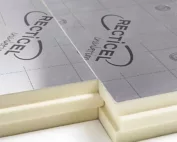
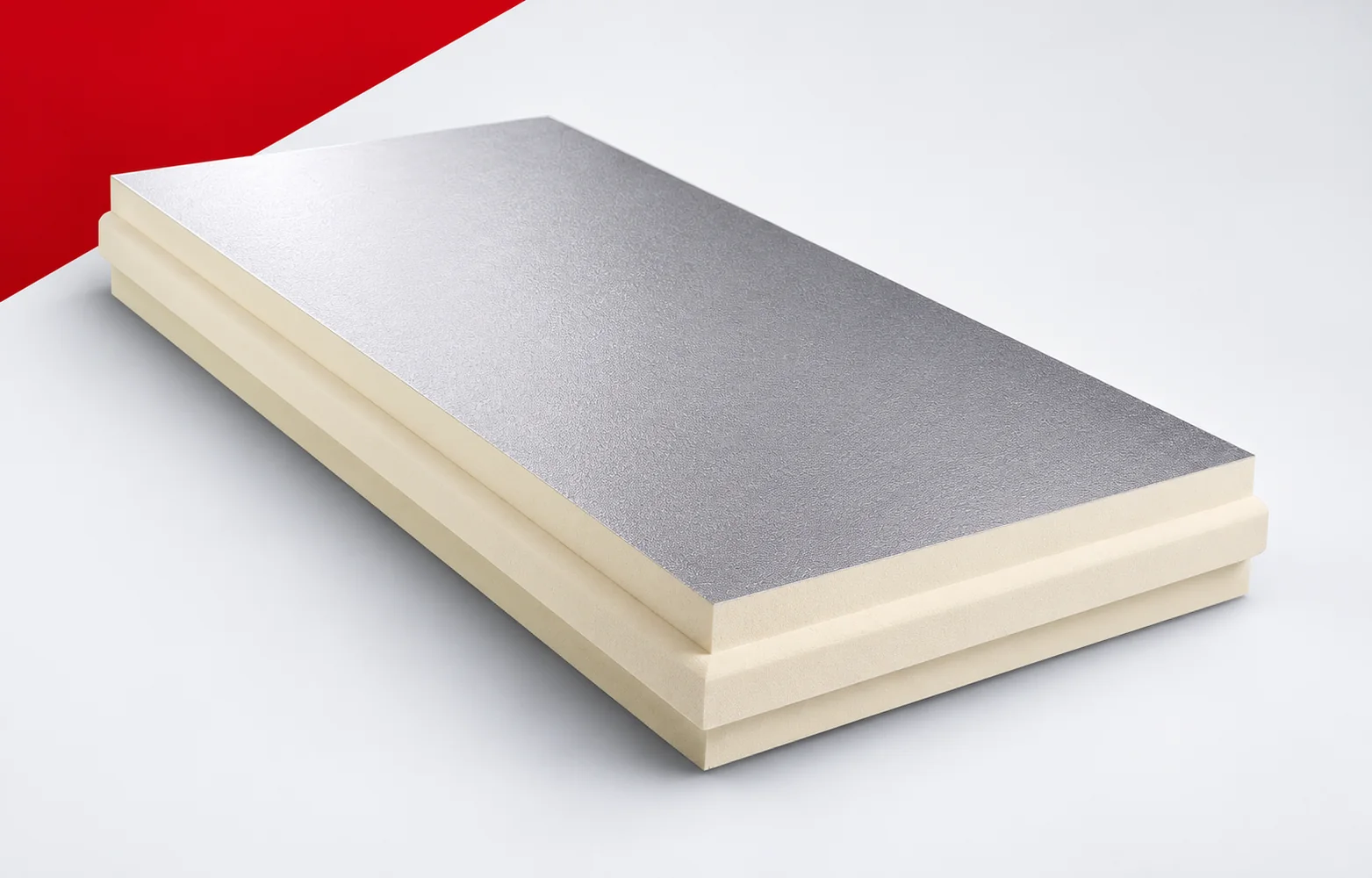
The price of Powerroof boards is only part of the cost of over-rafter insulation. Fixings, membrane, flashings and changes at roof windows must be added to the calculation. A comparison of two variants only makes sense when it covers the same works and a similar thermal effect. Recticel Powerroof is a PIR board for over-rafter thermal insulation of pitched roofs. It has an aluminium facing and a tongue-and-groove joint on all four edges. An enquiry about PIR boards should describe the over-rafter Powerroof layer installed above the timber structure of the pitched roof slope. Powerroof must be installed above the rafters while ensuring proper fixing of the entire roof covering.
An unambiguous scope of enquiry
Do not choose solely on the basis of a short commercial description, because continuous thermal insulation does not replace the elements that transfer forces from the covering to the structure. The compared offer is intended to allow the arrangement above the rafters to be used without omitting the support and changes to the roof geometry. Agree with the bidders on the course of the insulation layer, the height of the roof slope and the design of the connection to the timber elements, so that everyone prices a similar task.
What result is worth paying for
In the architecture of a pitched roof, the thickness of the layer above the rafters translates into the appearance of the eaves and roof windows. The lambda of 0.022 W/(m·K) declared for Powerroof allows the assumed thermal resistance to be achieved with a smaller board thickness, which makes it easier to fit the thermal insulation into the existing building details.
For Powerroof, calculate the thermal resistance of the layer from its thickness and the declared lambda of 0.022 W/(m·K), and for the roof slope add the fasteners that penetrate the insulation. A favourable value for the centre of the board alone does not describe the result at every roof detail, so a cheaper substitute may produce a different thermal effect. When assessing the price per metre, relate the space saving to the full cross-section, not to the foam alone. In the quotation table, record the fixing, the junction at the eaves and the insulation thickness at the terminations — only then will you link the price difference to the parameters.
The board format versus actual waste
The gross format of 2400 × 1200 mm and the coverage of 2380 × 1180 mm are two different values: the tongue and groove reduce the usable area. When planning the rows on the roof slope and the cut-offs around windows and roof valleys, you must calculate from the coverage, not from the external dimension of the Powerroof board.
Powerroof has a gross format of 2400 × 1200 mm, but after allowing for the tongue and groove the coverage is 2380 × 1180 mm. Calculating by the gross dimension will overstate the area that a given number of boards can cover and may understate the required order. Calculate the full elements by coverage, and then the losses at roof valleys, windows and the ends of rows. The allowance should result from the plan of cut-offs around the actual obstacles.
Parameters required for the application
CS(10/Y)150 and reaction-to-fire class D-s2,d0 are data for the Powerroof board itself. They do not make PIR a non-combustible material, nor do they replace the fire resistance of the entire roof; therefore, when assessing the solution for a specific building, they must be read together with the other layers of the building envelope.
For a Powerroof equivalent, check reaction-to-fire class D-s2,d0 and CS(10/Y)150, bearing in mind that they do not signify the non-combustibility of PIR or the fire resistance of the entire roof. Keep the Euroclass and the compression result separate from the load-bearing capacity of the covering fixing — a similar name or facing is not enough. The supplier should present data for assessing the mechanical and fire requirements at the correct level of the solution. Compare the documentation for the entire roof and the transfer of loads and wind forces to the structure.
Layers that must not be omitted
In a quote for Powerroof, the water-draining layer, the method of joining its laps and the closure at the chimney must be indicated separately. The aluminium facing of the board does not take over the function of the penetration flashing, so its absence from the quote means an incomplete scope, not a saving.
At the chimney, the rebate cut into the PIR board does not seal the penetration — a separate layer protecting against rain is needed, so indicate this location in the enquiry and ask about it separately. The aluminium facing of Powerroof does not itself form the chimney flashing or its terminations, so in the scope of roofing works establish whether the quote covers the continuity of the water shield and the laps. Only then does the price of auxiliary materials correspond to the real scope rather than to an omitted item.
Acceptance in line with the scope of the order
The cost of Powerroof includes the net covering, cutting around roof valleys and roof windows, and the flashings resulting from raising the roof slope. The new thickness of the assembly at the eaves and windows changes the scope of external works, which must be included in the schedule.
Adding the Powerroof above-rafter layer raises the roof slope, which usually changes the eaves and the flashings – these works must be included in the quotation, otherwise the purchase price does not correspond to the finished building envelope. Retaining the existing attic build-up may force a larger scope of external works, so the difference between offers is sometimes a difference in scope, not in the rate. When approving the order, check the net covering, the bill of quantities for fixing, flashings and works at the existing roof windows, and record every excluded item as a separate cost.
One Powerroof board has a gross area of 2.88 m², but its declared covering is 2.8084 m². This difference results from the geometry of the joint, even before adding cutting waste. With a larger number of boards, the value starts to affect the number of elements needed. The material price should therefore be related to the actual covering. Cuts at windows, roof valleys and the ends of the roof slope remain a separate item.
7 branches. Materials closer to your project.