Choice of covering
When do the advantages of sheet metal roofing matter most?
A sheet-metal roof can be light and quick to install, yet its advantages emerge only when weighed against a specific project. Check the load-bearing capacity of the existing roof structure, the batten spacing and the fixing method, because the sheet alone does not relieve the structure without verification. For a renovation, compare the cost of preparing the substrate and the full layer build-up, not just the weight per square metre of covering. The choice of profile and sheet format should suit the roof shape and the number of details. Leave the decision to use sheet metal to the designer, who will assess pitch, loads and the required coating protection.
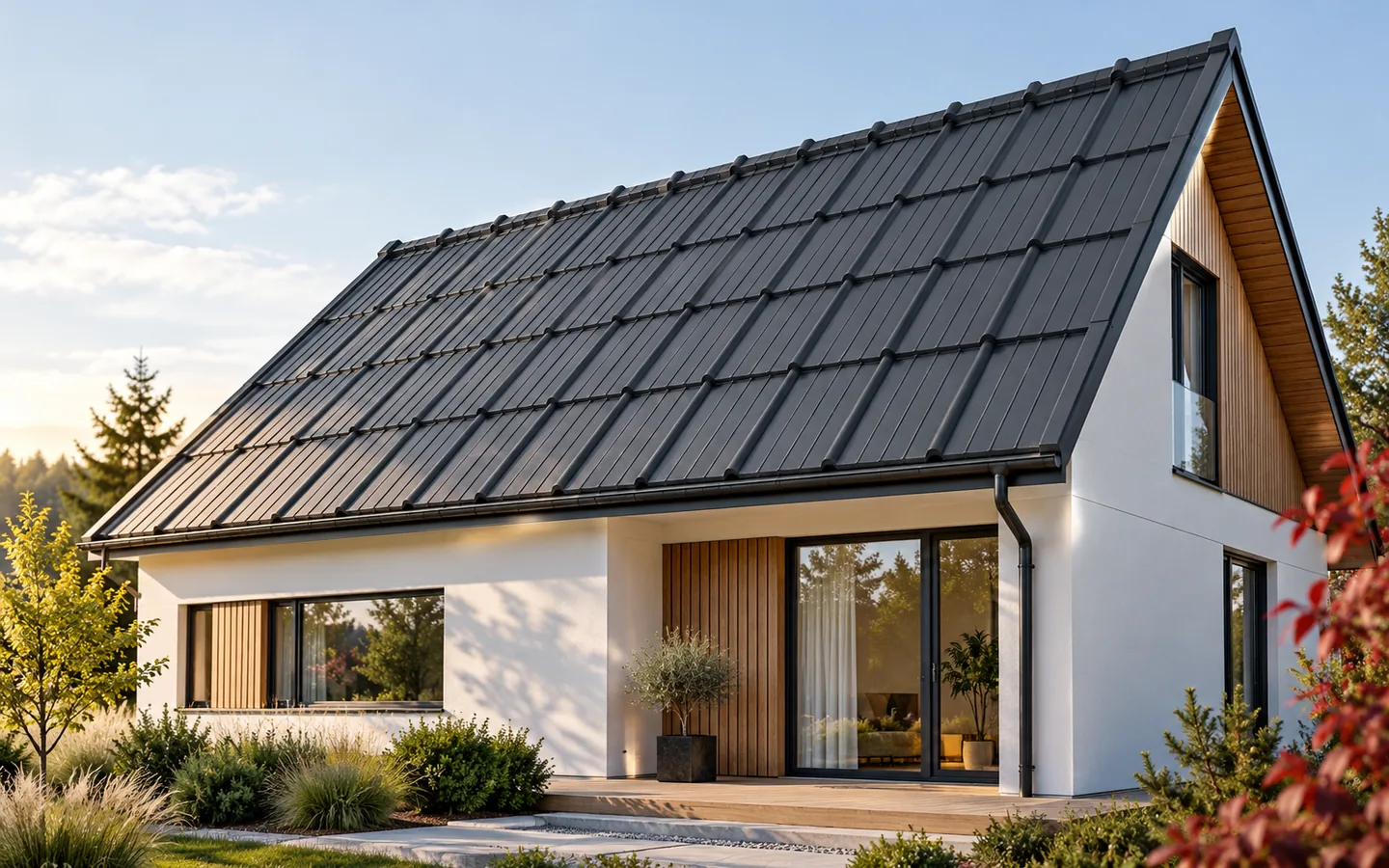
What does the low weight of the covering provide?
Metal roof coverings usually weigh a few kilograms per square metre, depending on thickness and profile. This can be an advantage when designing a new roof and during renovation. However, the entire layer build-up must be taken into account. Battens, decking, insulation and finish also load the structure.
Lightweight steel sheet does not mean that the old roof structure needs no inspection. Snow and wind still act on it. Fixing remains particularly important, as wind can lift the covering. Changing from a heavy material to a lighter one should be assessed in the design. Saving weight is a benefit, but it does not replace checking the condition of supports and connections.
The benefit of low weight is also evident during transport to the construction site. However, the load capacity of the equipment used and the method of lifting the packs must still be checked. The weight of the entire delivery is different from the weight of one square metre of covering.
Why can installation proceed efficiently?
Large sheets cover a considerable area with one placement. Modules, on the other hand, allow smaller elements to be conveniently supplied and adjusted. With a well-prepared substructure, both solutions can ensure efficient work. However, the pace depends on the number of details and the team’s experience, not just the sheet size.
The eaves, roof valleys, chimneys and windows require the most attention. Their execution must not be rushed at the expense of tightness. Before the material goes onto the roof, measurement and a complete set of accessories are needed. A missing flashing can halt work despite the availability of all sheets. Good logistics are part of the advantage of a metal covering.
How to match the appearance to the building?
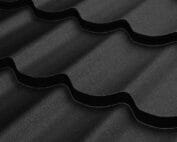
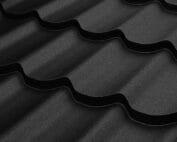
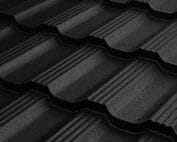
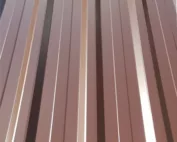
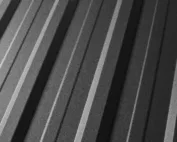
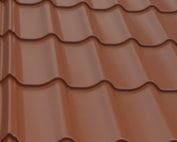
T18 creates a fine rhythm, while T35 has a more pronounced profile. Tile-effect metal roofing offers forms from corrugated to calm flat panels. This allows the covering to be matched to a traditional house, a contemporary form or a utility building. It is worth assessing proportions on a project with a similar roof scale.
Colour and gloss change the perception of the material. A sample is best viewed in daylight, together with the gutter and façade. The shade on screen is not a reliable reference. The coating should not be chosen solely by appearance. It must also suit the environment in which the roof will be used and the required surface protection.

When is cut metal sheeting worthwhile and when modular?
Sheets cut to size can be advantageous on a simple roof. They reduce the number of transverse joints and allow the length to be matched to the roof slope. However, they require appropriate transport and careful handling. A very long element is more easily deformed with poor organisation of feeding.
Modular tile-effect metal roofing is often convenient with many short roof slopes and bends. It can facilitate material utilisation, but does not provide a constant reduction in waste. The cutting plan must be calculated. Compare both variants taking into account flashings, fasteners and labour. The cheapest metre of the basic sheet does not necessarily make the cheapest finished roof.
What limitations need to be consciously addressed?
The sheet metal alone does not insulate the attic or provide a defined acoustic comfort. Proper layers, airtightness and ventilation are needed. Rain noise depends on the entire assembly. A roof over an open shelter cannot be compared with a finished house roof and the difference attributed solely to the type of sheet.
The coating requires protection during installation and subsequent inspections. Hot cutting, swarf and damaged connections can shorten durability. Correct fastening of additional equipment is also important. Photovoltaics or an antenna should not be mounted by randomly drilling through the covering without checking the structure and sealing.
How can you use the advantages on your own roof?
Start with the design and comparison of complete variants. Check the pitch, spans, steel thickness and coating. Ask for a laying plan and a quote covering accessories. Agree storage and delivery rules with the contractor. Well-ordered material should arrive on the prepared roof at the right moment.
Later, ensure unobstructed drainage and the condition of details. Sheet metal can provide a durable, aesthetic covering if the entire system works correctly. Its advantages do not stem from a single slogan. They are formed by low weight, convenient format, a wide choice of profiles and the ability to adapt to the building. Each of these benefits should be assessed under specific conditions.
For renovation, also compare the cost of preparing the old substrate. A covering that is easy to install still needs an even and stable framework. Omitting this stage can remove both the aesthetic and economic benefit of choosing sheet metal.
7 branches. Materials closer to your project.