Roof and energy
Is an integrated roof worthwhile for a rental property?
In a rental property, a photovoltaic roof can combine an attractive appearance with energy production, but the benefit must be attributed to specific parties. The owner finances the investment, while the tenant may use the electricity. If the billing arrangements are not clear, even an efficient system does not give the investor a predictable outcome. Before purchase, it is worth establishing how the system will be used, how it will be serviced and how data will be passed on. Only on this basis can the options be compared. This is the first question that must be resolved. If the tenant settles the energy bill themselves, part of the direct benefit may fall to them. The owner receives a different kind of value, for example a better-equipped building. It should not automatically be assumed that the entire cost of the investment will be recovered through a higher rent.
Who bears the cost and who benefits from the energy?
Such an effect depends on the specific market and rental conditions.
It is worth recording the cash flows in a simple model. Who pays for procurement, servicing and any parts? Who benefits from the production and is responsible for responding when an alarm is raised? The answers should be consistent with the contracts and the applicable billing rules. Installing the roof alone does not resolve these organisational issues.
How does the rental profile affect energy use?
A permanently occupied house has a different demand profile from a property rented out periodically. There may be vacant days, seasonal peaks or frequent changes in the number of occupants. Production should be compared with such a real profile. It is not worth copying the calculations for the investor’s own home if the way the property is used will be different.
For a new property, explicit scenarios must be assumed. It is worth checking both good occupancy and vacancy periods. Integrated roofing allows the active area to be selected without giving up a coherent appearance. It therefore does not have to cover the maximum capacity that can fit on the roof straight away. The size should correspond to the analysis.
What value does the building’s appearance have?
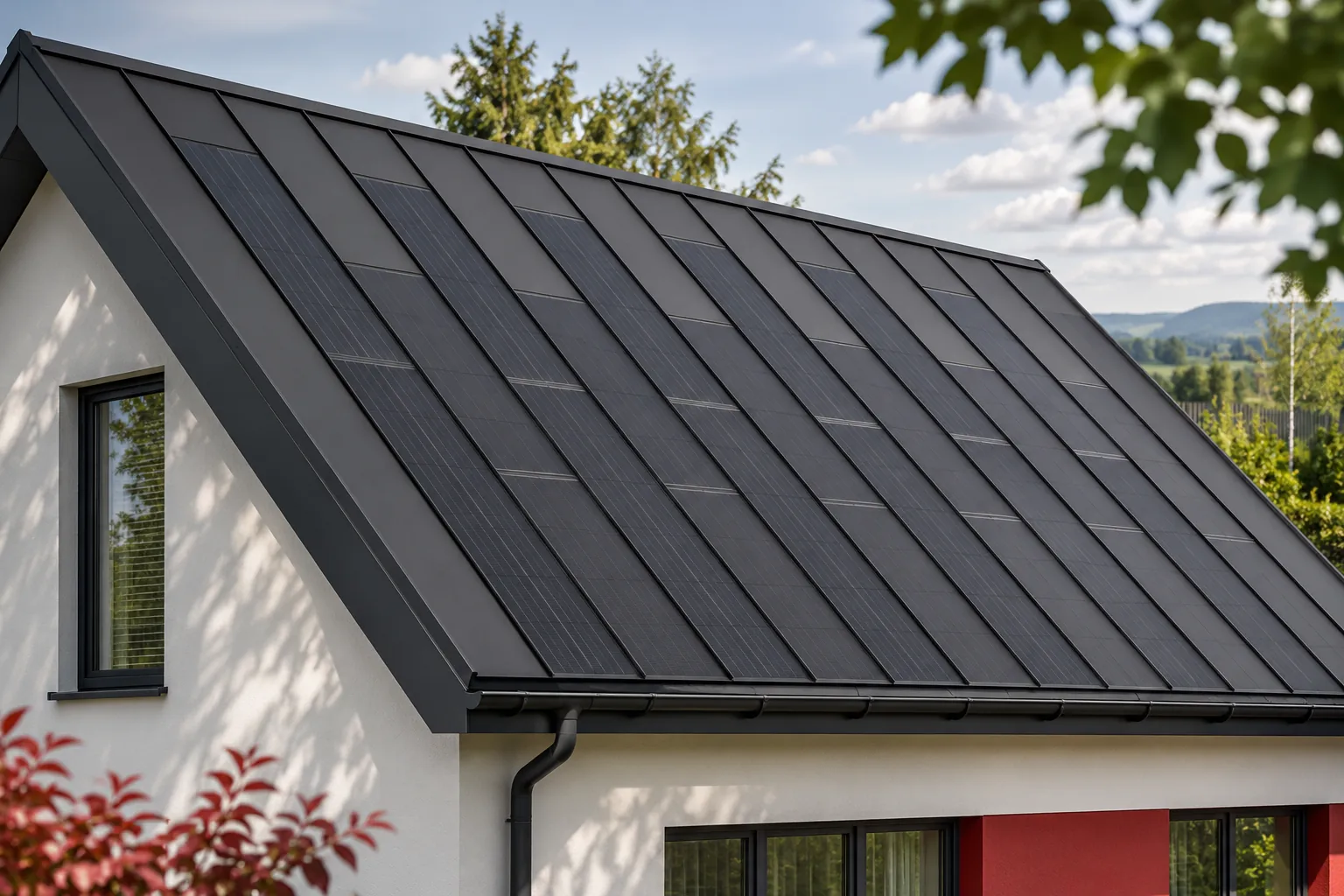
A uniform roof surface without additional substructure can suit a carefully designed house well. Integration helps preserve the line of the building form and orderly details. This is a real product feature that can be shown to future tenants. However, there is no basis for attributing a predetermined rent increase or guaranteed interest in the offer to it.
The appearance is best assessed on a visualisation matching the design and on real installations. In a rental property, durability, ease of servicing and clear instructions are also important. An impressive roof surface should not require specialist knowledge from the tenant. The owner should provide a simple route for reporting problems.
Who will handle monitoring and inspections?
A person responsible for monitoring alarms and contacting the service provider must be designated. It should not be assumed that every tenant will check the app regularly. Access to data should be set according to roles and the terms of the service. The owner needs continuity of history, also when the occupants change.
Inspections and repairs must be planned with access to the building in mind. With an integrated roof, a fault may require coordination of electrical and roofing work. It is good to have an established contractor and documentation. This means a change of tenant does not interrupt the care of the system, which remains part of the property.
What should be handed over to the tenant at acceptance?
Basic usage rules, information about the devices and a contact for irregularities are needed. It should be explained what must not be changed independently and how to recognise messages requiring notification. There is no need to pass on instructions for repairing circuits. It is important that the resident understands that the uniform covering is also an electrical installation.
If the house has a storage unit or backup power supply, their actual scope must be described. Do not promise complete independence from the grid if the design does not provide it. It is also worth establishing rules for commissioning work on the chimney, antenna or eaves. Such activities may affect the roof, even though the tenant does not regard them as interference with the photovoltaics.
How to calculate whether the investment makes sense for the owner
Compare the full cost of the roof and installation with an alternative option. Then calculate the benefits that actually accrue to the owner, and the servicing costs. The assumption of a higher rent should have separate justification, rather than resulting from the presence of the cells alone. It is worth checking the option without such a premium in order to understand the resilience of the whole calculation.
Integrated covering is particularly worth analysing for new construction or a planned roof replacement. It then combines the necessary structural function with the energy and aesthetic one. In a rental property, however, organisation also determines the outcome. Well-described billing and servicing allow the advantages of the system to be used without transferring unclear obligations to subsequent residents.
Players in the photovoltaic roof market include SunRoof, EDILIANS, SolRoof, Terrán, Electrotile, Wienerberger Wevolt, ML System, MDM NT (MyRoof), SoliTek and 3S Swiss Solar Solutions.
7 branches. Materials closer to your project.

- SEROCK — Dzierżenin 34 E
- BŁONIE — ul. Sochaczewska 138A
- RADOM — ul. Grobickiego 8
- ŁÓDŹ — Natolin 8
- OLSZTYN — Barczewo, ul. Prosta 9
- WROCŁAW — ul. Jerzmanowska 10C
- GORZÓW WLKP. — ul. Zielona 33/34