Construction and design
Which roofing materials give a roof a modern appearance?
A modern roof look depends above all on a coherent building form, well-proportioned roof slopes and high-quality details, not on choosing the most fashionable covering pattern. It is worth assessing the whole building, not just a sample of the material. Check whether the profile and colour suit the façade and the windows and doors, whether the layout of the modules and flashings brings order to the roof slope, and whether the technical solutions ensure tightness and durability. If you are installing photovoltaics, decide the panel layout before the roof is built. Also compare the cost of the complete system, including flashings, fixings and installation.
What makes a roof look contemporary?
The result depends on the proportions of the roof slopes, the number of breaks and how the edges are executed. A simple form with an even eaves line can look modern even with a distinctly profiled covering. Conversely, visually flat steel sheet will not bring order to a roof full of random additions. It is worth assessing the whole building, not just the material pattern.
The relationship with the façade and joinery matters. If the walls have a strong texture, a calmer roof can balance it. With a very simple façade, a more pronounced profile introduces the necessary detail. There is no single correct combination for all houses. A view of the building from several sides and samples of the planned materials help.
The word “fashionable” is not a technical parameter. It does not prove greater durability or investment value. When choosing a covering for years, it is better to rely on compatibility with the architecture. The short-lived popularity of a colour matters less than how it will look next to the façade and garden.
Which profile gives a calm roof slope pattern?
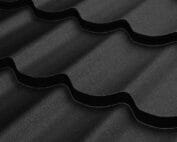
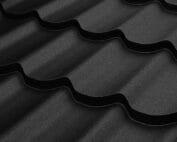
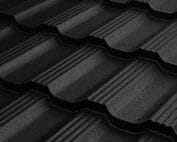
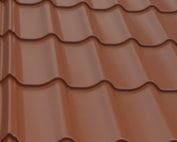
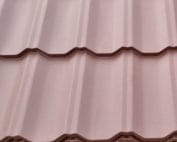
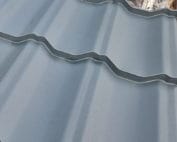
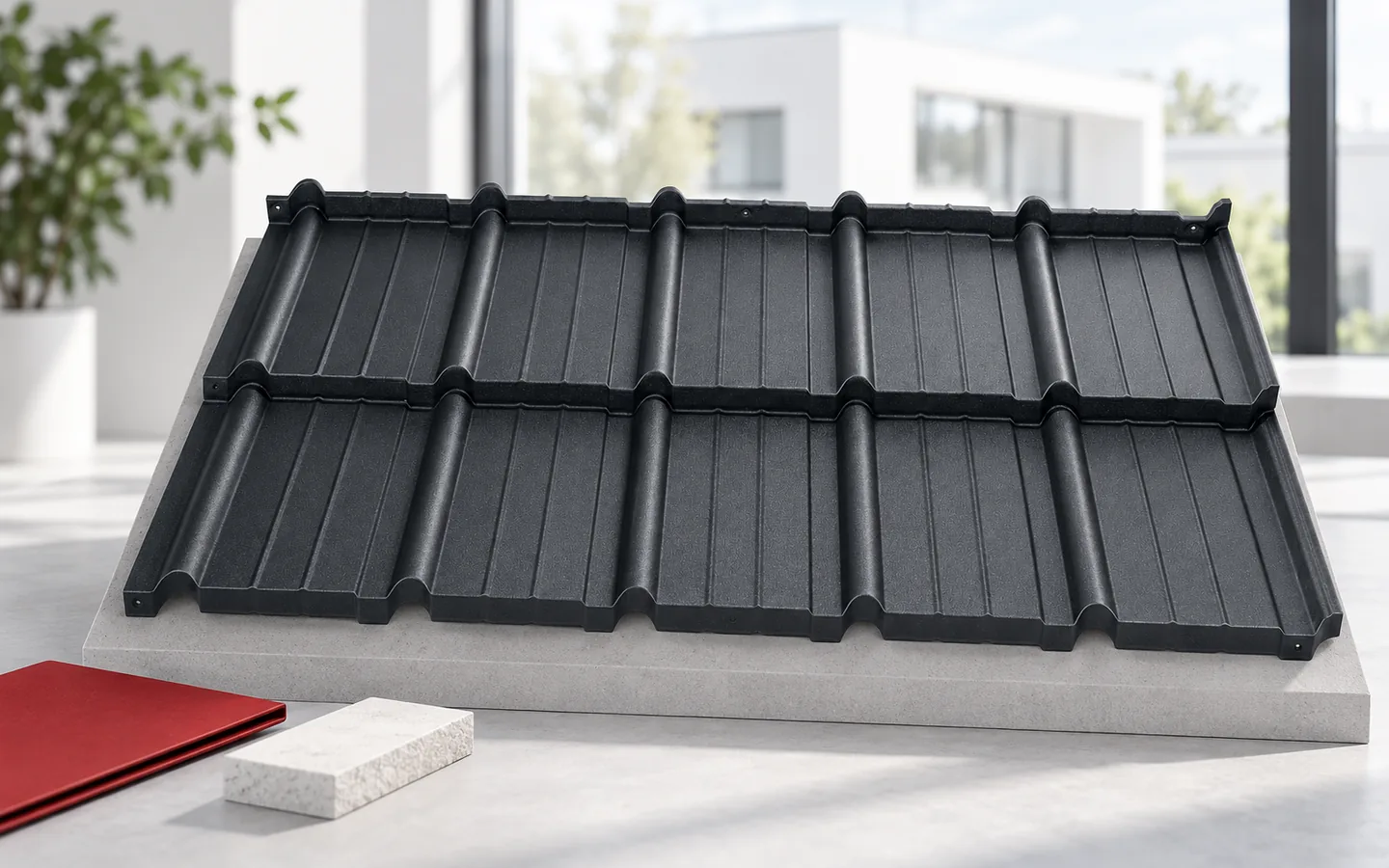
Modular tile-effect metal roofing can have a softer or distinctly geometric pattern. The effect is determined by the height of the embossing and the rhythm of the modules. It is worth viewing several joined sheets, because a single sample does not show the whole surface. A short format alone does not mean a modern look.
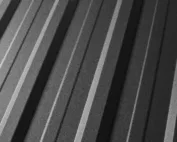
Trapezoidal steel sheet T18 creates a simple, linear division and can suit economical forms. T35 gives a stronger relief and is more often associated with technical buildings, although the application depends on the design. The profile should not be chosen solely by the light-and-shadow effect. The pitch, thickness and support spacing must be checked.
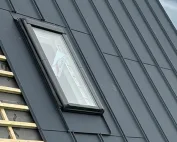
On a simple roof, sheets cut to size are also worth considering. Reducing the number of transverse joints can make the layout neater. However, a larger format requires careful planning for transport and handling. Aesthetics should not lead to ordering elements that are difficult to install correctly.

How do you choose the colour and level of gloss?
Matt surfaces give softer reflections than pronounced gloss. Graphite and black are easy to combine with many façades, but they are not the only good choices. With warm wood or brick, it is worth checking browns and muted shades. The colour should also suit the conditions of the project and the surrounding buildings.
The sample should be viewed outdoors. A screen can change the shade, texture and contrast. Gutter, window sill and covering marked with a similar colour may differ in gloss. If this matters for the design, the order must be described precisely. The colour name alone does not specify the type of coating.
Dark steel sheet heats up strongly in the sun. This does not automatically mean an overheated loft. Comfort depends on insulation, ventilation and windows. At the same time, recommendations for the thermal movement of components must be observed. The chosen appearance must work with the correct arrangement of layers and fixings.
Which details should be limited and which kept?
A modern effect often comes from the orderly arrangement of flashings and accessories. Their lines should follow the roof geometry. This does not mean removing everything that is visible. Ventilation, drainage, service access and protection appropriate for the building remain necessary. They can be planned coherently instead of being added at random.
In a roof without eaves, the junction detail with the wall is especially important. Concealed drainage requires access for inspection and provision for emergency solutions. It should not be chosen merely because the gutter disappears from the façade. Any leakage can have more serious consequences than with an easily accessible external gutter.
With photovoltaics, it is advisable to determine the panel layout before the roof is installed. Fixings and penetrations should match the covering and the structure. Even distribution of the installation helps maintain a calm appearance of the roof slope. However, this must not come at the expense of correct spacings and service access.
How do you decide without following fashion alone?
Narrow the choice to materials approved for the given roof. Then compare the appearance on the building volume and the cost of the complete system. The quote should include flashings, fixings and installation. A non-standard detail may cost more than the difference between two types of steel sheet.
Check how the covering can be cleaned and repaired. The availability of accessories and the possibility of ordering replacements are practical advantages. It is also worth viewing a completed project at a similar scale. A large hall and a small house show the same profile in completely different proportions.
A good choice should also stand up without the word “trend”. The roof must suit the house, drain water and retain its properties over the years. A consistent colour, correct divisions and carefully executed details usually produce a more lasting effect than the most distinctive pattern from the current catalogue.
7 branches. Materials closer to your project.