Roofs and details
Why is a new metal roof leaking? Eight places to check
A wet patch under a new roof does not have to mean faulty sheet metal. Water can get in through a joint, flashing or a hole left after installing services. Sometimes it comes from condensation on the inside of the covering. It is worth tracing its path before starting a repair. The place where it drips can be some distance from where the problem started. The first cause is a roof pitch lower than that permitted for the chosen system. Water then flows differently from what the joint detail assumes. The length of the slope and the presence of transverse joints also matter. The name ‘trapezoidal’ or ‘standing seam’ alone does not define the permitted fall.
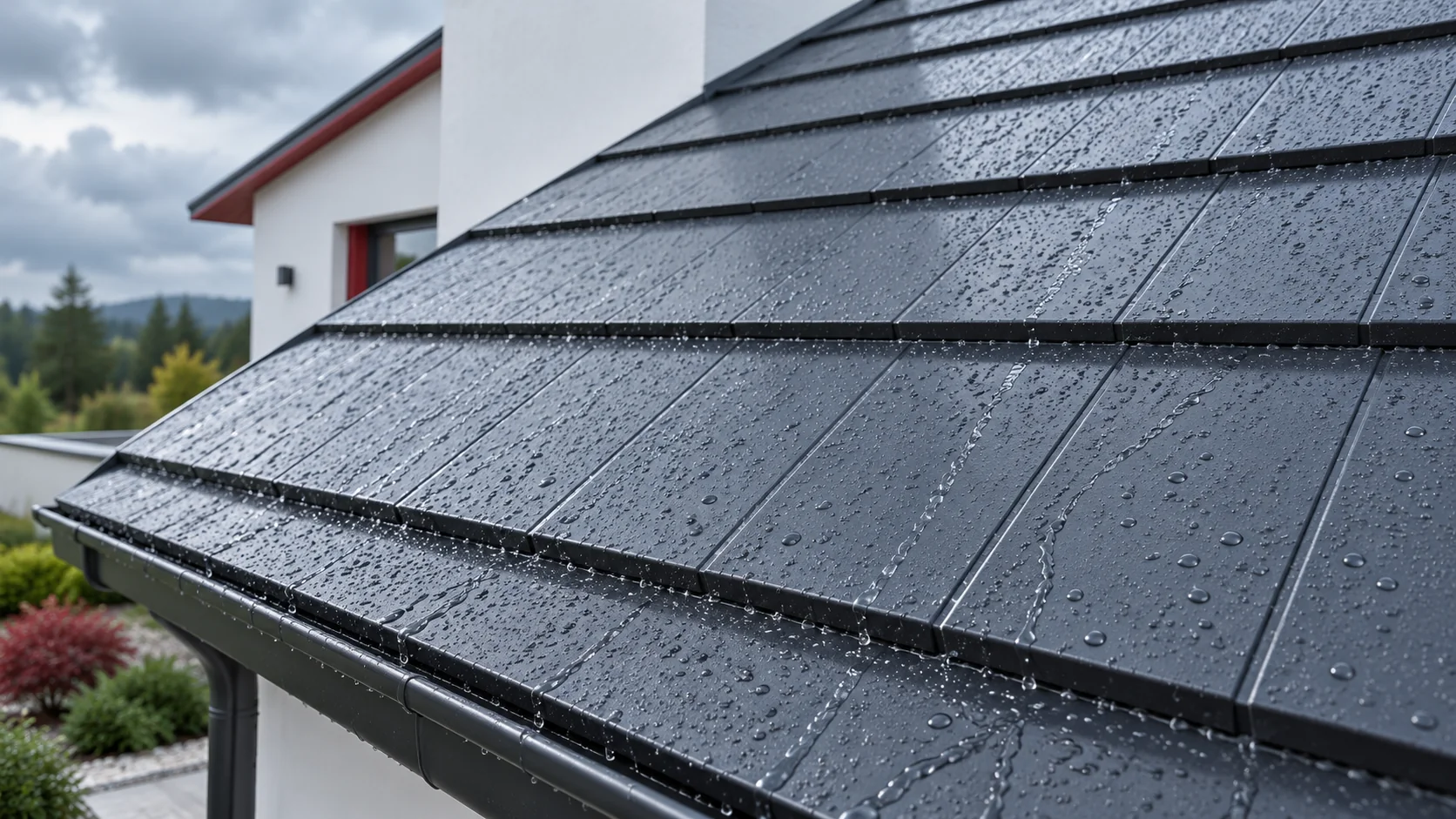
Do the pitch and laps suit the covering?
The second cause is faulty laps. Sheets may be joined the wrong way round, not pushed together properly or supported in the wrong place. Water is held back by the obstruction or drawn up into the gap. An additional sealing strip does not always correct a geometry error. The shape of the joint and its compatibility with the chosen covering must be checked first.
Are the screws and the sheet surface watertight?
The third place is the fastenings. A screw driven in at an angle may press the seal unevenly. If it is too loose, a gap remains, and if it is too tight, it may damage the seal or deform the sheet. The screw must also suit the substrate and hit a structural element. An even row of heads does not prove that all the connections are working correctly.
The fourth cause is damage to the sheet. A hole may be made during handling, drilling or work by another team. Not every scratch causes a leak straight away, but exposed steel requires assessment and proper protection. Swarf left on the surface can corrode and leave marks. It should not be rubbed into the paint during cleaning.
Do the flashings and roof valleys lead water to the outside?
The fifth cause concerns the connections to chimneys, walls and roof edges. The flashing may be too short, poorly connected to the covering or rigidly tie together elements that move independently. The part on the ridge side is particularly important. That is where water flows in from the section of slope above the obstruction.
The sixth place is the roof valley. It collects water from two slopes, so it must not be treated like an ordinary gap between sheets. Insufficient clear width, incorrect sheet ends or fastenings in the path of the flow can cause seepage. Accumulated leaves further obstruct drainage. The appearance of the valley must be assessed together with its actual function.

What did the service penetrations and the initial covering change?
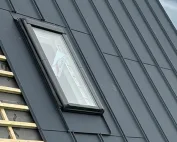
The seventh cause is penetrations made later: a ventilation chimney, a duct, a bracket or a fixing for equipment. The penetration must suit the roof profile and pitch. It is not enough to seal tightly around the pipe at the top if water can enter under its base. The installer and the roofer should agree such a detail before cutting the hole.
The eighth cause concerns the layer beneath the covering. A damaged membrane, poorly executed upstand at the chimney or a termination without drainage will not take up incidental water. The initial covering is part of a specific roof build-up. It does not permit a defective covering, but its faults can turn minor dampness into wet insulation and a stain on the ceiling.
How can you tell a leak from condensation?
Note when the dampness appears. Is it after rain from a particular direction, during a thaw, or in the morning after a cold night? Condensation can form on cold steel sheet without precipitation. In a new building, moisture from plaster and screed is added. Its removal and the airtightness of the layers on the inside then matter greatly.
The inspection begins with the accessible places inside and with photographs. Do not climb onto the wet roof slope yourself. A specialist checks both the covering and the course of the layers. A water test, if needed, should be controlled. A strong jet directed under the lap can introduce water where ordinary rain does not.
How do you prepare an effective repair and acceptance?
Mark the location of the stain, the date, the weather and the course of the installations on the plan. Keep the photographs taken before the insulation was covered. This helps to narrow down the area to be checked. Do not apply further random compounds over the whole surrounding area. This can obscure the cause, make it difficult to take the detail apart and block drainage.
The repair should eliminate the identified fault. Sometimes it is enough to correct a joint, and sometimes a flashing or a section of the covering needs to be replaced. Damp layers require assessment and drying. At the acceptance of a new roof, it is worth inspecting the critical places before the ceiling is installed. After rain, it is easier to check whether the solution works when the interior remains accessible.
Questions and answers
Can every leak be sealed with silicone?
No. A compound will not correct an incorrect slope, a reversed lap or a poorly formed flashing. The sealant must be matched to the identified cause and the materials.
Why does water drip far from the damage?
It can travel along the underside of the sheet, the membrane or the structure. The stain on the ceiling shows the point of exit, not always the point where water enters the roof.
7 branches. Materials closer to your project.