Maintenance and durability
How coatings affect the life and appearance of tile-effect steel roofing
A metal roof tile owes its durability and appearance to the full coating system, not the outer paint alone. Colour and texture are only the finish: beneath them sit the steel core, metallic protection and layers that prepare the substrate and form the organic coating. Each has its own job, so judging a product by gloss or micrometre count can mislead. What matters is the type of protection, resistance to corrosion and sunlight, service conditions, and the complete material the profile was made from. Installation and maintenance also shape durability.
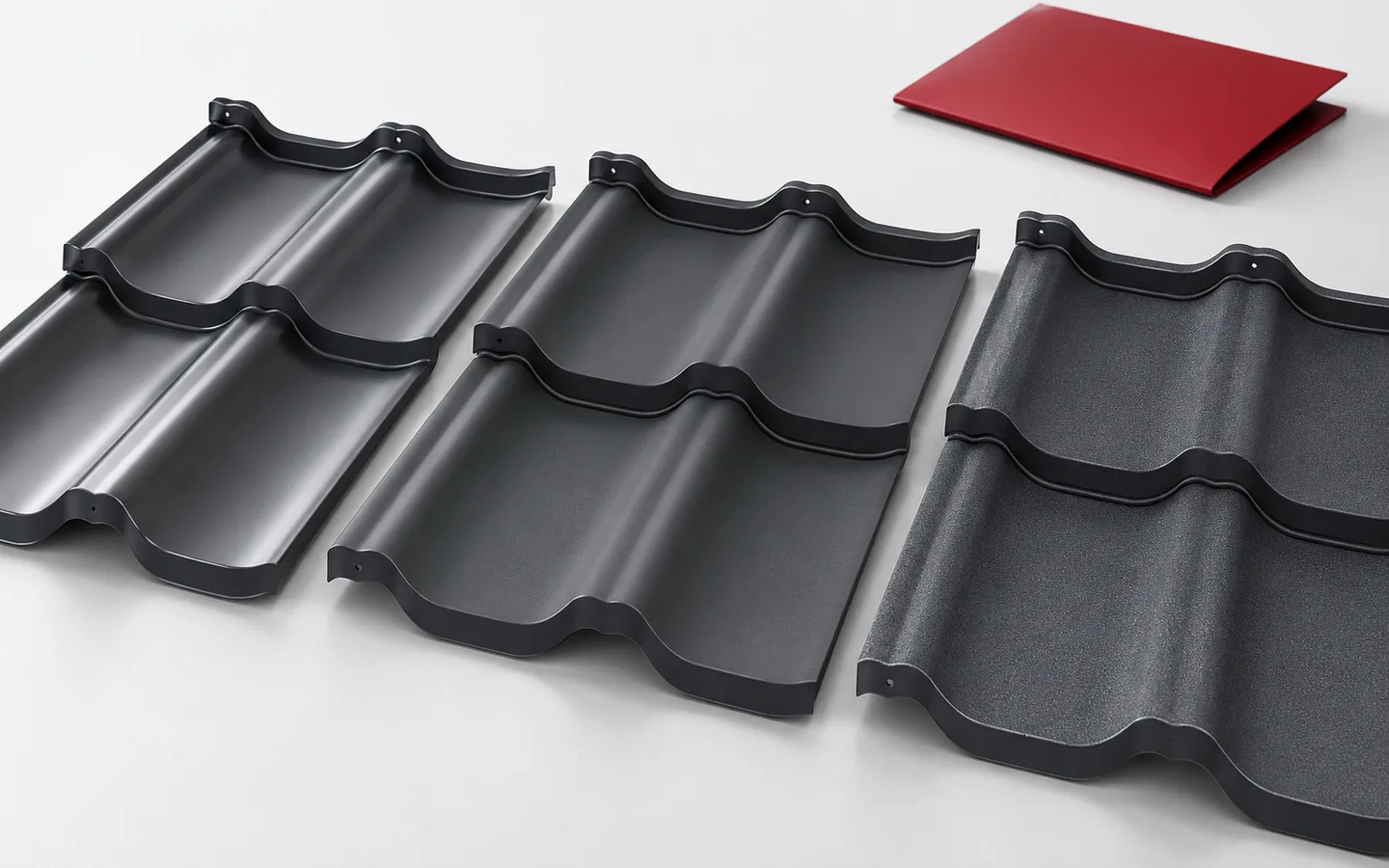
What layers protect the steel sheet?
Beneath the coloured surface lie a steel core and metallic protection. Further layers prepare the substrate and form the organic finish. Their functions complement one another. The product therefore cannot be judged by the external paint alone. What matters is the complete material used for profiling.
The underside also requires protection suited to the application. In a building with a damp or aggressive interior, it should not be omitted. The external decorative layer and the protective lacquer underneath may serve different purposes. This difference also matters for sheets used for fences and façades.
Damage during cutting or handling can impair the protection. A good coating system therefore does not excuse improper installation. Swarf, scratches and prolonged storage of damp sheets can spoil the result. The factory parameters are only effective if the material reaches the roof in the right condition.
How do the coating families differ?
The range of coverings includes polyester, polyurethane and solutions combining different layers. Within one family there are variants with different properties. It is therefore not possible to fairly rank all products on the basis of the plastic name alone.
Polyester comes in finishes with different gloss levels and textures. Polyurethane coatings may offer increased resistance under certain conditions. However, the specific properties must be confirmed in the documentation. The marketing term “premium” does not replace parameters or information about the permitted service environment.
The choice should follow the needs of the project. On a sheltered house in a mild environment, different properties may matter than on a building near the sea or industry. A more expensive coating may be justified, but it is worth knowing which property you are paying for. A longer sales description alone is not proof of superiority.

Does greater thickness always mean a better product?
Coating thickness is important information, but it must be read together with its composition and intended use. Two layers of similar thickness may behave differently in terms of colour retention, scratch resistance and reaction to the environment. A thicker coating, in turn, will not compensate for a steel core that is too thin or damaged.
Paint thickness should also not be confused with the thickness of the entire sheet. Micrometres of coating and millimetres of core describe different elements. In the offer, it is worth looking for both parameters and the type of metallic protection. Such a combination shows whether the price difference results from a real change in material.
Tolerances and the method of declaring data are important. Measuring the entire sheet with a simple instrument will not confirm all layer properties. In case of doubt, it is better to request documentation than to draw far-reaching conclusions from a single figure. Assessing the coating requires consistent product information.
How do the environment and colour influence the choice?
Moisture, contamination and salinity can increase the requirements for protection. Some applications require confirmation of suitability based on local conditions. It is worth describing these before purchase. The fact that the building is a single-family house does not yet define the environment in which the roof will perform.
Colour and gloss relate to appearance, but they also affect surface heating. Dark elements require compliance with recommendations on thermal expansion and panel length. Matt should not be equated with automatically greater durability. Resistance is determined by the characteristics of the specific coating system, not just the visual effect.
Compare samples in natural light. A similar colour code in two systems can produce a different shade and texture. This also applies to flashings and gutters. If consistency is to be exact, it should be established at the time of order and attention paid to the material batch.
How to read the warranty and care for the surface?
The conditions may separately cover perforation and aesthetic characteristics. Protection periods are not the same as the expected roof service life. The exclusions, the maintenance method and the conditions for notification are important. Two warranties are not compared solely by the highest number of years visible in the advertisement.
After installation, swarf, material residues and film are removed in accordance with the instructions. During use, it is worth checking places where leaves or deposits accumulate. Cleaning is carried out with agents compatible with the coating. A strong concrete stain remover may be unsuitable for coated sheet.
Scratches and local damage should be assessed before a larger problem develops. Keep documentation of the material and the repair agents used. A well-chosen coating provides a benefit when its intended purpose matches the roof and the installation and care method do not destroy the factory protection.
7 branches. Materials closer to your project.