XPS insulation
XPS or mineral wool? Different tasks in one building
XPS and mineral wool restrict heat flow, but they do so as materials with distinctly different structures. Extruded polystyrene is a rigid foam, while mineral wool has a fibrous structure. This gives rise to important differences in application. The colloquial name Styrodur does not describe these properties. A comparison should cover not only thickness but also moisture, loads, and fire and acoustic requirements. A foundation is in contact with the ground, a loft has different moisture conditions, and a partition wall may need to absorb sound. No single material can be identified as the best for all these locations. XPS is selected where its combination of properties matches actual needs.
The choice starts with the function of the building element
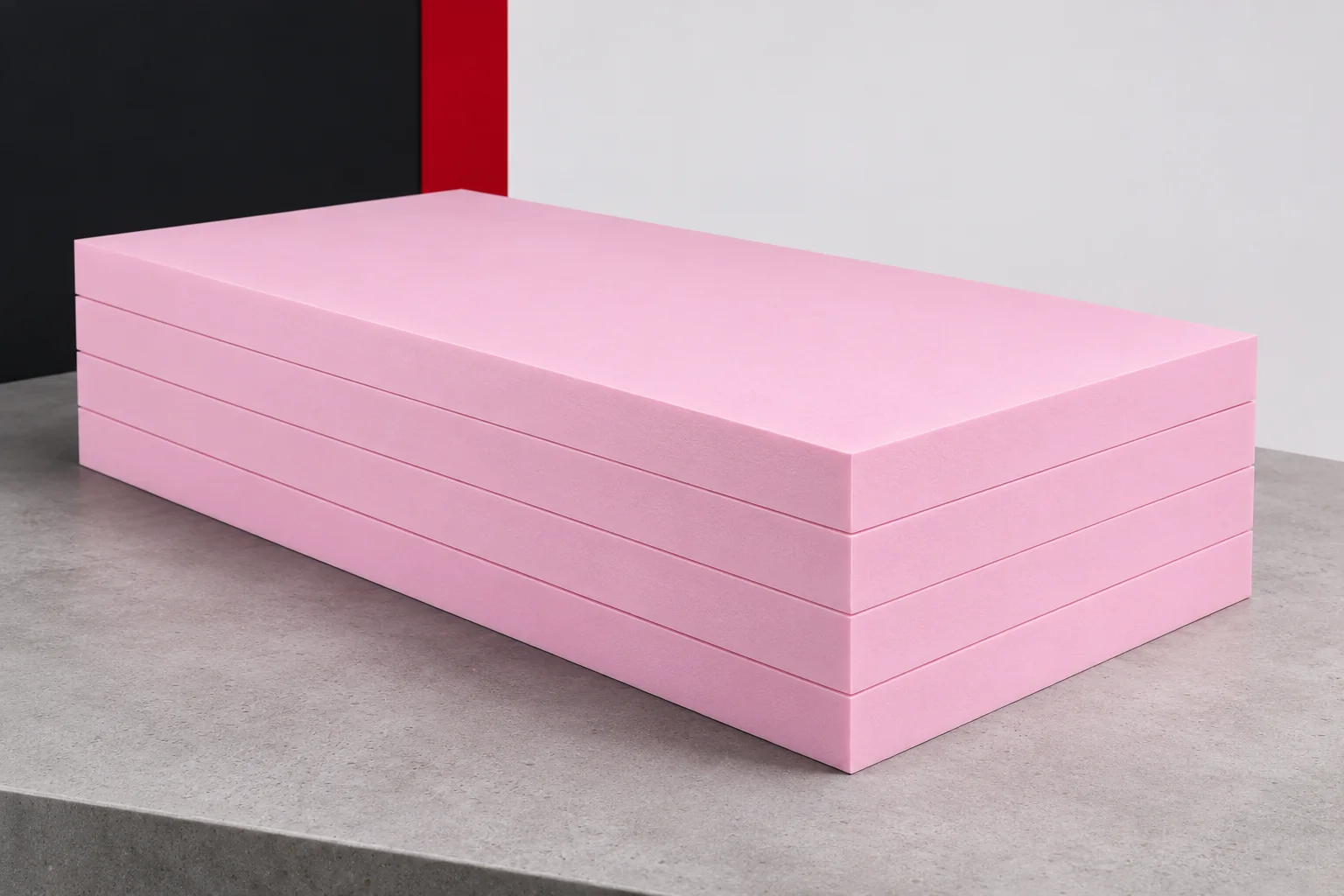
Extruded polystyrene is valued for its low water absorption and rigidity. Mineral wool offers other advantages, depending on the specific product and layout. In a single building, both materials can work together in different zones. This requires correctly designed connections and continuity of thermal protection.
Moisture is an important argument for XPS
The compact, closed-cell structure of XPS limits water uptake. This is useful in appropriately designed foundations and inverted roofs. In such places it should not be replaced with any mineral wool board simply because both have a similar lambda.
Extruded polystyrene also has limits of application and a declared, not zero, water absorption. Waterproofing and drainage remain separate elements. With mineral wool, the product intended for the given building element and the method of protection against water must be assessed. Comparing entire families without conditions is too general.
The rigidity of XPS helps under load
XPS is available in variants that allow loaded thermal insulation layers to be designed. This is an advantage beneath a properly executed substrate, surface or structure. Mineral wool also has specialist boards for specific loads, but not every mat is suitable for such work.
Extruded polystyrene must be checked for creep and permissible deformation. A short-term compression class is not a ready-made service limit. In both groups, support and load-distributing layers are important. Replacing the material requires assessment of the whole cross-section, particularly under point loads.
Fire reaction can determine the solution
Selected mineral wool products have an A1 classification, meaning they are non-combustible. XPS should not be attributed with such a characteristic. Its classification must be read for the specific variant. The difference matters where the project sets specific requirements for materials and their coverings.
At the same time, the reaction-to-fire class is not the fire resistance of the entire wall or ceiling. The two issues must be kept separate. XPS may be used in an approved, suitably protected assembly, but it should not replace a required non-combustible layer solely on the basis of similar thermal insulation performance.
Acoustics require the right structure and layout
Mineral wool is sometimes used in solutions that limit sound transmission. However, the result depends on the entire partition and the correct type of material. XPS is not automatically a substitute for a sound-absorbing layer or resilient floor insulation.
A rigid board has a different task from a mat in a partition wall. One should not promise acoustic improvement simply because the thickness of XPS has been increased. If both thermal and acoustic protection are needed, the design may combine different materials. Each of them should perform a clearly described function.
Assess water vapour across the whole cross-section
Fibrous insulation and closed-cell foam may offer different resistance to vapour flow. However, this alone does not allow the moisture conditions of the entire wall to be assessed. Data for all layers, internal and external conditions, and the way joints are executed are needed.
XPS manufacturers include Finnfoam, FIBRAN and PNP, among others. Their board documents allow the properties needed for calculations to be read. Adding XPS on the inside of an existing partition may change its temperatures and its ability to dry out. Such a decision must be verified rather than based on a general slogan about the material breathing.
Compare the lambda and thickness of specific products
There is no single thermal conductivity value for all XPS or for all mineral wool. The required resistance can be achieved with different combinations of material and thickness. Operating conditions and the influence of structural elements and joints must also be taken into account.
XPS is convenient for precise cutting and creating rigid surfaces. A soft or resilient variant of mineral wool may better suit a different geometry. The installation method should follow the product instructions. Merely filling a void with a random material does not mean that correct insulation has been installed.
Assess cost once the requirements are met
First, solutions that do not meet the moisture, fire or load conditions should be eliminated. Only then is it worth comparing the remaining variants by cost. The cost of XPS also includes coverings, substrate preparation and installation. For mineral wool, the range of required components may be different.
A well-chosen insulation system does not have to be the same everywhere. XPS can perform at the foundations, while the right mineral wool can be used in another part of the building. This approach makes use of the strengths of both material groups. It avoids paying for properties that are not needed and the risk that comes from cutting costs where a given material should not be used.
7 branches. Materials closer to your project.