Roof and energy
When should you decide against a photovoltaic roof despite its advantages?
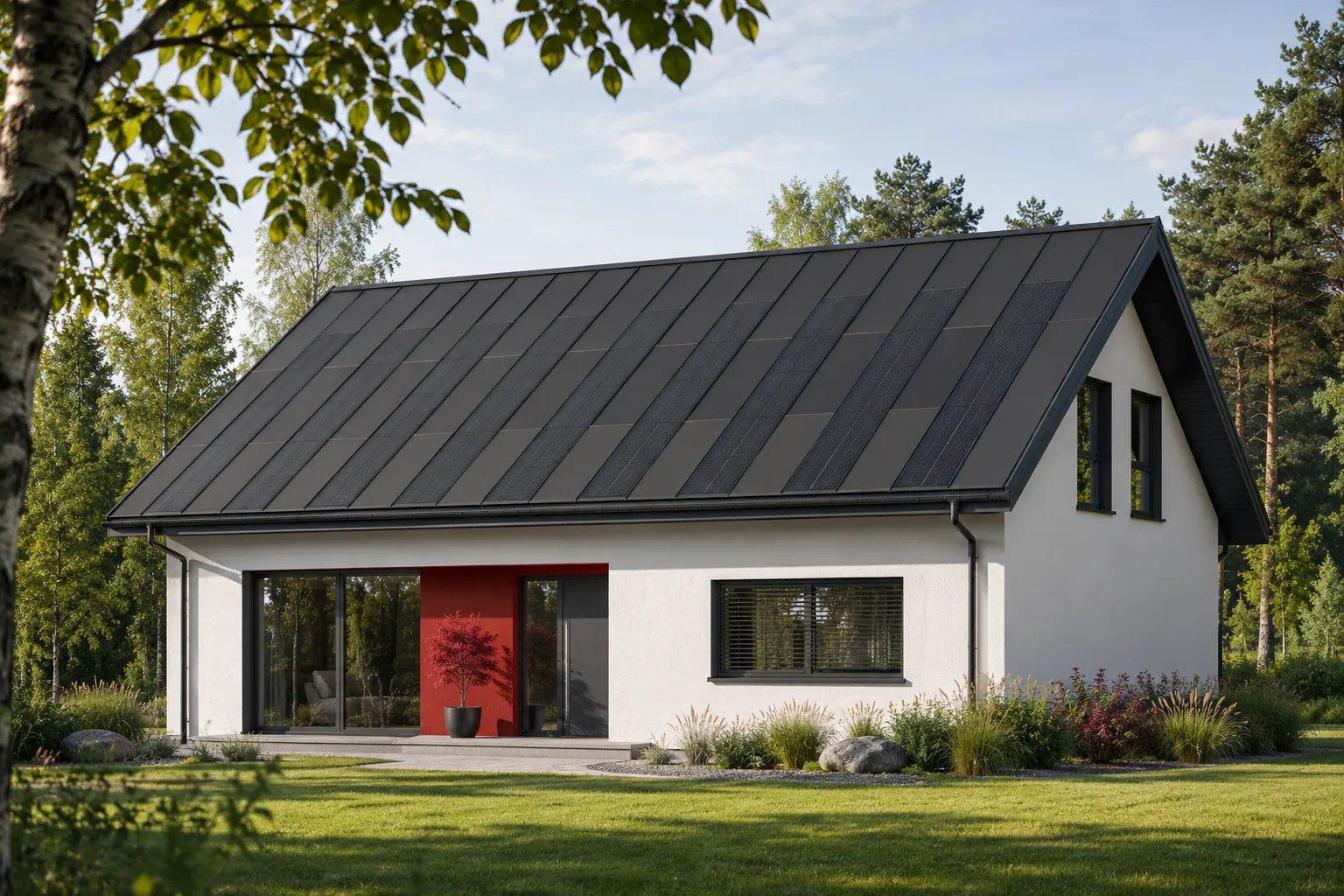
An integrated roof gives a coherent appearance and combines the covering with energy production. It is best considered for new builds or a planned roof replacement. However, this does not mean it will be the best choice for every building. Sometimes the obstacles are technical conditions, poor solar exposure or an unjustified cost of reconstruction. A reliable decision takes these limitations into account. This ensures the system is installed where its advantages can actually be utilised. If the covering is sound and recently installed, removing it solely for integration may be difficult to justify economically. The value of the remaining service life and the cost of new works must be taken into account. This situation should not be compared with building a house, where the roof is being constructed anyway.
Does the existing roof really need replacing?
The starting point significantly changes the calculation.
It is then worth analysing other ways of obtaining energy, including installation above the existing covering if it is suitable for this. This does not mean giving up the advantages of integration forever. In a future renovation the situation may look different. The decision should correspond to the current state of the building, not just to an attractive visualisation of a new roof surface.
What if the solar conditions are poor?
Extensive shading or an unfavourable surroundings can limit the yield. One should not assume that electronics will completely compensate for a lack of light. An analysis is needed for the specific location and year. If the additional energy is small relative to the cost, the active area can be reduced or another solution considered. The available roof area alone does not yet create energy value.
An integrated system allows active and passive parts to be combined aesthetically, which helps with partial use of the roof surface. However, even such a variant should be justified. It is not necessary to buy cells in every difficult location. A sound design can indicate the point beyond which further increasing the active area ceases to be sensible.
When is roof construction the limiting factor?
The pitch, geometry, condition of the structure and details must correspond to the product’s conditions of use. Not every system suits every roof. If the solution requires significant reconstruction, its cost and impact on the building must be calculated. Requirements must not be omitted merely to stay within the assumed budget or deadline.
Particular caution is required when copying parameters from another variant. The permissible pitch or method of support relates to specific documentation. If the supplier does not confirm the application, it is better to choose a solution suited to the property. The advantages of a uniform covering do not replace a correct structural and roofing design.
Is the lack of a good contractor a reason to postpone the decision?
Yes, if competent execution and servicing are not ensured. An integrated roof requires coordination of roofing and electrical work. It is not worth treating the building as a place for experimentation with random connections. The contractor should know the system, document the work and be able to explain the repair procedure. Access to service is part of the practical value of the solution.
You can wait for the right team or switch to a variant with confirmed support. However, you don’t have to reject the technology just because one offer was incomplete. It’s worth clarifying the scope first and comparing contractors. The decision to opt out should stem from a genuine lack of feasibility, not a single misunderstanding.
When is the budget based on overly optimistic assumptions?
A warning sign is a calculation that only works at maximum production, full self-consumption and zero servicing costs. Treating unconfirmed support as a certain source of funding is similarly risky. It’s worth checking a more conservative variant and the full cost of an alternative roof. This allows you to assess whether the investment fits within realistic possibilities.
You don’t always have to give up the whole thing. You can reduce the active area, postpone additional equipment or better prepare the scope. Every change requires technical confirmation. The worst way to save is to omit necessary layers, protections or acceptance. Aesthetics and energy only make sense when they stand on a correctly executed roof.
How do you recognise a situation that favours integration?
A good starting point is a planned construction or roof covering replacement, suitable geometry, a sensible active area and a contractor with a clear servicing path. Then a steel integrated system allows you to combine coherent architecture with an energy function. You can plan details, cables and the passive part together, instead of adding another layer on top of a finished roof.
A reliable assessment of limitations helps you appreciate these benefits where they actually occur. The choice doesn’t have to be unconditional support or rejection of the entire technology. It should be an answer to the question about a specific building. If the design, cost and servicing fit its needs, integration becomes a conscious decision rather than a purchase based on appearance alone.
Solar roof manufacturers and brands include Electrotile, Ennogie, Wienerberger Wevolt, ML System, MDM NT (MyRoof), Solartag, SolRoof, Dyaqua, SunRoof and BIPVco.
7 branches. Materials closer to your project.

- SEROCK — Dzierżenin 34 E
- BŁONIE — ul. Sochaczewska 138A
- RADOM — ul. Grobickiego 8
- ŁÓDŹ — Natolin 8
- OLSZTYN — Barczewo, ul. Prosta 9
- WROCŁAW — ul. Jerzmanowska 10C
- GORZÓW WLKP. — ul. Zielona 33/34