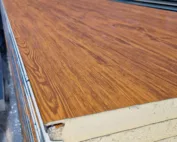
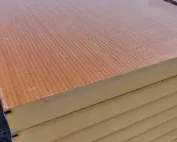
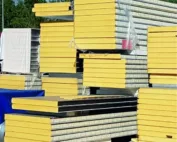
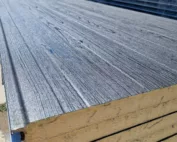
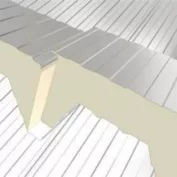
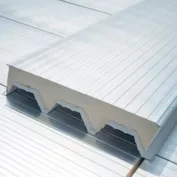
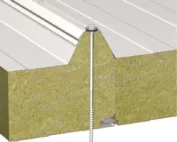
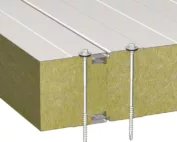
Installing insulated wall panels with a mineral wool core
Cutting sandwich panels and forming openings without damaging the facings
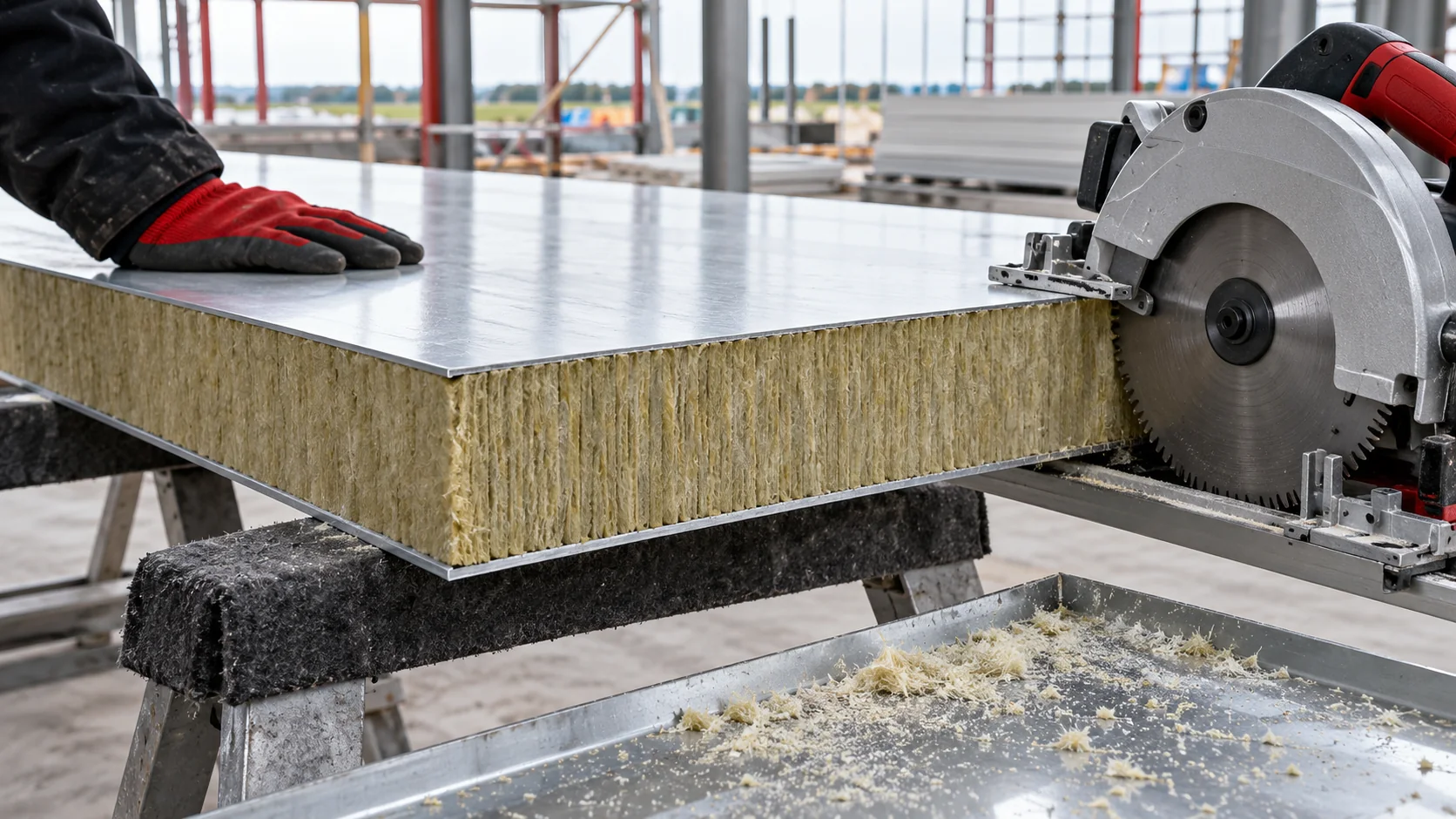
Cutting a panel cuts through the facings and the core at the same time, so the tool must be matched to the whole element. On a new build, the cutting location and its effect on load-bearing capacity are also important. Careful cutting to size helps limit corrections at openings. High temperature and left-over swarf can damage the coating before installation is finished. First check the installation direction, the external side and the required dimension of the finished element. An opening for a window or a service penetration should have an approved location. It cannot be moved to any position simply because it is easier for the installer to work closer to the edge.
Approve the cutting plan before the first cut
A cut-out weakens the panel and may require additional sub-construction. Particularly large openings must be coordinated with the designer and the joinery supplier. Do not treat decorative framing as automatic reinforcement. Its purpose must be distinguished from load transfer around the opening.
Reduce the number of cuts by fitting in advance
It is worth checking which lengths can be prepared before the material is delivered and which require measurement of the finished structure. A cutting plan matched to the wall geometry reduces work at height and the number of exposed edges. However, it does not mean that all openings can be made without taking account of joinery tolerances.
For repetitive fields, prepare a list of elements and mark their position on the drawing. If two sections have a similar dimension, a mistake can cause an unnecessary additional cut and a shortage of material. Good organisation of the workstation therefore combines the tool with identification of the pieces, and not only with the speed of guiding the blade.
Choose a tool for cold working
System instructions provide for, among other things, fine-toothed saws, sabre saws or jigsaws suitably selected for the panel. For the flashings themselves, appropriate tools for thin sheet metal are used, for example shears. The choice of blade, cutting range and settings should correspond to the instructions for the device and the product.
Do not use an angle grinder or any other solution that overheats the edge. Hot particles can damage the coating even beside the cut line. A short time to make the opening does not compensate for damage to the anti-corrosion protection, the effects of which will appear later.
Support the panel and the part being cut off
The work area should be stable, and the contact surfaces should protect the cladding from scratching. Arrange the supports so that cutting does not cause a sudden drop of a fragment or excessive deflection of the panel. The cut-off piece should not tear the thin sheet metal at the end of the operation.
Provide space for the tool to pass and for moving the material aside. Do not use a randomly placed stack as a table if the panels underneath could be damaged. On a new site, it pays to set aside one prepared workstation rather than moving cutting onto successive freshly completed surfaces.

Adapt the work to the core and the opening
A panel with mineral wool, PIR or EPS requires a tool that can handle its thickness and construction. With mineral wool, pay attention to a clean passage through the compact core, without tearing material from the cladding. With hole saws, depth control and stable guidance are important.
Do not transfer the permissible hole dimensions from one system to all the others. The position relative to supports, the width of the remaining fragments and fire requirements matter. If delamination of the cladding appears after cutting, the element requires assessment before further installation.
Remove swarf and prepare the edge
After cutting, remove metal filings from both claddings and from places where they could have lodged. Leftover particles can corrode and soil the surface. Choose a cleaning method that does not scratch the coating; do not rub filings into the paint while moving the panel.
The edge and the exposed core must be sealed in accordance with the designed detail. This does not automatically mean applying any paint to the entire cut surface. The scope of touch-up, sealing and flashing should correspond to the system and the conditions in which the hole will operate.
Link cutting to the installation sequence
Plan when the frame, penetration or flashing will be installed after the hole is made. It is not worth leaving the exposed edge unprotected until all other work is completed. This applies particularly to mineral wool and places exposed to precipitation or water from construction processes.
After completion, check the dimension, straightness, and the condition of both sheets and the core. Also record changes relative to the approved cutting plan. Good control concerns not only the aesthetics of the cut but whether the remaining element still has the intended support and can be tightly connected to the rest of the wall.
Questions and answers
Can a panel be cut with an angle grinder with a thin disc?
This should not be done where the panel instructions prohibit tools that generate high temperatures. A thin disc does not remove the risk of damage to the coating and the scattering of hot particles.
Does every opening need to be framed with an additional frame?
Not every one, but the decision depends on the system, size, position and loads. Large openings require a design assessment. A universal limit from the instructions for another product should not be applied.
7 branches. Materials closer to your project.