Maintenance and durability
What to check on a metal roof after winter
After winter, examine the sheet-metal covering, flashings and drainage before deciding the roof is watertight. Start with safe observations from ground level and from inside the building. Damp marks in the attic, a bent gutter or a displaced component call for the cause to be established. A wet patch does not always mean a hole in the metal — condensation or a blocked outlet may be responsible. Repair should therefore follow diagnosis, and inspection of the roof slope and fixings should be left to a suitably prepared specialist.
Where should you start the spring inspection?
Inspect the roof from an accessible and safe position. Look for changes in the eaves line, loose flashings and items lying in the garden. Photos taken from the ground can help compare the condition with the previous season. However, they do not show all connections. The absence of visible damage from a distance does not guarantee that the entire roof is watertight and correctly fixed.
It is worth noting when the problem occurred. Leaks after wind-driven rain may have a different cause than dampness during a thaw without precipitation. Such information makes diagnosis easier for the roofer. If torn sheet metal or an element at risk of falling is visible, keep people away from the danger zone. Attempting to press down a loose sheet yourself during wind increases the risk of an accident.
What should you check in the attic and at the ceiling?
Look for fresh stains, streaks and dampness near chimneys or windows. Where safely accessible, also check visible sections of timber and the underlay. The distribution of the marks is important. A single stain at a penetration may indicate a local problem. Extensive dampness on the underside of the covering may require an assessment of ventilation and water vapour flow.
Water can travel through the roof layers. The location of a drip inside is not always directly below the leak. It is not worth immediately sealing a random screw above the stain. The path of ingress must be checked. In a heated attic, the continuity of the layer restricting moisture from the interior is also important. Replacing the external sheet alone may not remove the cause.
Which places on the covering require attention?
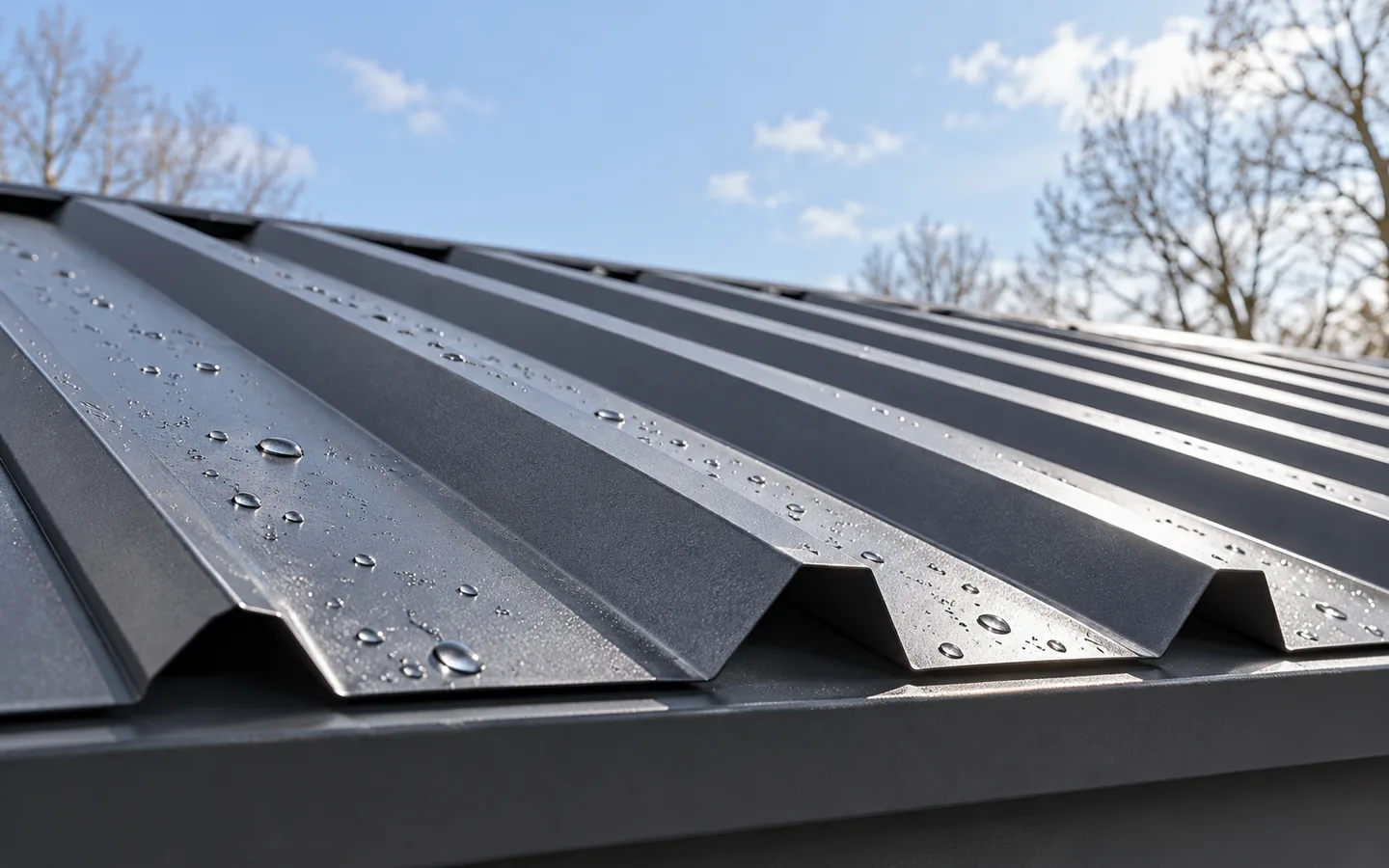
A specialist’s inspection should cover sheet connections, fixings and the coating surface. Areas at the edges and places where snow has slid off require particular attention. A scratched coating, deformed profile or damaged washer require proper assessment. Not every defect means replacing the entire roof slope, but the scope of repair must match its depth and cause.
Screws should not be tightened blindly according to the principle of ‘the tighter, the better’. Excessive pressure can damage the seal and deform the sheet metal. Loosening, in turn, may result from a problem with the substrate. Replacing a fixing requires the correct type and size of fastener. A random screw matching in colour is not a reliable substitute for a component specified in the system.

Why are gutters and roof valleys so important?
Leaves, needles and winter debris can restrict drainage. Water may then accumulate in places where it normally drains quickly. The patency of gutters, outlets and downpipes must be checked. Their fixing should also be assessed. The weight of ice or sliding snow can deform components even if the sheet metal on the slope itself shows no visible changes.
Roof valleys collect water from adjacent roof slopes. Accumulated debris can impede its flow. Cleaning should be carried out without damaging the coating and flashings. Sharp tools must not be inserted under the seams. In the case of concealed drainage, the designated inspection points should also be checked. The absence of a visible pipe on the façade does not mean there is no need to inspect it.
How to assess roof flashings and fittings?
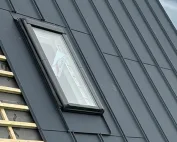
The areas around chimneys, windows, vents and the ridge require checking. Changes after winter may affect seals or the connection of flashings to the wall. Repair should restore the correct detail. A thick layer of random sealant on the surface often only makes it harder to identify the problem. The repair material must be compatible with the coating and the operating conditions of the given location.
Snow guards, steps and walkways as well as installation mountings must also be inspected. These are elements that transfer forces to the roof. Visible bending or loosening requires assessment before further use. An access element should not be checked by stepping on it. Its condition and correct fixing must first be confirmed, particularly after heavy snow load.
How to plan repairs after an inspection?
Ask for a description of the defects and photos of the areas requiring work. Leakage problems and elements at risk of detachment are urgent. Minor coating repairs should be carried out in accordance with the material instructions. Proper cleaning and a touch-up product matched to the damage may be needed. Painting a dirty or wet surface usually does not provide a lasting solution.
Keep the documentation and the date of the work performed. This will facilitate the next inspection and any warranty claim. Regular inspection helps to notice a change before major damage occurs. However, it does not require walking on the roof yourself. Safe observation and a good description of the symptoms are a useful start, while the inspection of the roof slopes and repairs should be entrusted to a suitably prepared team.
7 branches. Materials closer to your project.