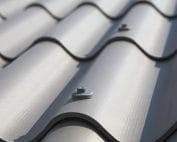
Fibre cement coverings
Natural and painted fibre cement surfaces: comparing samples
A sample helps in choosing a surface, but you need to know what it cannot tell you. Corrugated fibre cement sheets come in natural and factory-painted variants. Asbestos-free fibre cement with the same geometry can have a different visual character depending on the finish. The comparison should cover colour, texture and the conditions of later use. It is worth checking which profile and surface variant each piece shows. A flat colour sample does not fully convey the interplay of light and shadow on the wave. It can be useful for choosing a shade, but not for assessing the whole roof area. It is also good to have a photo or an actual piece of the profile at the appropriate scale. Samples should be labelled and their designations kept.
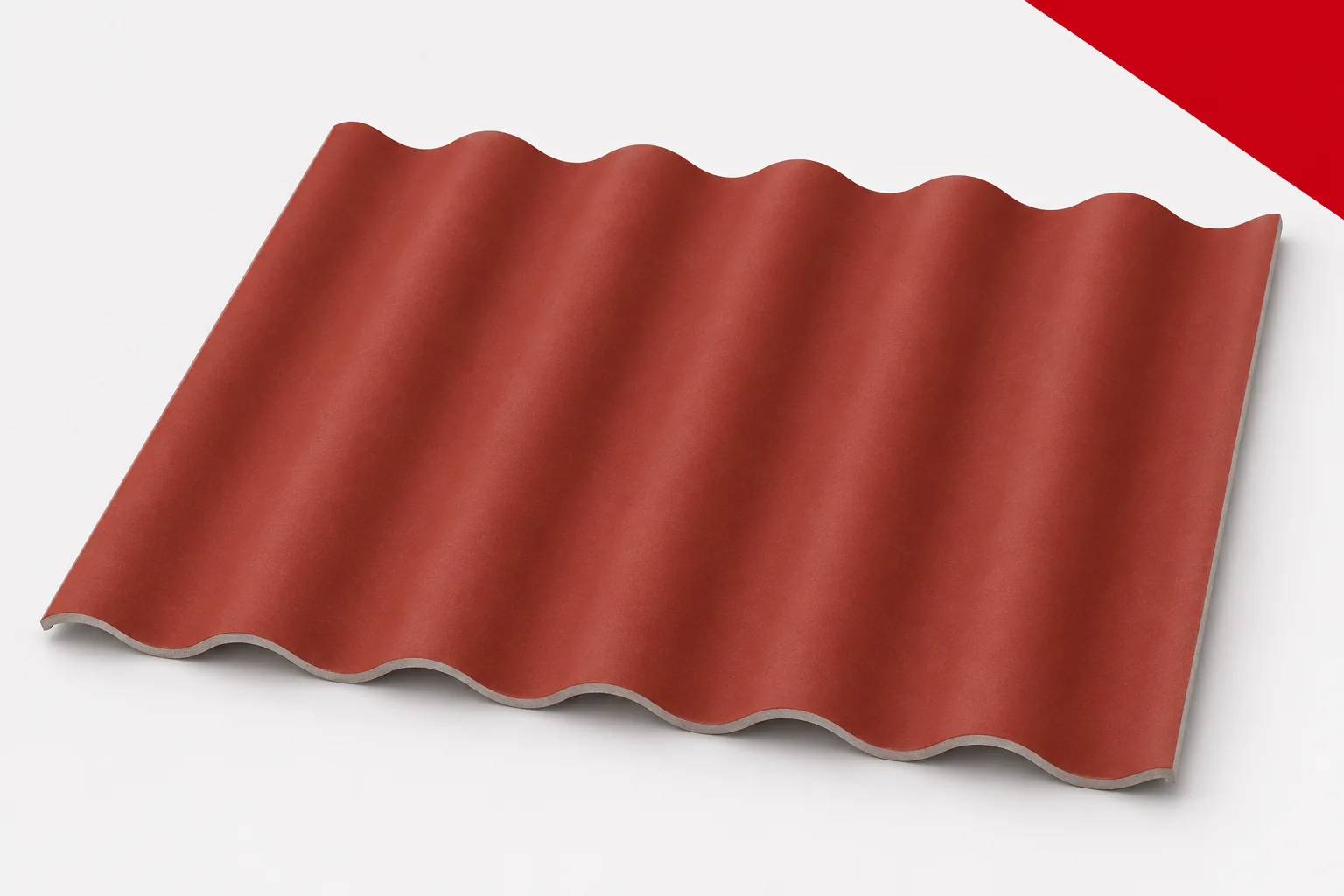
Check whether the samples represent the products being compared
A description from memory, for example graphite matt, may be too general when ordering. Different materials under such a name do not necessarily look identical. What matters is the designation specific to the particular product and the availability of that variant.
The natural surface shows the mineral character
Uncoated corrugated fibre cement sheets may have subtle differences in tone and texture. Such an appearance is sometimes an intentional design element. It should not be compared with a perfectly uniform screen colour. It is worth assessing whether the natural variation suits the façade and the intended character of the building.
Wet material may look different from dry material. This is important when viewing a sample and a finished roof. Not every local change in colour is a defect. It must be considered together with the conditions, the state of the surface and the documentation. Appearance and performance in use are not exactly the same criterion.
A coloured coating has its own requirements
A factory finish allows a specific colour and a more even surface effect to be achieved. This does not mean there is unlimited freedom in later cleaning or repainting. Coated corrugated fibre cement sheets should be handled according to the recommendations of the given system. Not every product is neutral to the pigment and the top layer.
Asbestos-free fibre cement does not have one single joint guarantee covering both material and colour. The terms may separate these issues and depend on the variant. It is worth checking the scope before purchase, instead of comparing only the number of years from an advertising slogan. The exclusions and the method of installation and maintenance also matter.
Lighting should resemble the intended location
Samples are worth viewing outdoors, positioned at an angle similar to that of the roof. In sunlight the shadow in the valleys will look different than on a cloudy day. Corrugated fibre cement sheets create a pattern that changes with the direction of the light. The colour alone in the packaging does not show this effect.
It is helpful to compare them with the façade materials, flashings and joinery. Not everything has to be matched one to one. What matters is a conscious relationship. A photograph can help compare the composition, but automatic camera correction does not provide an accurate colour reference.
Do not infer technical parameters from appearance
A smoother or darker sample does not necessarily mean better coverage for a given roof. The intended use, documentation and installation requirements must be checked. The reaction-to-fire class may depend on the surface variant. Data for the natural board should not be transferred to the painted board without verification.
Asbestos-free fibre cement remains an external covering, not insulation. Colour can influence radiation absorption, but does not by itself determine comfort inside. Corrugated fibre cement sheets must be considered together with the roof layers. The attic temperature or the noise level during rain cannot be read from a sample.
Check that the accessory range is complete
The chosen shade should be available in the required formats and finishing elements. The ridge, edges and transitions are visible on the finished roof. It is worth confirming the entire set before placing an order. The colour of the sheet alone does not complete the aesthetic decision.
A mismatched fitting must not be replaced with another profile merely for a similar tone. Geometry takes precedence in ensuring a correct connection. A consistent roof is created from technically compatible materials. A difference in finish is better agreed deliberately than concealed as a mismatch during installation.
Take transport and storage into account
A sample is usually small and carefully protected, while a delivery consists of large packs. Corrugated fibre cement sheets require protection against scratching and moisture trapped between the sheets. The material should be lifted, not dragged across the stack. The unpacking method depends on the delivery documentation.
White efflorescence formed during improper storage should not be removed with random chemicals. First, its type and the recommended treatment must be determined. Similarly, a difference in shade between batches requires assessment before installation. Once laid on the roof, clarifying the matter and replacing elements will be more difficult.
Keep the sample as a reference point
After making the choice, it is worth keeping the described fragment together with the documents. It will not be an identical roof pattern after years of exposure, but it will help establish the original variant. For repairs, the profile designation, delivery date and type of accessories are also useful. These details matter more than a general description of the colour.
Asbestos-free fibre cement is worth comparing without expecting the natural and painted surfaces to behave in the same way. Both can be appropriate if they match the design and the way it is maintained. A good decision covers the appearance today as well as realistic requirements for later.
Compare the described samples in daylight, against the façade and at the correct angle. At the same time, check the documentation for the variant and the availability of compatible accessories.
7 branches. Materials closer to your project.