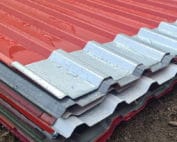
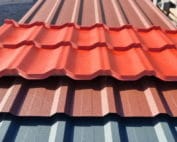
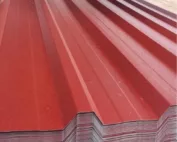
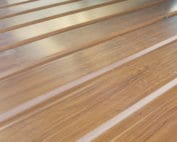
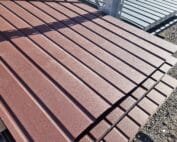
Trapezoidal profiled sheets
How to assess second-grade steel sheet for its intended use
The designation “second grade” does not in itself say what is wrong with the sheet metal. It may concern appearance, format or another characteristic of a specific batch. Before buying, you need to know the reason for the classification and inspect the material. Only then can you assess whether it is suitable for a roof, façade or cladding. A lower price does not replace the information needed for such a decision. Ask for a description of the actual difference compared with full-value material. An assurance that the defect is minor is not enough. What matters is where it occurs and what it concerns. A difference in shade has a different consequence from a damaged edge, a distorted trapezoidal profile or a break in the continuity of the surface protection. It must not be assumed that every discounted sheet has only an aesthetic defect.
What should you ask about a specific batch?
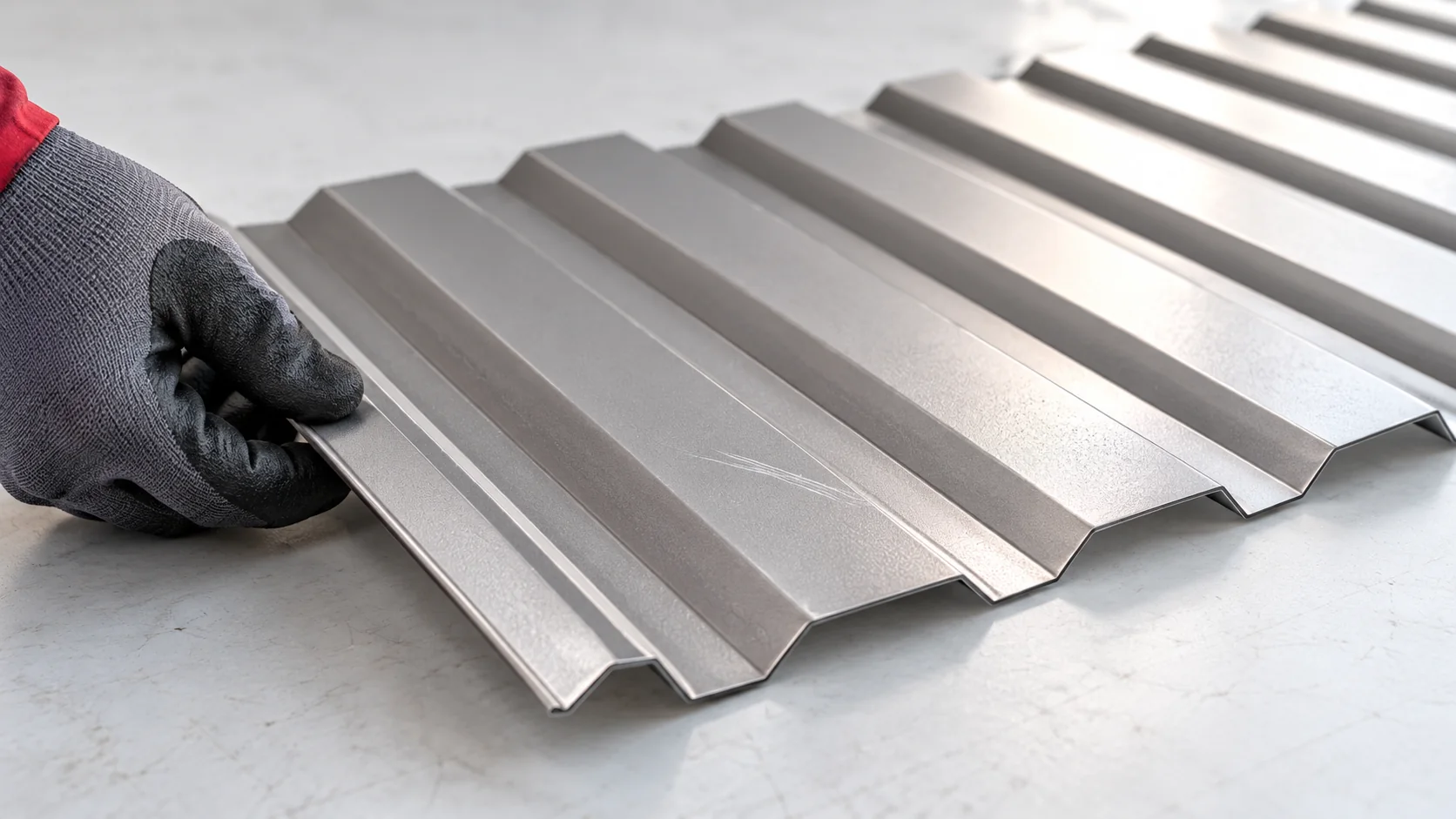
Establish the profile, thickness, available dimensions and type of coating. Ask whether all sheets in the batch have the same parameters. For several lengths, a list of pieces is needed, not just the total square metreage. It is also worth agreeing a description of the material’s condition in the purchase confirmation. This makes it easier to compare the order with the actual delivery later.
How should you inspect the sheet metal before deciding?
Check the surface in daylight and inspect both sides of the sheet. Look for scratches, coating cracks, corrosion and signs of prolonged dampness. Inspect the edges and lap areas. Deformation in this zone can hinder a correct connection, even if most of the sheet looks good.
Do not judge the whole batch on the basis of one element lying on top. The scope of inspection should match the actual variety of the material. Long sheets must be supported during checking so as not to damage them further. Photos help record the condition, but they do not always show the depth of a scratch or a change in geometry. Where there are important doubts, an assessment by someone familiar with the given covering is needed.
When does appearance matter, and when does structure?
An uneven shade may be acceptable on a cover not visible from the entrance. The same effect on a large front façade may be bothersome. This is an aesthetic decision. The mechanical suitability of the sheet must be established separately. A damaged cross-section, uncertain thickness or lack of material identification do not allow data from the table for a similar product simply to be adopted.
It should not be assumed that second-grade material automatically has the same load-bearing capacity as a full-value variant. Nor should it be assumed that every defect rules out all applications. The assessment depends on its type and the sheet’s task. A roof requires checking loads, supports, fixings and tightness. A light cover has different requirements, but it must still be correctly fixed and safe in use.
Does painting solve the problem?
A new layer of paint may change the appearance, but it does not straighten a deformed profile or restore missing material data. Repairing the coating requires selecting a method of substrate preparation and a compatible material. Not every product is suitable for every factory surface. It must also be assessed whether the damage qualifies for such a repair at all.
Some batches are offered with a specified scope of finish and require further processing. This information must not be transferred to the entire second-grade category. Ask about the condition of the specific material, how it has been stored and what handling is permitted. If the entire surface needs painting, allow for preparation, material, labour and the conditions of execution. The purchase price alone then ceases to describe the final cost.

How to calculate the price of usable surface area?
Assume, solely for the calculation, that you buy 48 m² at €6.94 net per m². You pay €333.12 net. After matching lengths and excluding unusable fragments, 36 m² goes into the planned construction. The cost of the purchase alone, calculated per this area, is therefore €9.25 net per m², not €6.94.
Cutting, repair, transport and disposal of offcuts may be added to this. This does not mean that second grade is not worthwhile. It merely shows the proper basis for comparison. You have to calculate the material that will actually fulfil the task. Before buying, draw the sheets on the planned covering and check whether defects can be avoided without creating random joints that are difficult to seal.
When is it better to choose a different batch?
Do not force a fit if the parameters required for the project cannot be established. This applies in particular to a covering whose behaviour under load and tightness must be predictable. A low price will not compensate for uncertainty that cannot be resolved by inspection or by information about the material.
When the batch suits the task, record the accepted condition and the agreed purchase terms. Check separately the scope of any warranty and the installation recommendations. Do not automatically assume that they are the same as for another series. A good decision results from the specific application, the actual cutting layout and the known limitations. The word “bargain” alone is not a technical assessment of the sheet.
Questions and answers
Is second-grade sheet suitable for a roof?
It may be suitable if its parameters and actual condition correspond to the project. This cannot be confirmed on the basis of the grade designation alone.
Can every scratch simply be painted over?
No. The extent of the damage must be assessed and a compatible repair method selected. Painting does not remove the deformation of the sheet or the problem with its joint.
7 branches. Materials closer to your project.