Metal fences
Metal fence pickets for a house: choosing the infill and layout
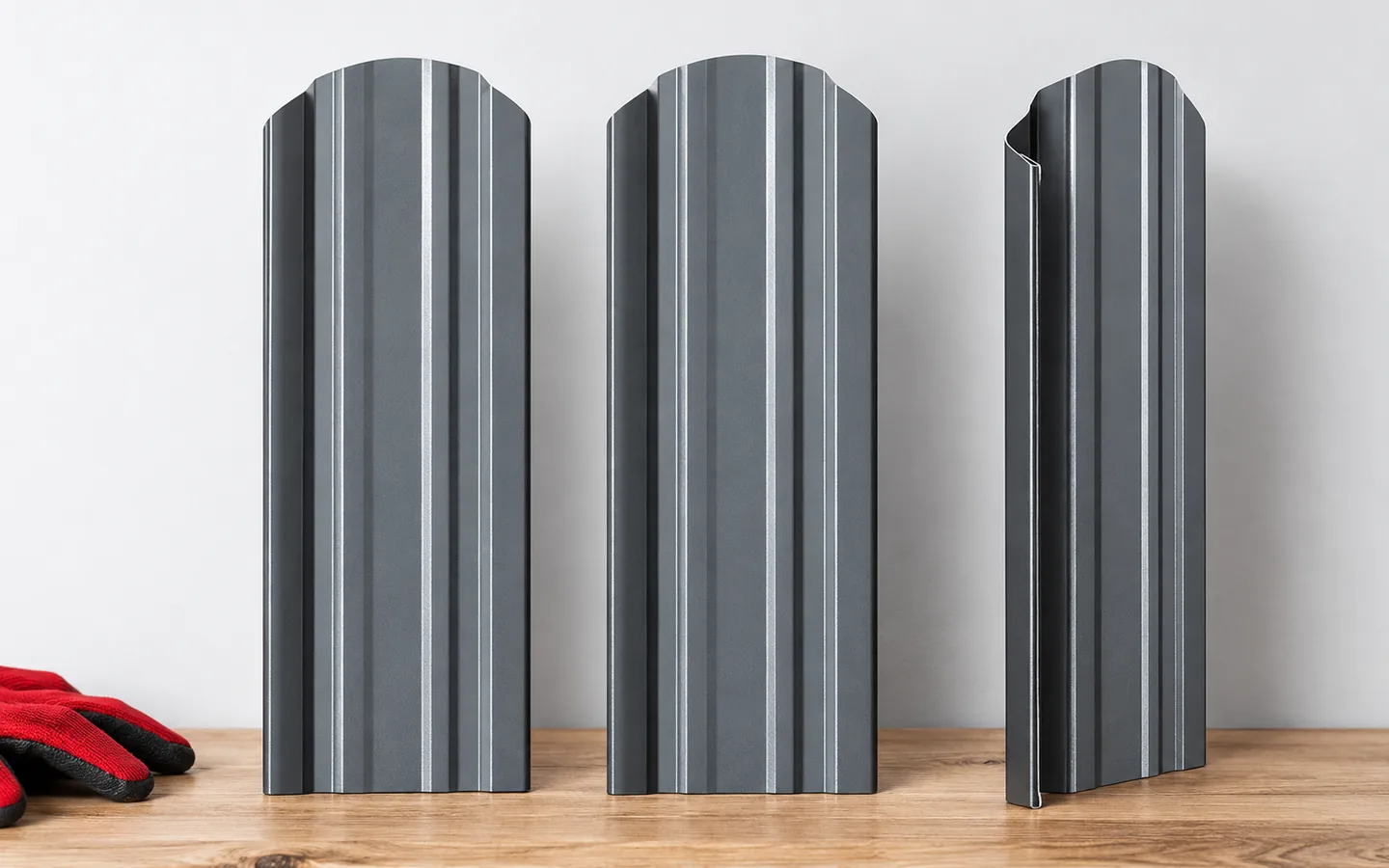
Metal pickets will work when you want a durable fence with a repeatable colour and no frequent painting, but the choice should follow the function of the property. Before buying, set priorities for each side of the plot: privacy, screening from the street or marking the boundary. Check whether openwork bays give enough visual exposure and whether a dense layout increases the area exposed to wind. View a sample from the side to assess the section and coating, and count the complete set with posts, rails and gate.
How to determine the most important function of the fence?
For some, marking the boundary is important; for others, screening from the street and limiting visibility. Openwork bays let light and air through but do not provide full privacy. A dense arrangement screens better but increases the area exposed to wind. It is worth setting priorities for each side of the plot instead of using one variant everywhere.
Children, animals and the way the gate opens also matter. The gap at ground level should not be an accidental result of uneven terrain. The entrance requires space for the movement of the leaves or for sliding. Choosing the infill alone does not solve the problem of a poorly planned gate. It is worth first making a sketch of the entire fence with actual dimensions and levels.
What do profiled metal fence pickets offer?
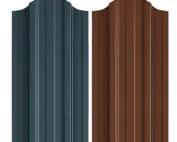
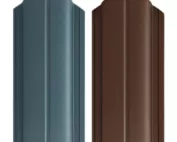
Thin sheet metal gains rigidity through the shaping of its cross-section and folded edges. A picket is therefore not a solid steel beam. Its behaviour depends on width, thickness and geometry. When comparing models, it is worth looking at a sample from the side. The front view alone may hide differences that are important for stability and for the appearance on the other side of the fence.
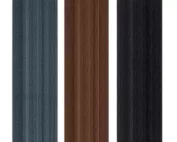
The coating protects the steel and gives it colour. A decorative variant on both sides must be distinguished from sheet metal with a simple protective lacquer on the underside. This matters when the fence is viewed both from the street and from the garden. The finish of the top edge should also be checked. The appearance and the type of finish affect how the entire panel is perceived.
How to choose the gap and the number of pickets?
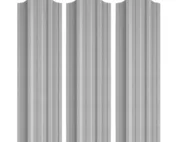
The number of elements results from the usable width of the bay, the width of the picket and the planned gap. Spacings at the posts must be taken into account. It is not worth ending a bay with a random narrow gap. First the rhythm is laid out, and only then are the fixings drilled. With several bays, a consistent layout is often more important than maximum density in one of them.
A double-sided arrangement can limit visibility at an angle but requires more pickets and suitable crossbars. It does not automatically mean full opacity. It is worth checking a sample in a real setting. The density of the infill also affects the wind. Posts and foundations must be matched to the height and area of the bay, not only to its weight.

How does metal compare with wood and panels?
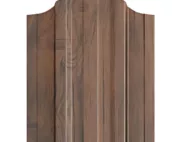
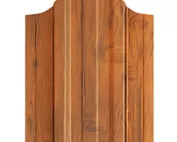
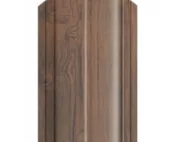
Wood gives a natural texture but usually requires renewing the surface protection. Metal pickets allow a consistent colour and a simpler rhythm. This does not mean there is no maintenance at all. Damage, fixings and dirt must be checked. Wood-effect colours may resemble wood, but they remain a different material with a different way of ageing.
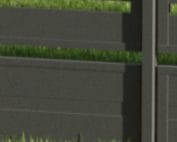
A welded panel is practical where a visually light demarcation of the plot is needed. It usually provides less screening from view than dense metal fence pickets. A full infill of trapezoidal steel sheet gives a different appearance and reacts more strongly to wind. The choice should follow from the function of the section, not from the assumption that one type of fence is best for the whole property.
What not to economise on during installation?
The crossbars and posts form the structure that holds the infill. They should have adequate rigidity, protection and fixing. The fasteners must be matched to the material and to outdoor conditions. Overtightening can deform thin pickets. Insufficiently tight fixing causes vibration, noise and loosening of connections in wind.
Cutting is done with a tool suitable for coated sheet. Swarf should be removed before it sticks to the surface. The pickets should not be in constant contact with damp ground or vegetation. On a sloping plot, it is worth establishing in advance whether the bays will be stepped or run with the slope. This decision changes the cutting layout and the appearance of the ends.
How to compare the cost of a finished fence?
Add posts, crossbars, fasteners, foundations and installation to the pickets. Price the side gate and the driveway gate with fittings separately. The price of a single picket without its length and width says little. It is best to compare the cost of the same bay or a metre of finished fence. Transport and the unloading conditions for long elements should also be taken into account.
For the enquiry, prepare the side lengths, the planned height, the width of the gaps and photos of the terrain. Specify whether both sides are to be decorative. Ask for a colour sample and check it against the façade in daylight. Well-chosen metal fence pickets combine straightforward handling with the option of matching the appearance, provided the whole layout has been designed as a coherent fence.
7 branches. Materials closer to your project.