
Knowledge base
Izoprofil.com helps you compare materials for a specific building project. The guides cover the uses of sandwich panels, PIR insulation boards, metal roof tiles and trapezoidal sheets. The criteria depend on the application, including the supporting structure, thermal performance and requirements for the finished surface. Read the product specifications, identify which dimensions affect the order and compare complete solutions. The articles help you discuss the options with a designer or installer and check the suitability of the selected materials before purchase.
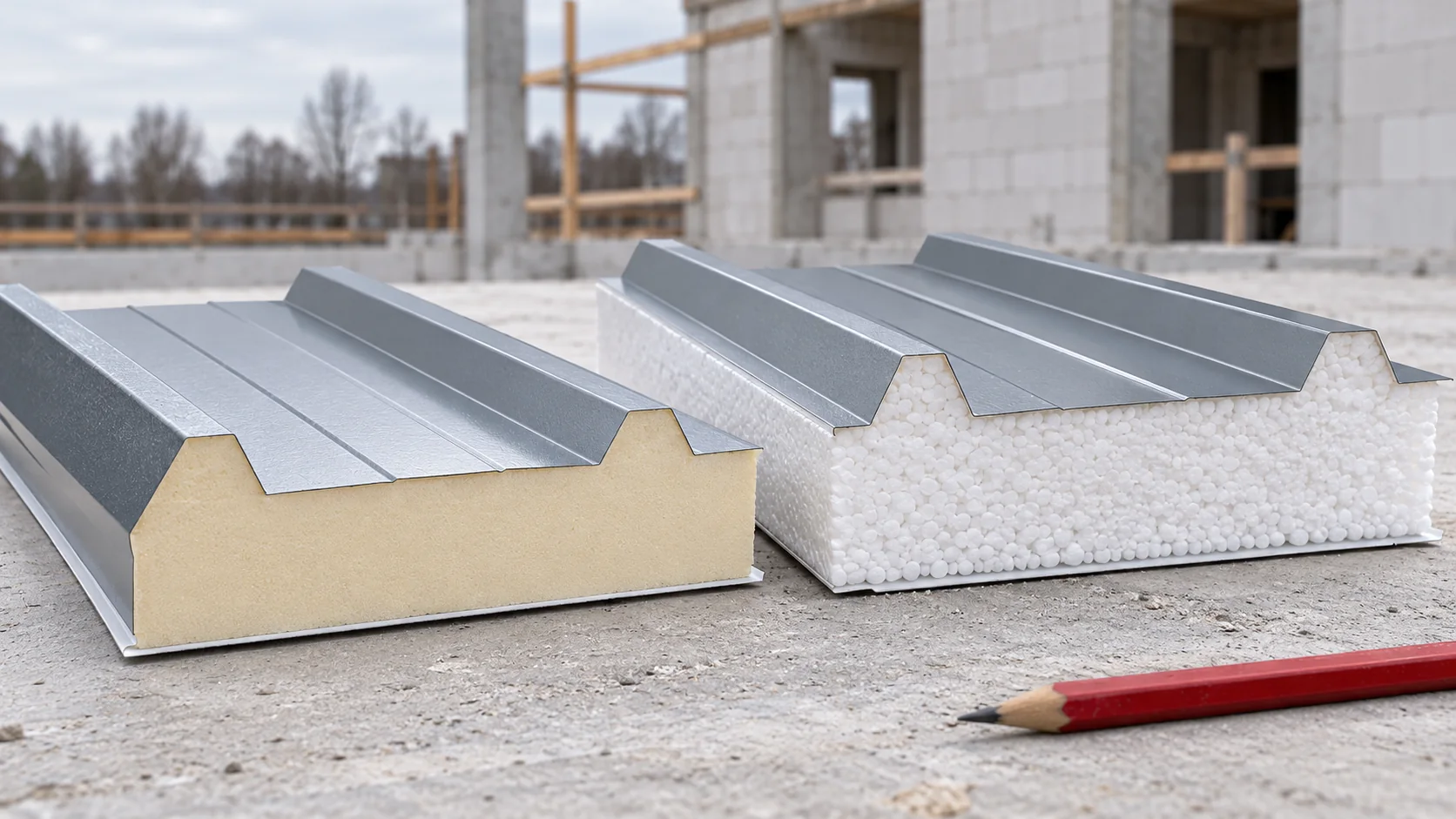
PIR or EPS for the roof: how to compare panels in a project?
PIR and EPS are different sandwich panel cores, but the choice should not be reduced to their names. First establish the roof requirements, then compare complete panel configurations. This order shows how thickness affects flashings, how weight interacts with the structure and which properties actually determine the application. A roof sandwich panel has a core bonded to the facings and a profile suited to a specific application. It is not the same as loose insulation board laid on a ceiling. Data for standalone EPS or PIR do not automatically describe the load-bearing capacity and airtightness of a finished roof panel.
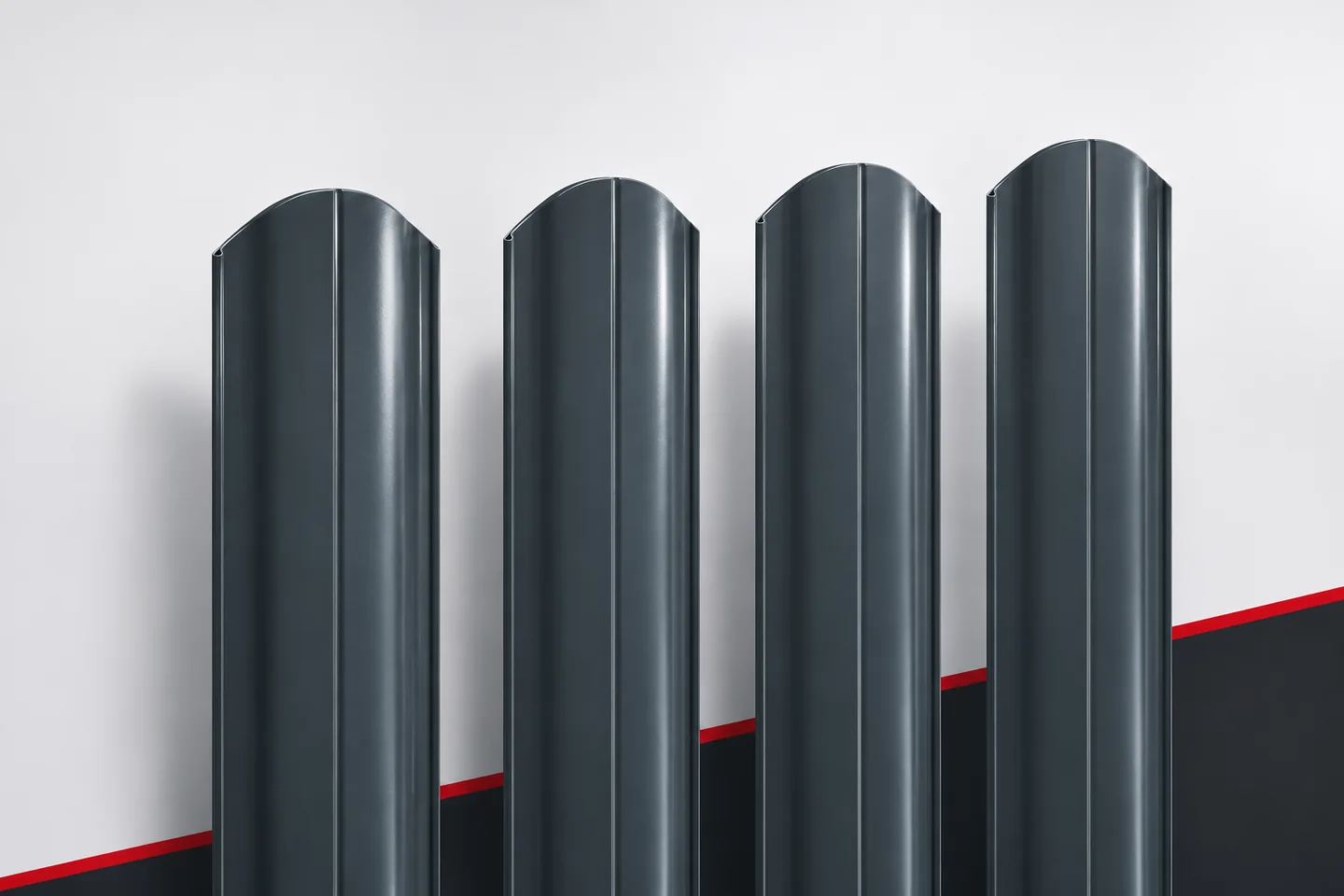
Pieces, linear metres of picket and linear metres of fence: how to calculate an order?
When buying pickets, it is easy to confuse three different quantities. The number of pieces refers to the elements, the linear metres of pickets to their total length, and the linear metres of fence to the length of the fence line. None of these values replaces the others. A reliable cost estimate must clearly show what is being calculated. This allows the quote to be checked and avoids ordering extra material due to an incorrect unit. A price per piece only makes sense when it is clear which element it covers. Two pickets of the same profile can have different lengths. Their rates should not be compared as the price of an identical product. In the schedule, each group should state the dimension and the quantity. This also applies to elements with a different coating.
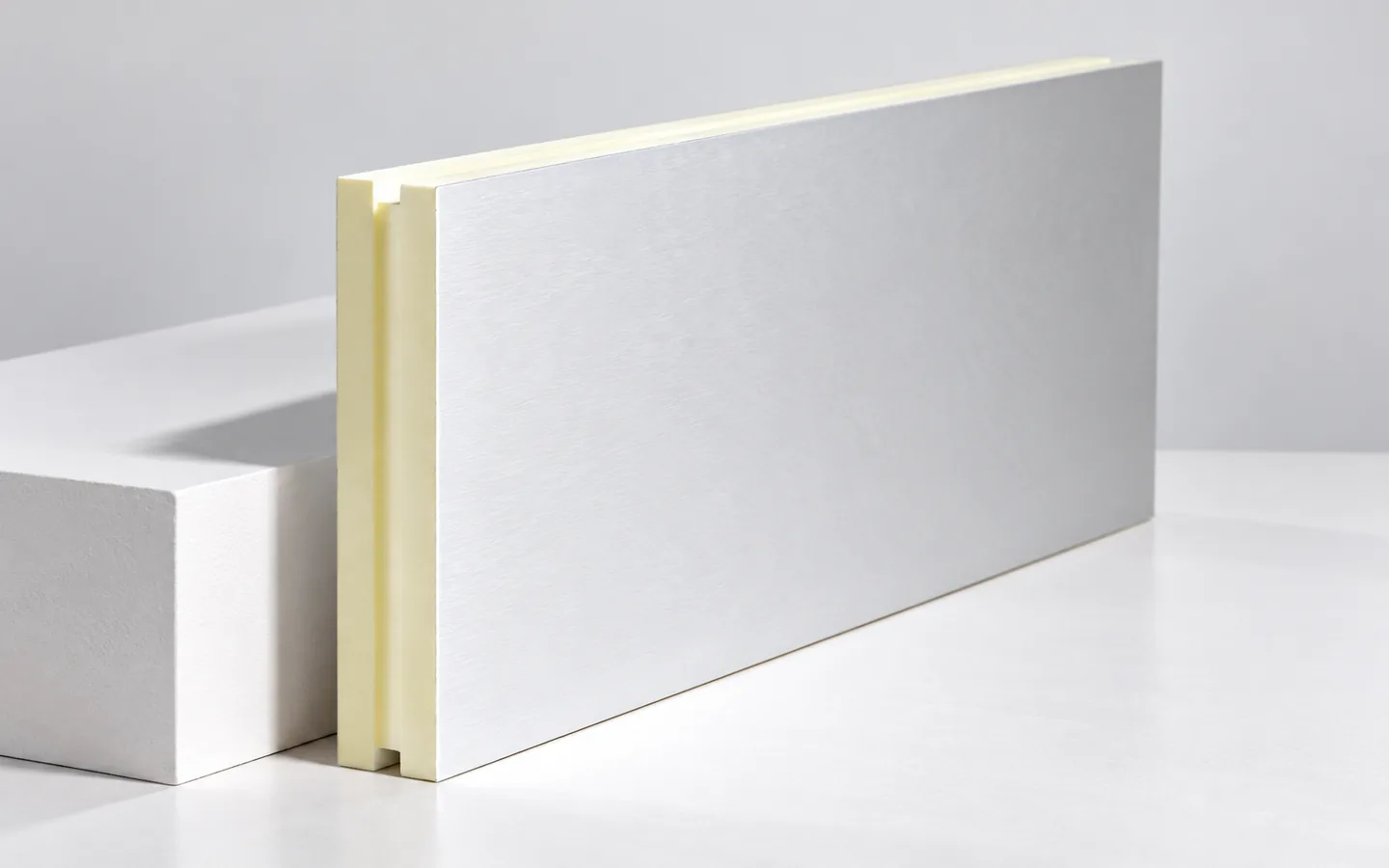
Comparing insulation materials for a roof
Choose roof insulation to suit the project. A new flat roof and a pitched roof being renovated offer different places for insulation. In a pitched roof there may be room between or below the rafters, or for a continuous layer over the structure. In a flat roof, consider the position of the insulation in the build-up and the pressure it must withstand. Compare declared thermal conductivity and mechanical properties in the context of the complete roof section. PIR boards, mineral wool, XPS and EPS each suit particular conditions.
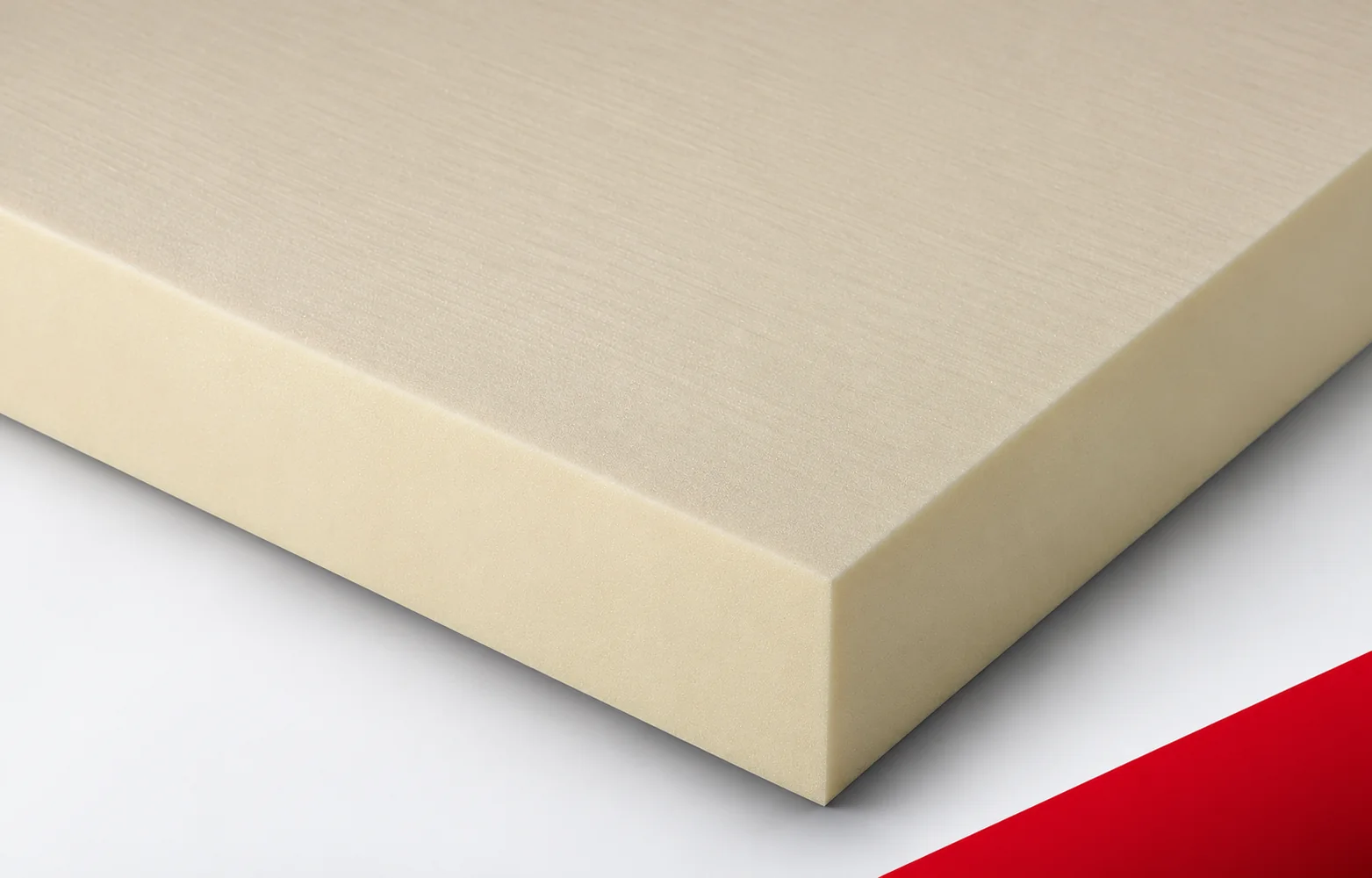
BauderPIR T: pricing roof geometry and the complete tapered board set
BauderPIR T are uncoated tapered boards, so the quotation must cover the entire set of wedges arising from the roof geometry, not just the area that is easy to cover. The valley carrying water towards the outlet is where the absence of the right component only becomes apparent after the actual levels have been corrected. The enquiry should therefore specify a roof with uncoated tapered boards and the expected finished result, and it is worth attaching to the quotation a falls drawing showing the direction in which the thickness increases, together with a survey covering the substrate levels and the course of the water-collecting lines. The supplier then does not have to guess the scope, and the costs of changes after the survey are fixed in advance.
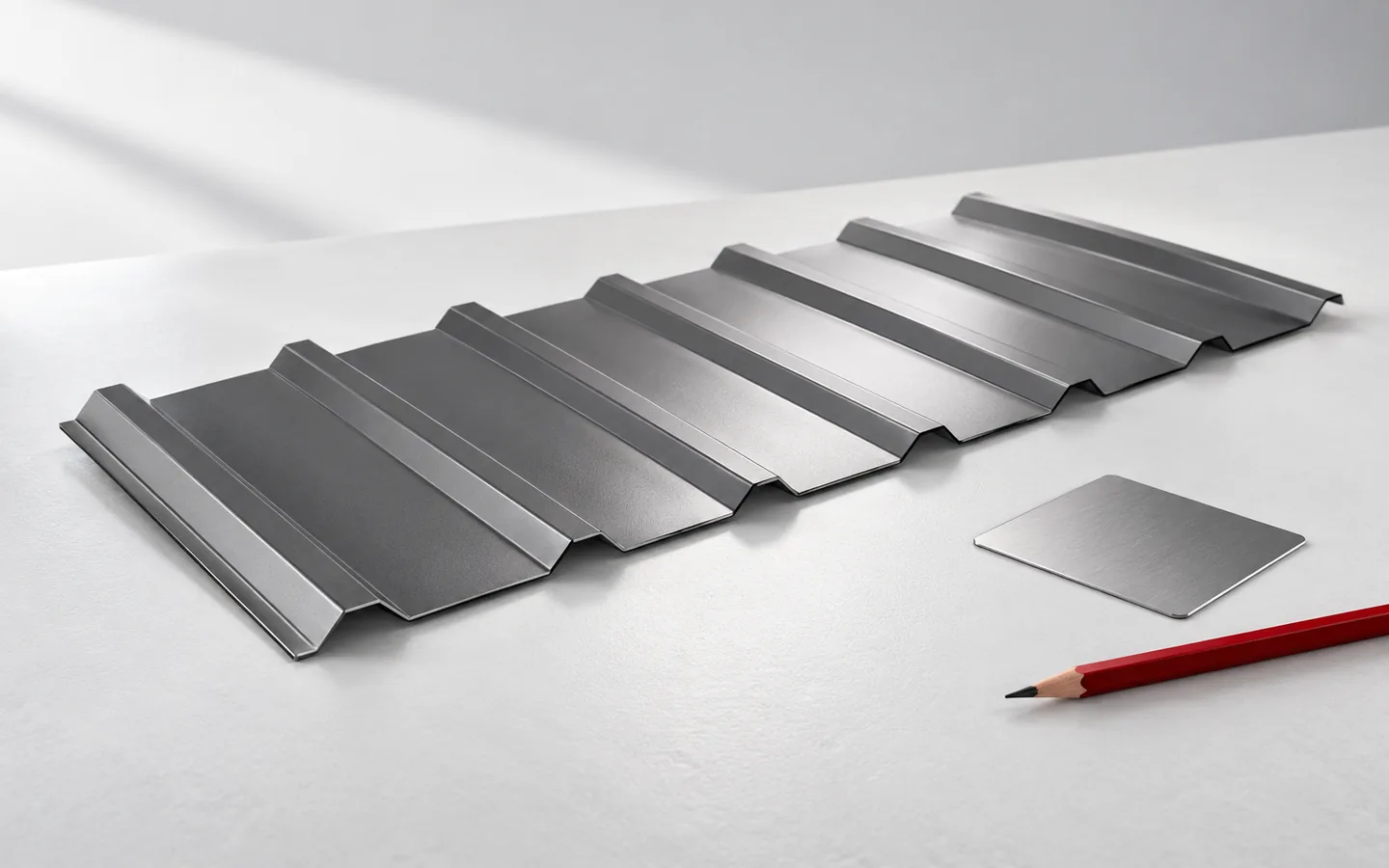
Titanium zinc or coated steel: what changes with the choice of sheet?
When choosing between titanium-zinc sheet and coated steel, first establish whether the criterion is appearance and architectural detail or a simple, economical covering. Check how the sheets and flashings will be joined, because titanium-zinc has a zinc base with alloying additions, while coated steel relies on a steel core. Also check the service conditions, contact with other metals and water drainage. The natural patina changes tone at different rates, so do not expect a uniform colour from the start.
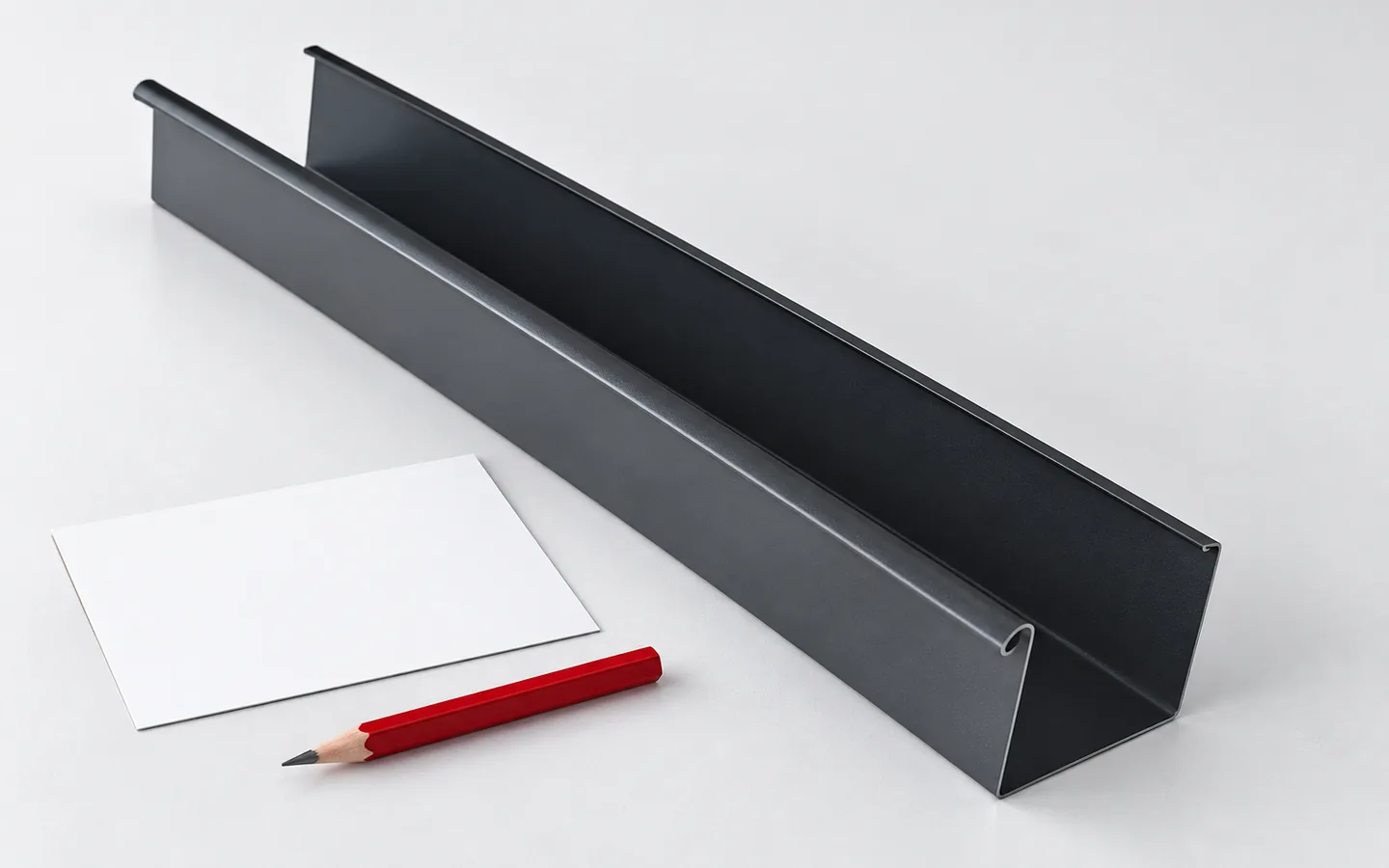
Steel or PVC gutters: what to check before choosing
The choice between steel and PVC gutters depends primarily on drainage capacity, not on the material alone. Before deciding, check the roof area assigned to each outlet, the roof pitch, the eaves length and the downpipe positions. In both systems, the fall, bracket spacing, expansion joints and patency are key. Steel stands out for its rigidity, while PVC offers low weight and resistance to material corrosion; plastic reacts more strongly to temperature in terms of dimensions. Leave the final layout to the designer.