
Knowledge base
Izoprofil.com helps you compare materials for a specific building project. The guides cover the uses of sandwich panels, PIR insulation boards, metal roof tiles and trapezoidal sheets. The criteria depend on the application, including the supporting structure, thermal performance and requirements for the finished surface. Read the product specifications, identify which dimensions affect the order and compare complete solutions. The articles help you discuss the options with a designer or installer and check the suitability of the selected materials before purchase.
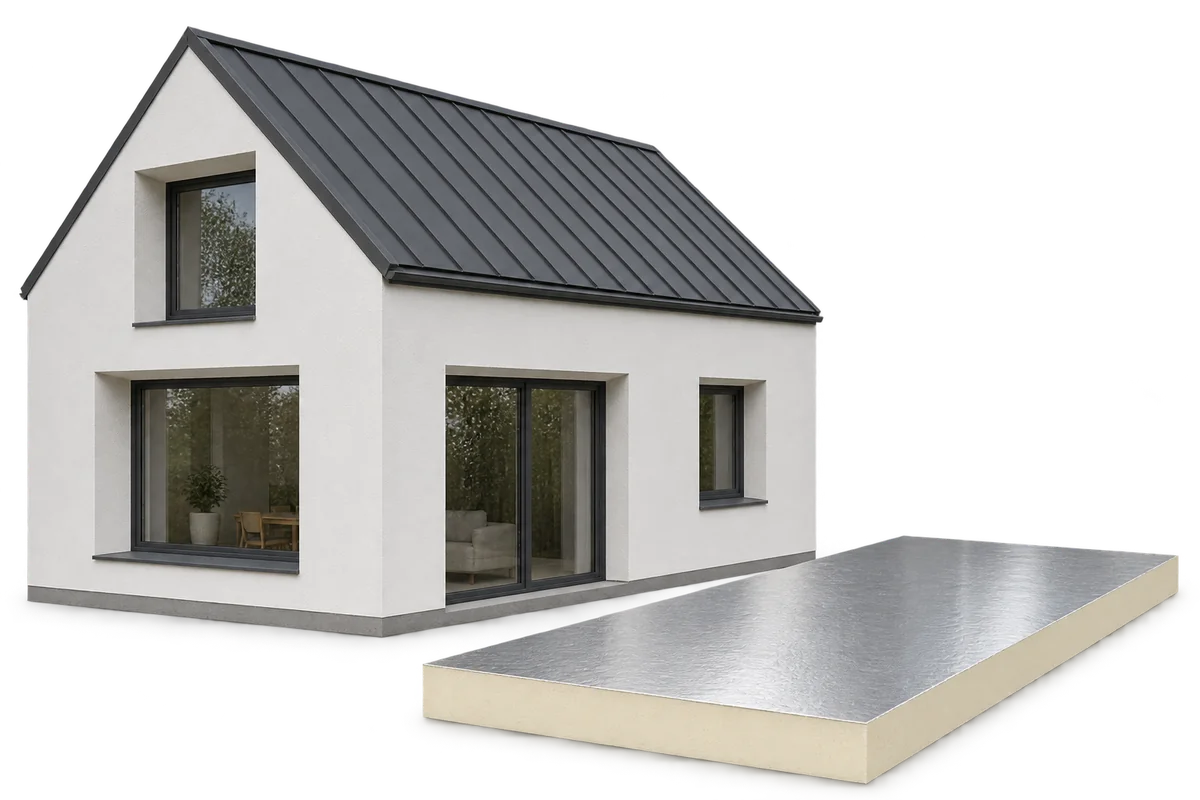
Passive house basics: the benefits and limits of a well-insulated building
A passive house needs little energy to maintain a comfortable indoor temperature. Its insulation, airtight envelope, windows and ventilation work together to limit heat loss. Roof insulation alone cannot deliver that performance. Junction details, solar shading and the way the systems are operated all matter. Consider these before selecting a construction method. The term passive house describes the energy performance of the whole building. Masonry, timber and steel structures can all be used, but each requires different junction details to limit thermal bridging. Choose the construction method alongside the design of the complete envelope.
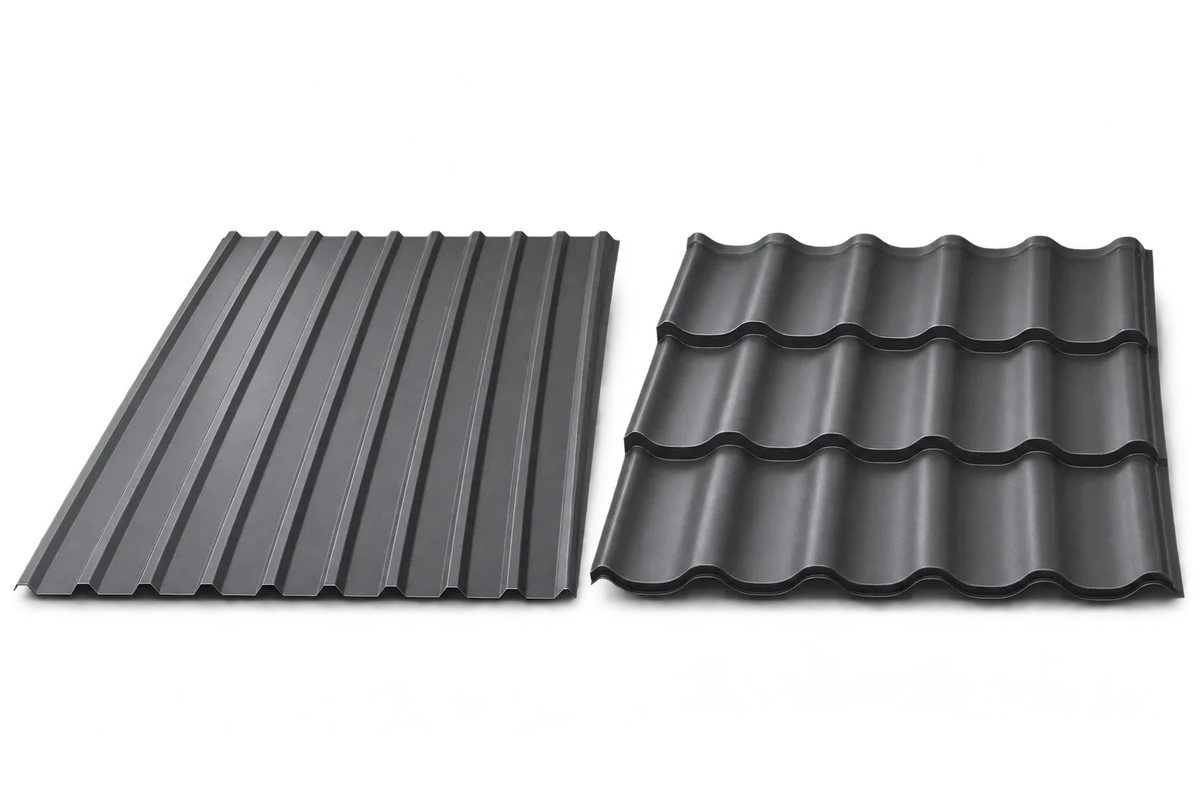
Metal roof tiles or trapezoidal sheets? Choosing a covering for your roof
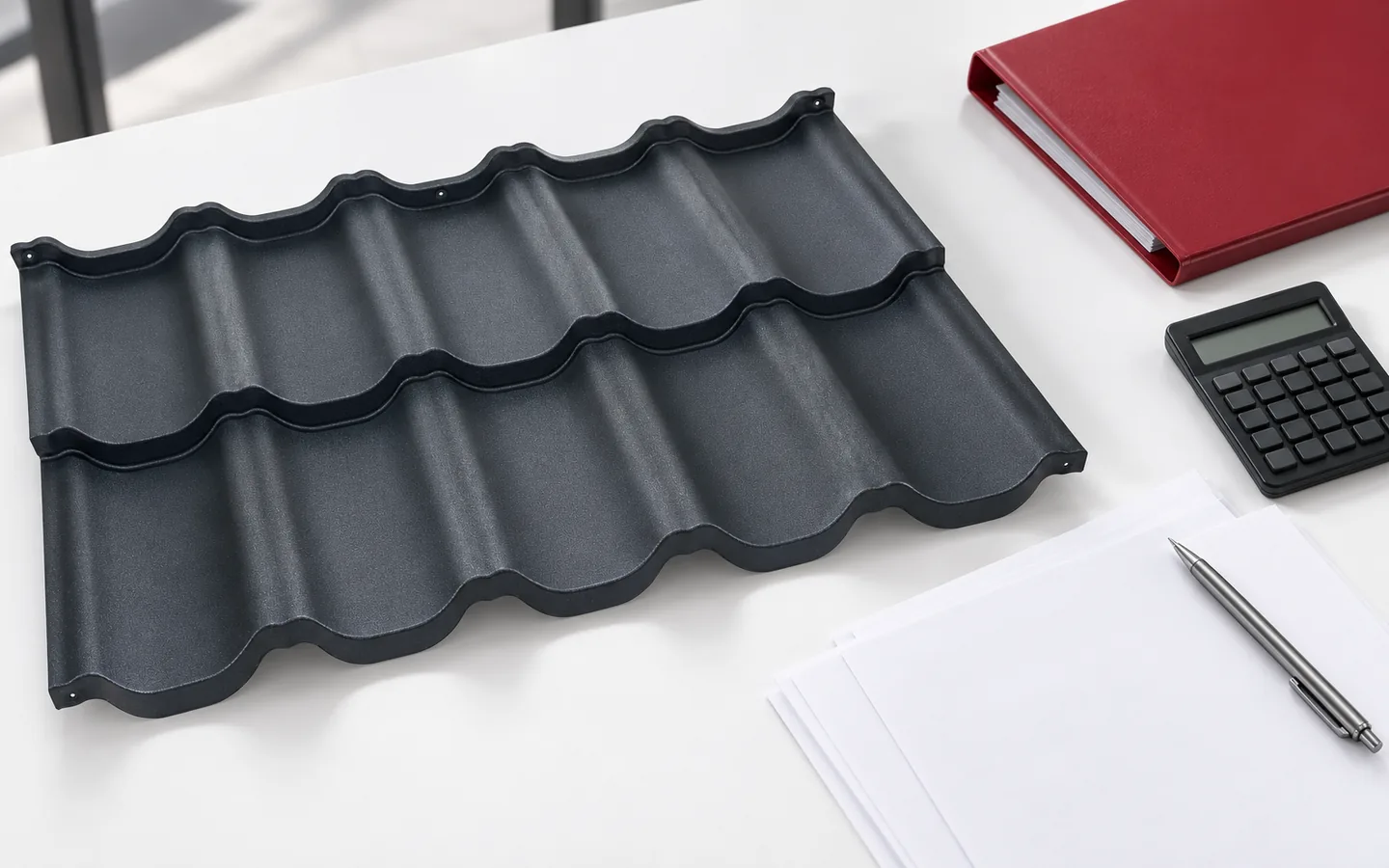
Metal roof tiles suit traditional houses, while trapezoidal sheets create a simpler roofline. Check the roof pitch, support spacing, protective coating and total installed cost alongside the appearance. Compare T18 and T35 profiles, cut-to-length sheets and modular panels against the same roof plan. Tile-profile sheets form regular rows like traditional roof tiles. They work particularly well with pronounced eaves, dormers or a traditional façade. Modular metal tiles come in small panels, while a cut-to-length sheet can cover a larger part of a roof slope in one piece.
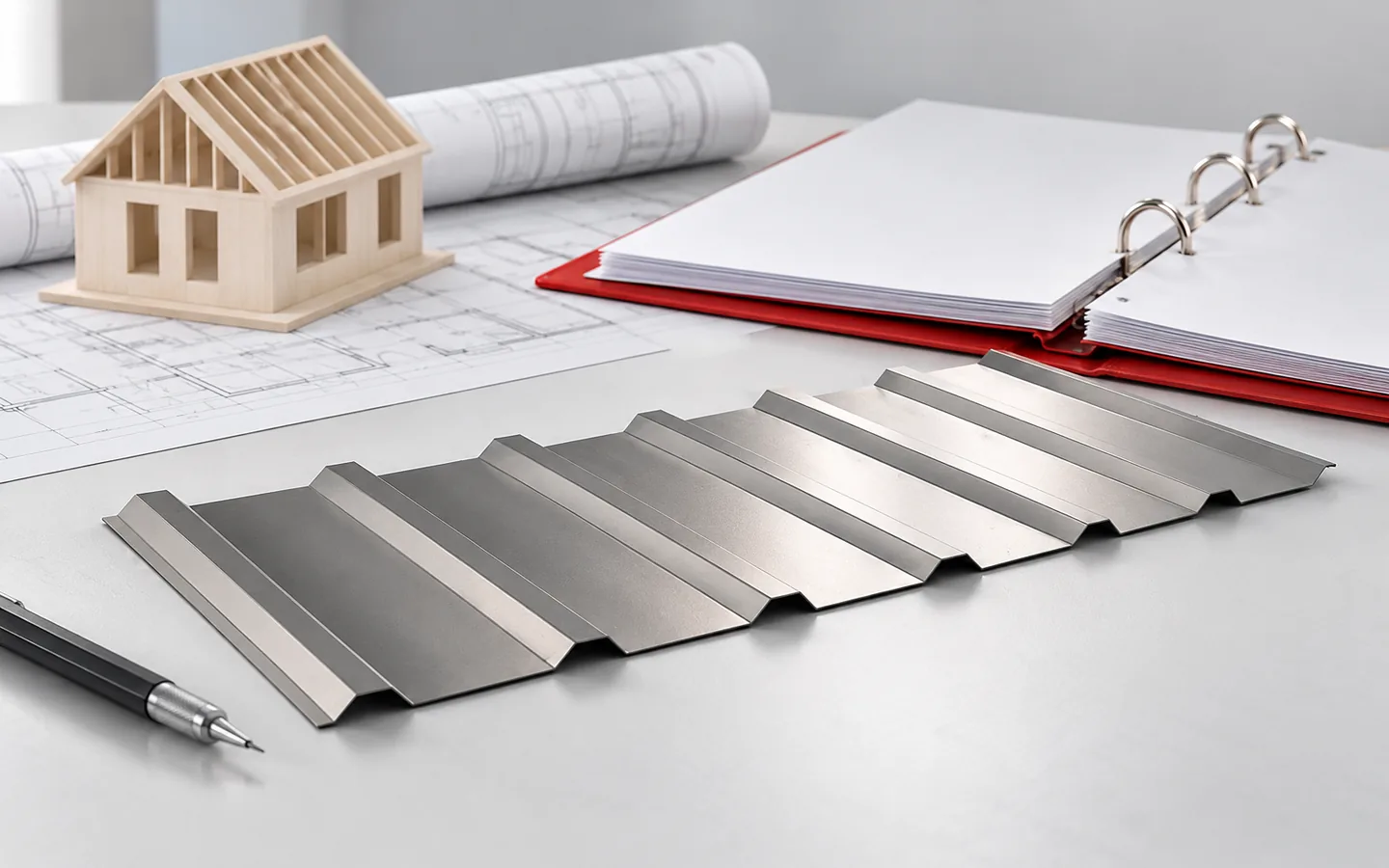
When is a building permit required in Poland in 2026?
In Poland, whether a building permit is required depends primarily on the actual scope of works, not on the label ‘roof replacement’. Before ordering sheet metal, describe the planned changes: are you only removing worn sheets, or also replacing rafters, altering the roof pitch or raising the knee wall? Check the property’s legal status, the design and the local plan, and for listed buildings, any additional restrictions. Establish whether notification suffices or a permit is needed. Remember that submitting an application alone does not authorise works to start. The rules reflect legislation verified as of 1 November 2026.
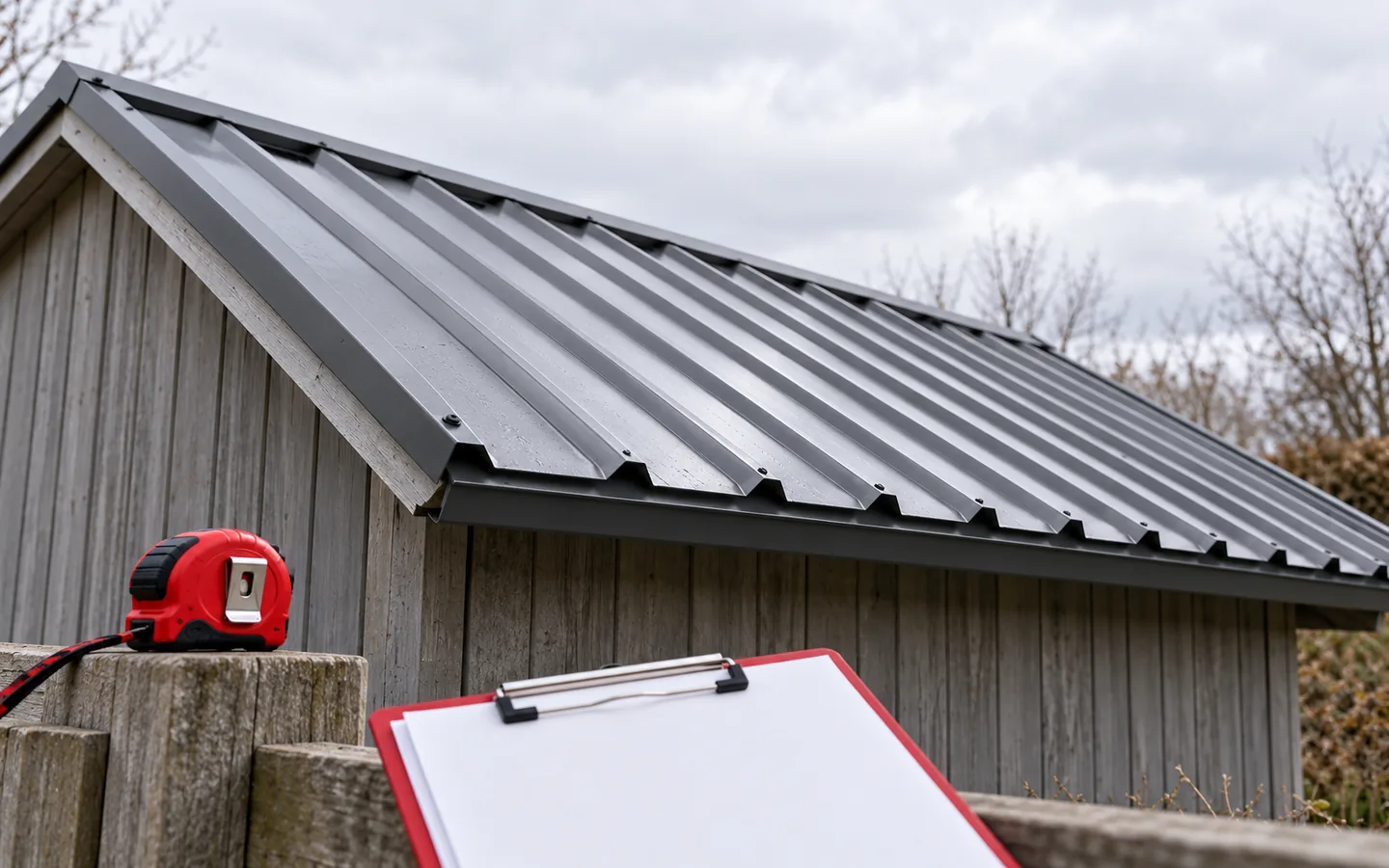
Unauthorised building work in Poland and how to clarify its legal status
In Poland, the status of works depends on the type of breach, the date of completion and the documentation, not on the roof covering replacement alone. Before modernising a roof, establish whether the building had the required permit or notification and compare the documents with the existing state: building dimensions, roof geometry, wall height and room use. Missing papers at home do not prove unauthorised construction, as files may be held by the authority or archive. Also check which requirements applied when the works were carried out, and separate the stages of the building's history.
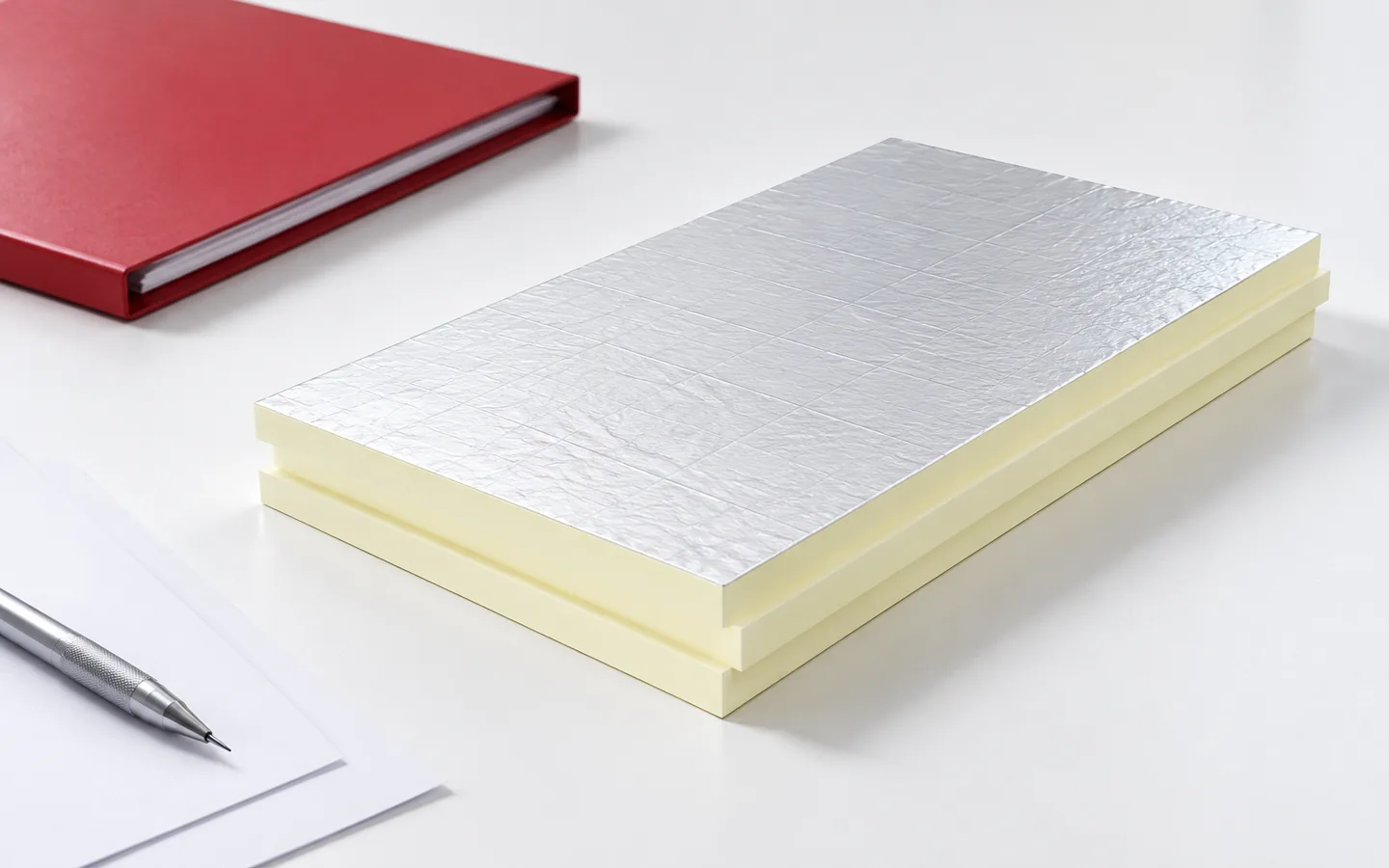
Checking roof and wall insulation against Polish requirements
Before choosing roof or wall insulation, establish which legal basis applies to your project rather than looking for a single universal U-value. Check whether the design falls under the transitional provisions as at 1 November 2026, and verify the current regulations if you order later. Compare lambda and thermal resistance R, but remember that U describes the whole building envelope, not the material alone. Assess fire, moisture, acoustics and continuity of layers too. Leave the decision on thickness and build-up to the designer.
Which Polish VAT rate applies to roofing materials and roof renovation?
In Poland, roofing materials bought on their own generally carry 23% VAT. Under the rules in force on 1 November 2026, certain work on qualifying residential property may attract the reduced rate of 8%. Eligibility depends on the contracted work, the type of building or dwelling and its usable floor area. Describing an offer as “materials and installation” does not by itself determine the rate. When comparing quotations, first check that both cover the same materials and work, then compare VAT-inclusive totals. The price of a sheet before tax tells you little about the final installed cost.