Gutters and drainage
How to size and select gutters for a metal roof
Gutters are selected primarily according to the volume of water to be drained and the roof layout, not merely the colour of the sheeting. It is worth checking the effective roof area, pitch, eaves length and downpipe positions, since a large slope directing water to one point makes different demands than several short sections. The gutter and pipe cross-section should be confirmed against the specific system’s data, allowing for corners, valleys and thermal movement. Colour matching alone does not guarantee efficient drainage.
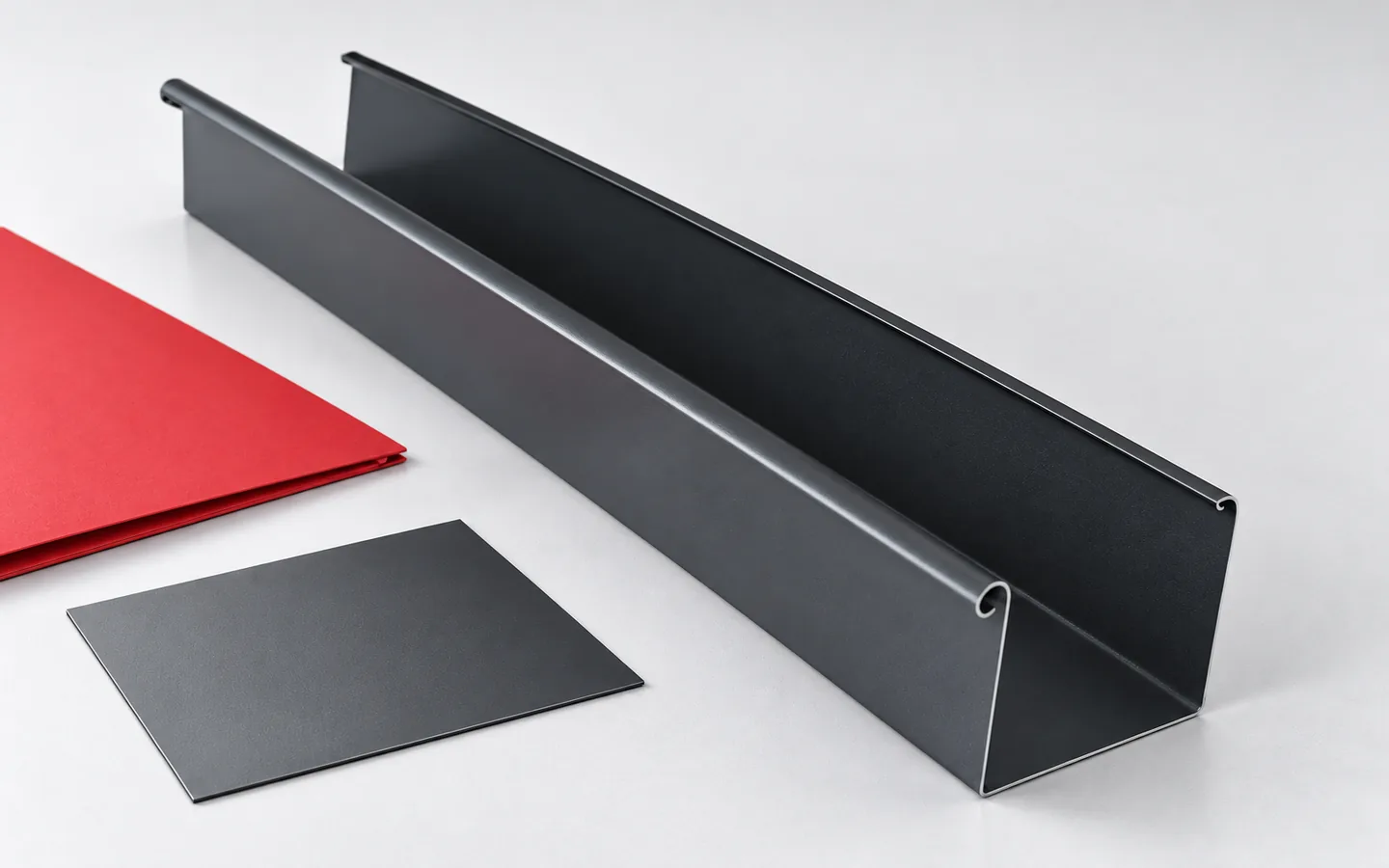
How do you determine the required system size?
The starting point is the effective roof area and the drainage layout. The pitch, the length of the eaves and the location of the outlets all matter. A large roof slope directing water to a single point places different demands than several short sections. The size of the gutter and downpipe is selected according to the data for the specific system, not solely the width of the building.
Corners and roof valleys must be taken into account. Water can flow in locally faster than the average for the whole slope suggests. If several outlets are provided for in the design, one should not be removed for aesthetic reasons alone. Such a change requires rechecking. A more attractive façade does not compensate for regular overflow during intense rainfall.
Steel or plastic — what to compare?
Steel and plastic systems have different properties and methods of connection. In both, resistance to service conditions, completeness of accessories and adherence to the instructions are important. It is not worth making a simple division into durable metal and non-durable plastic. The quality of the specific product and the workmanship matter more than such a shorthand.
Thermal expansion must be taken into account. Connectors and fixings should allow the movement intended for the material. They must not be blocked with random screws or adhesive. With a steel gutter, protection of the coating and edges is important. In both variants, damaged sealing or incorrect installation can lead to leaks.
Round or square cross-section?
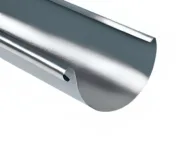
The choice of shape affects the appearance of the eaves, but the capacity must be checked for the specific dimensions. It cannot be assumed that every square gutter carries more water than a half-round one. The entire system matters, including the outlet and the downpipe. The selection should combine hydraulic requirements with the proportions of the building.
It is worth examining the corners and connections, not just a straight section. These often determine the aesthetics of the system. Check the availability of accessories and spare parts. Connecting elements from different families just because they have a similar width may not ensure tightness. System compatibility is more important than an apparent dry fit.

How do you connect the gutter to the metal sheet?
The position of the gutter must be coordinated with the end of the covering and the eaves flashing. Water should enter the inside of the system, not behind its rear edge. The first row of tile-effect metal roofing requires proper support. With trapezoidal steel sheet, the shape of the valleys and the end of the sheet matter. There is no single overhang that is correct for every roof.
Water from the underlay can follow a separate path. It must be drained in accordance with the design without dampening the timber and façade. With concealed gutters, there is an additional requirement for an emergency overflow and service access. The cover should not block ventilation beneath the covering. All these functions meet in the small area of the eaves.
What should be checked in fixing and maintenance?
The hooks must be fixed to the correct substrate and arranged in accordance with the system. Special locations such as outlets and corners may require additional attention. The gutter should not take on the role of snow guard. If snow can slide down from the roof slope, a separately designed solution is needed.
Subsequent cleaning should be possible without damaging the covering and façade. Trees in the surroundings increase the need for inspection. Grilles limit some of the contamination, but they themselves also require checking. It is worth checking the connections and flow after strong wind. An overflowing gutter can dampen the wall despite a completely tight roof.
Where should rainwater go?
Water drainage does not end at the lower end of the downpipe. Its reception must be planned in accordance with the site conditions and the design. This may be a suitable installation, a tank or another permitted solution. Water should not accumulate at the foundations without a plan or flood the entrance to the building.
When ordering, calculate the entire system, together with connectors, hooks and drainage elements. Confirm the colour and coating of the flashings. Well-chosen gutters protect the covering, walls and surroundings of the house. Their appearance is important, but performance is assessed during rain and after years of use, when the system can still be inspected and repaired.
In the cost estimate, also include the installation and the access required for the works. The lowest price per metre of gutter does not always mean the cheapest completed drainage. Only a complete list allows solutions with a similar function to be compared.
7 branches. Materials closer to your project.