Maintenance and durability
How to prevent leaks in a sheet metal roof
A metal roof stays watertight when the covering suits the actual roof pitch. Before buying, check the pitch, the rafter length and the planned roof penetrations. The minimum angle for one sheet model does not apply to all products of similar appearance, including T18 and T35 profiles. On a gentle slope water flows more slowly, so lap lengths, seals and the position of joints matter more. The corrugation height marking alone does not describe the entire roof system.
Is every covering suitable for a low pitch?
On a shallow roof slope water flows more slowly. The length of the laps, the seals and the position of the joints then become more important. The minimum angle given for one type of steel sheet does not apply to all products of similar appearance. This also applies to the T18 and T35 profiles. The height of the corrugation alone does not describe the entire roof system.
Before purchase you need to know the actual pitch, the length of the roof slope and the planned roof penetrations. In the instructions for sandwich panels the required pitch is sometimes given in percent. Percentages must not be read as degrees. The presence of skylights or joints along the length can change the conditions of use. The covering should not be adapted to an insufficient pitch by adding a random tape.
How do laps affect tightness?
The sheets are laid so that their geometry leads water along the outer side of the covering. The side lap and the end lap serve different functions. Their width, fixing and any sealing are determined by the documentation. If a sheet has a drainage groove, it must not be crushed or the direction of the joint reversed. The solution must be checked before the first batch is cut.
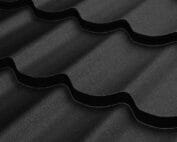
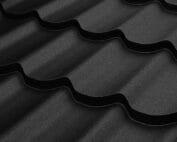
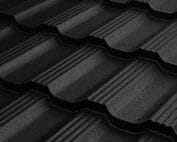
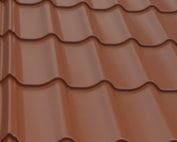
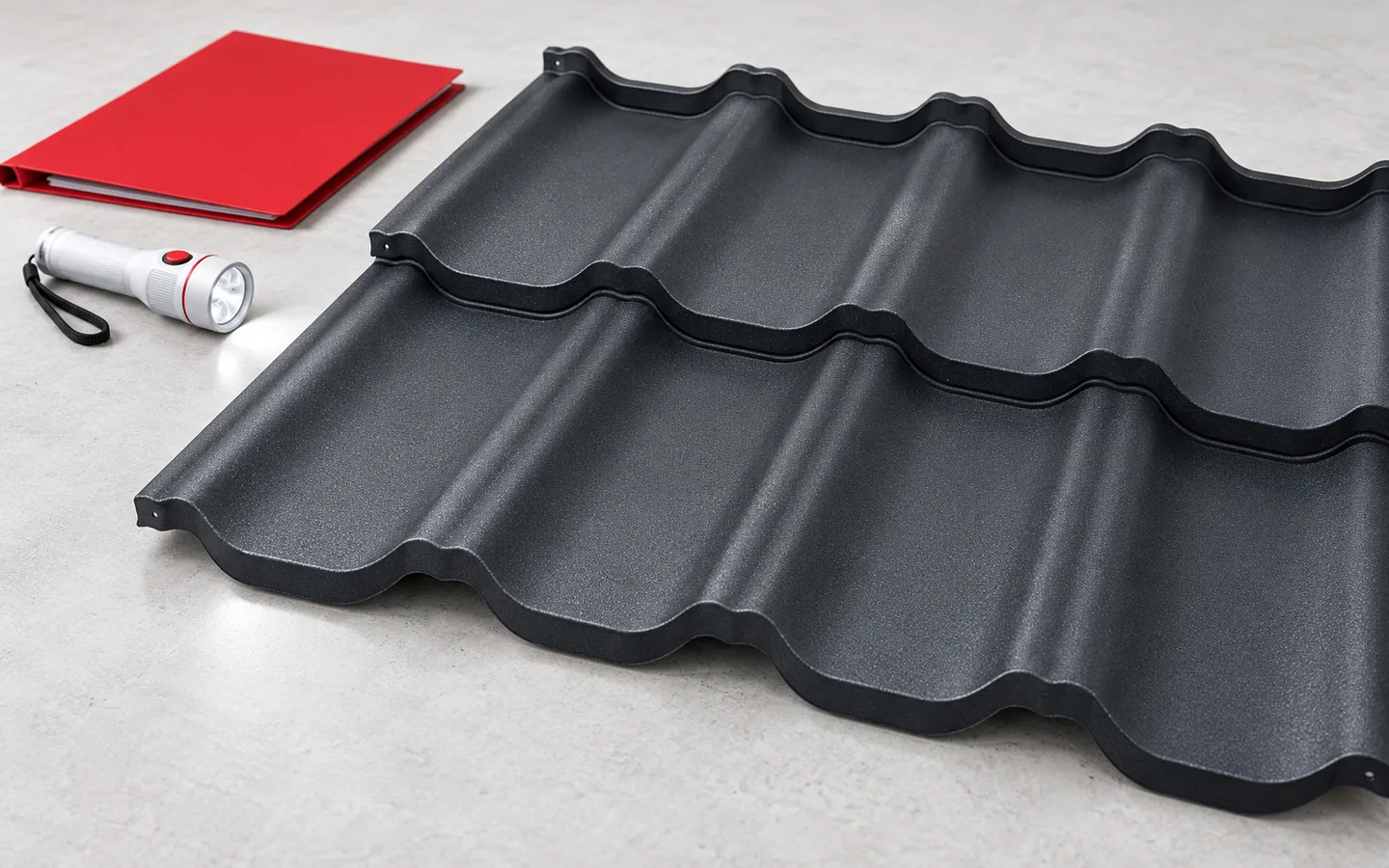
Fewer transverse joints can make it easier to achieve a watertight slope. Very long sheets, however, are more difficult to transport and prone to damage during handling. Modular tile-effect metal roofing, by contrast, has a designed lap arrangement. Its watertightness depends on correct fit rather than on sealing all edges with sealant.
Why do flashings require a separate plan?
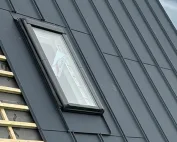
The places where the direction of flow changes require the most attention. These include roof valleys, chimneys, walls and roof windows. The flashing should lead water onto the covering or into the gutter. It must also allow the elements to move under the influence of temperature. A strip of sheet metal merely adhered to a wall does not replace a proper connection with its surface.
On a wide chimney, drainage from its rear side must be provided for. At a window, a collar matched to the specific window and the profile height is used. In a roof valley, fixings are not placed at random points in the water flow. The details should be drawn before installation, especially where different coverings meet or the roof adjoins an existing building.

What does the membrane under the steel sheet provide?
The underlay takes up water that gets beneath the covering and helps protect the insulation. It should be continuous at chimneys, windows and service penetrations. Its laps and joints are bonded in accordance with the intended system. A tear left under a batten does not cease to be a problem once the steel sheet has been installed.
Equally important is the termination at the eaves. Water from the membrane must have a designed drainage path. It must not reach the wall insulation or be retained on the timber. The arrangement of ventilation gaps depends on the roof type and the layers. In a sandwich panel, the sealing function is also performed by the locks and their tapes. The detail from a roof on rafters is therefore not transferred directly to a hall made of panels.
How to avoid compromising watertightness during installation?
The fastener must be selected for the substrate, the thickness of the fixed components and the loads. Its position and the pressure of the washer are important. A screw that is too loose will not seal the hole. Excessive pressure can damage the seal and deform the sheet. A screw driven in at an angle also does not ensure even contact. The number of fasteners is not determined solely on the basis of the roof area.
After cutting, swarf must be removed and the edges protected according to the coating instructions. Cable, antenna and installation penetrations should use the components intended for this purpose. A hole with only a silicone collar is a weak detail. Solar panel mounts also require verification of load-bearing capacity and tightness. The roof should be accepted before the details are covered by additional equipment.
How to maintain protection in the years that follow?
Even a correctly installed roof needs unobstructed drainage. Leaves behind the chimney or in the gutter can hold water where it should not stand. During inspection, the ageing of seals and the condition of flashings are also checked. After repairing an antenna or chimney, it is worth inspecting the nearby sheets. Many minor damages occur during work unrelated to the covering itself.
If a leak has appeared, the source is determined first. Water can travel along the membrane or timber. The visible stain does not have to lie beneath the leak. Condensation of vapour produces similar symptoms. An effective repair should remove the cause and restore the drying of the layers. Applying additional compounds to a wet surface usually makes later assessment more difficult.
7 branches. Materials closer to your project.