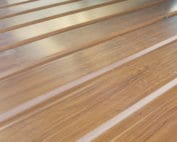
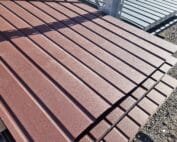
Appearance and planning
How do you choose the colour of steel sheet for the roof, façade and surroundings?
The colour of the steel sheet is best chosen together with the façade, windows and drainage. The RAL designation helps to describe the colour, but it does not say everything about the appearance of the finished surface. Gloss, texture, light and the shape of the trapezoidal steel sheet matter. Before ordering, it is worth viewing a real sample in the place where the roof or wall will be created. First establish the largest surfaces of the building. On a house with a sprawling roof, the covering can strongly influence the perception of the whole form. In a simple hall, the façade may play a greater role. Choose the dominant colour, and only then match the flashings, gate, gutters and small accents. Too many similar but different greys can look accidental.
Which element should you start with when choosing colours?
Take the surroundings and light into account. A light cladding against dark green gives a different effect from the same steel sheet next to light concrete. It is worth placing a large sample alongside the render or wall cladding. Do not judge the roof solely on a phone screen. Display settings and the conditions in which the photo was taken can clearly change the colour.
Which RAL colours are worth comparing with each other?
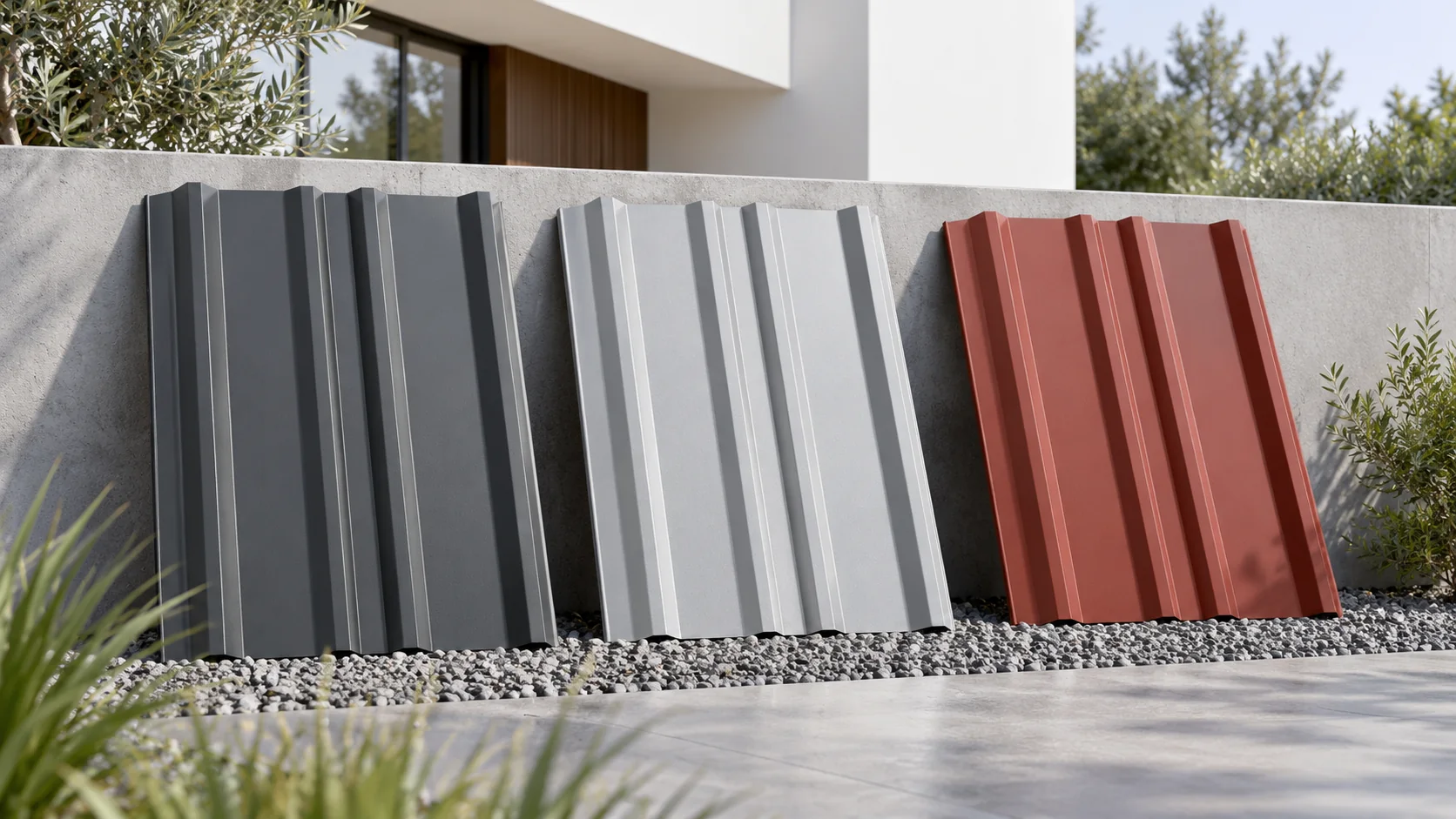
For comparison, you can choose anthracite RAL 7016, silver RAL 9006, oxide red RAL 3009 and chocolate brown RAL 8017. They offer four different directions: dark neutral, light metallic, warm red and muted brown. These are examples of colours, not a sales ranking or a declaration of availability in every coating.
A dark roof can emphasise a simple building form and window frames. Light steel sheet blends better into a cool, industrial palette. Red and brown are worth comparing with the façade materials rather than choosing them from memory. The same code on steel and on another substrate may be perceived differently. With metallic elements, the direction in which they are laid can also matter.
Why do matt and gloss look different?
A glossy surface shows reflections more strongly. Matt diffuses light, and a pronounced texture changes the appearance up close. That is why two samples of a similar colour can differ across a large roof area. The rhythm of the trapezoidal profile also creates light and dark bands. The deeper the profile and the more lateral the light, the stronger this division can be.
Gloss is not a simple measure of durability. A matt coating is not always thicker or more resistant than any glossy one. The choice of finish should be kept separate from the comparison of protective parameters. Ask for the exact designation of the variant, its properties and the conditions of use. The name ‘dark matt’ is too general to order all accessories safely against it.

What does colour change during heating?
Surfaces differ in how they absorb radiation, and heated steel sheet changes dimensions. However, the behaviour of the covering is also affected by sheet length, material, fixings and support. This should not be reduced to a ban on dark colours. The chosen variant must be taken into account in the design and in the installation rules.
It is particularly worth carefully assessing a long, dark façade with a low profile and wide, flat panels. Side sunlight can reveal minor unevenness. Tightening the sheets more firmly is not a universal remedy. It is better to establish the panel layout, the geometry of the substructure and the fixing method in advance. A sample in good light will help determine the expected appearance.
How can you avoid differences between the roof and the flashings?
Agree the colour, texture and type of coating for the covering and visible accessories at the same time. The same RAL number does not guarantee an identical impression on different materials and finishes. The gutter, flashing and sheet may reflect light differently. It is worth comparing them side by side before placing the order.
For a large, uniform surface, it is good to agree delivery from a single batch if possible. A later order for a small section may differ from material that has already been exposed to the sun. A small reserve therefore makes sense where a change in shade would be difficult to hide. Its size should result from the layout of the elements, not from an arbitrary percentage.
How can you carry out a simple test before purchase?
Place the samples outside in an orientation close to the intended one. Tilt the roof sample and position the façade sample vertically. View them in shade and in sunlight, from close up and from the place where the building will usually be seen. Set them alongside a section of façade and a window frame. Such a test reveals differences that a small swatch held in the hand does not show.
Record the final designations so that subsequent orders are not based on the description ‘grey as before’. Also check the availability of the entire set in the chosen variant. It is best when the colour decision is made before splitting purchases between roof, walls and drainage. It is then easier to maintain a consistent appearance without looking for approximate substitutes at the end of construction.
Questions and answers
Does the RAL number also specify gloss and durability?
No. It describes the colour. The type of coating, gloss, texture and protective properties must be specified separately.
Does light-coloured steel sheet always solve the problem of interior overheating?
No. Colour is one of the factors. Insulation, airtightness, ventilation, glazing and the entire construction of the building envelope also matter.
7 branches. Materials closer to your project.