PIR insulation
Flat roof costs with PIR: comparing complete roof assemblies
When buying PIR for a flat roof, you must also price in the slopes, fixings and waterproofing. A cheaper board may require a different method of connection to the covering. The comparison should be made for a finished roof with the same function, geometry and scope of service. PIR boards for a flat roof are selected according to how the covering is constructed. Aluminium laminate, glass fleece and bituminised facing are not interchangeable surfaces. A difference in facing can change the adhesive or intermediate layer required. The offer should show the cost of the entire compatible connection. The basis for the comparison is therefore a specified board, the layers above and below it, and the way they are installed. Without this, a price difference does not explain what the buyer actually receives.
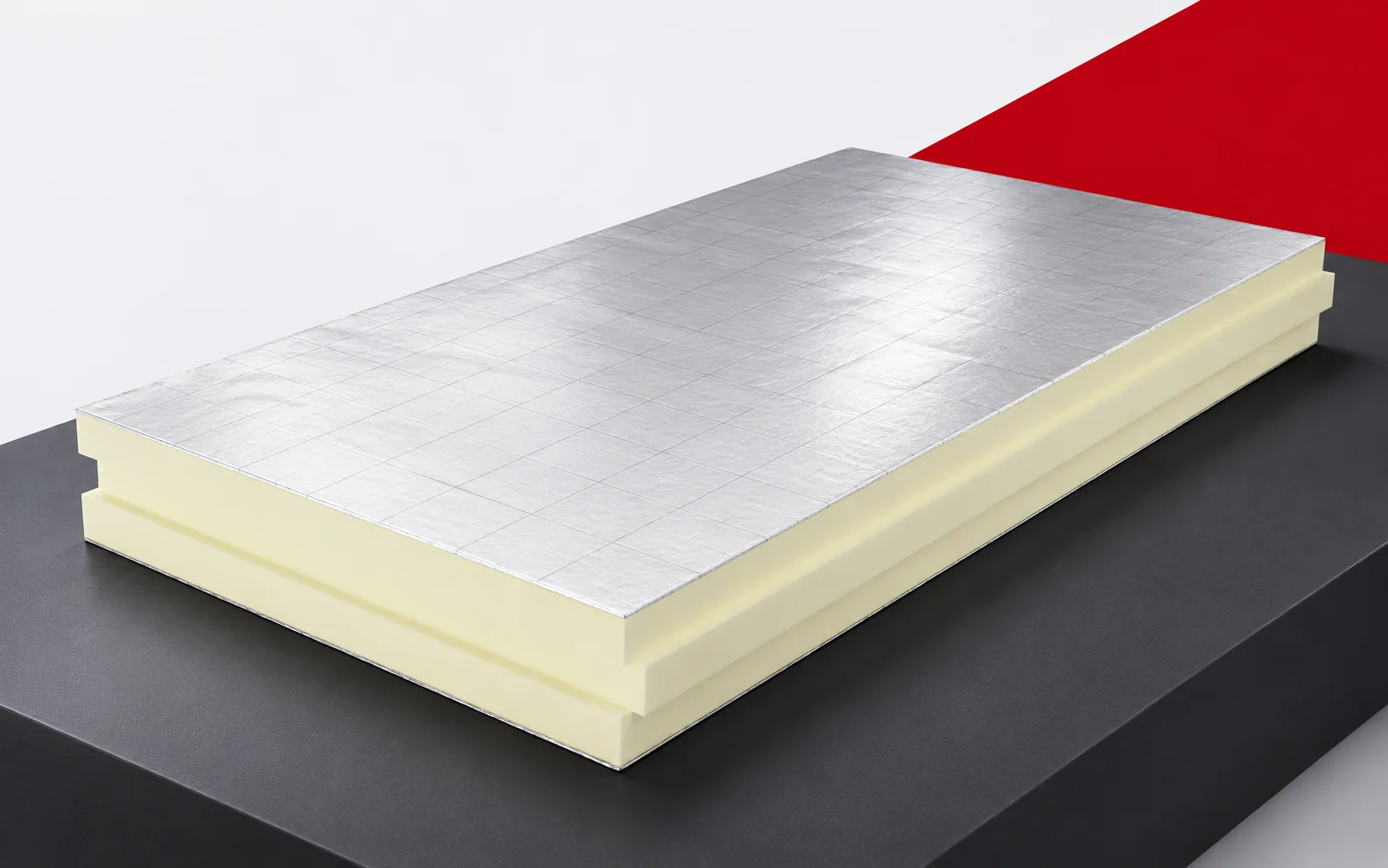
Facing matched to the waterproofing
The cheapest core does not always lead to the cheapest assembly. It is also worth comparing the time needed for the individual operations. Such a description allows the benefit of PIR to be assessed without omitting the surface that works together with the waterproofing.
Slopes directing water to the drain
Water drainage must be planned as an element of the assembly: the slope may result from the structure, the base layer or the PIR tapered boards. The latter are priced on the basis of the plan, not an averaged thickness, because it is precisely the distribution of heights that determines the completeness of the delivery.
The order of the tapered elements should be based on the plan view and the markings. The price per metre of a board of one thickness does not describe a set with many heights. The constant layer and the cuts at obstacles must also be taken into account. It is worth checking whether the supplier states the complete scope and how the elements are identified. A missing wedge can halt the execution of a specific drainage area despite a large quantity of material on site.
Fixing and the effect of wind
Wind load is transferred from the covering through the connections all the way to the substrate, and mechanically fixed, adhesively bonded and ballasted systems place different demands. The cost of the fixings depends on the exposure zones and the type of substrate, which is why it cannot be compared using a single rate per metre.
Comparing a single figure for fixings across the entire surface can overlook edge requirements. The fixing quotation should correspond to the zones of influence and the actual substrate. In a refurbishment, a prior assessment of its condition may be necessary. An averaged number of fixings for the whole roof slope need not describe the required layout. It is worth separating the cost of the survey from the cost of the actual installation. This means a lower price does not result from omitting conditions that are important for keeping the covering in place.
Loads above the insulation
Ballast loads the roof differently from an equipment base plate or load associated with service traffic. A PIR board does not automatically distribute every pressure across the entire surface. When comparing costs, separate out the solutions for equipment bases and service routes; their scope and interaction with the roof layers must be assessed separately.
Equipment and service routes require a solution above the regular roof field. The cost estimate should include supports, protective layers and suitable penetrations. Their selection also affects the loads on the insulation. It should not be assumed that a finished covering will accept any equipment. Including these items early reduces later rework and allows quotations for the same roof function to be compared.
Airtightness and moisture in the system
In a flat roof cost estimate, the vapour control layer, PIR insulation and waterproofing form one building envelope, not three separate purchases. The price of the system depends on whether seams, edges and installation penetrations maintain the continuity of the relevant layers. In a refurbishment, survey and replacement of damaged sections are added, so the quotation should also cover these works.
The price of adding insulation onto an unknown substrate leaves a significant cost risk. In refurbishment, the price depends on the scope of materials that can be retained. Exploratory openings help separate this scope from the replacement of damaged sections. It is worth establishing how unknown works will be settled before starting. A quote based on the assumption of a perfect substrate may not reflect reality. PIR should be purchased after determining the required thickness and preparing the build-up that will remain beneath it.
Access to details during renovation
Roof refurbishment begins with establishing what lies beneath the new PIR insulation: exploratory openings and measurements indicate the layers to be replaced, not merely covered over. The outlet with its flashing is part of a functioning roof, so its condition and the scope of works must be priced together with the laying of the boards, not only after the material has been ordered.
Drainage should not disappear into a general finishing item. Outlets, flashings and service access points perform specific functions throughout the service life. It is worth checking whether both quote variants cover a similar scope of servicing. A cheaper roof with difficult access may cause other costs later. Assessing the whole build-up therefore takes into account not only installation but also the ability to keep it functioning.
Example of the height of the slope layer
Pure geometry shows the scale of the decision on slope: over 14 m at 1.5%, the height difference is 210 mm, so with 120 mm of insulation at the lowest point, the simplified section reaches 330 mm at the other end. This is not a recommended slope nor the design of a finished roof, but a signal to check the height at the parapet and the drainage plan. The actual arrangement of tapered boards and the thermal assessment are selected according to the geometry, the outlets and the system documentation. The name polyurethane boards alone does not indicate the roof facing; polyurethane insulation requires documented compatibility with the intended build-up, and polyurethane foam in the core does not replace waterproofing. Polyurethane insulation in a roof requires a description of all layers and how they are fixed.
7 branches. Materials closer to your project.