PIR insulation
Comparing termPIR AL quotations with alternative insulation boards
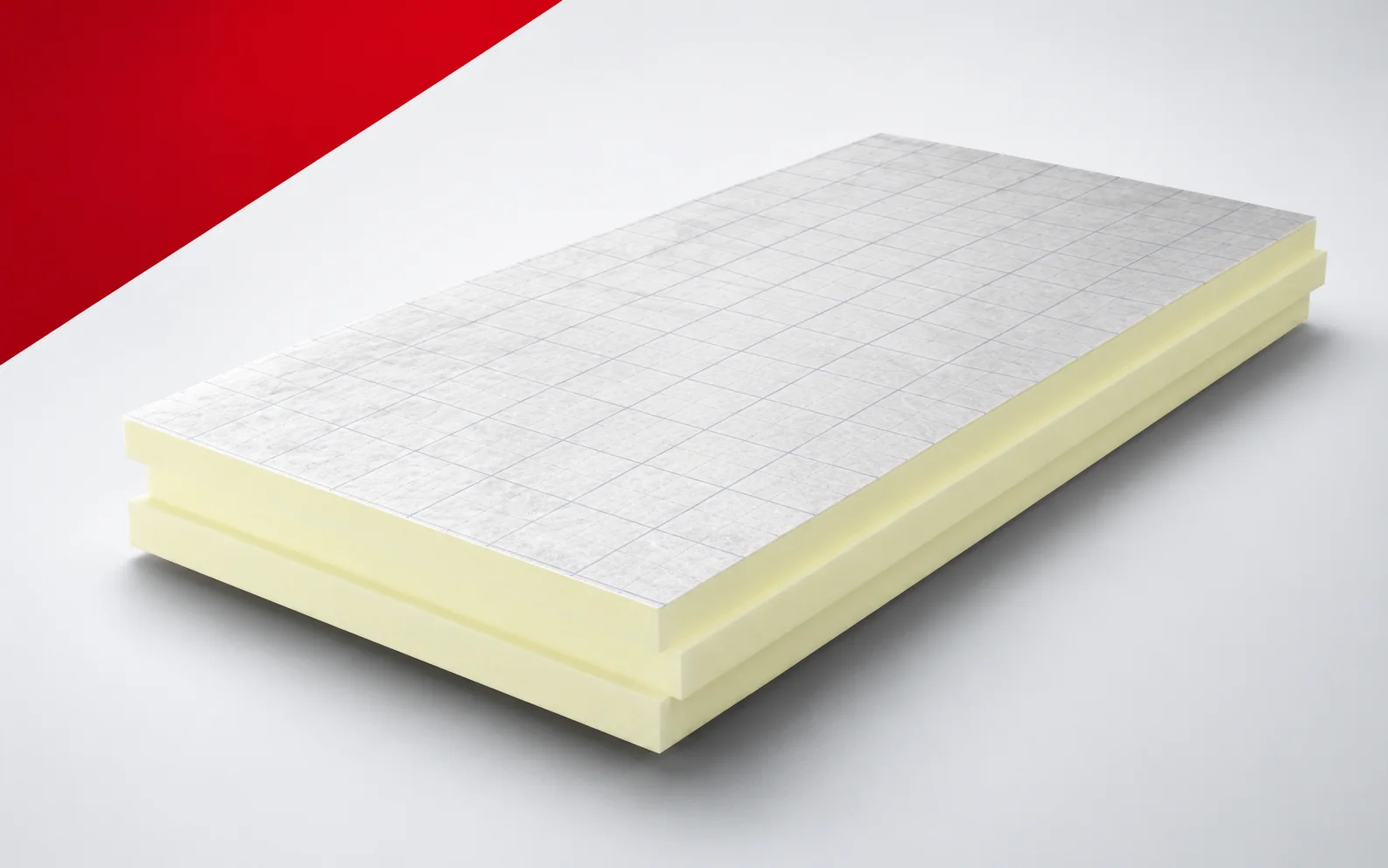
The price per square metre alone does not yet show which offer provides the more favourable arrangement. With termPIR AL, the agreed thermal target, the corresponding thicknesses and the coverage area must be compared together. Installation components and work on the insulation terminations must be calculated separately. termPIR AL has a rigid PIR foam core. On both sides there is a gas-tight laminate containing aluminium, paper and polyethylene. An enquiry about PIR boards should describe the low threshold at which the new layers are to have a limited height. The threshold must be combined with continuous thermal insulation of the wall and floor without leaving an exposed strip.
A clear scope for the enquiry
Do not choose solely on the basis of a short commercial description, because raising the floor may make it difficult to pass comfortably through an existing opening. The offer being compared should allow the required thermal resistance to be maintained without accidentally raising the floor level. Agree with the bidders the height of the free space between the substrate and the planned finish so that everyone is pricing a similar task.
An equal thermal basis for comparison
In the termPIR AL specification, enter a lambda of 0.022 W/(m·K) for thicknesses of 20–250 mm. This is the material’s thermal conductivity, so it does not replace the thermal resistance of the layer or the U-value of the building element.
An example termPIR AL layer with a thickness of 100 mm gives approximately 4.55 m²K/W from d/λ. This is the calculated thermal resistance of a homogeneous layer, not the declared RD or the U-value of the finished building element. To compare quotations, select thicknesses for a common thermal target. Separate the result for the insulation from the influence of the other layers, corners and fixings; link the price to the R of the selected layer and the U-value of the entire analysed section.
Coverage, cutting and labour
When choosing termPIR AL, specify in the order the FIT, LAP or TAG edge — respectively a straight side, an overlap or a tongue and groove. The edge type changes the laying method and the number of joints.
In the cutting plan, join the factory edge to the side cut at the wall, and fit the last row to the perimeter without unsupported narrow strips. The material allowance results from the actual cutting plan, because after shortening a board the joint may lose the ordered profile — the package surface area alone can be misleading. Check the width of the offcuts and how the joints are closed after the profile is lost before you determine the number of packages.
Parameters required for the application
For termPIR AL, the CS(10/Y)120 declaration means at least 120 kPa at 10% deformation. The reaction to fire of the product is F at 20–49 mm and E at 50–250 mm; do not transfer it to the entire building element.
For a substitute, analyse the support of heavy equipment on the layers above the PIR: the pressure of the support is distributed by the layers above the insulation before you regard the lower price as a saving with an equal effect. The name or facing alone is not enough, because 120 kPa comes from a test at a deformation greater than usually accepted in service. The supplier should indicate the data for transferring the anticipated load without equating CS with the load-bearing capacity of the finished floor; compare the bearing area, the duration of the load and the layer distributing the pressure.
Delivery and protection of the purchased material
In termPIR AL, the gas-tight laminate containing aluminium, paper and polyethylene increases the diffusion resistance of the board surface itself, but does not close the building element: cut locations, gaps and service penetrations remain critical points and require a separate solution in the building element design.
In the specification, indicate the penetration of a conduit through the surface with the termPIR AL aluminium laminate. The laminate must be connected to the designed layer controlling vapour flow; regarding auxiliary materials, ask about the scope of protection, because vapour penetrates through a leaky penetration despite the tight board surface. The auxiliary materials must ensure the continuity of this layer at the junction of the insulation and the installation. Before the final price, confirm the sealing of the conduit, the condition of the substrate before the layers are closed and the responsibility for the protective measures.
Full cost of the finished solution
When ordering termPIR AL, specify the format 600 × 1200 or 1200 × 2400 mm, the thickness, the edge type FIT, LAP or TAG, and the intended use, and in the coverage calculation allow for the loss resulting from the milling of the edges.
Price insulation works by the full scope of works, distributing the 600 × 1200 or 1200 × 2400 mm boards over the surface with folds. On the cutting plan, mark the pieces to be used in subsequent rows so that the purchase cost can be related to the completed works. A larger format reduces the number of joints but makes handling more difficult in a tight space, so the difference in prices may concern the scope. When ordering, check the list of full boards, usable offcuts and perimeter materials, and record each excluded item as a separate cost.
Two termPIR AL offers can only be compared once the format and edge have been agreed. The price per square metre of external surface does not have to correspond to the same coverage area after milling. It is worth asking for the number of full boards needed for a specific layout. Perimeter materials and labour should be priced separately. This way, a cheaper material item will not hide a larger number of offcuts or a different scope of installation.
7 branches. Materials closer to your project.