PIR insulation
PIR or mineral wool: comparing costs at equal thermal resistance
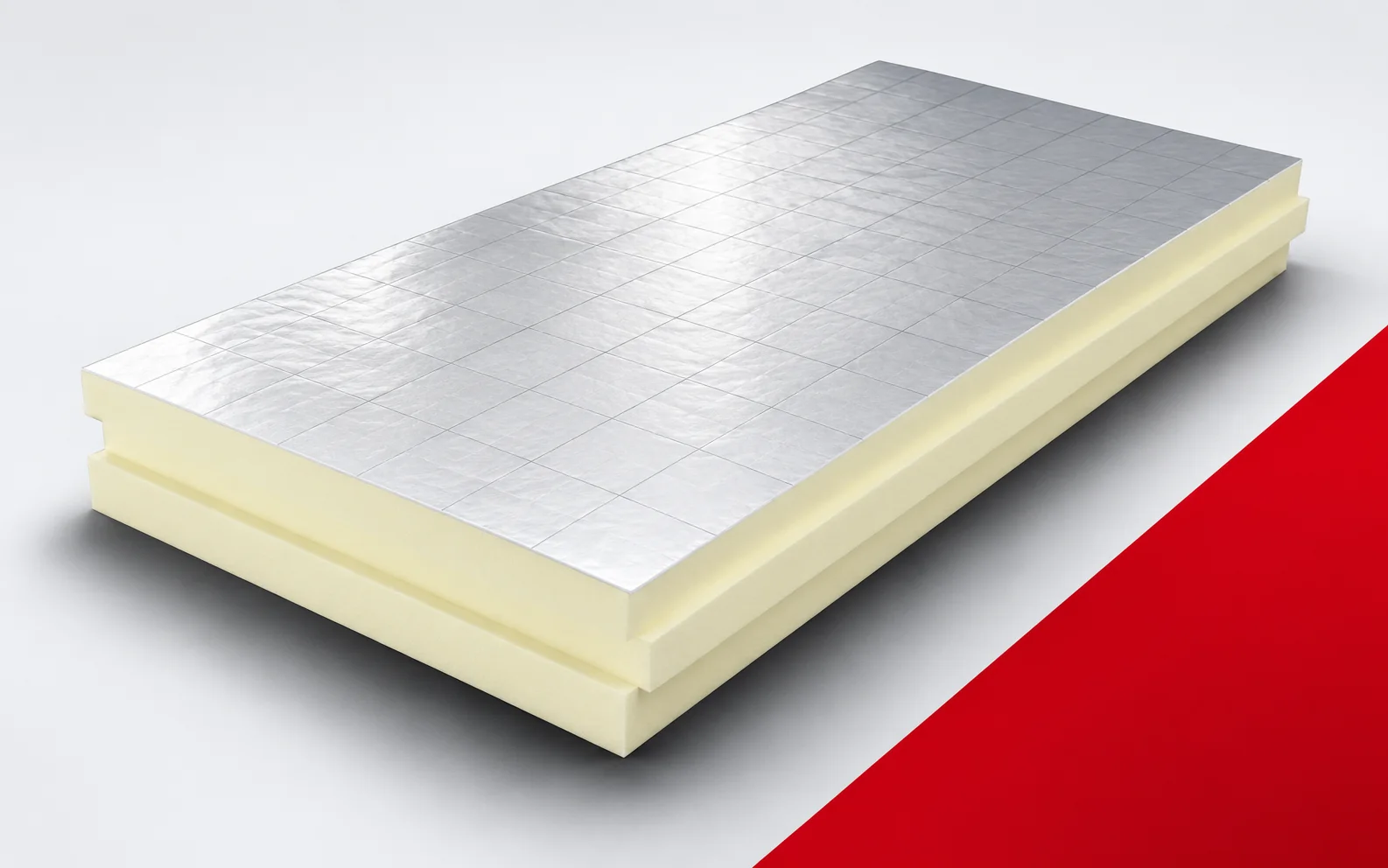
A quote for PIR and a quote for mineral wool may differ not only in the price of the insulation material. Thickness, accessories and additional functions of the building envelope also come into play. PIR boards should be compared for the same intended use. Only then is it clear whether the space saving justifies the cost of the whole solution. If you are comparing polyurethane boards with mineral wool, start with the required function. At the same R, the smaller thickness of PIR can make it easier to detail a reveal or eaves. Where space is unrestricted, this advantage may matter less. Then the other properties and the cost play a greater role. Calculate the thicknesses for the specific lambda values, and then check the available sales variants.
Comparing thicknesses requires specific figures
Polyurethane boards should not be compared with mineral wool solely on the price per cubic metre. The investor needs a specific thermal resistance over a given area. Also take into account cutting patterns and full packs. These quantities affect the actual purchase. A theoretical material saving is not worth the same if it does not correspond to a quantity that can be ordered.
Reaction to fire requires a separate assessment
The classification of the board and the fire resistance of the building element are different pieces of information. The first describes the reaction of the product to fire in a given test. The second concerns the behaviour of the entire system over a specified time. One value cannot be read from the other, nor can the installation conditions be omitted.
If one variant includes a solution that meets a specific fire requirement, the other should be assessed within the same scope. The polyurethane foam in the board cannot replace a full description of the system. The absence of the required facing or another component may artificially lower the price. It is worth asking for the documentation and the scope of execution to be specified. A cost comparison only makes sense once it has been confirmed that both solutions meet the requirements of the project.
Thermal insulation does not mean sound attenuation
It is worth separating the scope of thermal insulation and the scope of acoustic improvement in the offer. This way you do not expect a single board to perform a function that has not been declared. Polyurethane boards do not have to replace every layer of mineral wool. Sometimes it is more sensible to assign different tasks to the two materials.
An additional acoustic function is also part of the scope of the offer. Polyurethane insulation may require a different set of layers than a mineral wool solution. If the expected result includes noise reduction, it must not be omitted only in the cheaper variant. Record the common objective. A free quotation should cover the complete system. Then the price difference relates to a comparable result, and not to two different levels of specification for the building envelope.
Rigid boards and flexible infill are installed differently
With an irregular substrate, a rigid board needs proper support and careful cutting. It must not be forced between random unevennesses. The mat behaves differently during installation, but must retain the specified thickness. Each material should perform under the conditions planned for it.
Labour depends on the geometry and the technology. A large flat area may be laid differently from a loft with numerous penetrations. Rigid boards require a specific cutting layout, and fibrous products require proper fitting. The same installation rate should not be assumed without checking the scope. The quotation should also cover the joints and the acceptance. Otherwise, the material price will become the only visible difference, although not the only real one.
Water vapour and moisture depend on the entire cross-section
The material’s resistance to water does not mean that moisture in the building envelope is irrelevant. A wet substrate, a leak and moisture transport by air must be identified. Insulation with polyurethane does not remove their cause. A well-designed system should protect the layers and enable the intended performance.
In a renovation, the cost also includes investigating the old layers and any repair of moisture damage. No insulation material justifies skipping this stage. If the quote assumes that the old mineral wool is left in place, its condition must be assessed. If it provides for a new layer with high diffusion resistance, the cross-section must be checked. The saving resulting from not carrying out the necessary repair is only apparent and should not be presented as an advantage of the material itself.
The choice can combine the advantages of different materials
It is good practice to leave a clear record of the reasons for the choice. These may be limited space, a non-combustibility requirement or a specific acoustic objective. This means that a later replacement can be assessed according to the same criteria. An incidental change of product should not remove a function that was originally required.
The value of a thin layer depends on where it is used. PIR boards can reduce the extent of structural alterations at a threshold or a flashing, but the specific benefit must be calculated. Insulation with polyurethane does not have a fixed price advantage for every building. The comparison should include supply, installation and all required functions. An honest quote allows these items to be traced and the reason for the choice to be understood, even if one material is more expensive to purchase.
How to prepare a full comparison of offers
The PIR quote includes a thinner layer but does not cover an additional acoustic function. The quote with mineral wool can deliver this in a specific build-up. Before comparing the price, the scope must be made equivalent. Only then does the cost difference relate to the same expected result.
Compare two feasible variants with the same thermal, fire and acoustic objective. Add the substrate preparation, auxiliary materials and finishing. PIR boards may be justified by the space saving, and mineral wool by other required properties of the system. The actual cost results from the combination of these conditions. A good quotation table shows the scope of each item and does not replace missing data with a general statement about the best material for the whole project.
7 branches. Materials closer to your project.