Gutters and drainage
Box gutters or half-round gutters: comparing shape and capacity
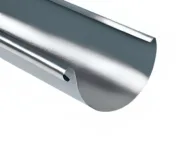
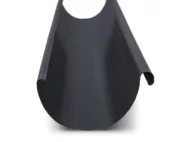
The choice between square and half-round gutters depends primarily on the required drainage capacity, not on shape alone. Check the actual hydraulic cross-section, the number and position of outlets, and the roof area the gutter is to serve. Also compare the mounting method, availability of accessories and ease of cleaning. For a hidden gutter, pay attention to tightness and emergency overflow. Leave the final selection to the designer, because the trade name of a size does not guarantee the same cross-sectional area across different systems.
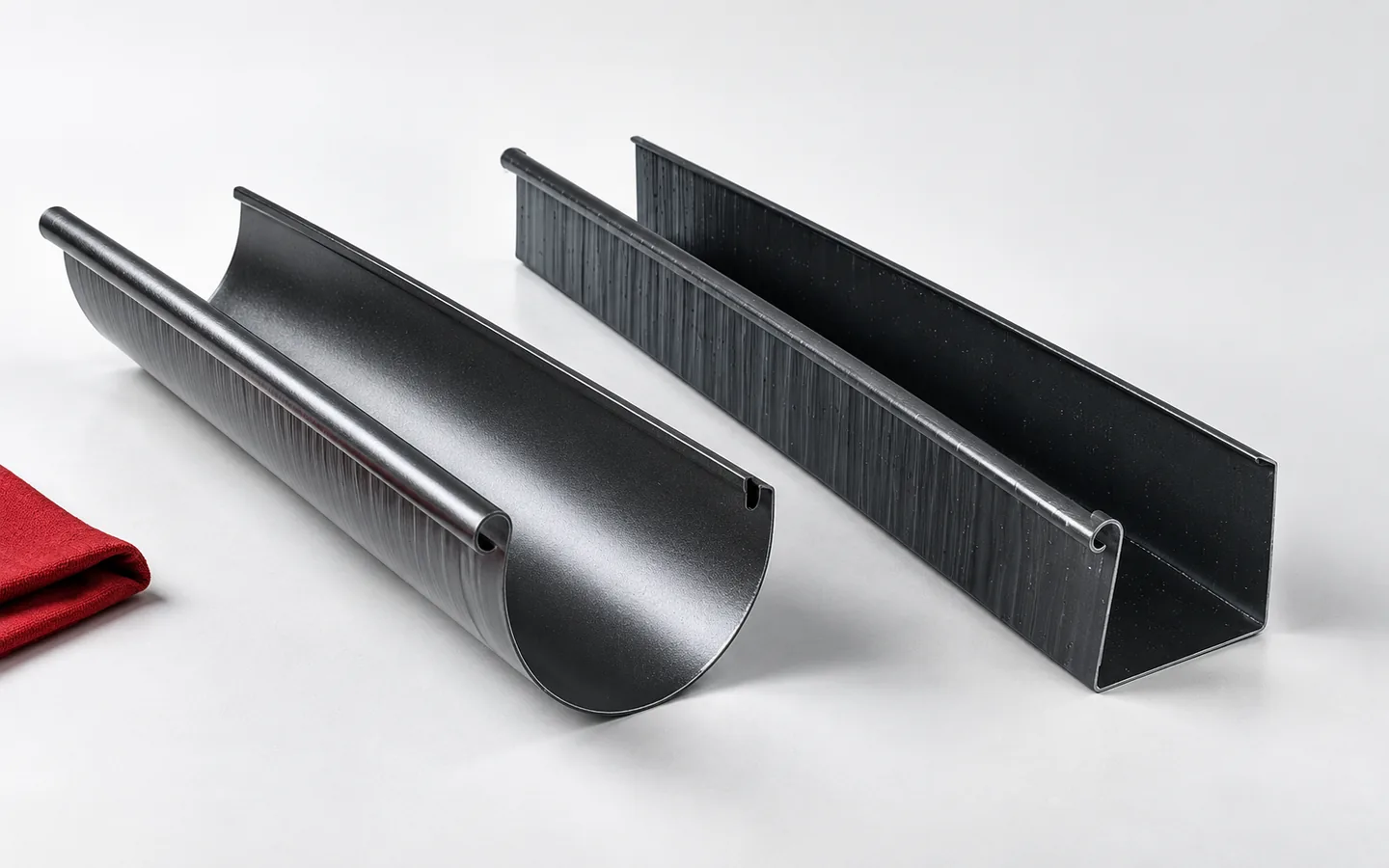
How does the gutter shape change the appearance of the house?
A rectangular cross-section emphasises the horizontal line of the eaves and combines well with a plain façade. A half-round gutter has a softer outline and suits many roof forms. The final effect also depends on colour, size and method of fixing, however. A large gutter in a contrasting colour can dominate regardless of its shape.
It is worth viewing a sample together with the eaves flashing and the covering. The same graphite can have a different gloss or texture. If the gutter is concealed behind a fascia, the façade shows mainly the cover. Such an arrangement must be assessed as a whole system. Choosing a rectangular cross-section alone does not mean the drainage is intended to be concealed.
Does a square gutter always collect more water?
This cannot be stated without dimensions. Performance depends on the hydraulic cross-section, the fall and the position of the outlets. A large half-round gutter can handle more water than a small rectangular variant. A trade name for a size also need not mean the same cross-sectional area in two different systems. Selection tables are needed.
The method of inflow also matters. A roof outlet directs a concentrated stream to one point. A long roof slope can deliver water evenly over a much longer section of eaves. In both cases the conditions are different. Selection should take account of the roof and the arrangement of the downpipes, not merely the impression that a rectangular profile looks more capacious.
What differences arise during installation?
Each system has its own brackets, corners, connectors and outlets. Random accessories should not be combined merely because they match in colour. The connection must remain watertight and allow for thermal movement. The spacing of supports and the fall are determined by the instructions. Fixing to the fascia board or roof structure may also differ.
Before ordering, the space at the eaves must be checked. The width of the fascia, the position of the gutter board and the height of the gutter must match. When replacing existing drainage, the new shape may require different brackets and flashings. These works should be included in the quote. The price of the gutter section alone does not show the cost of adapting the whole eaves.

What is important with hidden gutters?
In concealed drainage, a leak can remain invisible from outside for a long time. Water then has access to layers that are difficult to repair without removing the cover. A well-considered sealing detail and the possibility of inspection are therefore needed. The gutter should not simply be enclosed with a random fascia if the system does not provide for such use.
You also need to address the emergency situation when the outlet becomes blocked. Water must not find the easiest route through the interior of the partition. The overflow and service access should follow from the design. Aesthetics should not prevent cleaning. Before choosing, it is worth asking the installer to show how they will open the system and remove debris from it after a few years.
Which gutter is easier to keep clean?
Ease of cleaning is determined above all by access and the number of hard-to-reach corners. Any cross-section can collect leaves, sand and sediment. A half-round gutter is not self-cleaning, and a rectangular one does not have to be troublesome. Correct fall and a clear outlet are what matter. Even a slight deformation can create a place where water permanently stands.
A review is worth carrying out after the leaves have fallen and after strong wind. Grilles and covers limit some of the dirt, but they also require checking. They do not replace the servicing of pipes and sediment traps. When choosing a system, check whether the seal or a single connector can be replaced. Parts availability is a practical feature that you cannot see in a photo of a finished house.
How do you make the decision and compare the price?
Ask for a complete itemised list for the same roof slope. It should include gutters, brackets, connectors, corners, outlets, pipes and clamps. If the system is concealed, add covers and protective elements. Pay attention to transport and installation. The difference in the price of accessories may be more important than a small difference in the price per metre of gutter.
First select the capacity, then check the appearance and the servicing conditions. With a simple metal tile roof, both the half-round and the rectangular variant work well if properly designed. A good system should drain water even when it is no longer new. Regular access and correct installation are just as important as the shape of the cross-section.
7 branches. Materials closer to your project.