Choosing roofing
Clay roof tiles or tile-effect steel for a house?
The choice of covering depends primarily on the roof structure, the geometry of the slopes, the comfort of the attic and the cost of the complete set, not on the material name alone. Check whether the design accounts for the weight of the chosen solution and whether the supports and connections are suited to its installation. In an existing building, changing the covering requires an assessment of load-bearing capacity, not just a look at the rafters. Compare complete systems with the substrate, accessories and flashings, as only these reveal the real differences.
How important is the weight of the covering?
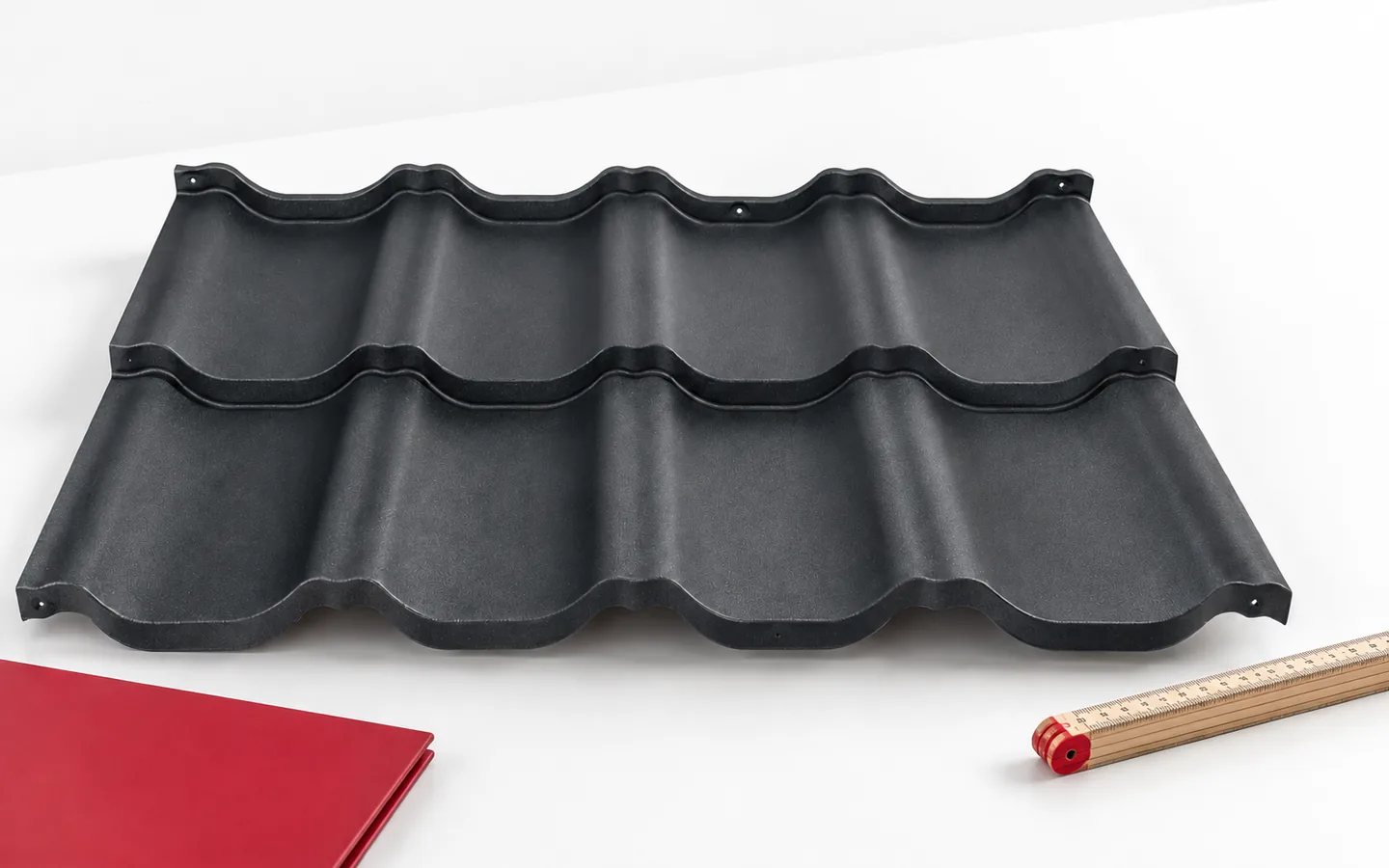
Tile-effect metal roofing is a lightweight covering, while ceramic tiles are distinctly heavier. In a new house, the structure is designed with the chosen solution in mind. In an existing building, changing from metal to a heavier material requires a load-bearing check. It is not enough to judge that the rafters look solid. Supports and the condition of connections also matter.
A change in the opposite direction can reduce the dead load, but also requires consideration. New layers, such as sheathing or additional insulation, bring their own load. Lightweight metal does not exempt you from accounting for snow and wind. It is therefore worth comparing the weight of the entire roof after renovation, not just the mass of two materials in a catalogue.
Which material is easier to adapt to the roof shape?
Small ceramic elements allow the covering to be laid on various geometries, but they also require cuts and special elements. Long sheets of tile-effect metal roofing are convenient on simple roof slopes. With numerous roof valleys and dormers, a modular format can facilitate cutting and handling. However, it is not true that modules always eliminate waste.
Pitch also matters. Each system has its own conditions for use and for substrate preparation. Choosing by the general material name can lead to errors on a shallow slope. Before ordering, it is worth comparing the construction drawings for the eaves, ridge and roof valley. The cost of these details often distinguishes quotes more than the area of the main covering itself.
What determines noise during rain?
Ceramic tiles and thin metal sheet react differently to raindrop impacts. In a house with a usable attic, however, the entire assembly of the building envelope matters. Insulation, airtightness, substrate and internal lining affect what is heard in the room. Impressions from an empty shelter should not be transferred to a properly constructed roof above a bedroom.
If quietness is a priority, the design should account for acoustic requirements from the outset. Changing the metal coating alone or adding a thin layer will not replace appropriate solutions. Roof windows and connections to other building components also matter. It is best to compare complete assemblies with known properties, not promises about a single material.

How to compare durability and maintenance?
Durability depends on product quality, the environment and correct installation. In metal, the protection of the metal, the condition of the edges and the removal of swarf after work are important. In ceramic, damaged elements, fixings and the condition of flashings are checked. Both roofs require inspection of gutters, roof valleys, chimneys and elements penetrating the covering.
A warranty is not a simple forecast of years without any work. It may distinguish technical properties from appearance and include maintenance conditions. When comparing, check what the protection actually covers. It is also worth establishing the future availability of individual components and accessories. The possibility of efficient repair is more important than the biggest slogan on the leaflet.
What should a cost comparison include?
The comparison should cover the material, substrate, supporting structure, accessories and labour. Add transport, unloading and any reinforcements. With ceramic tiles, edge and ventilation components matter. With metal sheet, flashings, laps and cutting patterns are important. Comparing two prices per metre without these items can reverse the actual result.
Both quotes should cover the same roof area and the same equipment. It is worth specifying chimneys, windows and snow guards already in the enquiry. Cut-to-length and modular tile-effect metal roofing can be compared separately. A cheaper format on a simple roof need not be cheaper on a slope with many short sections and hips.
How to decide without following fashion alone?
First check the project and structural requirements. Then define your priorities for appearance, the attic and the budget. Look at samples in daylight and at a roof of a similar scale. The height of the profiling and the surface texture can look different from the street than up close. It is worth matching the colour with the façade and joinery that will actually be used.
Tile-effect metal roofing will be a sensible choice when low weight and efficient installation in a suitable format are important. Ceramic tiles may meet different architectural and practical expectations. There is no need to look for a winner for every house. You need to find a solution that the contractor can install correctly on the specific roof and keep within the planned budget.
7 branches. Materials closer to your project.