Installation and details
How chimney flashings keep rain out
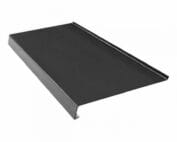
A chimney flashing has to lead water from the roof slope around the chimney and direct it back onto the covering. Its effectiveness depends on matching the sheet profile, the roof pitch and the chimney’s dimensions. The rear section, the sides and the junction with the chimney wall are crucial. Sealant plays only a supporting role – it cannot replace properly shaped sheet metal or the freedom of materials to move. During renovation, the underlay should also be checked. A chimney interrupts the continuity of the slope, and water has to get past this obstacle. The roof and chimney may move differently due to temperature or structural movement.
Why is a chimney a demanding roof location?
The chimney interrupts the continuity of the roof slope. Water flowing from above must bypass the obstacle and return to the covering. Different materials also meet at this point. The roof and chimney may move differently under the influence of temperature or structural movement. The connection should remain watertight despite these movements. Rigid sealing of the joint will not always ensure a durable result.
Particularly important is the section behind the chimney, on the ridge side. It collects water and contaminants from the upper part of the roof. With a wide chimney, an additional solution dividing the flow may be needed. Its shape depends on the geometry. The entire flashing cannot be selected solely by the chimney’s perimeter, without considering the place where it stands on the roof slope.
What parts make up the flashing?
The lower section directs water onto the covering below the chimney. The sides guide it along the walls, and the rear part takes over the flow from above. The elements must work together in accordance with the direction of flow. The laps must not create ledges directing water under the sheet. The exact arrangement depends on the type of covering and the selected sheet metal solution.
Special attention is required for the termination of the flashing at the chimney wall. A solution with additional covering of the upper edge is often used. It is intended to protect against water flowing down the chimney. The bead of sealant alone on the exposed edge may lose adhesion over time. The type of fastening and sealing is selected according to the chimney material, its finish and the permissible method of intervention.
How to match the detail to tile-effect metal roofing or trapezoidal steel sheet?
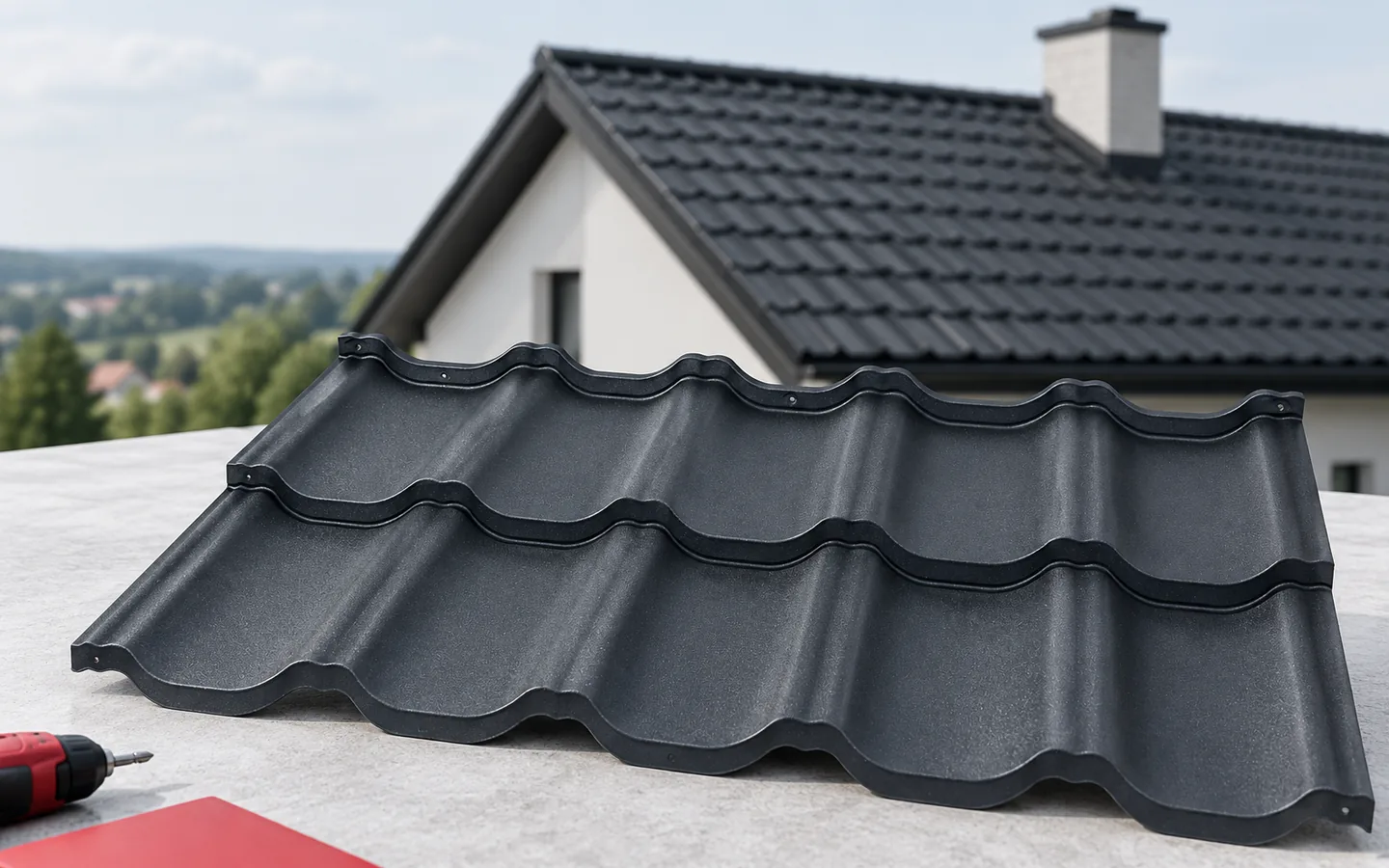
The height and spacing of the ribs influence the shaping of the joint. Flashing for a flat panel is not automatically suitable for T18 or tile-effect metal roofing. The support points and possible position of fastenings must be taken into account. The sheet should direct water on the outer side of the covering. Accidental depressions should not be created by pressing an unsuitable element too firmly.
Cut and modular tile-effect metal roofing require planning the rows at the chimney. A narrow strip of sheet may be difficult to fasten correctly. Therefore the position of the cut pieces is determined in advance. Materials compatible with the covering’s coating are used. Contact with unsuitable metal or water flowing from it may accelerate corrosion. The colour of the flashing does not confirm its material compatibility.

What happens to water under the covering?
Under the sheet there is usually a separate underlay layer. Its passage at the chimney requires maintaining continuity and draining water. Cutting the membrane around the obstacle without finishing the connection leaves a weak point. It cannot be assumed that the external flashing will never let any moisture through. Both layers should have a correct detail.
Fire safety requirements and distances from combustible materials are also important at the chimney. Not all gaps may be filled with any foam or insulation board. The type of material and the space are determined by the chimney solution and the design. Watertightness and fire protection are different tasks. Both must be met, instead of trying to solve them with one random compound.
Where do leaks at the chimney come from?
The cause may be an incorrect overlap, damaged coating, loose flashing or loss of tightness at the wall. Accumulated leaves can also change the drainage path. Water can penetrate through a crack in the chimney finish and appear lower down, near the roof. Therefore, not every damp patch next to the chimney means a defect in the lower apron. An inspection of the entire area is needed.
When repairing, it is not worth covering everything with another layer of sealant. Such a treatment can conceal a faulty joint and hinder drying. First, the cause is removed and the condition of the substrate assessed. Sometimes it is enough to replace a section of the seal, and sometimes new flashing is necessary. The scope should result from the diagnosis, not from the size of the visible stain inside.
How should the flashing be accepted and subsequently inspected?
Before acceptance, the drainage path, stability of the elements and connection to the chimney are checked. There should be no sharp protruding edges, reversed overlaps or cutting residues. It is also worth documenting the detail under the covering before it is covered. For work on an existing roof, it must be established whether the quote includes repair of that layer or only the visible sheet metal.
During later inspections, contamination behind the chimney is removed and the condition of the seals assessed. An additional check is sensible after chimney sweeping work or installation of equipment nearby. Access should be ensured by suitable roof access. Good flashing should work for subsequent seasons, not just pass a short water-pouring test. Its durability depends on the geometry, material and serviceability.
7 branches. Materials closer to your project.