Choosing the roofing
Choosing a roof covering for a holiday cottage
The choice of roofing for a holiday home depends primarily on the intended use and the roof parameters. It is worth checking whether the building will be used only in summer or also in winter, as well as the roof pitch and support spacing. The risk of condensation, rain noise and the convenience of transporting sheets to the plot should be assessed. If heating is planned, the entire insulation system must be designed, not just the top layer. Location affects loads and maintenance. The covering alone will not ensure comfort without properly selected flashings, ventilation and fixings.
How does the way it is used affect the roof?
A cabin used on warm weekends has different needs than a building heated all year round. It must be determined whether it will have a bathroom, kitchen and a place to sleep under the roof slope. These functions affect the amount of moisture and the expected comfort. A small floor area alone does not simplify all technical problems.
If a later change to year-round use is planned, it is worth allowing for it from the start. Insulating a finished roof from the inside can take up height and require new lining. The arrangement should enable a correct connection of the insulation with the wall insulation. Room ventilation must also be planned.
Location is important. Near trees, removing leaves and checking the gutters becomes more important. On an open plot, wind loads matter. In areas with heavy snowfall, the structure requires appropriate verification. A lightweight covering does not remove these loads.
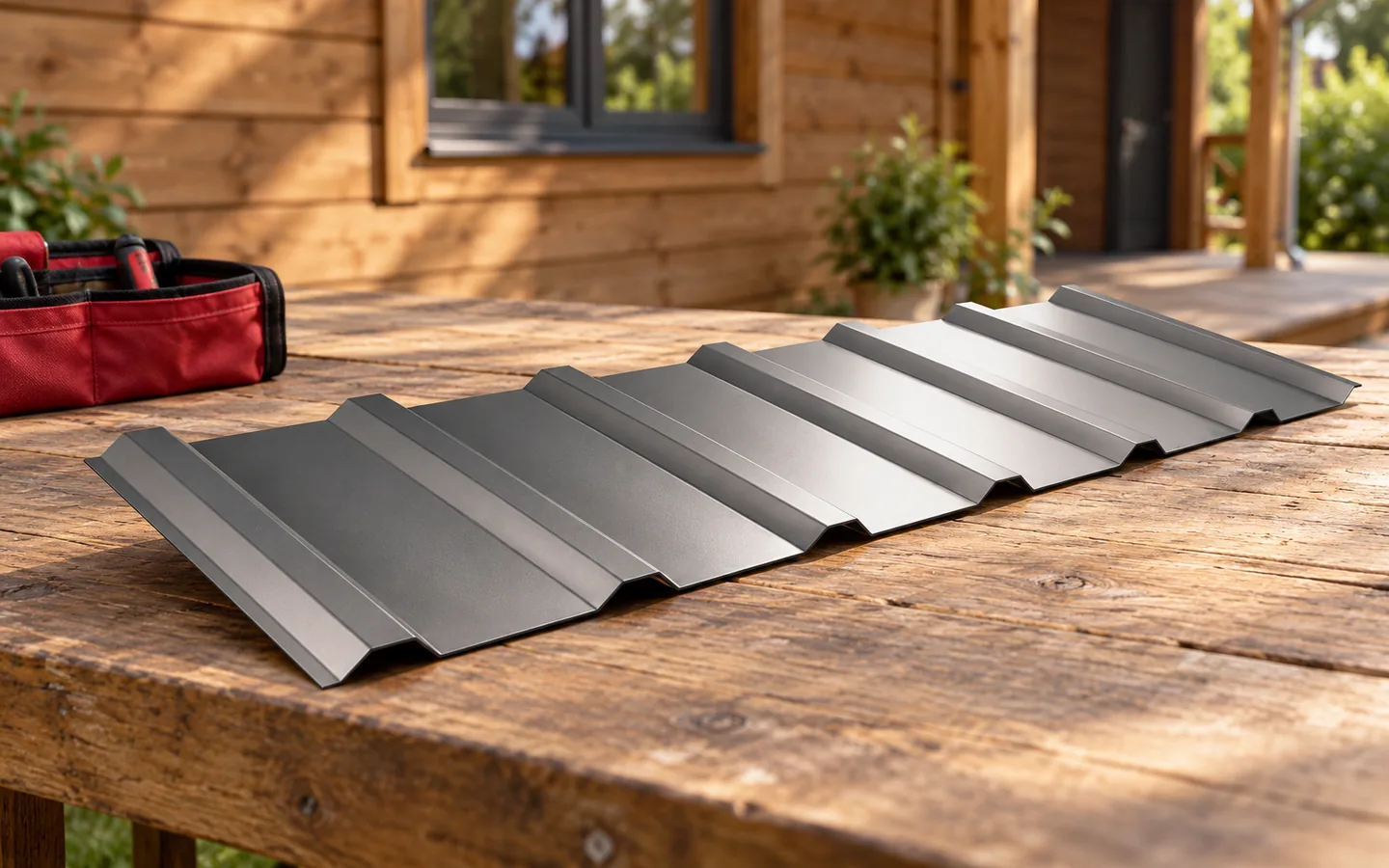
When is it worth choosing trapezoidal steel sheet?
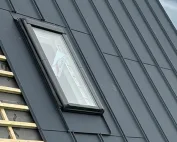
Trapezoidal sheet works well for simple roofs and economical architecture. T18 gives a finer pattern, while T35 has a higher profile. The right profile is selected according to the support spacing, steel thickness and loads. One should not assume a single permissible span for all variants with a similar name.
On a small plot, the length of the sheets and the way they are carried matter. Longer elements can reduce overlaps, but they are harder to manoeuvre between trees. Access and storage space should be checked before ordering. During manual transport, thin sheet is sensitive to buckling and gusts of wind.
If a cold surface remains underneath, condensation must be taken into account. An anti-condensation layer can reduce dripping if it has the possibility to dry out. However, it is not insulation nor a solution to all moisture problems. Its usefulness depends on the complete assembly and ventilation.
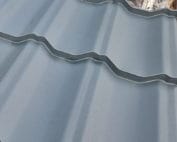
What speaks in favour of tile-effect metal roofing?
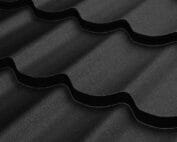
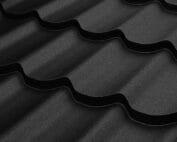
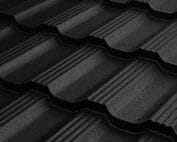
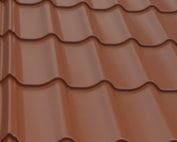
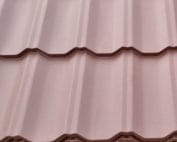
Tile-effect metal roofing may better suit the traditional appearance of a cabin. Short modules facilitate transport and storage where access is limited. Sheets cut to size are worth considering for simple, repetitive roof slopes. No format guarantees the least waste in every situation.
Before choosing, the minimum pitch must be checked. Not every low roof slope is suitable for a given profile. The batten spacing and the detail of the first row at the eaves are also important. In a small building, errors in the proportions of flashings are often particularly visible. Their width and colour should be well matched with the covering.
The coating is chosen according to the environment, not just the colour. Wood, proximity to plants and a damp location require a sensible maintenance plan. Branches should not constantly rub against the roof. Regular removal of debris helps preserve the appearance and limits prolonged moisture retention.

How to look after temperature and sound inside?
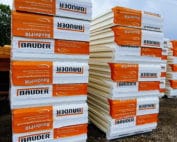
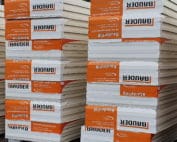
In a small holiday home, the roof makes up a large part of the building envelope surrounding the interior. The covering alone does not effectively protect against cold or heat. The insulation is selected for the whole system. PIR boards can reduce the required thickness, which is sometimes valuable with a low mezzanine. However, the airtightness and fire protection of the layers must be resolved.
Comfort in summer also depends on windows, shading and ventilation. A dark roof does not determine overheating, just as a light one does not automatically eliminate it. When planning, it is worth assessing the whole building form. A large glazed area facing the sun can have a greater effect on the interior than a minor change in the shade of the sheet metal.
Rain noise must be considered for the complete building envelope. Insulation, substructure and lining affect sound transmission. One should not promise silence based only on thicker sheet metal or the PIR core alone. If the bedroom is directly under the roof, it is worth defining the acoustic requirements before choosing the layers.
How to avoid savings that increase costs?
Compare coverings together with flashings, gutters, fixings and the layers beneath the sheet metal. A small roof often needs only a small quantity of material, but many finishing sections. Their share of the cost can be large. Simply multiplying the area by the price per metre of sheet will be too simplistic.
Check the availability of the installer and the travel costs to the plot. Also establish whether the material can be stored until the day of installation. Unpacked sheets left in damp conditions can be damaged before they are even laid. The delivery date should match the readiness of the structure and the crew.
The best covering for a holiday home is one that suits its use and the actual roof. A simple trapezoidal sheet can be a very good choice if the whole system has been taken care of. A more expensive profile will not replace a tight eaves detail, proper ventilation and correct fixing.
7 branches. Materials closer to your project.