Choice of roof covering
When is metal roofing a sound environmental choice?
A metal roof can be an environmentally sound choice if it is properly matched to the project. When assessing its impact, you need to consider production, transport, installation, use and the end of life of the materials. Recyclable steel alone does not guarantee an ecological roof. Durability, waste volume, thermal insulation and repair options all matter. A fair comparison calls for similar scopes and data for actual products, since a bare sheet of metal is not the same as a fully insulated assembly.
What should be compared when talking about the impact of a roof?
A roof serves many functions. It shields against water, works together with the structure and can reduce heat loss. An environmental comparison should cover systems with a similar function and expected service life. One square metre of steel sheet alone is not equivalent to one square metre of a complete insulated assembly. Without a common scope, figures can lead to incorrect conclusions.
Environmental declarations for specific products are helpful. However, the unit, life cycle stages and assumptions made must be checked. Data covering only production do not automatically describe transport, repairs and dismantling. Results for one variant should not be transferred to an entire category of steel sheets or panels. Differences may arise from thickness, core, coating and manufacturing method.
Can steel be reused?
Steel can be recycled. For the benefit to be real, the waste must be collected and passed to an appropriate process. This does not mean that every sheet will be reused in the same form. Recycling requires energy and organisation. It is worth distinguishing material suitable for recovery from a product containing a confirmed share of secondary raw material.
For sandwich panels, separating the facings from the core is a different task from collecting clean offcuts of steel sheet. The approach depends on the type of component and the available recipients. All residues should not be thrown into one container without establishing the rules. A segregation plan on site makes waste management easier and reduces contamination of valuable material.
How can the amount of waste during installation be reduced?
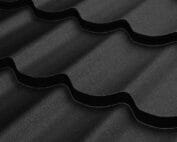
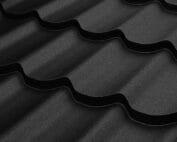
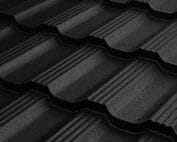
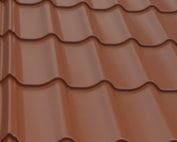
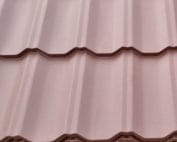
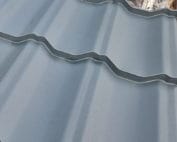
The most can be done before production. Accurate measurement and cutting help match sheet lengths to the shape of the roof slope. On a simple roof, a cut-to-size variant may be advantageous. With many breaks, it is worth comparing it with modular tile-effect metal roofing. However, smaller elements do not give a fixed percentage saving. The result depends on the geometry and the possibility of using offcuts.
When comparing material, a distinction must be made between total area and covering area. The laps are part of the system, not an arbitrary error to be removed. Attempting to reduce them below the requirements may impair tightness. Damage during storage and transport should also be avoided. A sheet damaged before installation means additional material, a journey and labour.

How do durability and repairs affect the assessment?
A well-chosen coating protects the steel in the intended environment. Its selection should take account of external conditions and the underside of the covering. A mismatched material may require premature repair or replacement. Therefore, the lowest purchase price does not necessarily mean economical use of resources. The service life of the entire roof is what matters.
Durability also depends on installation and maintenance. Removing metal filings, correct cutting and regular inspection of connections reduce the risk of damage. Minor repairs should be carried out in accordance with the coating instructions. Not every problem requires replacing the entire roof slope. On the other hand, masking advanced corrosion with paint does not automatically restore the properties of the damaged component.
What does good roof insulation achieve?
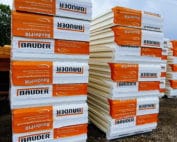
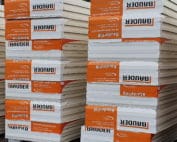
In a heated building, insulation affects energy demand. PIR insulation boards can provide the required thermal resistance at a smaller thickness than a material with a higher lambda value. However, this does not determine a lower environmental impact in every project. Product data, the thicknesses needed for the same function and the expected operating conditions must be compared.
Air tightness and the reduction of thermal bridges are equally important. Gaps between panels or a poorly executed junction between the roof and the wall can impair the insulation effect. In certain applications, another material will be the better choice, for example because of fire, acoustics or moisture. A reliable design selects the insulation for the task instead of attributing superiority in everything to one family of materials.
How can you make a fair purchasing decision?
Ask for the full specification and the available environmental data. Compare roofs with a similar function, not individual slogans. It is worth taking into account transport, the amount of waste, the possibility of servicing and the expected replacement of components. Retaining a sound structure during renovation can also be a benefit, provided this is confirmed by a technical assessment. Dismantling everything is not always necessary.
Avoid unconditional terms such as “no environmental impact”. Every material requires resources and energy. A sensible metal roof is one that has been properly selected, well executed and fulfils its function for a long time. Recyclability is one of the arguments. It delivers the most when combined with a reduction in material losses and conscious use of the entire building envelope.
7 branches. Materials closer to your project.