Choice of roofing
When to choose single-module tile-effect roofing sheets
A single-module sheet of metal roofing can be convenient to transport and lay on complex roof slopes, but it does not guarantee less waste or better tightness. Before deciding, compare the coverage area, the type of seam, the number of fasteners and the total roof cost rather than the price of one sheet. Also check the cutting plan and the availability of matching flashings, because quality depends on the steel, the coating and correct installation, while the number of modules mainly describes the sheet format.
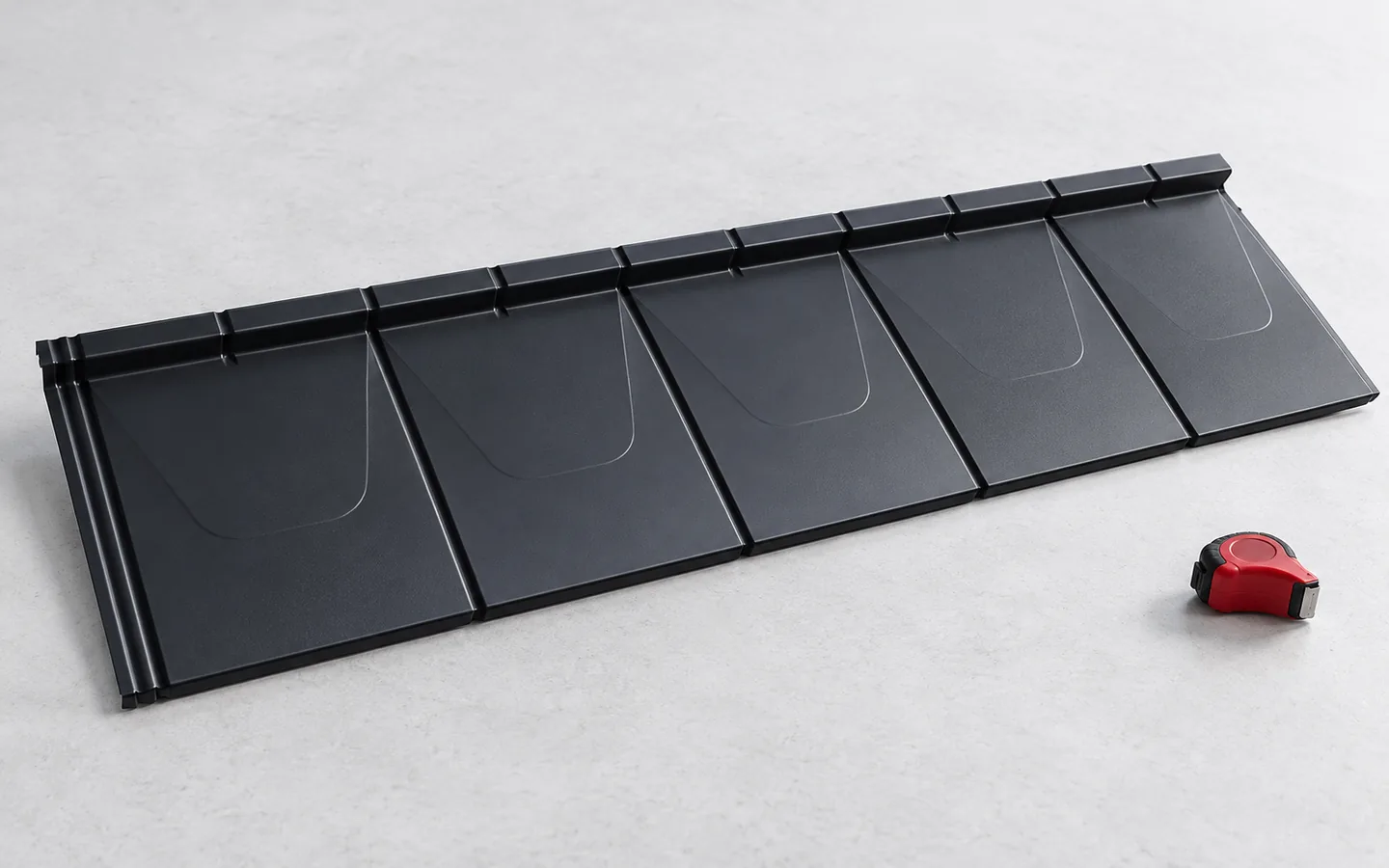
What does one module mean?
The module is a repeatable section of the pattern in the direction of the roof slope. A single-module sheet contains one such row, and a two-module sheet contains two. The module length should not be confused with the sheet width. The width covers several repeatable corrugations or pattern fields. Exact dimensions depend on the system and its overlaps.
The number of modules is not an indication of quality. Single-module roofing can have various thicknesses and coatings, just like other formats. The comparison should cover a specific specification. A shorter sheet does not make the steel more resistant to corrosion. It can, however, change the organisation of transport and the way work is carried out on the roof.
Why is a small format sometimes convenient?
Small sheets are easier to hand up and lay in a confined space. Smaller dimensions can make transport through a narrow entrance or storage on site easier. They also help to split delivery into batches. The coating must still be protected from friction and moisture. A small component is not resistant to being thrown around at will or dragged over other sheets.
During installation, a short component is easier to handle at a dormer, roof valley or chimney. The installer has a smaller section to control. This does not remove the need for fall protection and assessment of the wind. Even a small sheet metal panel can be dangerous when being handed up. The convenience of the format should not be equated with the ability to work without preparation.
Does one module limit waste?
This can make things easier, but the result depends on the roof geometry. With many short sections and breaks, small sheets allow the covering to be planned more precisely. On the other hand, some offcuts will remain unusable because of the direction of the interlock. A reversed piece does not always fit the opposite roof slope, even though it has a similar shape.
Material savings must therefore be confirmed by a cutting plan. Ask for a list of the number of sheets and the actual covering area. Compare them with the two-module variant and with cut-to-size sheets. A fixed promise of reducing waste by a specific percentage for every roof is not credible. A simple roof slope can give a completely different result from a multi-pitched roof.

What about the connections?
Shorter sheets mean more transverse joints over the same length of roof slope. A well-designed and well-executed interlock can ensure the tightness of such a system. However, the installation sequence and the positions of the fasteners must be maintained. It must not be assumed that a greater number of joints is irrelevant to the care taken in the work.
It is worth examining the assembled samples, not just a single sheet. This allows you to assess the interlock line and how the fasteners are concealed. The documentation also specifies the required pitch and support. Some details differ even between visually similar models. Fitting “by eye” can lead to stress or an incomplete closure of the joint.
Is such a roof easier to repair?
The small format can limit the area of the element requiring replacement. It is useful to keep a small stock of the correct material. However, this does not mean that every sheet can be removed without disturbing adjacent ones. Access depends on the interlock, the fixing and the location of the damage. The repair should be planned in accordance with the roof covering layout.
After years, a difference in shade may appear between new and used material. It is worth keeping records of the colour, coating and order batch. The colour name alone does not guarantee an identical appearance. Planning servicing is particularly important for installations to which successive crews will return.
When is this format a sensible choice?
Consider it for complicated roof slopes, limited access and the need for convenient logistics. On a simple roof, compare the total cost with larger sheets. The price of a single piece does not give a reliable picture. It must be converted to the effective area and added to the fasteners, offcuts and the contractor’s labour.
Ask the crew about their experience with the chosen system. Efficient installation results from the preparation of the substructure and knowledge of the interlock, not solely from the small size. Single-module tile-effect metal roofing is a tool for convenient roof completion. The benefit appears when the format matches the actual construction conditions and the geometry of the roof slopes.
Before purchase, also check the availability of matching flashings and accessories. A roof consists of more parts than the basic sheet. The completeness of the required components usually has a greater influence on the work schedule than the choice of one or two modules.
7 branches. Materials closer to your project.