Purchasing for a project
Can a supplier put together a complete cladding order for your building?
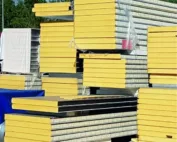
A large selection of panels and sheets is helpful if a compatible enclosure for a specific building can be assembled from it. When choosing a sales centre, check how products are identified, the availability of documents and the completeness of accessories. A good conversation begins with the function of the hall and its drawings, and ends with an unambiguous schedule of materials. The seller should know whether you are putting together a roof, façade, internal wall or cold store. Information about the floor area is important but not sufficient. The conditions inside, the location, and the layout of supports and openings are needed. An answer concerning a specific solution is more valuable than a general assurance that every panel is suitable for a hall.
Does the conversation start with your project?
Prepare a short description of the building: intended use, temperature, humidity and planned equipment. Indicate what is fixed in the design and what remains a variant. This makes it easier to separate the material selection from the structural decision that the designer must make.
Does every item have an unambiguous identity?
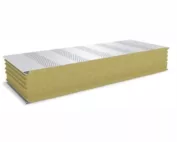
The schedule should include the panel type, core, thickness, facings, coatings, colour, module and length. A similar appearance is not enough to establish conformity. Panels with different locks or tolerances may not form a correct joint, even if all are described as white wall panels.
For stock batches, check that the markings match the documents. For second-grade material, a description of the deviations is required. Do not treat a general catalogue of full-quality products as proof of the condition of each item offered. The documentation and the actual material must describe the same variant.
Does the offer include connections between elements?
Completeness is also shown by corners, base profiles, opening flashings, ridge caps and eaves. Each of these points combines different functions: protection against water, insulation, tightness or load transfer. A list of panels alone does not show how the enclosure will be closed. Ask for separate accessory items and their purpose.
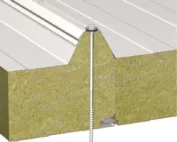
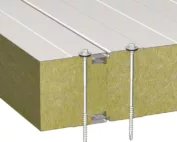
The fastener must match the substrate and the selected panel. The tape has a specific function in the joint. It is worth checking whether the answer covers these differences or lumps all accessories into one ‘installation’ bag. A design mixing walls and roof creates at least two different fastening arrangements.
How can samples and displays be used?
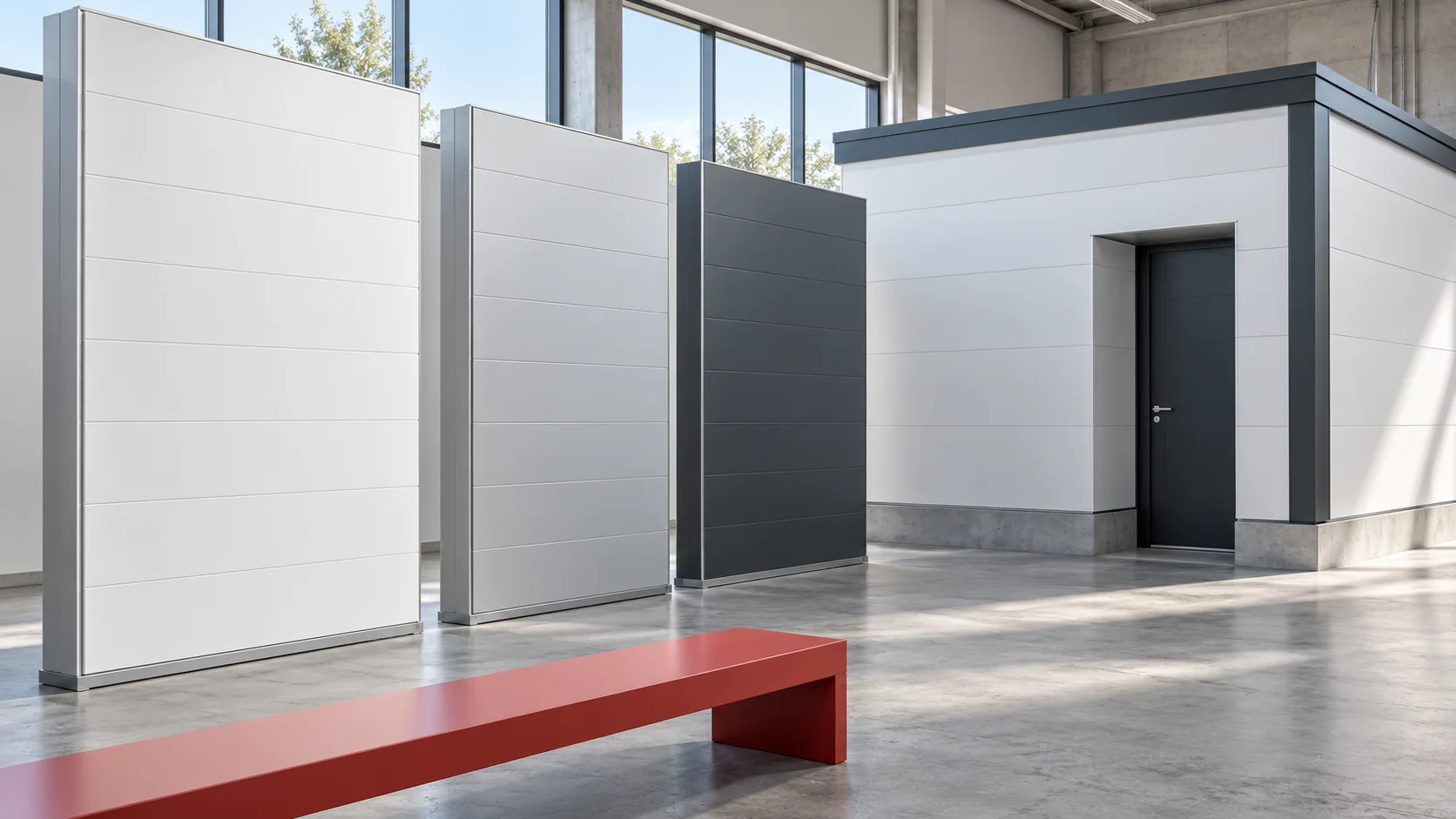
A sample allows you to assess colour, profiling and texture, and a corner mock-up helps you understand the appearance of the joint. However, it is not a fire test or a load-bearing table. To compare a façade, view the material in daylight and from different angles. Differences in gloss may only become visible over a larger area.
For a new building with office and warehouse space, also select samples for windows and doors and flashings. Determine which surfaces must be uniform and where different shades are acceptable. This decision makes it easier to use batches rationally without accidentally mixing materials on the representative front.

Does the technical support have clearly defined limits?
For an unusual span, high wall or additional roof load, an answer based on the right data is needed. Check whether the supplier can point to a document and direct the question to the person responsible for selection. Do not expect a sales conversation to replace structural design and assessment of the entire envelope.
A useful answer should distinguish reaction to fire from fire resistance and the core parameter from the panel parameter. If class EI is required, information about the insulation material alone is not enough. It must refer to the installation arrangement, supports, height and classification conditions.
A good explanation also indicates which data the designer must supplement. The interlocutor’s confidence does not replace calculation for the specific configuration.
What should remain once the arrangements are complete?
The result should be a clear version of the schedule that both the investor and the contractor understand. Record quantities, lengths, finish sides, scope of accessories and items requiring confirmation. Also mark who is responsible for resolving unusual details. This reduces discrepancies between the sketch, the quote and the actual envelope.
For a planned extension, ask about the possibility of later selecting a compatible system, without treating this conversation as a guarantee of future states. For the current construction, the conformity of the delivered set with the latest version of the design is more important than the size of the warehouse. Verify this conformity with each approved change.
Questions and answers
Does the largest warehouse mean the best choice for construction?
Not necessarily. What matters is the availability of the right configuration, the compatibility of accessories and the quality of information. A large number of different panels does not guarantee a complete batch for your project.
Should the seller determine the column spacing themselves?
This does not replace the structural design. The supplier can provide panel data and help interpret it, but the load-bearing arrangement and fixings must be selected for the loads of the specific building.
7 branches. Materials closer to your project.