Choice of covering
Which covering will protect a flat roof?
The choice of flat roof covering depends on compatibility with the substrate, falls, loads and intended use, not on the material name alone. Check that the design identifies the lowest points and emergency drainage, especially with a parapet. Confirm that the waterproof layer suits the fixing method and the PIR board facing. Also verify that outlets, penetrations and corners have execution details and that service access is planned. These details often determine the durability of the whole system.
Why does a flat roof also need a fall?
The term “flat” does not mean a horizontal surface without drainage. Water should reach the designed outlets or gutters. The direction and magnitude of the falls must take into account the selected covering, the roof shape and deflections of the substrate. Their selection cannot be based solely on the appearance of the building form. Puddles at a poorly seated outlet load the areas particularly exposed to leakage.
The fall may result from the structure or from appropriately laid layers. Insulation of variable thickness is also used. The design should show the lowest points and the method of emergency water drainage. This is important for a roof surrounded by a parapet. A blocked outlet must not lead to uncontrolled accumulation of water without the possibility of its safe drainage.
Which layer actually provides watertightness?
The waterproof layer may be a suitable roof membrane or a system of bituminous sheets. The choice depends, among other things, on the substrate, the method of fixing and the requirements for the entire roof. Not every material can be glued to any facing of a PIR panel. The compatibility of the adhesive, the temperature during works and the recommendations for separating layers are important. The specific set must be checked.
Membranes and bituminous sheets require different joining methods. Quality is not evidenced solely by the thickness of the purchased roll. Preparation of the substrate, overlaps and the execution of corners are also important. When selecting, it is worth considering the availability of service and the possibility of later repair. On a small roof with many penetrations, the skills of the installer are at least as important as the material itself.
What role does structural steel sheet play?
In lightweight hall roofs, deep trapezoidal steel decking can transfer loads to the main structural elements. It supports the subsequent roof layers. Its profile, thickness and arrangement of supports result from calculations. It should not be replaced with any T18 or T35 sheet simply because both have ribs. Similarity of name does not mean the same load-bearing capacity or purpose.
The design must also take into account the construction stage. Packs of insulation or rolls of waterproofing create concentrated loads. They must not be placed in random locations. Openings for outlets, skylights and equipment require a separate solution. Cutting out a wide section of the profile without a planned frame may change its behaviour. Such decisions belong to the structural designer.

When is it worth choosing PIR insulation?
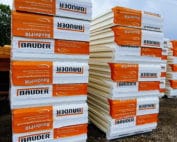
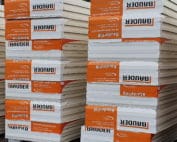
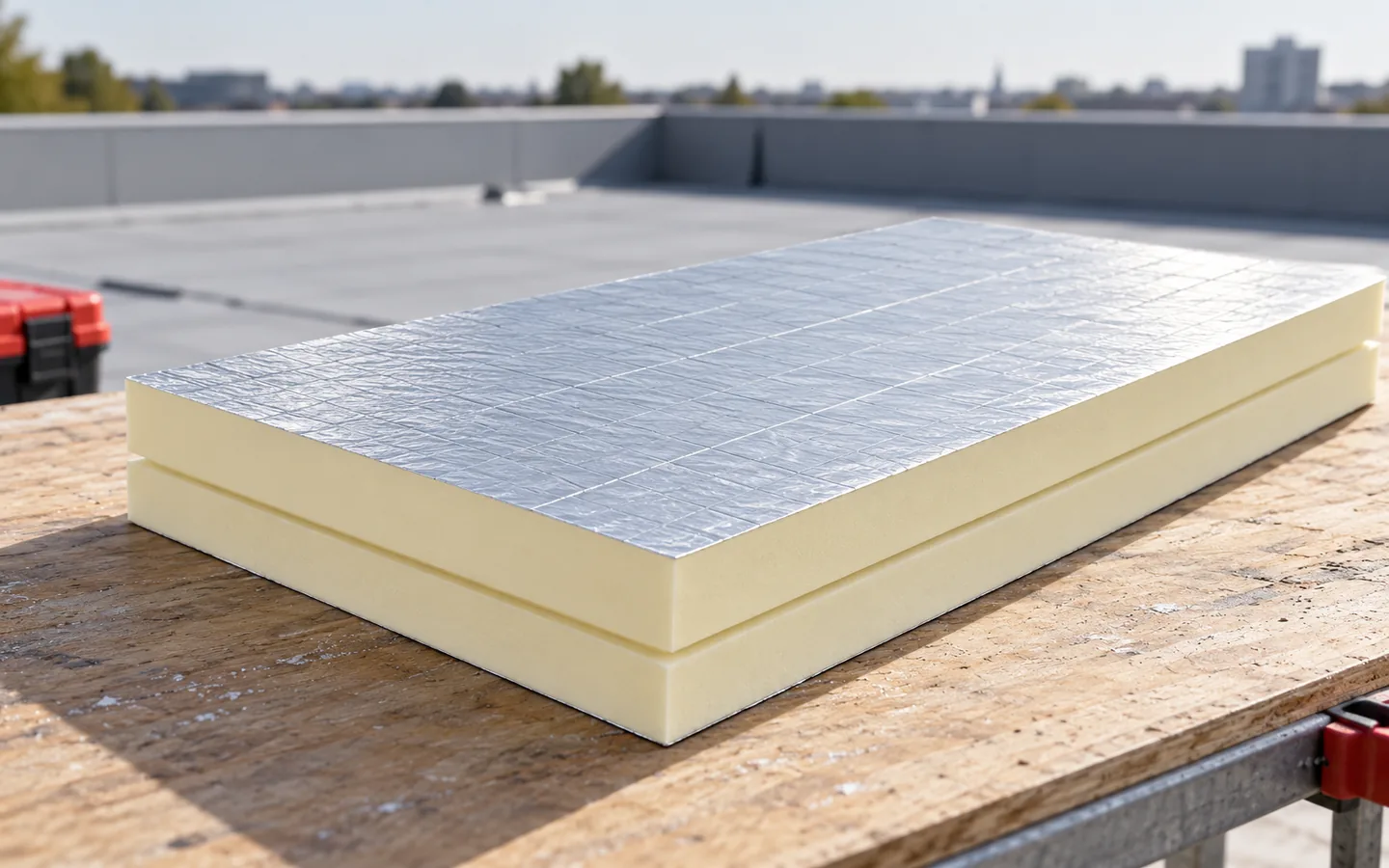
PIR boards are useful where high thermal resistance is needed with limited thickness. For an example lambda of 0.022 W/(m·K), a 10 cm layer gives a resistance of approximately 4.55 m²K/W. This is a parameter of the layer itself. It is not yet the thermal transmittance of the entire roof. The calculations must include the other layers, fasteners and areas where the insulation is weakened.
For a flat roof, a board with the right facing and mechanical properties is selected. The name PIR alone is not enough. The approved method of fixing and the service load must be checked. Short-term compressive strength does not directly define the safe load over many years. Under heavy equipment, separate supports and penetrations through the layer build-up may be needed.
What changes with a terrace, greenery or photovoltaics?
A roof used only for occasional servicing has different requirements than a terrace. A trafficable surface increases the weight and requires protection of the waterproofing. A green roof also needs proper drainage and protection against the effects of roots. It is not enough to add soil onto a finished membrane. The loads must be calculated for the intended conditions, including moisture in the layers.
Photovoltaics also require the entire system to be checked. A ballasted system adds weight, while a mechanically fixed one needs sealed penetrations. Access to the outlets and equipment must be maintained. The choice of insulation should match the way the loads are transferred. A layout drawing of the panels is worth preparing before ordering the roof to avoid later rework.
What should be checked before accepting the roof?
Acceptance should cover the details at parapets, outlets and penetrations. The method of fixing and the termination of the waterproofing are important. The patency of the drains and the possibility of cleaning them must also be checked. The method of testing watertightness is chosen by the contractor to suit the roof build-up. Uncontrolled flooding of the surface may create a load that the structure was not prepared to bear.
The owner should receive documentation of the layers, inspection rules and information on the permissible movement on the roof. A designated service route limits accidental damage. A well-chosen covering should form a complete system with the insulation and the substrate. The name of the membrane, PIR board or structural steel decking alone does not determine the durability of the finished roof.
7 branches. Materials closer to your project.