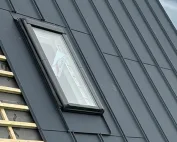
Installation and details
What work does a roofer carry out and take responsibility for?
A roofer is responsible above all for the roof covering and the details that protect the building from precipitation, not merely for fixing the sheets. Before work begins, check whether the contract clearly separates carpentry work on the roof structure from roofing work, that is, preparation of the substrate, protective layers and the covering itself. The scope depends on the contract and the team’s competence, so one company may carry out both stages, but this should not be assumed without agreement. It is also worth asking who is responsible for assessing the substrate and any consultation with the designer.
Does the roofer carry out the entire roof structure?
The scope depends on the contract and the team’s competences. Work on the roof truss belongs to carpentry, while the covering and flashings belong to roofing works. One company may carry out both stages. However, this should not be assumed without agreement. In the quote, it is worth separating the structure, substrate preparation, protective layers and the covering itself.
The roofer should assess whether the substrate is suitable for starting their work. Crooked battens, a damaged membrane or incorrect support spacing require clarification. This does not mean redesigning the structure independently. If the problem concerns load-bearing capacity or a change to the truss layout, a designer’s decision is needed before the roof is covered.
What does the work look like before the metal sheets are laid?
First, the dimensions and geometry of the roof slopes must be checked. The diagonals, the eaves line and the position of chimneys and windows matter. On this basis, a plan for laying out the sheets is created. For cut tile-effect metal roofing, the lengths of the ordered elements are determined. For modular tile-effect metal roofing, the row layout must be matched to the edges and details.
The next stage is preparing the layers under the covering. The membrane must have proper connections and water drainage. The battens and counter-battens should form an even grid and provide the intended ventilation gap. A mistake made here may only become apparent after the first heavy rain, even though the sheets look correct from the outside.
Which details most affect tightness?
Roof valleys, chimneys, windows, walls adjoining the roof slope and installation outlets require a lot of attention. Water should be directed outwards across the successive layers. Merely filling a gap with sealant does not replace a correct overlap and flashing. The sealant has a specific role in the system and should not be a repair for every inaccuracy.
The eaves and ridge are also important. The roof must drain precipitation, and the space under the covering should have designed ventilation. A blocked air outlet can promote dampness. That is why a well-executed detail combines protection against water with the function of the entire assembly. An aesthetically pleasing trim is not enough if the necessary solution is missing beneath it.

What tools and fasteners should be expected?
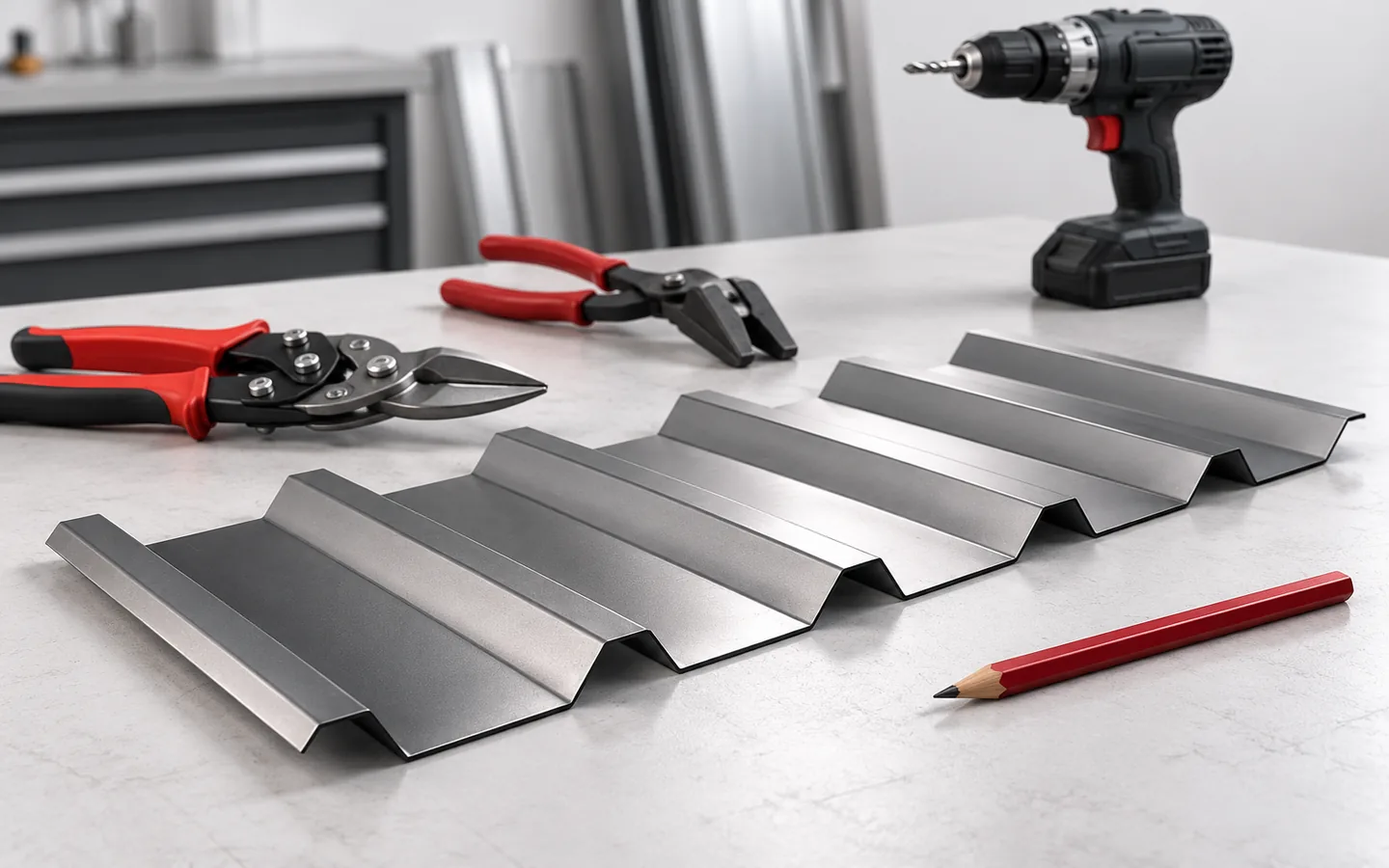
For coated steel sheet, tools intended for cold cutting are used, in accordance with the material instructions. An angle grinder can damage the coating and leave hot filings. After cutting and drilling, the roof must be cleaned. Small metal remnants can corrode and stain the surface, even though the covering itself does not yet have a defect.
Screws are selected to suit the substrate, loads and function of the connection. A fastener for joining two sheets is not always suitable for fixing them to the structure. Checking the tightening of the sealing washer is also important. Too little or too much pressure can impair tightness. The quality of the work should not be judged solely by the number of screws used.
What should you ask before choosing a team?
Ask for projects similar to the planned roof and discuss the specific scope of work. Establish how the building will be protected from rainfall, the delivery of material, unloading and cleaning. It is worth knowing who is responsible for ordering missing flashings. It is also necessary to define how work revealed after removal of the old covering will be agreed and settled.
Ask about familiarity with the instructions for the chosen product. Experience with one tile-effect metal roofing sheet does not automatically mean knowledge of all interlocking systems. A good sign is a conversation about details, ventilation and the substrate. A mere promise of quick completion is not enough. The schedule must take into account the weather and safe work at height.
How should you carry out the acceptance of a finished roof?
The acceptance should cover conformity of the scope with the agreements, the appearance of the covering, flashings and drainage. Photographs of covered layers are useful. It should be checked whether swarf and material remnants have been removed and whether the gutters are clear. Remarks should be recorded together with the agreed method of rectifying them. They should not be left solely in a telephone conversation.
Obtain information from the contractor about the materials used and the maintenance rules. This means that a later inspection will relate to a specific system. A competent roofer helps to understand how to care for the roof and where the areas requiring inspection are. This is an important part of a well-completed job, particularly with extensive roof slopes and new equipment.
It is worth agreeing the date of the first inspection and keeping the order documentation. It makes it possible to identify the thickness, coating and colour of the material when a repair is needed years later.
7 branches. Materials closer to your project.