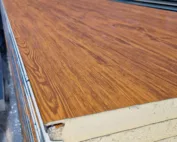
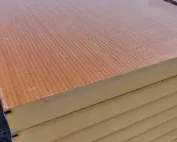
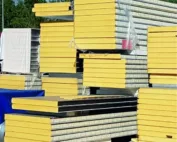
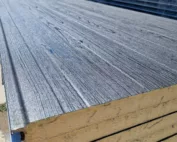
Selection of sandwich panels
What does the price of an Oborniki panel include and which type should you choose for a new hall?
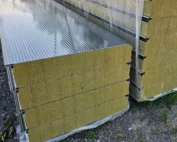
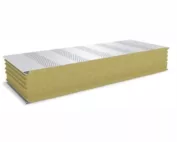
When pricing a hall, the term “Oborniki panel” requires clarification. The seller needs information on the core, thickness, facings and installation location. Each of these decisions can change the cost and the method of constructing the envelope. See how to move from a colloquial name to a set of panels and accessories that can be reliably compared with another offer. Most often it refers to a composite panel in which the insulating core sits between facings. In metal versions, both sides are usually steel sheet, but the word “Oborniki” alone does not guarantee a specific construction. The exact product type and its intended use should be specified.
Clarify the colloquial name in the order
Do not confuse such a panel with the insulation board alone. Insulation material without metal facings does not automatically have the same structural function or weather protection. Products with other types of facings also require their own documentation, not data borrowed from the steel version.
Choose the core according to the requirements of the partition
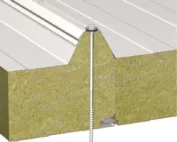
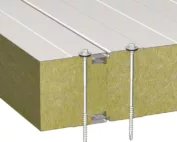
PIR, mineral wool and EPS occur in different panel families. They differ among other things in thermal properties and mass, but fire performance and load-bearing capacity must be read for the whole product. A building element should not be classified solely by the name of the material inside.
In the warmer part of the building, U-value together with thermal bridges and openings will be important. Where separation requiring fire resistance is involved, the classification conditions are decisive. For the humid zone, the type of coating and the joint detail are also important. One core does not relieve you of analysing the panel’s other properties.
Separate the wall panel from the roof panel
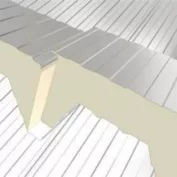
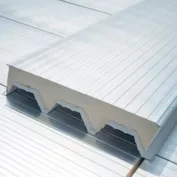
Roof panels have a geometry and details intended for use on the roof slope and for water drainage. Wall panels are designed for vertical cladding and other specified applications. A similar core thickness does not mean the two products are interchangeable.
For the roof, check the pitch permitted for the system, lengths, transverse joints and loads. For the wall, orientation, support, wind zones and openings are important. Production dimensions are logistical information; they do not determine the permissible distance between supports.
Check the width distinction using an example order
The panel may have an overall width greater than the covering module, because part of the edge forms the joint. The module is needed to lay out a closed wall, whereas for some transport operations the full overall dimension matters. Using the wrong measure can give an incorrect number of pieces.
In the enquiry, provide both pieces of information if they are needed for organising the construction. When comparing offers, also check whether the price refers to the covering area. The panel length alone does not provide a sufficient basis for pricing. It is worth creating a list of pieces assigned to fields so that the material cost can be linked to the actual geometry of the new hall.

Calculate the price from the correct surface area
Let us assume for the calculation 120 m² of panels at €32.17 net per m². The material would cost €3,860.40 net. If the cutting plan requires increasing the purchase to 126 m², the expense will rise to €4,053.42, even before finishing and installation. The rate is adopted solely for the example.
In the offer, check whether the metres refer to the covering module and how sections at openings are settled. Separate panels, accessories, transport, unloading and labour. This allows you to compare the scope of two proposals without confusing cheap material with a low cost of the finished enclosure.
Buy based on data, not availability alone
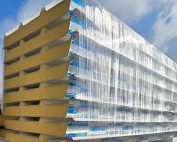
The supplier should be able to determine the configuration and present the documents relevant to the offered batch. Information on coatings, lengths, packaging method and storage requirements is also needed. Material available quickly may not fit the design of supports and openings.
For outlet batches, establish the reason for the downgrade and the usable area. Colour differences are a different issue from a damaged joint or a damp core. For a new build, it is better to know these limitations before laying out the façade than to try later to adapt the structure to a random package.
Align the choice with the whole building design
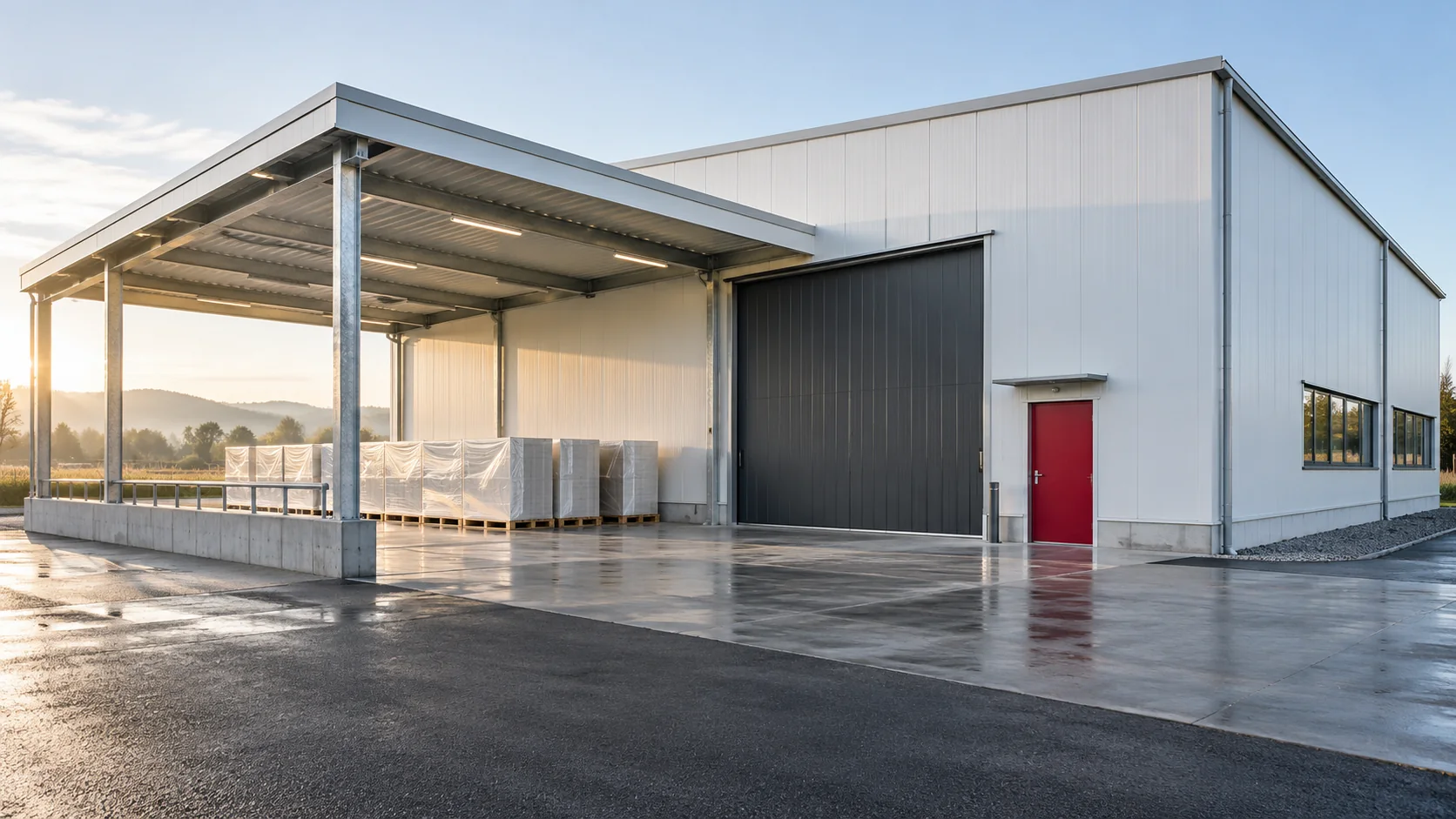
Agree the position of the plinth, gates, windows and roof edge. Each of these elements affects panel lengths and flashings. Also plan independent support for equipment that should not load the thin cladding itself.
The final specification should indicate exactly what you are buying and which requirements are to be met. The colloquial name may remain a convenient shorthand in conversation, but it is not sufficient for ordering or execution. A well-described panel is easier to coordinate with the structure, installations and schedule of the new hall.
Questions and answers
Does the płyta obornicka always have a polystyrene core?
No. The colloquial name is sometimes used for different sandwich panels. The core, facings and parameters must be specified explicitly.
Where is the best place to buy such a panel?
Where the offer matches the project and has a clearly described full cost. Without comparing an identical scope, quality and delivery conditions, the cheapest solution cannot be reliably identified.
7 branches. Materials closer to your project.