Roofs and details
What does an anti-condensation layer do in the roof of an open shelter?
Drops can form under the steel sheet of an open shelter even when it is not raining. This is the result of vapour condensing on cold metal. An anti-condensation layer can retain some of this water and reduce dripping. However, it must dry out afterwards. It is not insulation or a repair for a leaking roof, and its performance depends on the conditions beneath the covering. Air contains water vapour. When its contact with a cold surface leads to condensation conditions being reached, condensate forms on the underside of the metal. In an open shelter this can occur after the covering has cooled overnight. It does not automatically mean a hole or a poorly closed lap.
Where does water come from under uninsulated steel sheet?
The amount of moisture depends on the weather and how the space is used. Wet wood, damp ground or objects brought in after rain can increase its ingress. Therefore, when assessing dripping, it is worth noting when it occurs. If water appears only during rain from a specific direction, flashings, laps and fixings must be checked in parallel.
What does the layer bonded to the underside of the sheet do?
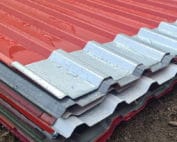
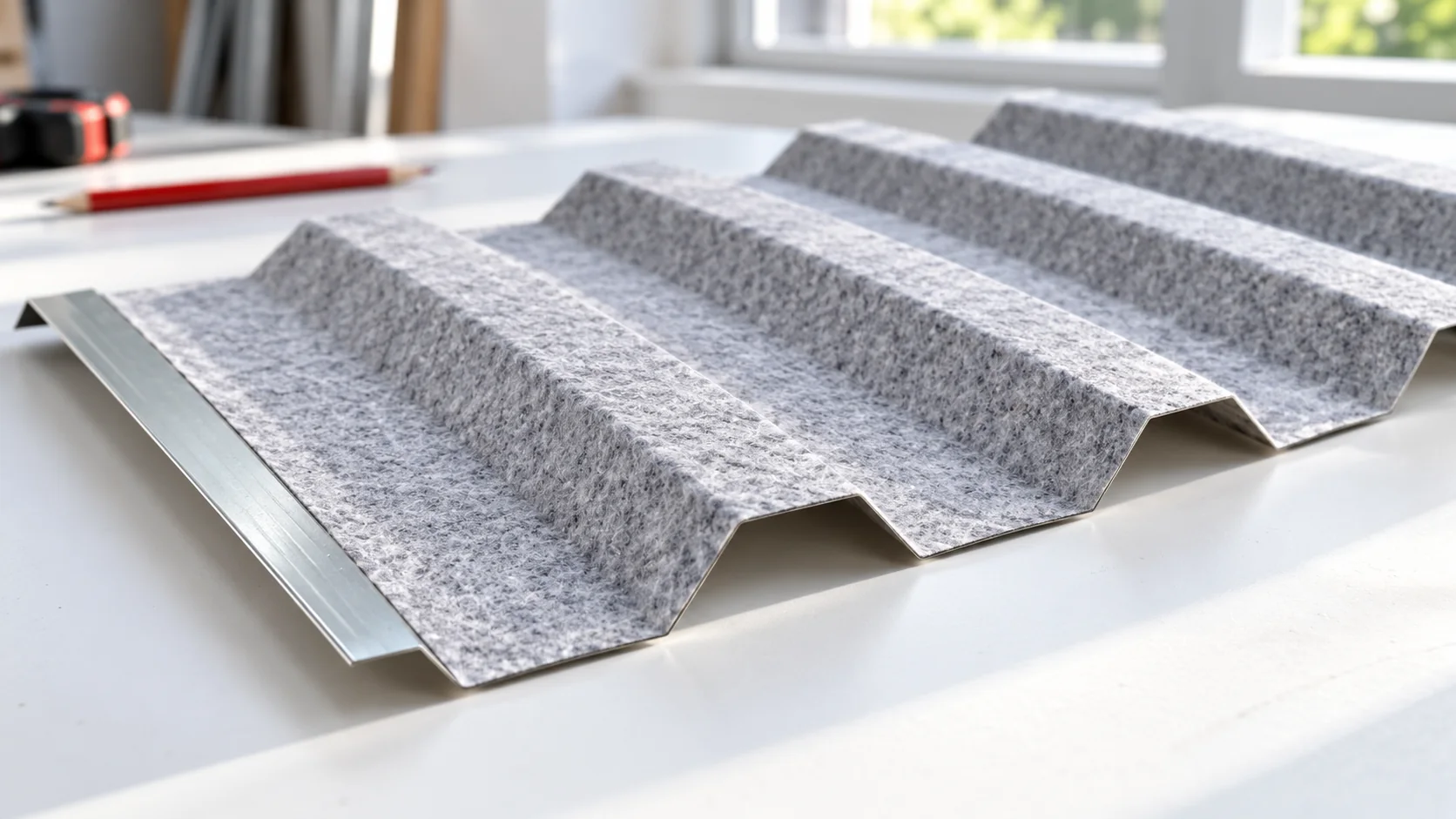
The fibrous layer takes up a certain amount of condensate and holds it instead of letting it fall immediately. Later it releases the moisture to the air if conditions favour evaporation. This is a process of storage and drying out, not permanent removal of water from the surroundings. The capacity depends on the specific material and is limited.
It is not worth comparing fleeces only by the thickness visible on the sample. The declared properties, adhesion and method of application matter. The layer should be intended for the given covering. A random material glued on site does not become an equivalent solution. The behaviour of edges, laps and cut areas also matters.
Why must the shelter allow drying?
Airflow helps to carry away moisture released from the layer. If damp conditions prevail permanently under the roof, the material may not have time to dry out before the next condensation period. Once it has reached its water-holding capacity, it will not prevent every drop. Therefore, a complete absence of dripping anywhere should not be promised.
Already when designing the shelter, assess the openness of the sides and the position of stored objects. Later sealing of the structure changes the conditions. A shelter converted into a closed store requires a reassessment of moisture and ventilation. What worked with free airflow does not necessarily retain the same effectiveness after walls are added.
How should the eaves and laps be prepared?
The fleece should not accidentally draw in rainwater from edges and joints. Depending on the solution, appropriate setback, removal or protection of the layer is used at specific points. The method of preparation is determined for the specific material and profile. There is no single arbitrary strip width suitable for all sheets.
These steps are worth considering before installation. With a finished eaves detail, access can be more difficult. Also check that cutting and storage have not damaged the layer. It should remain clean and bonded to the substrate. A soaked pack left without the possibility of drying out is not the proper way to prepare the material for work on the roof.

How does fleece differ from membrane and insulation?
In the given system, the underlay membrane is to take over its tasks related to water and protection of the layers below. The felt retains condensation directly at the sheet. It does not create the same continuous drainage plane around chimneys and openings. One material must not be swapped for the other simply because both are related to moisture.
Insulation limits heat flow. A thin anti-condensation layer will not replace roof insulation above a heated room. It also does not replace airtightness and vapour control on the interior side. If you plan to heat the workshop later, consider the entire target cross-section. The surcharge for felt does not settle a future change in the building’s function.
When can the surcharge be worthwhile?
The layer is worth considering when condensation under uninsulated roofing could drip onto a car, tools or stored materials, and the roof has conditions for drying out. First, however, the sheet itself, the pitch, the supports and the drainage must be correctly selected. The felt is an addition to a functioning covering, not its substitute sealing.
In the quote, compare the same profile, thickness and coating with and without the layer. Check whether the surcharge applies to the gross or net metre. Agree the edge preparation and storage conditions. After the roof is completed, observe its behaviour at different times of year. If dripping remains intense, the moisture ingress and the possibility of drying out must be identified, rather than immediately adding further materials.
Questions and answers
Will the felt seal the hole from an incorrectly installed screw?
No. It is not intended to repair leaks from precipitation. Faulty fastening or flashing must be corrected separately.
Will sheet with felt never drip?
There is no such general guarantee. The moisture-retaining capacity is limited, and the layer needs conditions for drying out.
7 branches. Materials closer to your project.