Choice of covering
Tile-effect or trapezoidal steel roofing: which suits the building?
The choice between modular metal tile and trapezoidal sheet depends on the roof geometry, not on the product name alone. Both coverings have a steel core but differ in the arrangement of ribs and the method of support. Check the minimum pitch for the specific profile, the direction of the ribs, and whether the sheets will be joined along their length. Also compare the cutting plan and fixing points, especially the first batten and the eaves detail. Only then compare the cost of the whole roof at the same steel quality and thickness.
What does the covering geometry change?
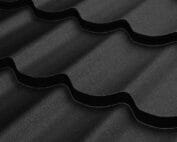
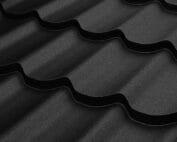
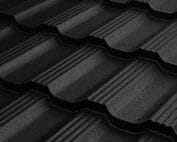
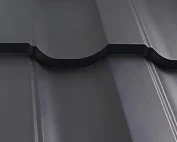
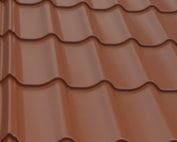
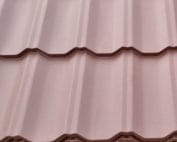
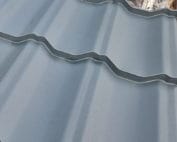
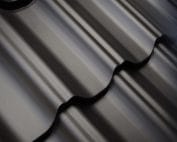
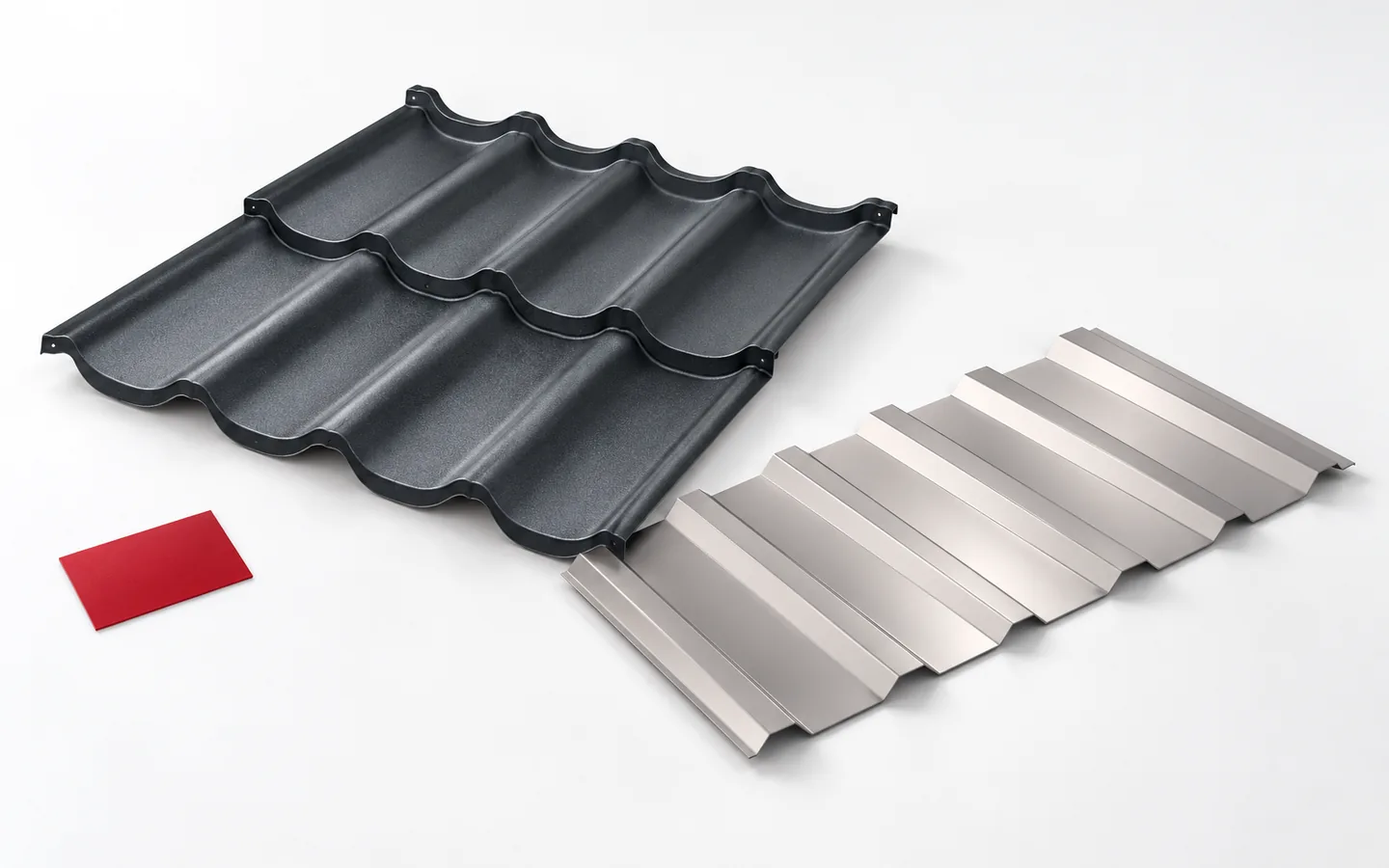
Tile-effect metal roofing has longitudinal and transverse pressings that form a repeating module. Trapezoidal steel sheet runs ribs along the sheet. The difference affects appearance, support and fixing points. A batten layout prepared for one material cannot be used for the other without checking. This applies in particular to the first batten and the termination at the eaves.
On a residential building both solutions can look good if they suit the form. Trapezoidal steel sheet is not reserved exclusively for garages, and tile-effect metal roofing does not automatically provide higher quality. It is worth viewing samples on a roof area of similar size. A deep profile and a fine rhythm look different up close than from street level.
How does roof pitch limit the choice?
Each specific profile has its conditions of use. The minimum pitch matters, as does whether the sheets will be joined along their length. A single value cannot be assumed for all trapezoidal steel sheets or for every tile-effect metal roofing. On a shallow roof area, overlaps, seals and limiting deflection of the substrate are particularly important.
If the project specifies a low pitch, the material choice should be made before ordering the supporting structure. Adding a larger overlap later does not always solve the problem. It can change the quantity of material and access to fixings. It is worth confirming system compatibility first, and only then comparing colours and prices. This avoids buying a covering that cannot be laid correctly.
Which format makes installation easier on a complex roof slope?
Tile-effect metal roofing cut to length can efficiently cover a simple roof area from eaves to ridge. Small modules are easier to transport and distribute at dormers and roof valleys. Trapezoidal steel sheet can also be ordered to size, but cuts must preserve the correct direction of ribs and overlaps. In neither solution does waste disappear just because the sheet is small.
The cutting plan should show the number of pieces, lengths and coverage area. A long sheet reduces transverse joints but is harder to handle. Where access to the building is limited, a more convenient format can reduce the risk of damage and the cost of organising the work. This is an argument that is not visible in the basic price per square metre of material.

How to compare rigidity and quality?
For T18 and T35, the tables for the specific thickness and the support scheme must be checked. A deeper profile is not automatically better in every application. In tile-effect metal roofing, the geometry of the module and the support at the points specified by the system matter. Both coverings transfer loads to the structure, so they cannot be chosen on appearance alone.
Quality also covers the steel, the coating and the precision of profiling. A thicker paint layer does not determine durability without information about its type and the environment. It is worth comparing parameters with the same meaning. The aesthetic warranty covers different characteristics than the technical one. Long protection against selected damage is not a promise of unchanging appearance of the entire roof.
What about insulation, noise and condensation?
Neither trapezoidal steel sheet nor tile-effect metal roofing constitutes standalone thermal insulation. Above a heated room, a complete building envelope is needed. Its layers also affect rain noise. Comparing the sheets alone without considering the loft can lead to misleading conclusions. Airtightness, insulation and the lining on the interior side are important.
In an unheated carport or garage, water condensation under the sheet metal can be a problem. An anti-condensation mat helps to retain moisture temporarily, but requires the possibility of drying out. It is not equivalent to an insulated roof sandwich panel with a core. If the garage is to be heated, it is worth comparing the cost of the entire system with a sandwich panel solution already at the start of the project.
Which criterion should decide the purchase?
First choose solutions suited to the roof, then compare their cost and appearance. The quote should include the covering, accessories, transport and installation. The price must be related to the effective covering area. If one quote omits roof valleys and ridge tiles, it is not comparable with a complete set. It is also worth establishing the availability of the required flashings in the chosen coating.
T18 and T35 are a good starting point for simple structures and economical architecture. Tile-effect metal roofing allows a different roof character to be achieved and offers a choice between sheets and modules. There is no obligation to pay extra for a more decorative profile. It is worth paying for material properly matched to the structure, durable details and workmanship in accordance with the instructions.
7 branches. Materials closer to your project.